
cve-2025-66398
Demonstrate exploitation of Signal K Server CVE-2025-66398 allowing unauthenticated attackers to inject backdoor and enable remote code execution.

Demonstrate exploitation of Signal K Server CVE-2025-66398 allowing unauthenticated attackers to inject backdoor and enable remote code execution.

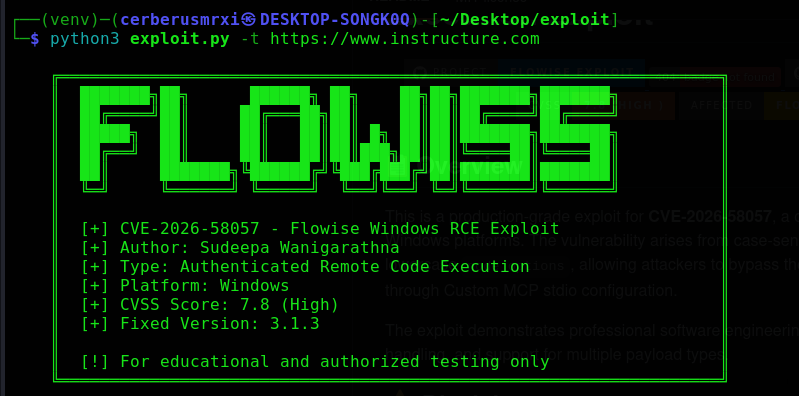
Flowise Windows RCE exploit for CVE-2026-58057. Bypasses environment variable validation via case-sensitive flaw. Uses node_options to inject…

CVE-2025-66398 — Signal K Server ≤ 2.18.0 RCE PoC

CVE-2026-25755 A critical PDF Object Injection vulnerability in jsPDF allows attackers to inject arbitrary PDF objects through the addJS() function,…

Gitea versions 1.1.0 → 1.12.5 allow authenticated users with "May create git hooks" permission to inject arbitrary shell commands into post-receive…

SharePoint WebPart Injection Exploit Tool

CVE-2025-53547 one of poc code

This vulnerability displays an XSS flaw in a WordPress popup plugin, allowing attackers to inject malicious JavaScript through a stored XSS

It is an input sanitization flaw caused by an encoding mismatch, allowing crafted input to bypass filters. If a server is vulnerable, an attacker can…

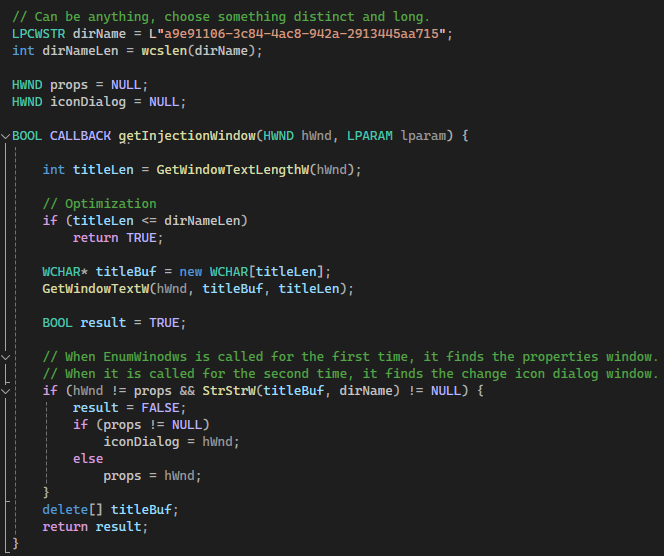
Inject DLLs into the explorer process using icons

Proof-of-concept exploit for authenticated remote code execution via command injection in ProApps Enterprise Appliance ping functionality, with…

Detailed CVE-2025-25706 proof-of-concept demonstrating authenticated remote code execution via command injection in ProApps ping functionality,…


Port of Cobalt Strike's Process Inject Kit

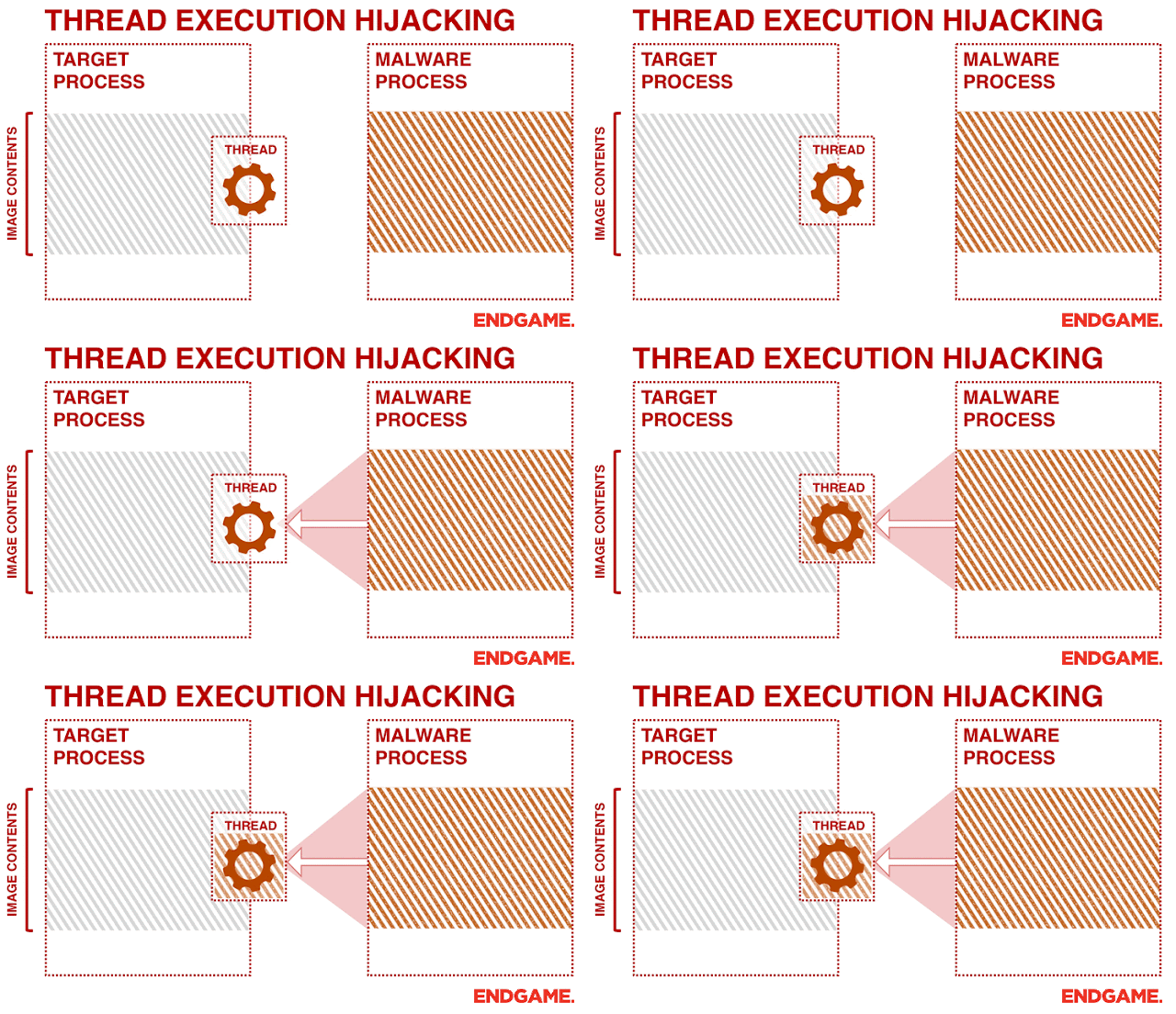
PoC Thread Execution Hijacking for Win32 Code Injection

This vulnerability allows an unauthenticated attacker to remotely execute arbitrary code on a vulnerable Confluence server. The vulnerability exists…

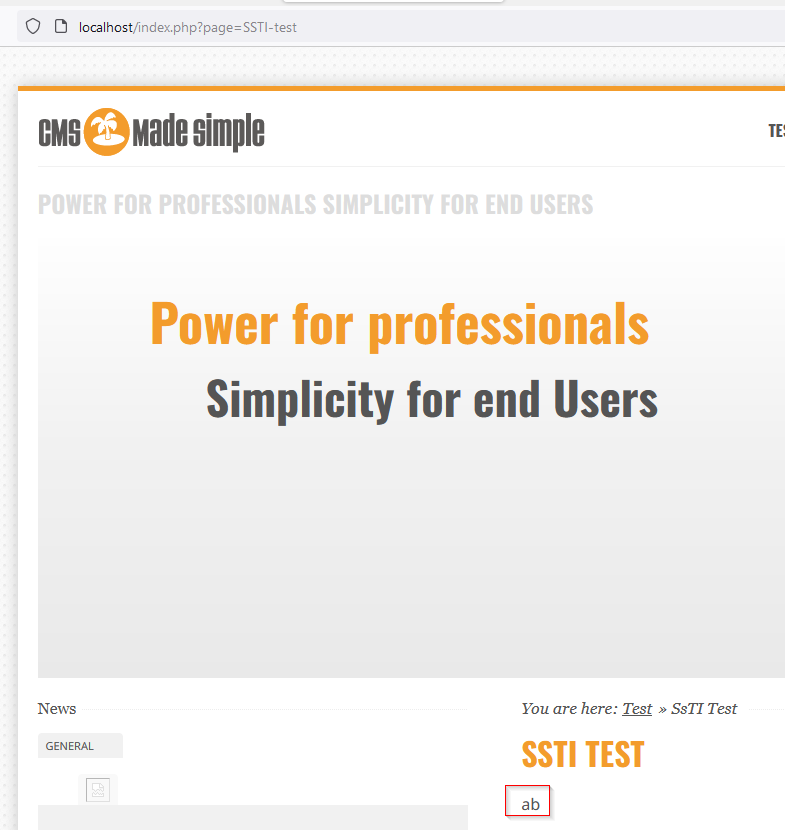
SSTI vulnerability in CMSmadesimple v.2.2.18 allows a local attacker to use native template syntax to inject a malicious payload into a template,…