
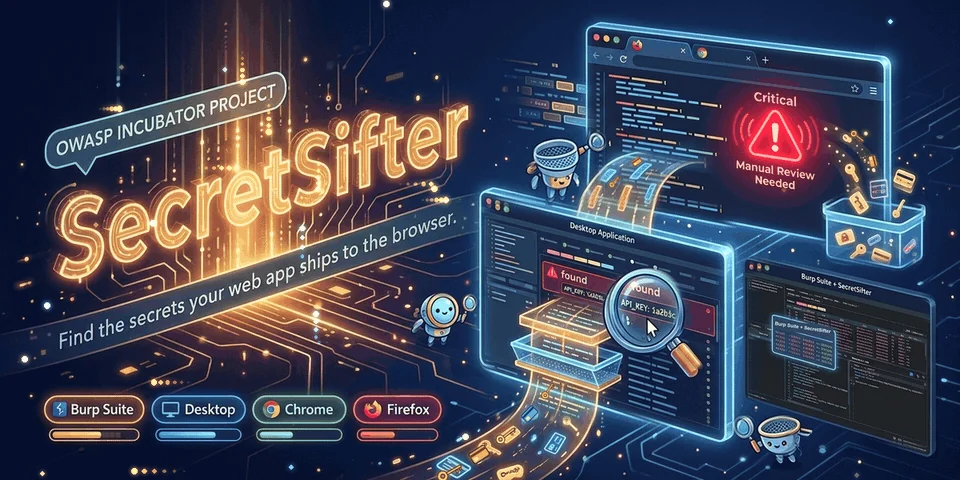
SecretSifter
 owasp/secretsifter
OWASP Incubator project: detects credentials exposed in browser-delivered content (JavaScript, config responses, live traffic).
ai-securityapi-securitydefensive-tools+7
owasp/secretsifterOWASP Incubator project: detects credentials exposed in browser-delivered content (JavaScript, config responses, live traffic).
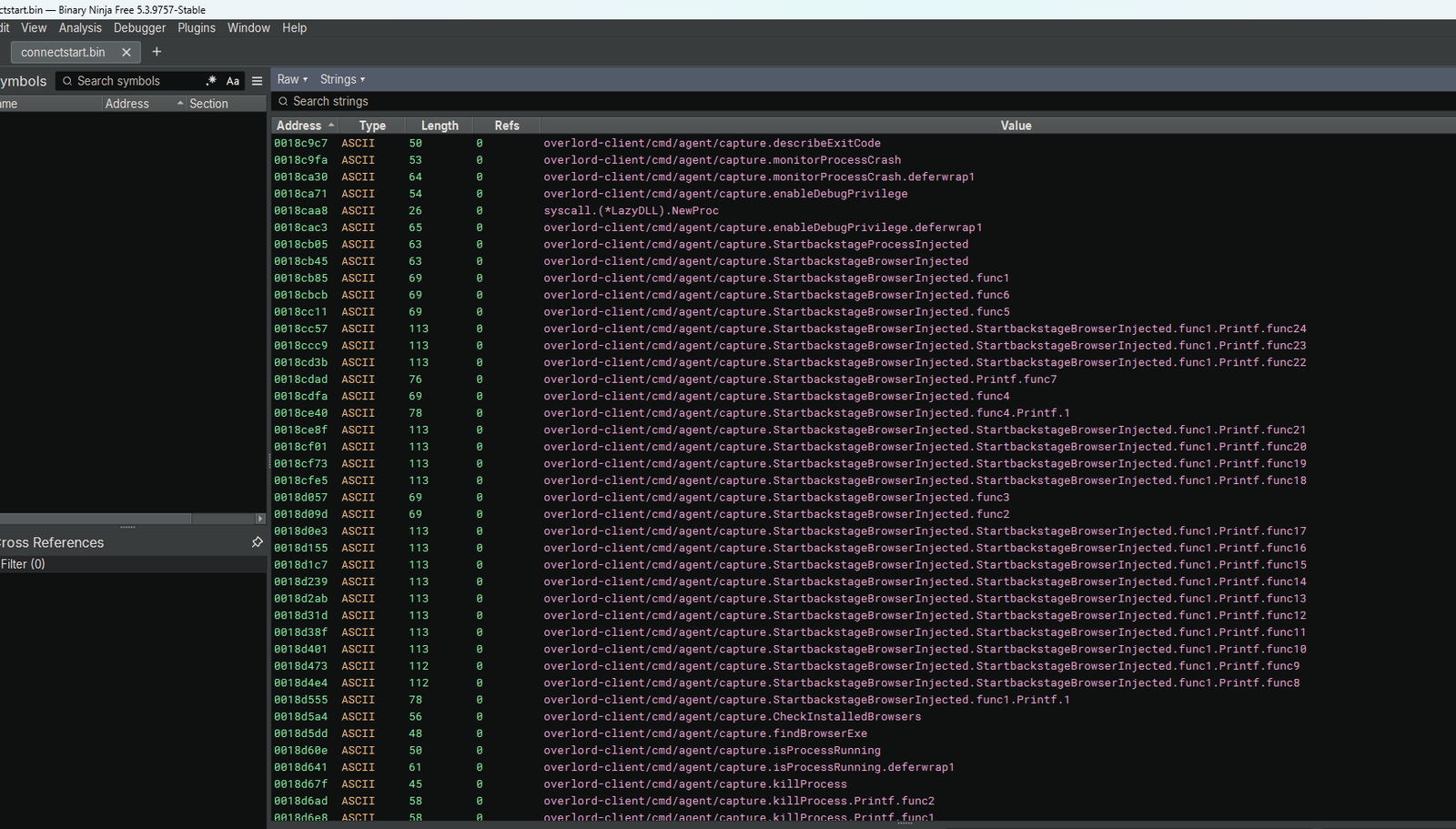 kaandemir993/overlord-rat-reverse-engineering-a-go-based-rat-injection-keylogging-c2-exfiltration-analysis
Full static & memory analysis of Overlord RAT: Go agent architecture, HTTP/2 + WebSocket C2, reflective DLL injection, browser keylogging, and IOCs.…
 moontea0416/webmirage
Adversarial image attacks on vision-language web agents, from visual grounding to browser execution
 0x574r/darkcloak
Linux process identity cloaking tool that spoofs comm, argv, cmdline, environ, exe path, and VMAs via an 11-phase prctl pipeline to impersonate…
 g4sp4rcs/cve-2019-11707-from-an-ionmonkey-type-confusion-to-system-
Windows proof-of-concept exploit chain for CVE-2019-11707, a Firefox IonMonkey type confusion, combining browser RCE with sandbox escape to achieve…
 sneakynachos/cve-2026-85048-the-gpu-died
Reproducer and technical analysis for CVE-2026-85048, a Chrome viz surface use-after-free in the GPU process, with ASAN unit tests and browser…
 m1ghtym0/browser-pwn
An updated collection of resources targeting browser-exploitation.
 xv0nfers/v8-sbx-bypass-collection
Curated collection of V8 sandbox escape, bypass, and violation reports with issue tracker links, articles, papers, slides, and design documents for…
 thomasking2014/slides
Curated collection of security conference slide decks covering Android rooting, kernel exploitation, browser memory corruption, JIT mitigations, and…
 nccgroup/setcookieanalysisinbrowsers
SetCookie Analysis in Browser Research Results
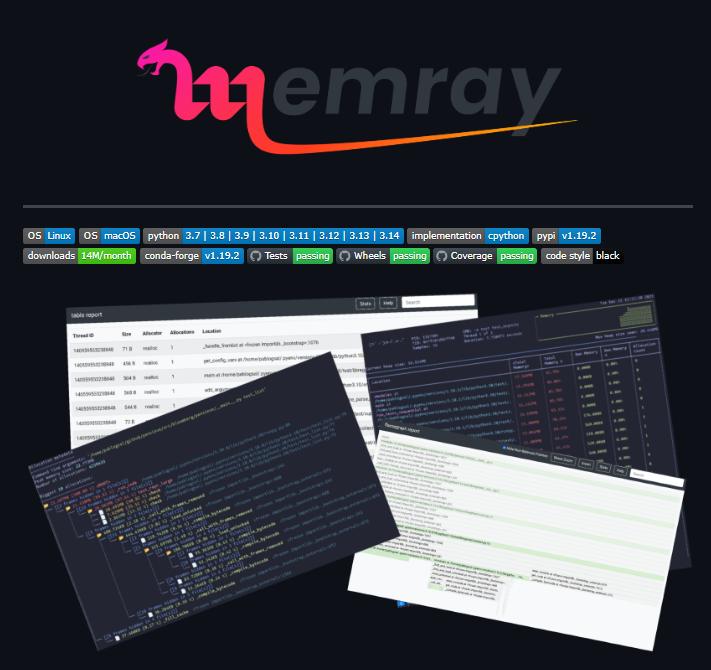 0xmrma/cve-2026-32722
Bloomberg Memray’s Stored XSS via Unescaped Command-Line Metadata
 x0root/cve-2025-68116
A Documentation of CVE-2025-68116
 ethannjc/cve-2012-1723
Proof of concept exploit for CVE-2012-1723
 ohexa/py_trustwallet_wasm
(CVE-2023-31290) Trust Wallet Core before 3.1.1, as used in the Trust Wallet browser extension before 0.0.183, allows theft of funds because the…
 masamuneee/cve-2024-4367-analysis
Analysis and PoC for CVE-2024-4367: arbitrary JavaScript execution (XSS) in PDF.js
 erupmi/cve-2018-4416-exploit
Educational walkthrough of CVE-2018-4416, a WebKit JavaScriptCore type confusion vulnerability, with PoC, debugging setup, and analysis of common…
 chattopadhyaykittu/cve-2017-0037
Technical analysis of CVE-2017-0037, a Microsoft browser memory corruption vulnerability enabling remote code execution via type confusion in CSS/JS…
 tharooon/cve-2026-29971
An attacker can execute arbitrary JavaScript in the victim's browser, potentially leading to session hijacking or privilege escalation.