

CVE-2024-21378
 d0rb/cve-2024-21378
This repository contains an exploit for targeting Microsoft Outlook through Exchange Online, leveraging a vulnerability to execute arbitrary code via…
educationemail-securityexploitation+4
9
d0rb/cve-2024-21378This repository contains an exploit for targeting Microsoft Outlook through Exchange Online, leveraging a vulnerability to execute arbitrary code via…
 sublime-security/ics-phishing-toolkit
Open source tooling to stop ICS phishing (malicious calendar invites)
 djackreuter/cve-2023-23397-poc
C# PoC exploit for CVE-2023-23397 that sends malicious Outlook meeting invites with a UNC path trigger for NTLM credential theft.
 onvio/gophish
Gophish with Malicious Attachment and HTTP redirect support
 defrancescojp/cve-2013-2977
Proof-of-concept exploit for CVE-2013-2977: IBM Lotus Notes PNG integer overflow leading to arbitrary code execution when a malicious email is opened…
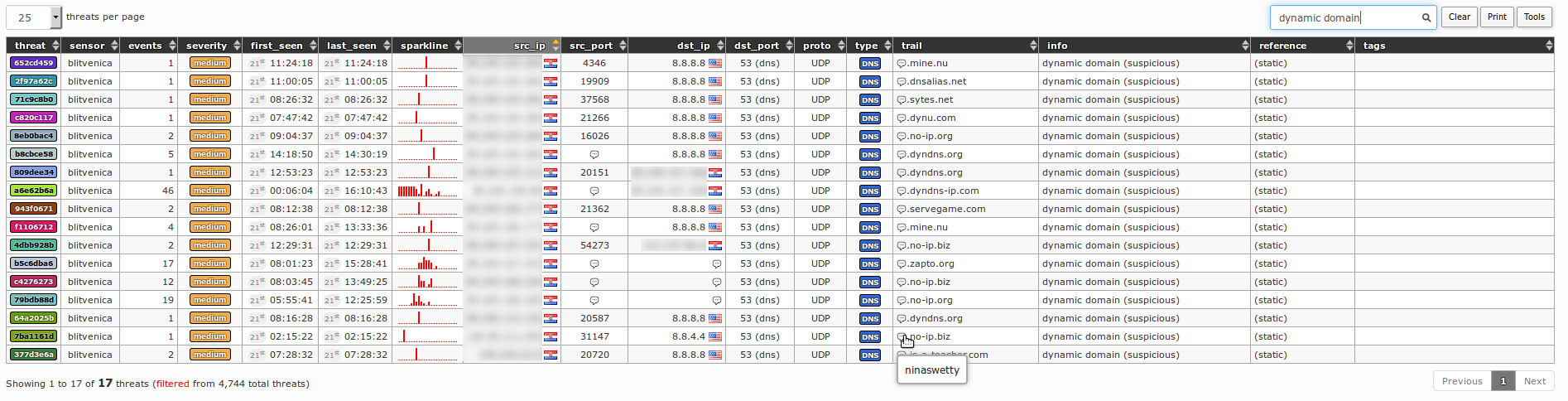 stamparm/maltrail
Real-time malicious traffic detection system using public blacklists, static malware trails, and heuristic analysis to identify threats across DNS,…
 themehackers/cve-2024-21413
CVE-2024-21413 | Microsoft Outlook Remote Code Execution Vulnerability PoC
 je6k/cve-2021-34473-exchange-proxyshell
对Exchange Proxyshell 做了二次修改,精确的拆分、实现辅助性安全测试。
 mbanyamer/cve-2026-25916-roundcube-webmail-dom-based-xss-exploit-via-svg-href-attribute
Python exploit for Roundcube Webmail DOM-based XSS (CVE-2026-25916) via SVG href attributes, enabling session hijacking and data exfiltration through…
 th3hellion/cve-2024-21413
Python exploit for CVE-2024-21413, a Microsoft Outlook remote code execution vulnerability. Sends a crafted email via SMTP to trigger code execution…
 trackflaw/cve-2023-23397
Simple PoC of the CVE-2023-23397 vulnerability with the payload sent by email.
 tiepologian/cve-2023-23397
Proof of Concept for CVE-2023-23397 in Python

 amavis/amavis
amavis is a high-performance email content filter framework written in Perl.
 api0cradle/cve-2023-23397-poc-powershell
PowerShell script to exploit CVE-2023-23397 by sending or saving malicious Outlook calendar invitations that trigger NTLM credential leakage via the…
 dshabani96/cve-2024-21413
Proof-of-concept exploit for Microsoft Outlook RCE (CVE-2024-21413) with SMTP email delivery, malicious RTF attachment generation, and optional…
 dionissh/cve-2024-21413
Proof-of-concept exploit for Microsoft Outlook RCE (CVE-2024-21413) with SMTP-based phishing email delivery, malicious RTF attachment generation, and…
 j0eyv/cve-2023-23397
Proof-of-concept exploit for CVE-2023-23397, an Outlook/Exchange privilege escalation vulnerability that triggers NTLM credential theft via a…
 jacquesquail/cve-2023-23397
Proof-of-concept exploit for CVE-2023-23397, a Microsoft Outlook privilege escalation vulnerability. Sends a crafted email with a malicious UNC path…