CVE-2025-27480-The-Silent-Gateway-Risk

Letting attackers run malicious code without needing a cracked password, user interaction, or even a foothold in your network. That’s CVE-2025-27480

Letting attackers run malicious code without needing a cracked password, user interaction, or even a foothold in your network. That’s CVE-2025-27480

C-based payload for CVE-2022-21894 that maps a second stage payload to call EFI services, extending the original PoC for Secure Boot bypass…

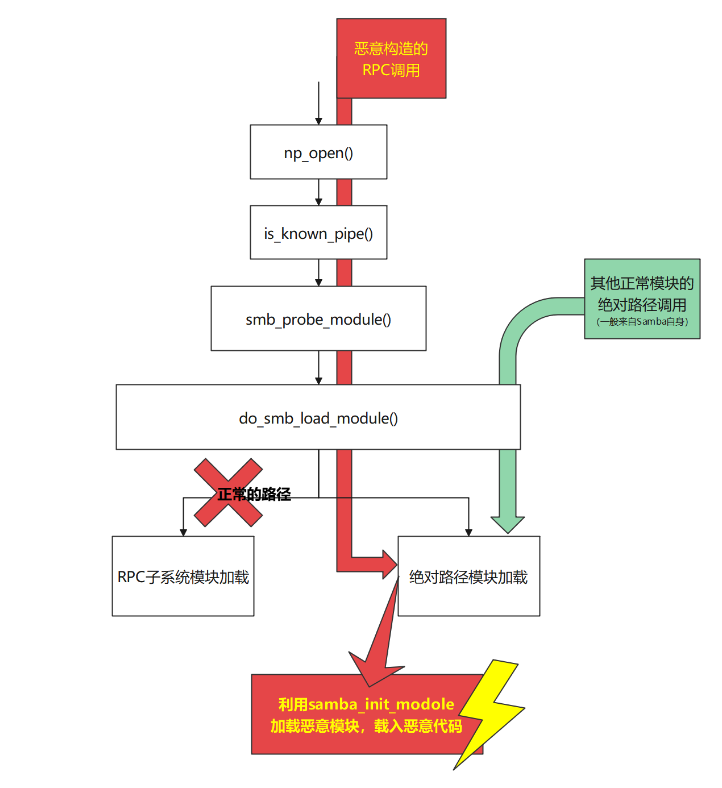
Exploit CVE-2017-7494 for Net Security course final Assignment. This would reveal the vulnerability of services that run in administrative priority…

CVE-2024-29050 is a vulnerability found in the Windows Cryptographic Services.

Revisited CVE-2016-9795 privilege escalation (casrvc binary from CA Common Services suite)

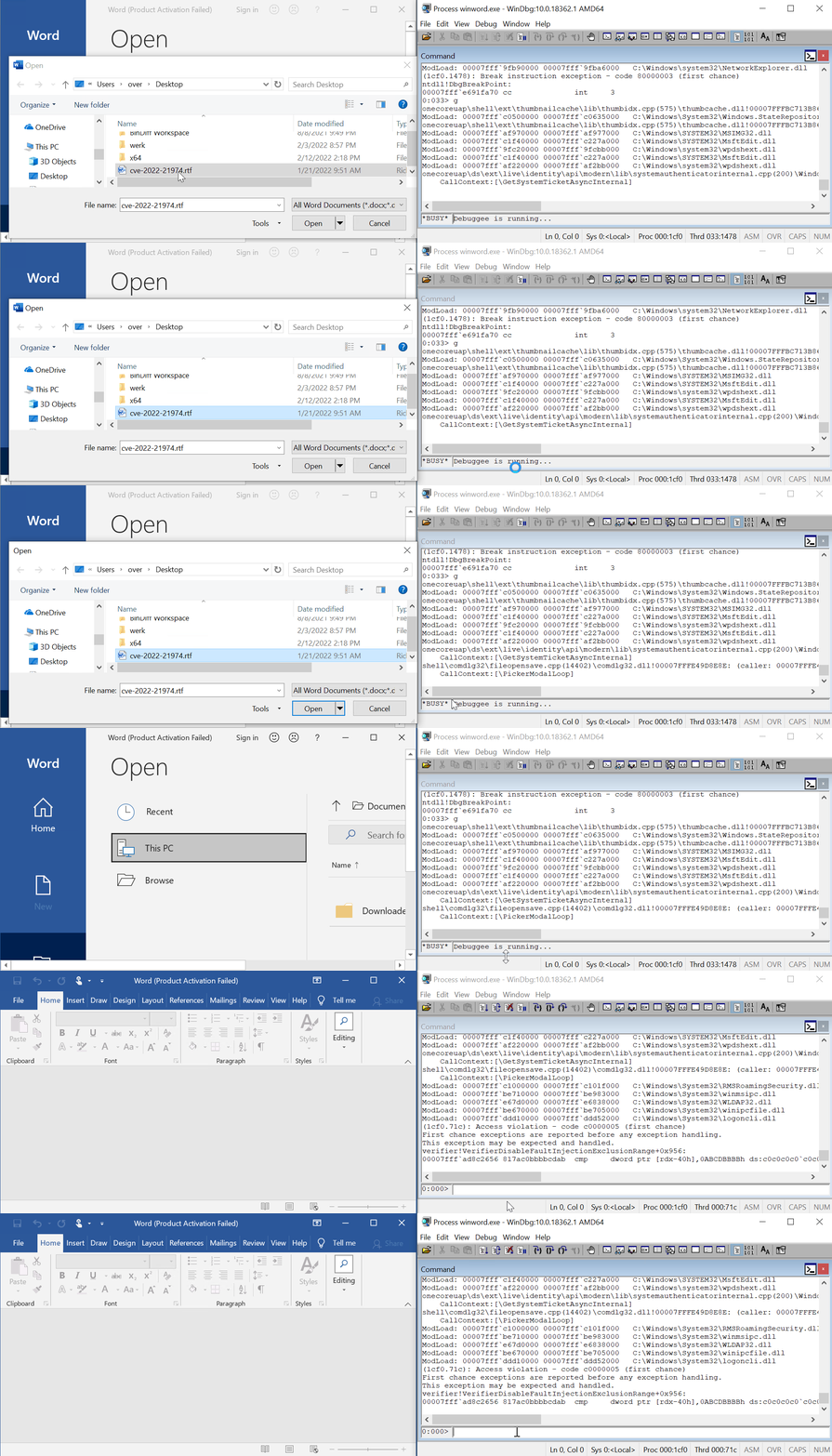
PoC for CVE-2022-21974 "Roaming Security Rights Management Services Remote Code Execution Vulnerability"

CVE-2019-0708 (BlueKeep) proof of concept allowing pre-auth RCE on Windows7

Documentation and proof of concept code for CVE-2022-24125 and CVE-2022-24126.

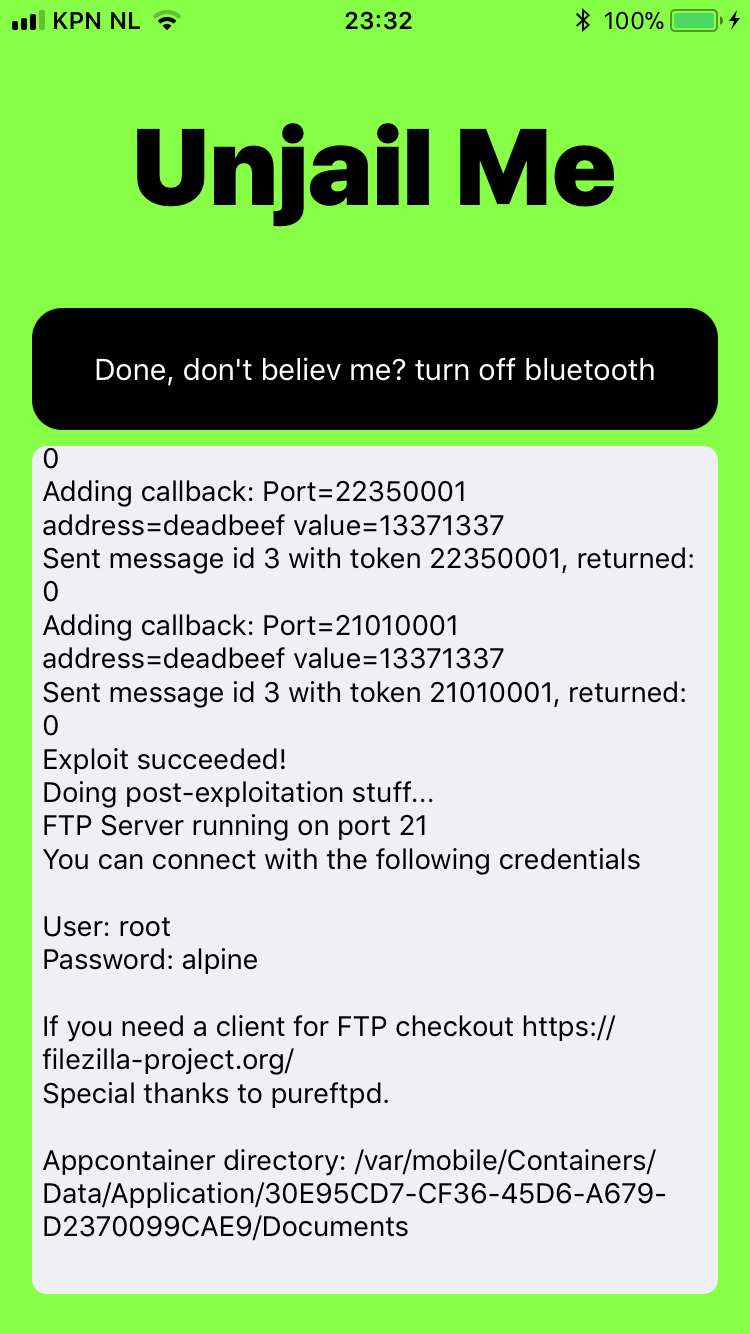
A sandbox escape based on the proof-of-concept (CVE-2018-4087) by Rani Idan (Zimperium)

Example payload for CVE-2022-21894

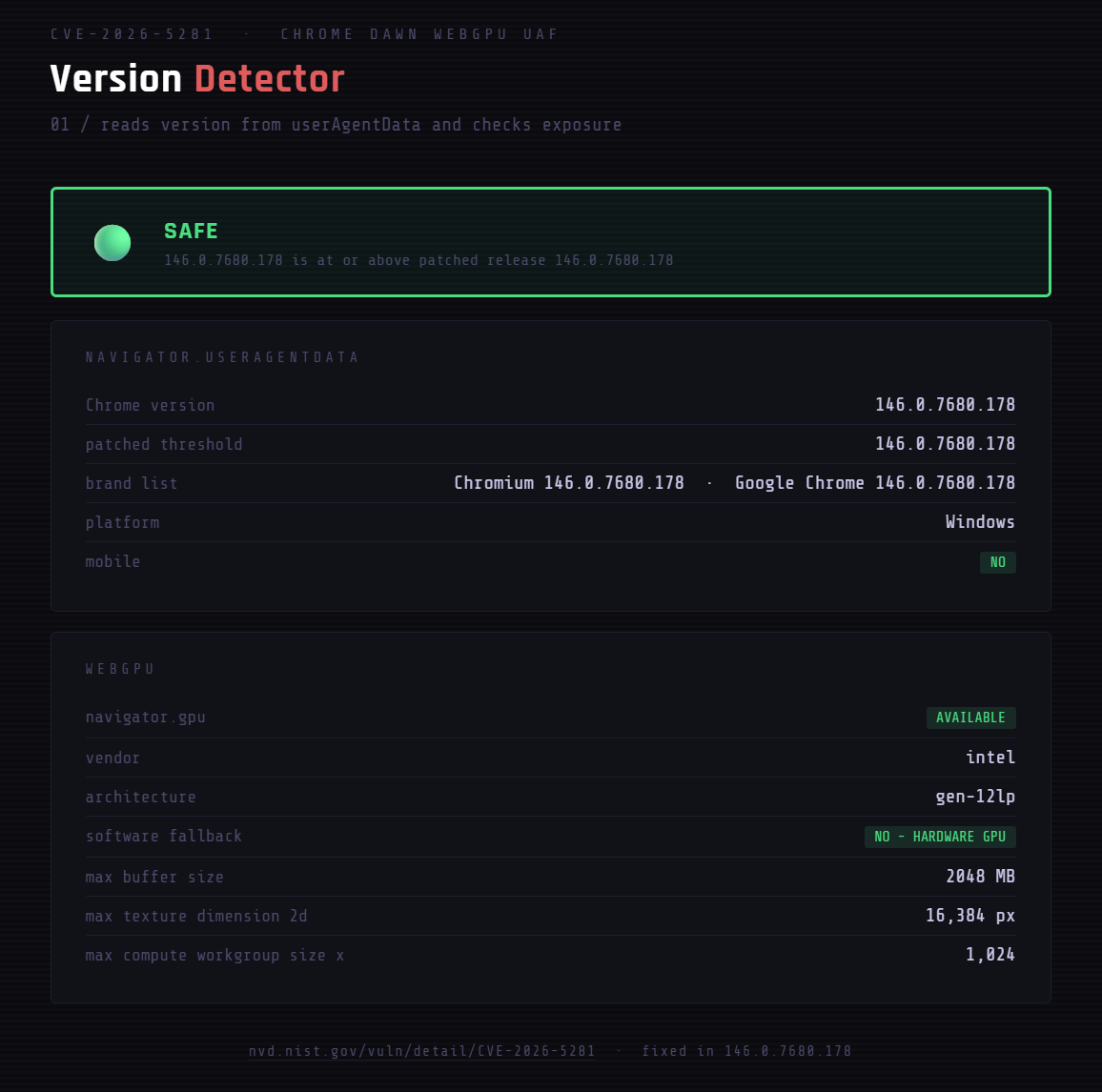
CVE-2026-5281 (Chrome Dawn WebGPU UAF) analysis, lab validation tools, and reproducible environment for vulnerable vs patched builds.

KVM/x86 guest-to-host escape exploit (CVE-2026-53359) leveraging a use-after-free in shadow MMU emulation. Includes PoC for triggering host kernel…

PoC exploit for CVE-2026-64561, a KVM/x86 shadow MMU use-after-free enabling guest-to-host escape with kernel root code execution on the host.

Summary of Cyber Security interview questions I have been through, hope this helps

Reproducer for Linux kernel memory corruption vulnerability CVE-2020-14386, deployed as a Kubernetes pod to test node vulnerability by triggering a…

Exploit for Linux kernel CVE-2026-31431 causing page cache corruption via authencesn AEAD manipulation, targeting privilege escalation in containers…

CVE-2026-31431 Copy Fail — Linux kernel LPE tester via MCP

Exploit KVM/x86 guest-to-host escape CVE-2026-64561 with Zapscape, a proof-of-concept demonstrating hypervisor vulnerability.