

AISVS
 owasp/aisvs
The AI Security Verification Standard (AISVS) focuses on providing developers, architects, and security professionals with a structured checklist to…
adversarial-attackai-securityanomaly-detection+6
565
owasp/aisvsThe AI Security Verification Standard (AISVS) focuses on providing developers, architects, and security professionals with a structured checklist to…
 pixee/compaction-laundering
Security research on context compaction in coding agents: shows how forged role labels in untrusted content survive summarization and get executed,…
 suels-group/beyond_asr
Research code for measuring jailbreak attack success rates (ASR and stepwise ASR) against LLMs, with implementations of attacks such as GCG and…
 phkhanhtrinh23/agas
LLM-driven agentic group shilling attack framework that manipulates black-box collaborative-filtering recommender rankings using adaptive multi-role…
 moontea0416/webmirage
Adversarial image attacks on vision-language web agents, from visual grounding to browser execution
 stardust457/sldr
Defense framework that mitigates malicious fine-tuning of LLMs using selective layer recovery and dynamic routing, with training, harmfulness…
 ml-security-research-lab/cachetrap
Research code for a gray-box trojan attack that flips a single KV-cache bit in fine-tuned LLM classifiers and measures per-class attack success rate.
 sisl-uri/t-backdoor
Research code implementing T-Backdoor, temporal-trigger backdoor attacks on spiking neural networks using rate, latency, and jitter triggers without…
 usama1002/deleting-the-trace
Experiments for control-token chain-of-thought suppression and parser-leniency attacks on tool-using LLM agents
 alex66366/odpure
Black-box input-stage purification defense that neutralizes backdoor attacks on object detectors via corruption, diffusion reconstruction, and DBSCAN…
 rosesecurity/anti-virus-evading-payloads
During the exploitation phase of a pen test or ethical hacking engagement, you will ultimately need to try to cause code to run on target system…
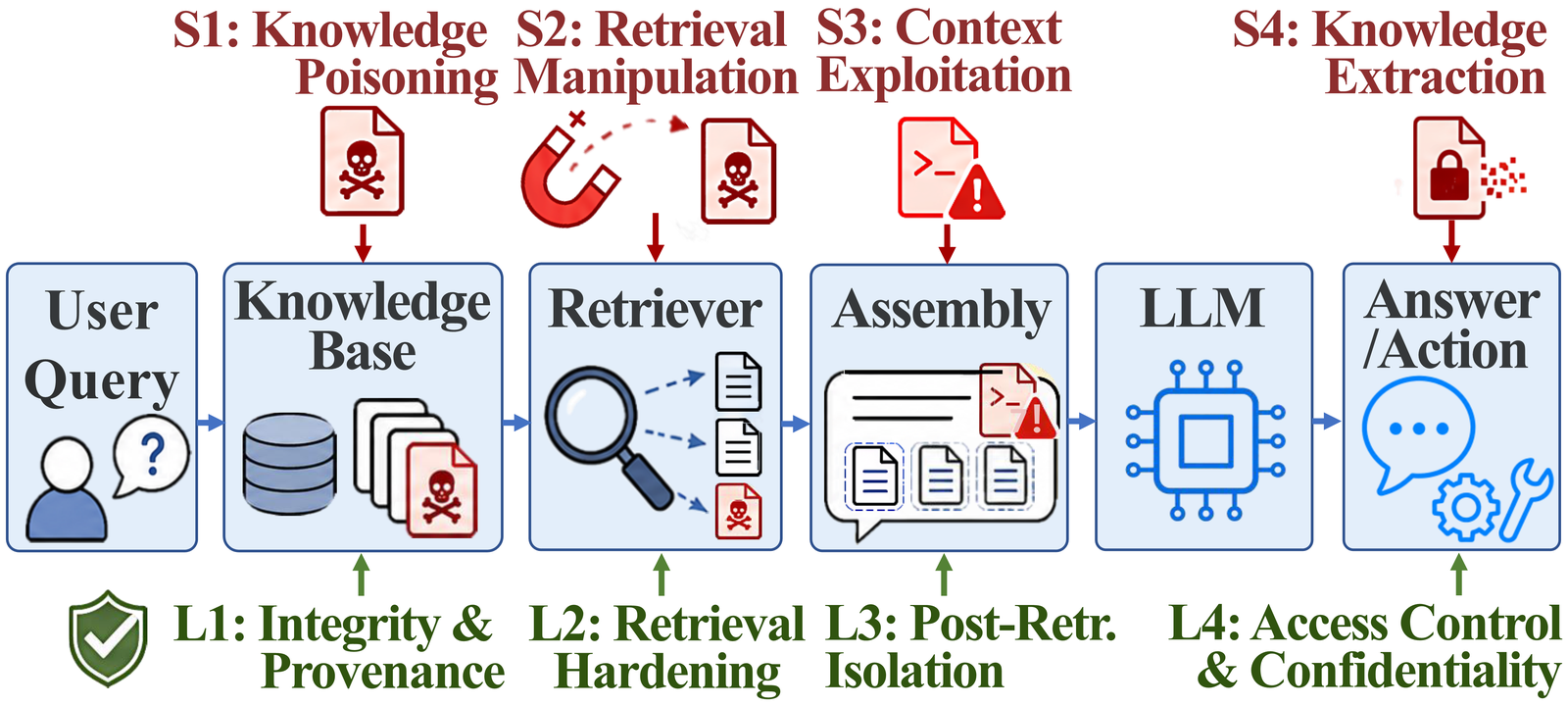 treeai-lab/awesome-rag-security
Curated collection of research papers on retrieval-augmented generation security, organized by the SLOT taxonomy covering knowledge poisoning,…
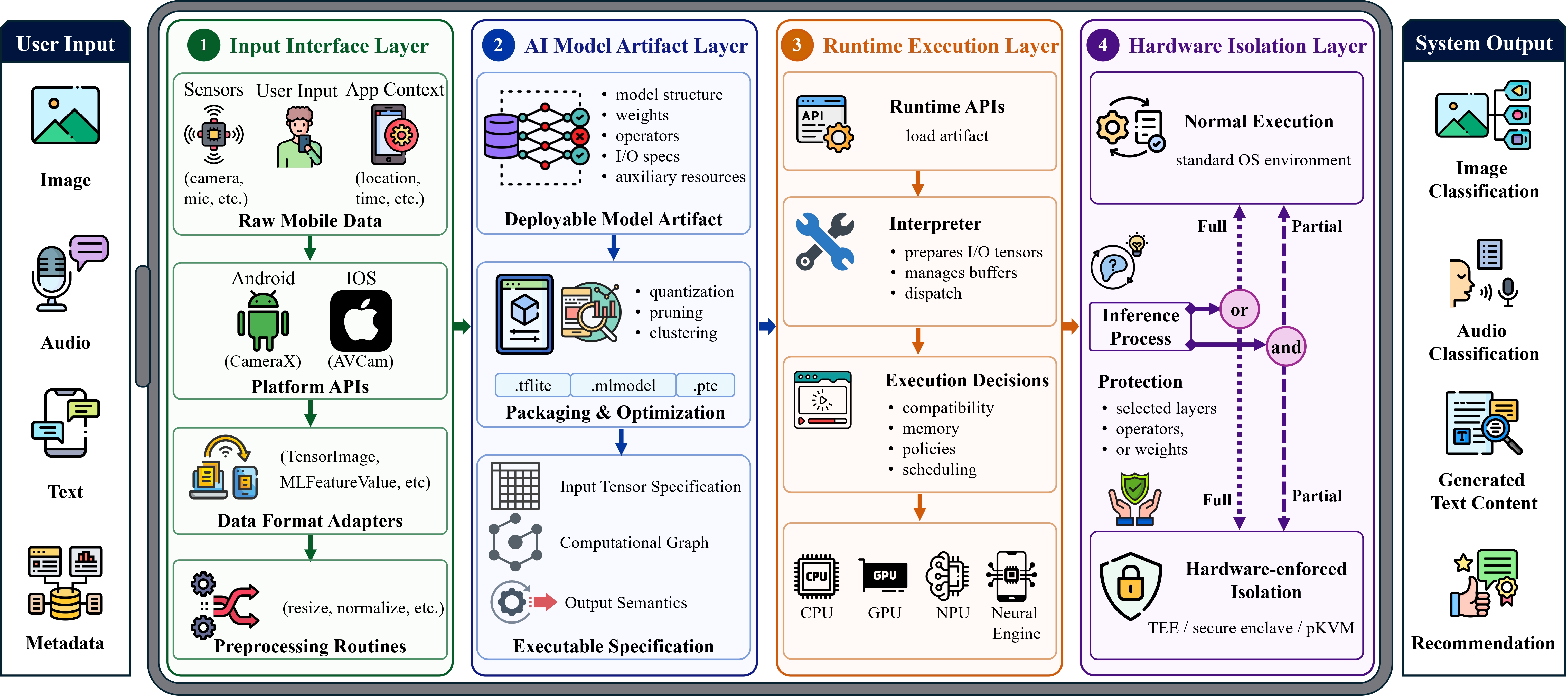 jinxhy/awesome-moai-security
Curated reading list and taxonomy of attack and defense research for mobile on-device AI systems, covering adversarial, backdoor, model stealing, and…
 atsukisato/pgm-attack
Research code for poisoning attacks on the PGM-index, demonstrating how to craft adversarial data to degrade learned index performance.
 yeasen-z/leakgauge
Detects LLM context-leakage attacks by training lightweight behavior probes on log-probabilities, with vLLM offline/server detection pipelines.
 camillegr/cve-2026-73292
Proof-of-concept exploit for CVE-2026-73292: CSRF attack on Semaphore UI password change endpoint, serving a malicious page that silently resets an…
 cenobyte-vincit/xspawn
Spawns macOS programs through launchd's private XPC interface without execing them, making EDR record launchd as parent. Supports one-shot,…
 ezramansor/cve-2025-32432-poc
A simple PoC on the Remote Code Execution (RCE) Vulnerability of CraftCMS designated as CVE-2025-32432 written in Go