Skip to content
KitploitKITPLOIT
ToolsBlog
Submit
ToolsBlog
Submit

Hacking, PenTest, and Cybersecurity Tools for Your Security Arsenal!

Kitploit is a directory of hacking, cybersecurity, and pentesting tools. Discover the latest project updates to find vulnerabilities, analyze systems, automate testing, and strengthen your security.

··Feeds·Contact·Privacy·© 2026 Kitploit

Tool Directory

Categories

View all categories
Loading categories
Olyx — 🔗 Lightweight security orchestrator mobile application for URI vetting, providing a unified, multi-engine interface to aggregate and validate link safety in real-time. | Kitploit
Tools/GitLabGitLab/shacode/olyx
Android SecurityOSINT (Open Source Intelligence)Phishing ToolsVulnerability AnalysisInformation GatheringWeb SecurityMobile SecurityThreat IntelligenceAPI SecurityDNS Analysis
GitLabshacode/olyx

Olyx

6 months agoNot yet reviewed

Most Popular

View all →

Discover the most used tools by our community.

Explore all tools

Browse our collection of tools

View all tools →
Share

🔗 Lightweight security orchestrator mobile application for URI vetting, providing a unified, multi-engine interface to aggregate and validate link safety in real-time.

View RepositoryWebsite

Olyx

License Kotlin Jetpack Compose Android Material Design 3

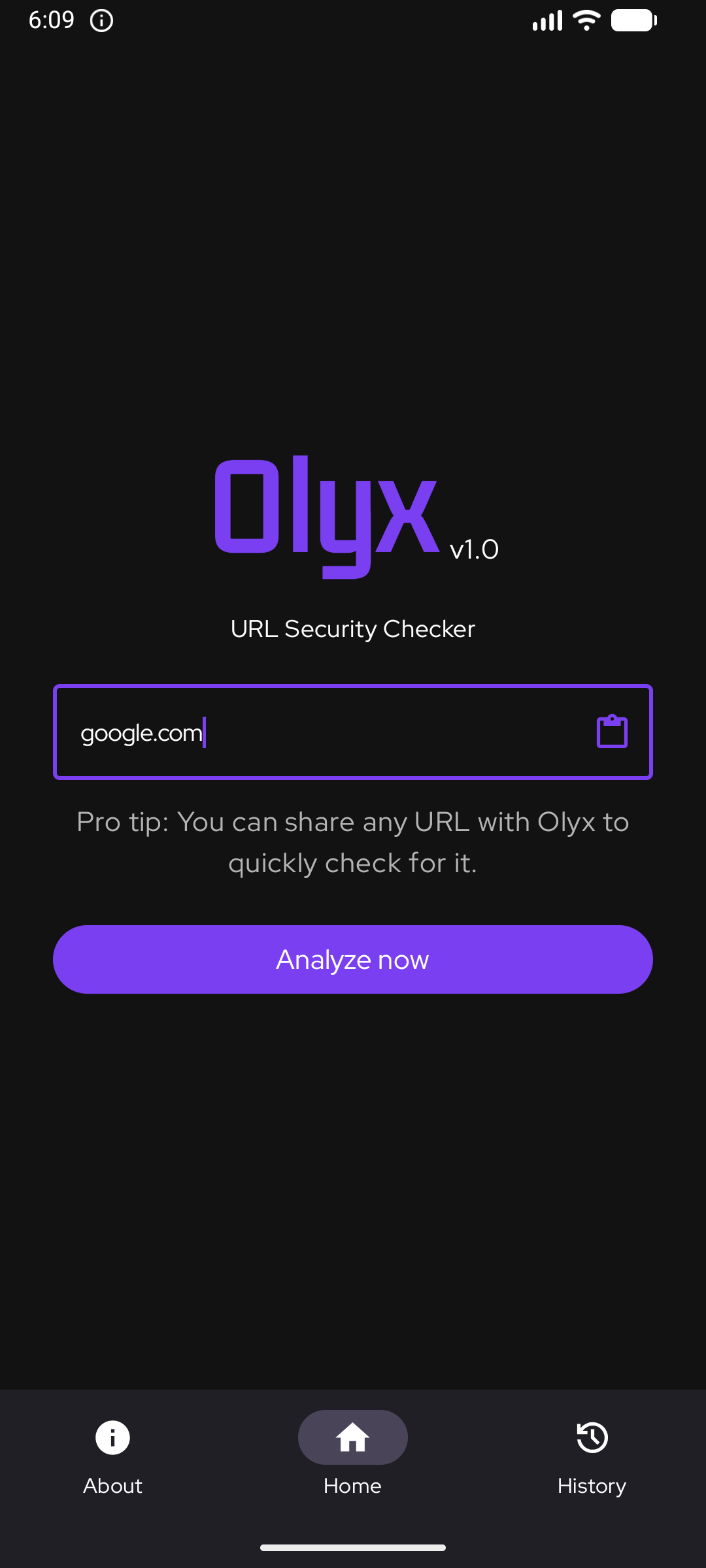
A modern Android application for comprehensive URL security analysis, combining multiple threat detection APIs with advanced domain spoofing detection to protect users from malicious websites.
Download APK

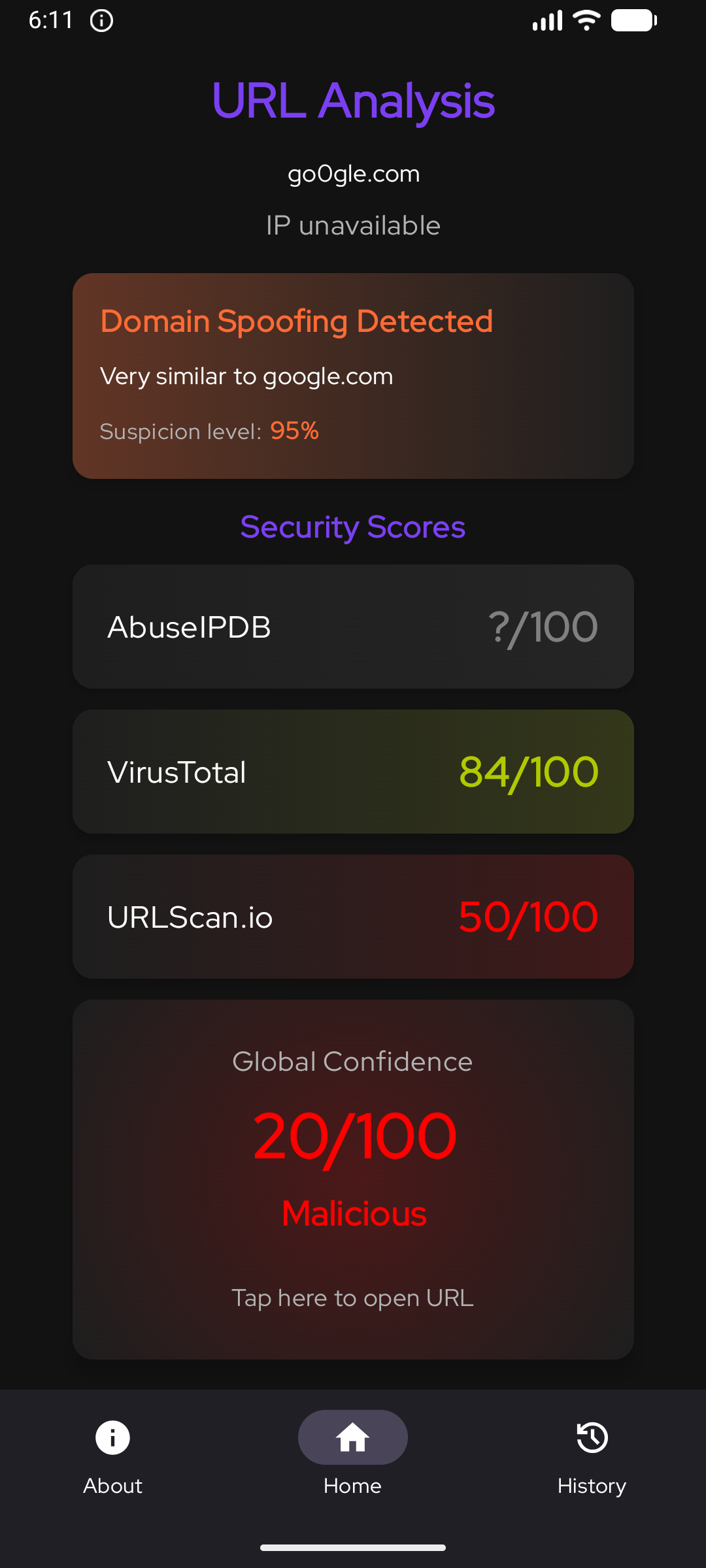
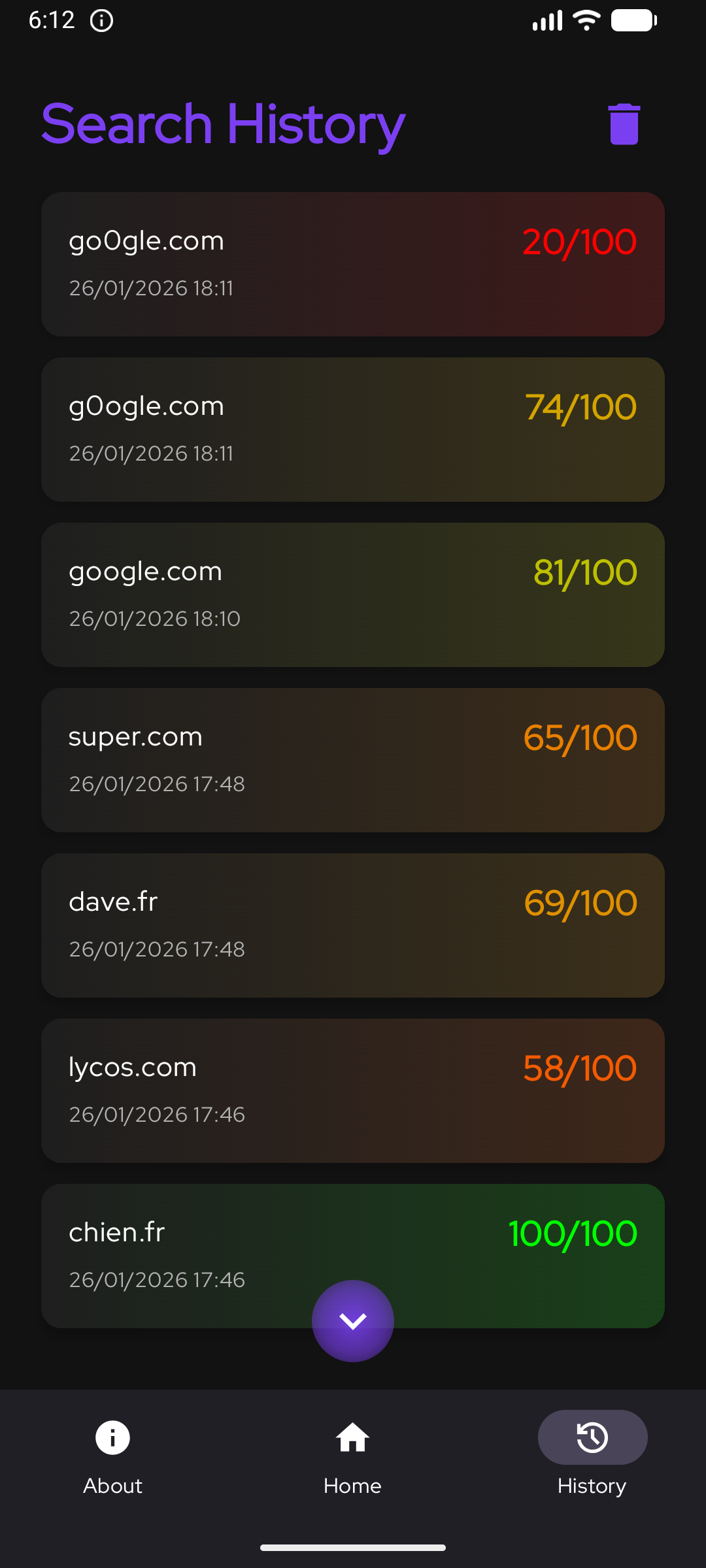
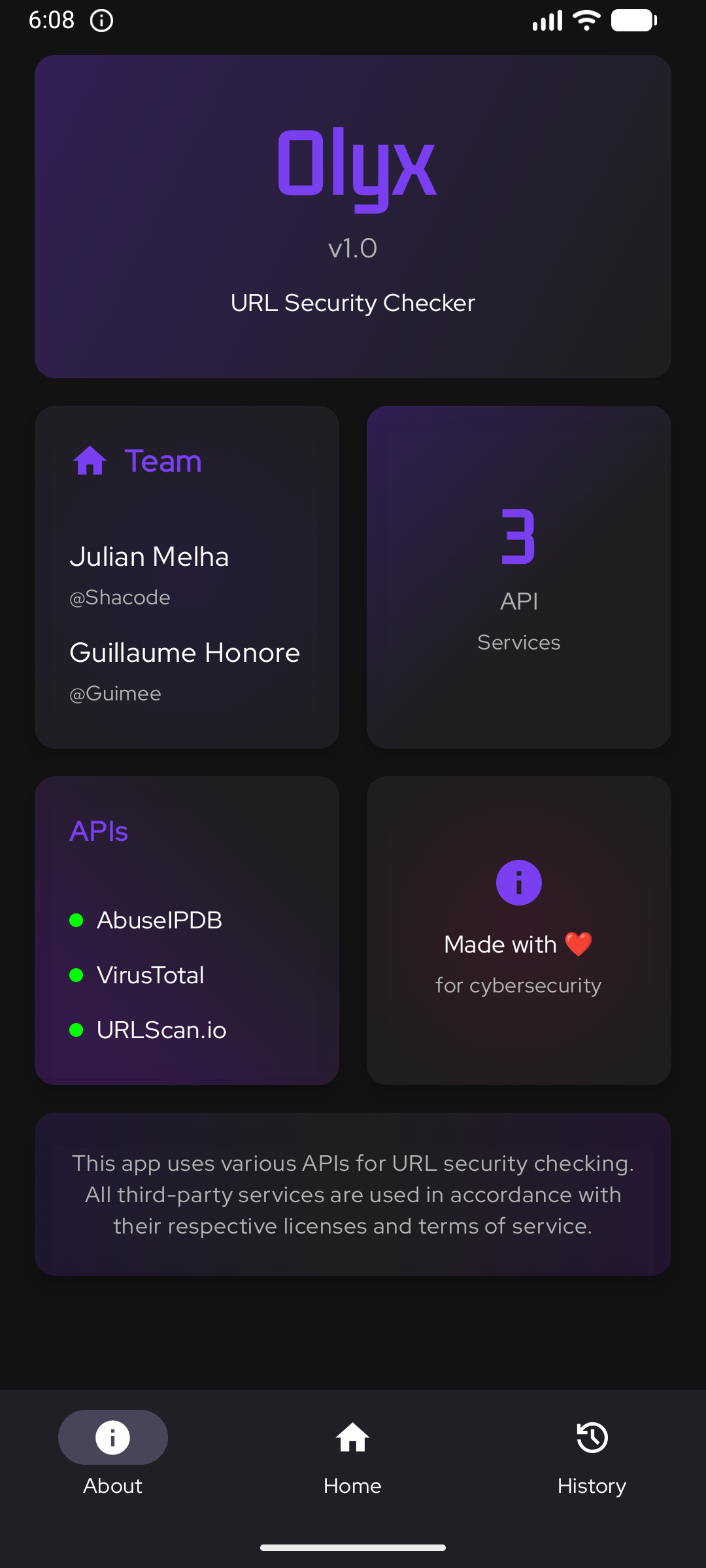
Screenshots

Features

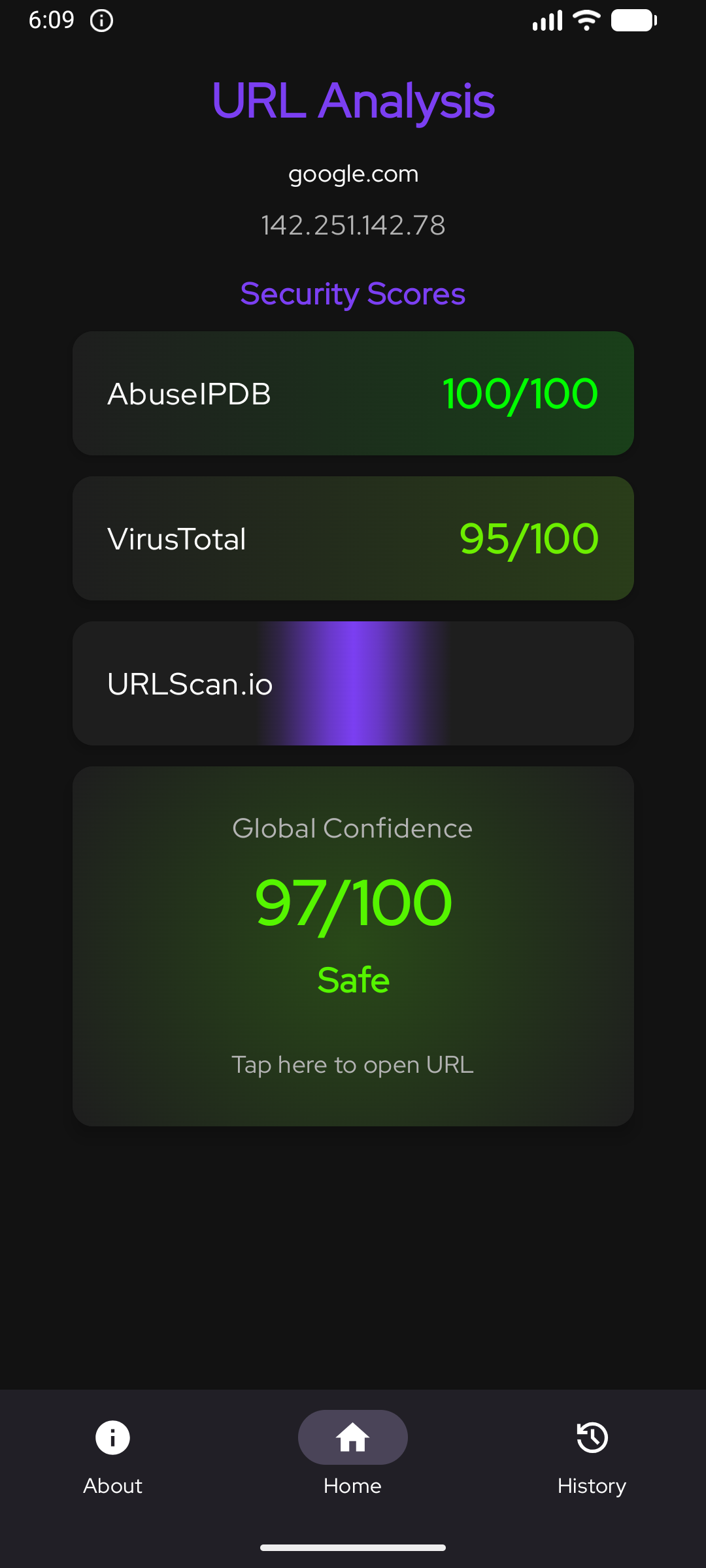
Multi-API Security Analysis

  • AbuseIPDB: Scans IP reputation for reported malicious activity
  • VirusTotal: Checks URLs against 70+ antivirus engines
  • URLScan.io: Performs deep website behavioral analysis
  • Real-time Results: Progressive loading with immediate partial results

Domain Spoofing Detection

  • 200+ Protected Domains: Pre-loaded database of legitimate websites (Google, PayPal, banks, etc.)
  • Character Substitution Detection: Identifies homograph attacks (g00gle.com, paypa1.com)
  • Levenshtein Distance Analysis: Catches typosquatting attempts
  • TLD Variations: Detects suspicious domain extensions
  • Smart Filtering: Distinguishes legitimate regional variants (.com vs .fr)

Intelligent Scoring System

  • False Positive Detection: Identifies outlier API responses using statistical analysis
  • Spoofing Penalty: Automatically reduces scores for suspicious domains (up to -50 points)
  • Weighted Aggregation: Combines multiple API results for accurate risk assessment
  • Dynamic Confidence Levels: Safe, Likely Safe, Moderate, Risky, Malicious

User Experience

  • Material Design 3: Modern, polished dark theme interface
  • Adaptive Layout: Optimized for both portrait and landscape orientations
  • Search History: Persistent local storage with swipe-to-delete
  • Fade Animations: Smooth transitions and visual feedback
  • Collapsing Headers: Space-efficient navigation
  • URL Sharing: Direct integration with Android share menu

Visual Indicators

  • Color-Coded Scores: Red to green gradient based on safety level
  • Animated Loading: Purple gradient wave for API calls in progress
  • False Positive Warnings: Orange labels for suspicious outlier results
  • Spoofing Alerts: Dedicated cards with suspicion level percentage
  • Scroll Indicators: Radial gradient hints for additional content

Getting Started

Prerequisites

  • Android Studio: Ladybug or newer
  • Android SDK: API 29+ (Android 10+)
  • Gradle: 8.0+
  • JDK: 11+

API Keys Required

Create a secrets.properties file in the root directory:

root@kitploit:~
ABUSEIPDB_API_KEY=your_abuseipdb_key
VIRUSTOTAL_API_KEY=your_virustotal_key
URLSCAN_API_KEY=your_urlscan_key

Important: By using this application, you must comply with the Terms of Service of each API provider:

  • AbuseIPDB Terms
  • VirusTotal Terms
  • URLScan.io Terms

Installation

  1. Clone the repository

    root@kitploit:~
    git clone <repository-url>
    cd olyx
    
  2. Configure API keys

    root@kitploit:~
    cp secrets.properties.example secrets.properties
    # Edit secrets.properties with your API keys
    
  3. Build and run

    root@kitploit:~
    ./gradlew assembleDebug
    ./gradlew installDebug
    

Project Structure

root@kitploit:~
olyx/
├── app/
│   ├── src/main/
│   │   ├── java/com/olyx/
│   │   │   ├── data/
│   │   │   │   ├── Models.kt              # ApiResult, HistoryEntry
│   │   │   │   ├── HistoryManager.kt      # Persistence logic
│   │   │   │   └── SpoofingDetector.kt    # Domain analysis engine
│   │   │   ├── network/
│   │   │   │   └── ApiService.kt          # API integrations
│   │   │   ├── ui/
│   │   │   │   ├── components/
│   │   │   │   │   ├── ApiScoreCard.kt    # Individual API results
│   │   │   │   │   └── GlobalScoreCard.kt # Aggregate score display
│   │   │   │   ├── screens/
│   │   │   │   │   ├── HomeScreen.kt      # URL input
│   │   │   │   │   ├── AnalysisScreen.kt  # Results display
│   │   │   │   │   ├── HistoryScreen.kt   # Search history
│   │   │   │   │   └── AboutScreen.kt     # App information
│   │   │   │   ├── theme/
│   │   │   │   │   ├── Color.kt           # Dark theme palette
│   │   │   │   │   ├── Theme.kt           # Material3 setup
│   │   │   │   │   └── Type.kt            # Typography
│   │   │   │   └── utils/
│   │   │   │       └── ScoreUtils.kt      # Scoring algorithms
│   │   │   ├── utils/
│   │   │   │   └── Constants.kt           # App constants
│   │   │   └── MainActivity.kt            # Entry point
│   │   └── res/
│   │       ├── raw/
│   │       │   └── legitimate_domains.txt # Protected domains list
│   │       └── font/
│   │           ├── gemunulibre_regular.ttf
│   │           └── redhatdisplay_regular.ttf
├── screens/                                # Screenshots
├── build.gradle.kts
└── secrets.properties                      # API keys (not in repo)

Customization

Adding Protected Domains

Edit app/src/main/res/raw/legitimate_domains.txt:

root@kitploit:~
yourbank.com
yourbank.fr
yourbusiness.com

Adjusting Detection Sensitivity

Modify thresholds in SpoofingDetector.kt:

root@kitploit:~
private fun calculateSuspicion(...): Int {
    if (distance == 1) return 90  // Very similar → High risk
    if (distance == 2) return 70  // Somewhat similar → Medium risk
    if (distance == 3) return 50  // Less similar → Low-Medium risk
}

Changing Score Penalties

Update spoofing impact in ScoreUtils.kt:

root@kitploit:~
val penalty = (spoofingResult.suspicionLevel * 0.5).toInt()  // 50% of suspicion level

Built With

  • Kotlin - Modern, concise programming language
  • Jetpack Compose - Declarative UI framework
  • Material Design 3 - Latest design system
  • OkHttp - HTTP client for API calls
  • Kotlinx Serialization - JSON parsing
  • Android SharedPreferences - Local data persistence

Security & Privacy

  • No Cloud Storage: All data stays on device
  • No User Tracking: No analytics or telemetry
  • API Privacy: Only URLs are sent to third-party services
  • IP Extraction: Performed locally before API calls
  • Minimal Permissions: Only requires INTERNET permission

Testing

root@kitploit:~
# Run unit tests
./gradlew test

# Run instrumented tests
./gradlew connectedAndroidTest

# Generate coverage report
./gradlew jacocoTestReport

Algorithms

False Positive Detection

Uses statistical deviation analysis:

  • Calculates mean of all API scores
  • Flags results deviating >40 points from mean
  • Requires ≥2 results within 20 points of mean for consensus

Spoofing Score Calculation

root@kitploit:~
Base Score = Average(API Scores)
Penalty = Suspicion Level × 0.5
Final Score = max(0, Base Score - Penalty)

Levenshtein Distance

Computes minimum edit operations (insert/delete/substitute) between strings to detect typosquatting.

Authors

  • Julian Melha - @Shacode
  • Guillaume Honoré - @Guimee

Acknowledgments

  • AbuseIPDB, VirusTotal, and URLScan.io for their APIs
  • Material Design team for the design system
  • Jetpack Compose team for the modern UI framework

📄 License

This project is licensed under the GNU Affero General Public License v3.0. See LICENSE for details.

Download Tool