 yami0x777/belsen_group-et-exploitation-de-la-cve-2022-40684
Analyzes a dark web leak of 15,000+ Fortinet devices compromised via CVE-2022-40684, providing IOCs, impacted versions, and a Python script to reproduce the investigation.

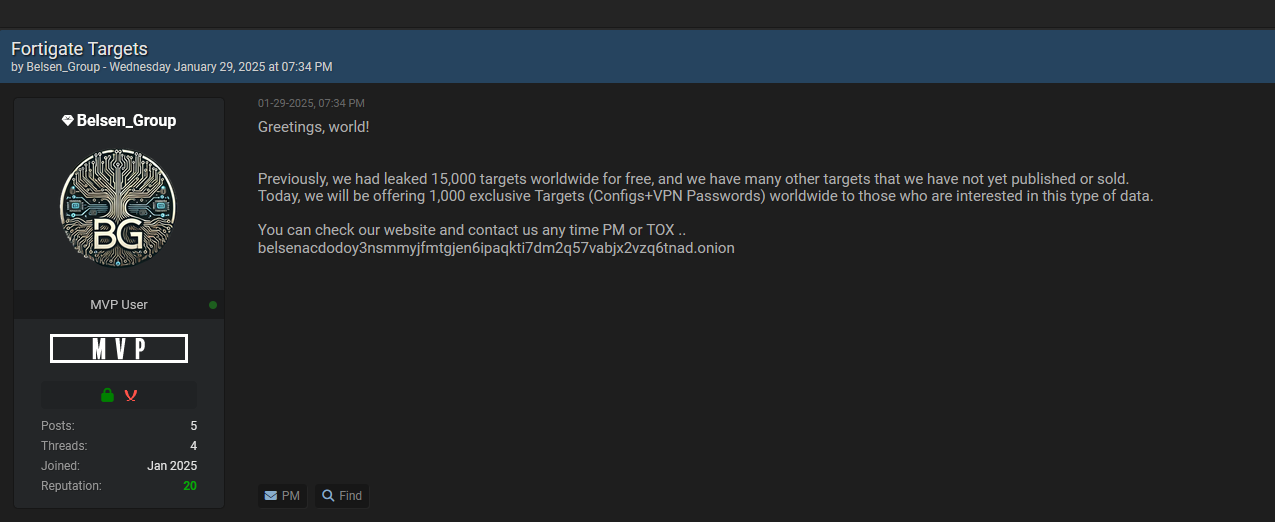
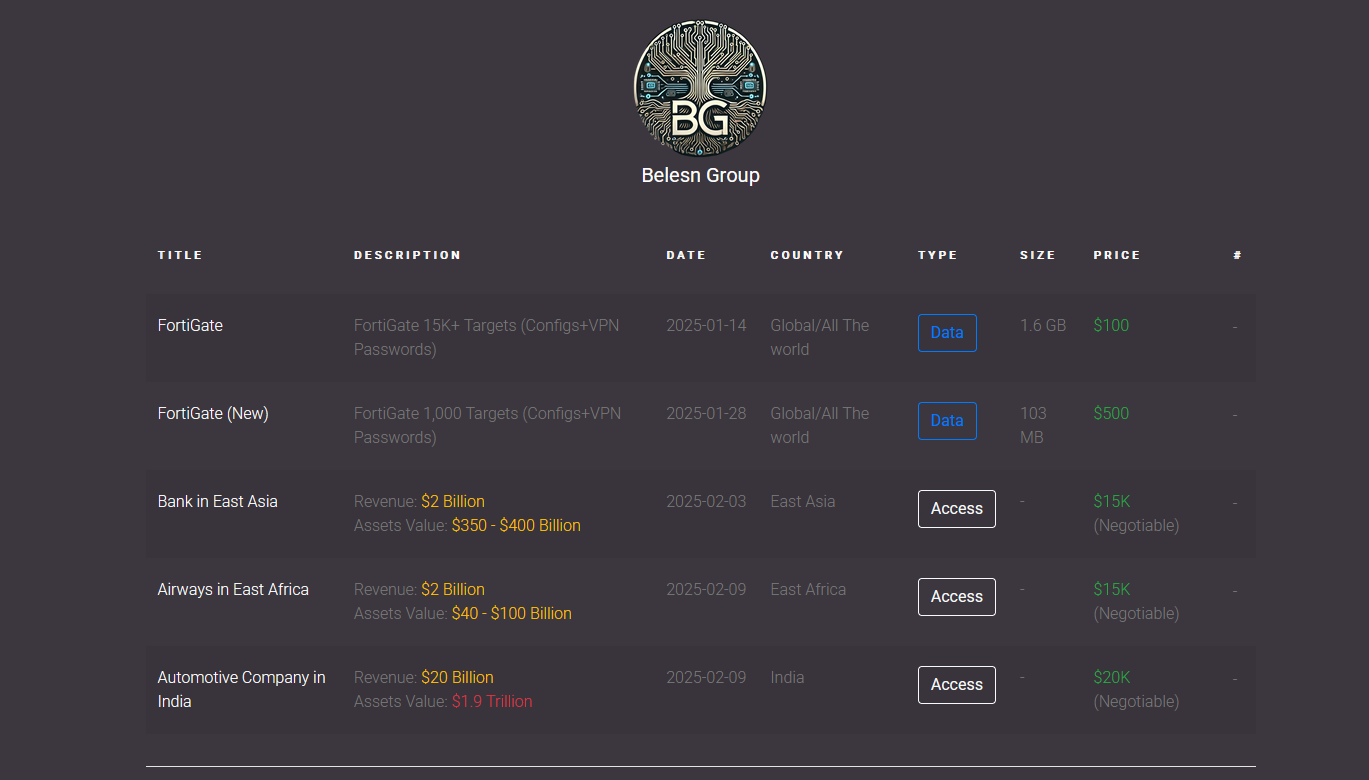
On January 29, 2025, a user of the cybercriminal forum Belsen_Group published a message claiming to hold 15,000 compromised Fortinet devices, with configuration files and VPN passwords. He now offers 1,000 exclusive targets for sale on the dark web.
However, our analysis of the files shows that Belsen_Group is not behind this compromise, but has simply recycled an older leak resulting from the exploitation of vulnerability CVE-2022-40684, a critical flaw allowing unauthenticated administrator access via HTTP/HTTPS.
========== SUMMARY ==========
Total subdirectories: 15 474
Total 'config.conf' files: 15 474
Total 'vpn-passwords.txt' files: 9 088
Total IP addresses: 15 474
Total unique IP addresses: 15 469
Total extracted email addresses: 43360 Total unique email addresses: 25601
========== AFFECTED VERSIONS ==========
Version 7.0.0 : 1 376 affected devices
Version 7.0.1 : 1 882 affected devices
Version 7.0.2 : 1 252 affected devices
Version 7.0.3 : 1 181 affected devices
Version 7.0.4 : 320 affected devices
Version 7.0.5 : 2 395 affected devices
Version 7.0.6 : 2 245 affected devices
Version 7.2.0 : 2 593 affected devices
Version 7.2.1 : 2 209 affected devices
Version 7.2.2 : 1 affected device
Unknown version: 21 affected devices (corrupted or missing files)
Fortinet had published a patch in November 2022 (FortiOS 7.0.7 and 7.2.2), which means these leaks come from a compromise that took place before that date.
Our analysis revealed two key intrusion markers, confirming a massive exploitation of CVE-2022-40684:

Marker confirmed by Fortinet as a sign of exploitation of CVE-2022-40684. Allows unauthenticated access to FortiGate systems via hidden administrative commands.
Addition of a fake administrator account ("super_admin") used to maintain permanent access.
This account is visible in the configuration files:

This account has been massively used in exploits related to CVE-2022-40684.
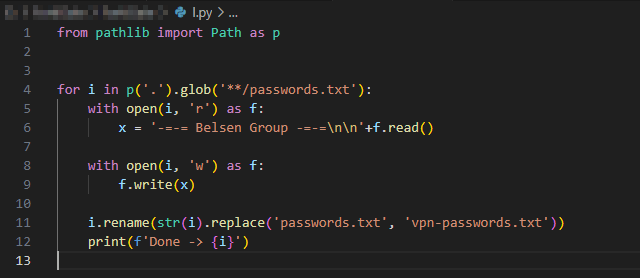
What does this script do?
Adds the "Belsen Group" signature to the first line of passwords.txt files. Renames passwords.txt files to vpn-passwords.txt.
Why does this script prove that Belsen_Group is not behind the hack?
No data theft → The script only modifies files locally, it does not exfiltrate them. Adds a visible signature "-=-= Belsen Group -=-=" to pretend to be the origin of the compromise.
This means that Belsen_Group only recovered and reused an existing leak.
Therefore, this group has no connection to the initial compromise, it merely recycles and resells already compromised accesses.
You will also find a table listing the compromised IPs, indicating:
Protect your infrastructures! Conduct an immediate audit and apply the necessary patches.
