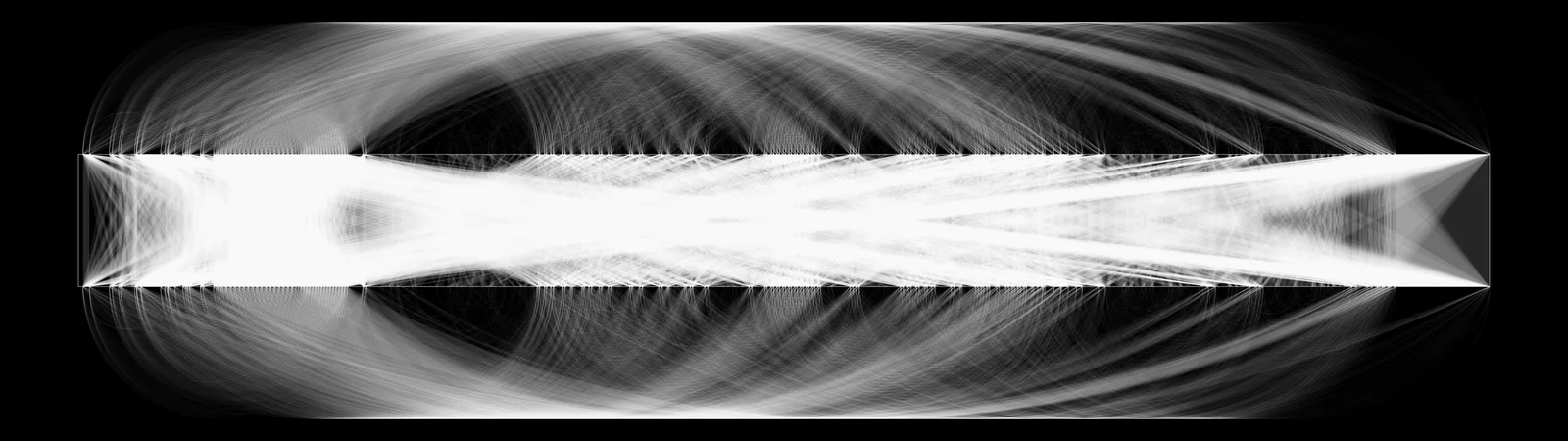
 xoreaxeaxeax/hexcymatix
Visualizes repeated byte sequences in binary files to reveal hidden structure, supporting reverse engineering and pattern discovery without predefined signatures.

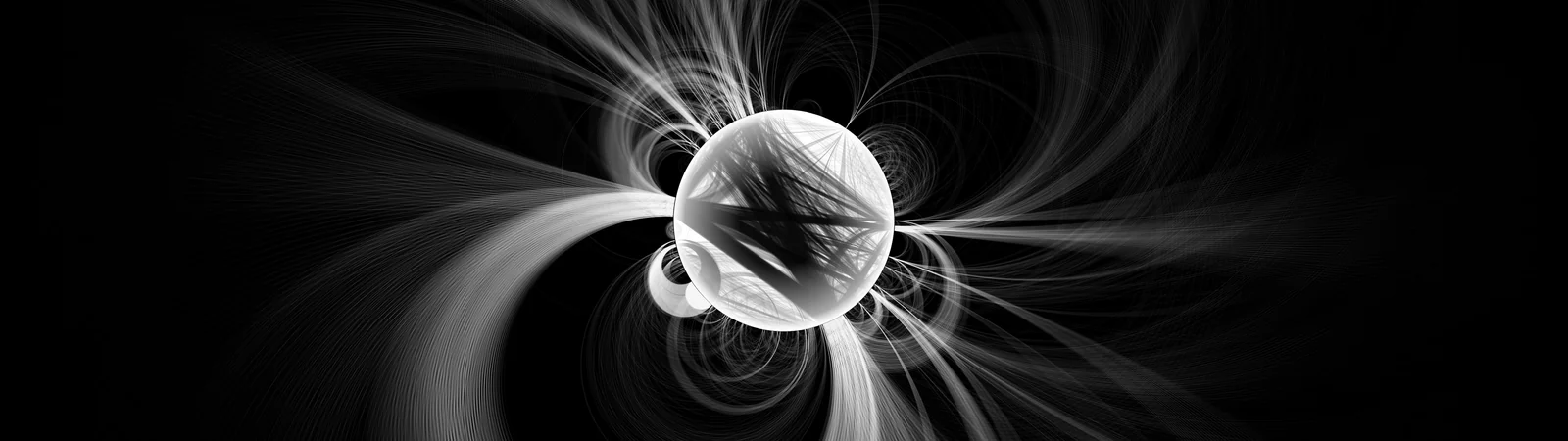
hexcymatix is an exploratory research project, loosely envisioned as a
binary reverse engineering tool for extracting structural information from
repeated byte patterns in binary files.
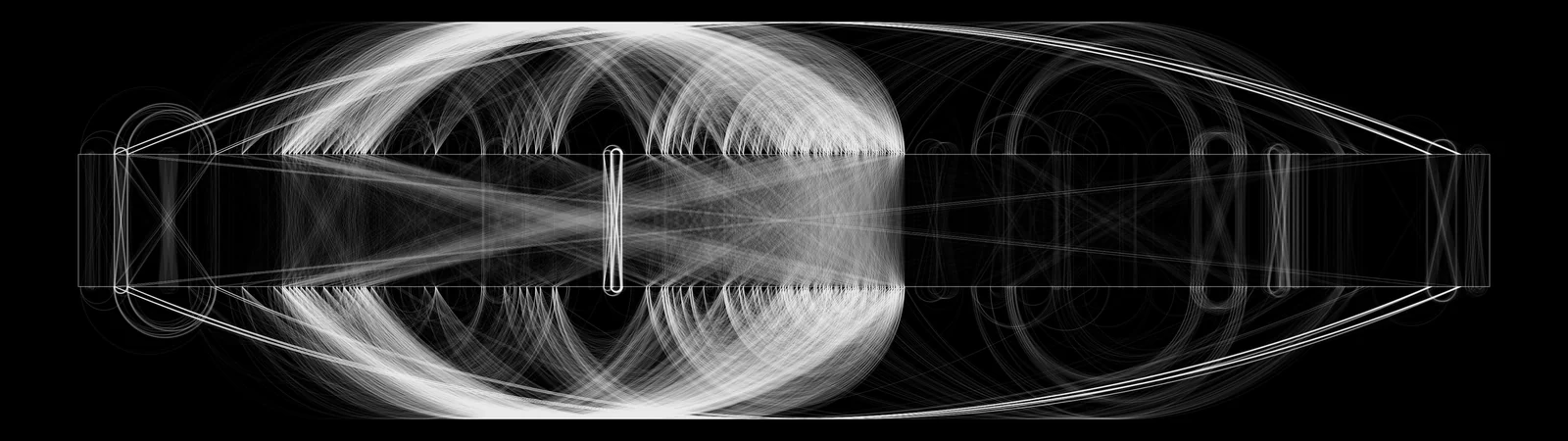
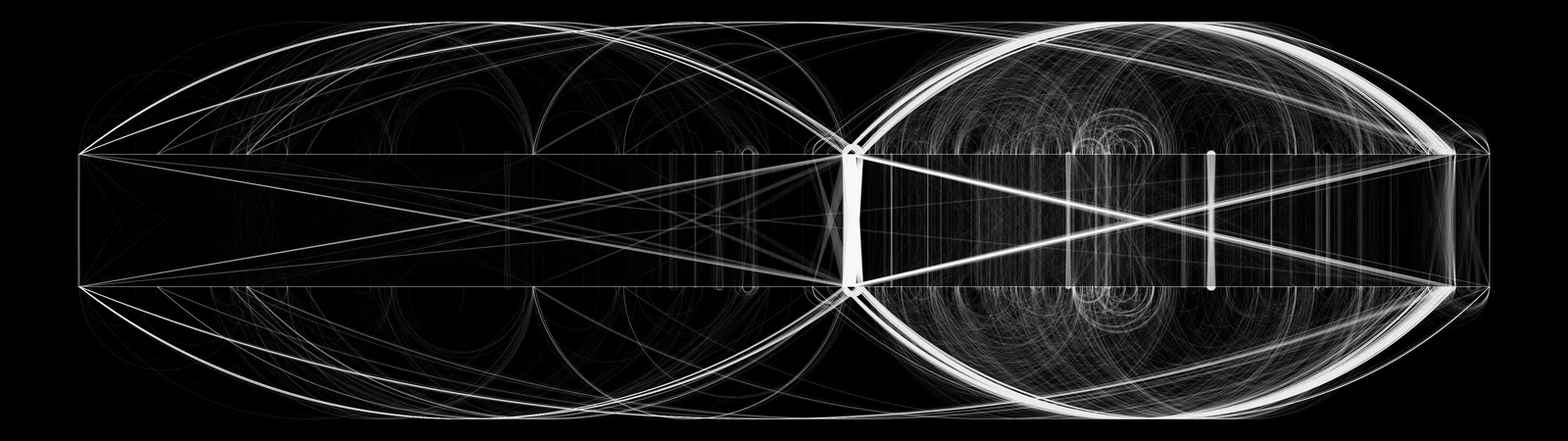
The idea never materialized into a usable tool, but still yields some fascinating representations of the striking self-symmetry in everyday data.
Sometimes in reverse engineering you have an example of some data — a table, a compressed blob, a protocol payload — and want to find similar data elsewhere in a file, without yet being able to write a rule or parser that describes it. You want similarity without specification.
hexcymatix posits that repeated byte strings imply structure or relationship,
even if we don't know what that structure is. By visualizing repetitions, we
can surface related data without knowing exactly what we're looking for.
For example, the Pensées passage below has several self-repeating sequences
(' incapable of ', ' which he ', 'ing either ') — hexcymatix lays the file out
across two lines and connects any repeated byte sequences of at least 8 bytes:
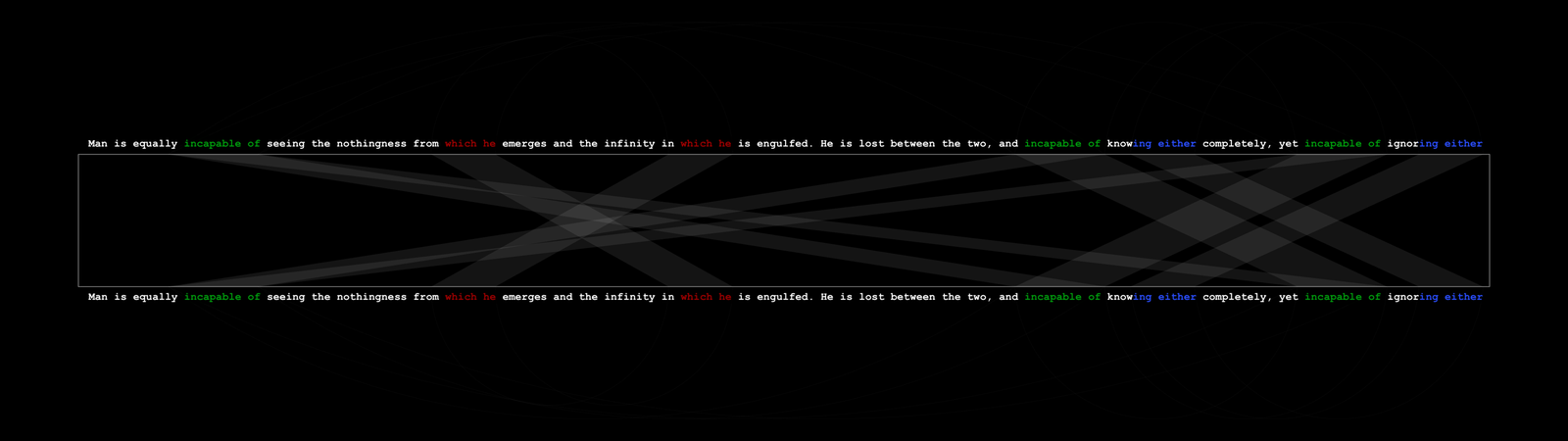
The connections that emerge then hint at underlying structure and relationships in the data.
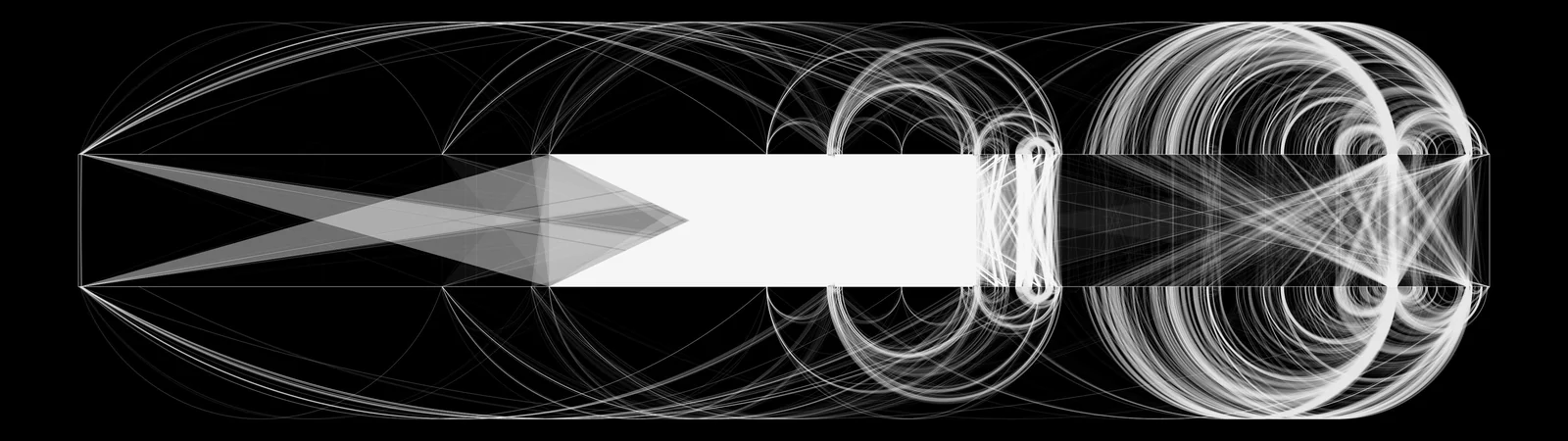
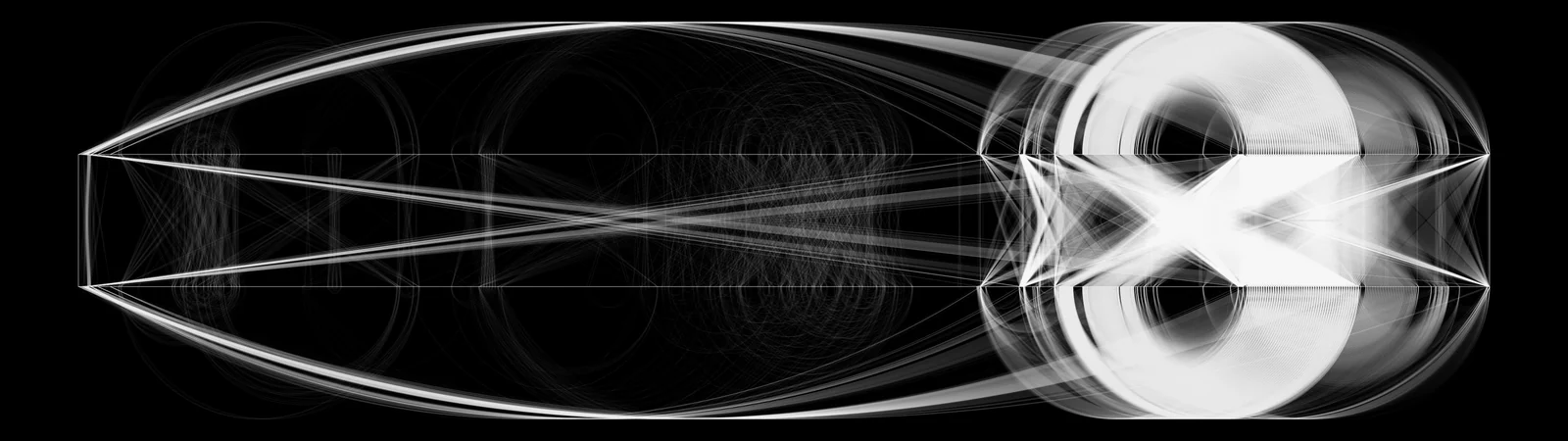
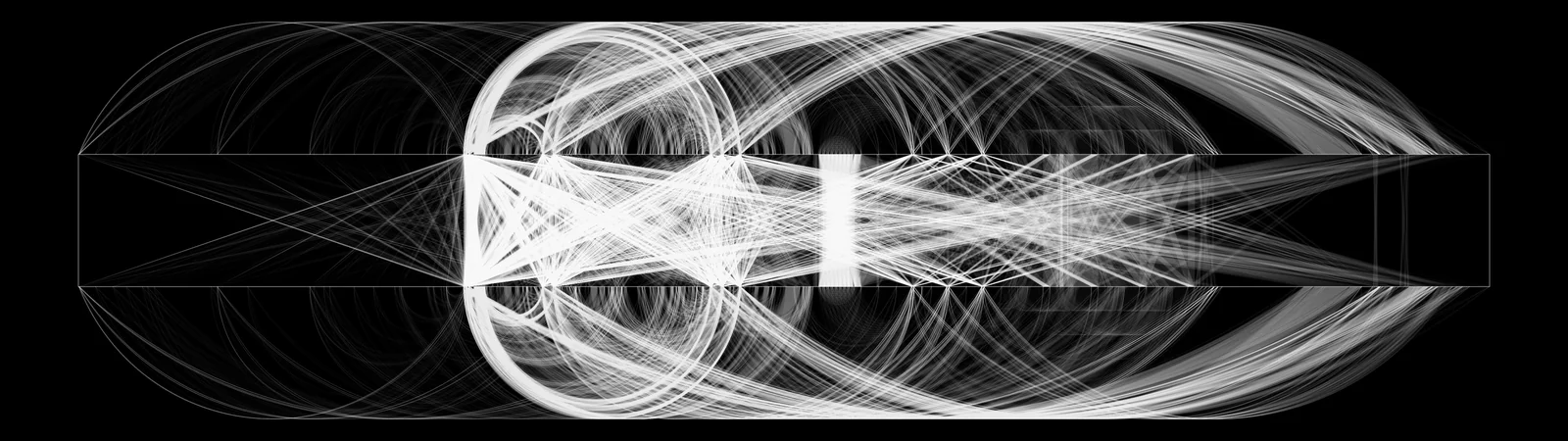
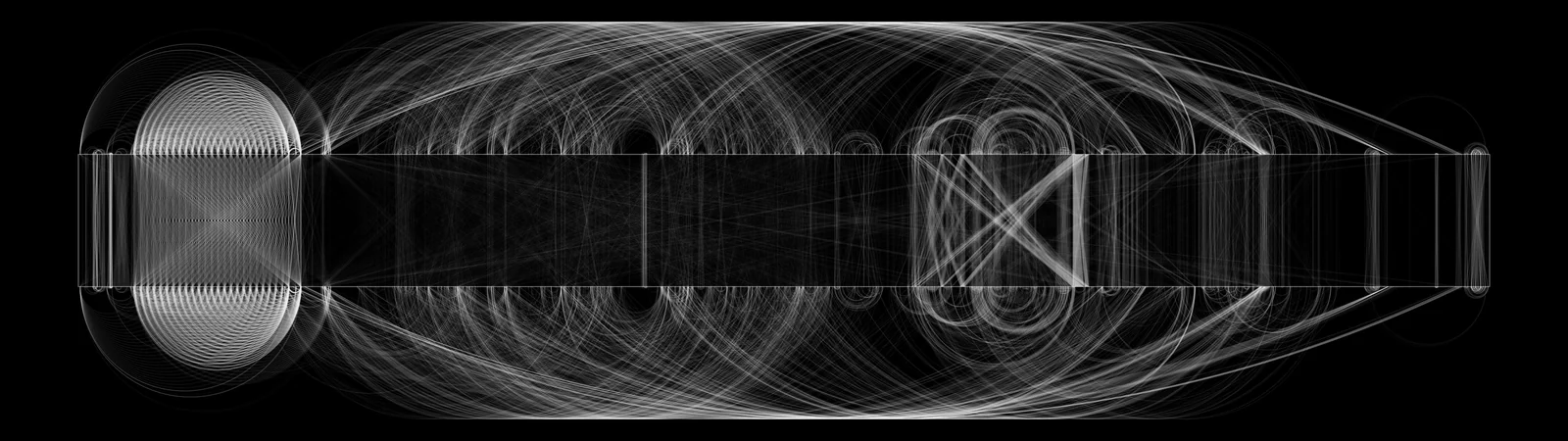
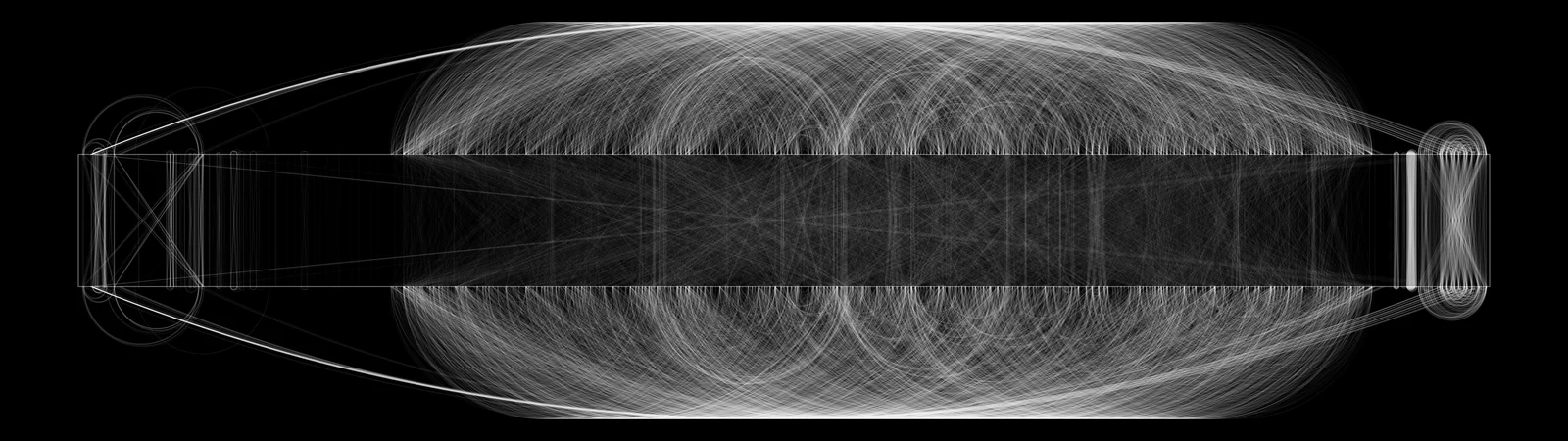
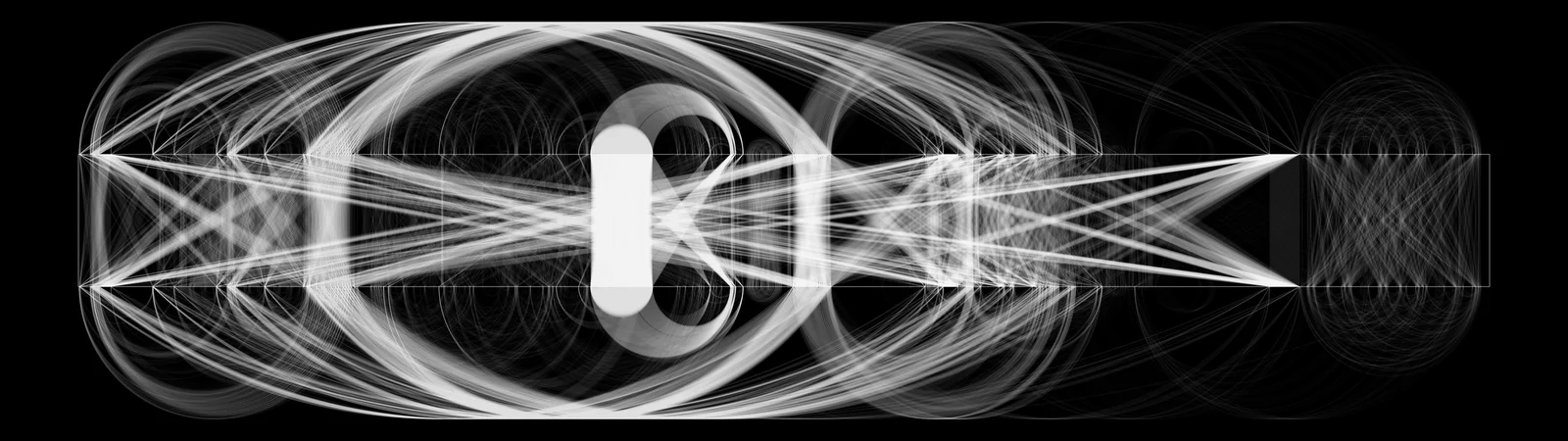
Repeating this process on an everyday binary file starts to automatically pull out unexpected self-similarity, connections, and structure. As an example, here is the error lookup executable in a standard Windows install:
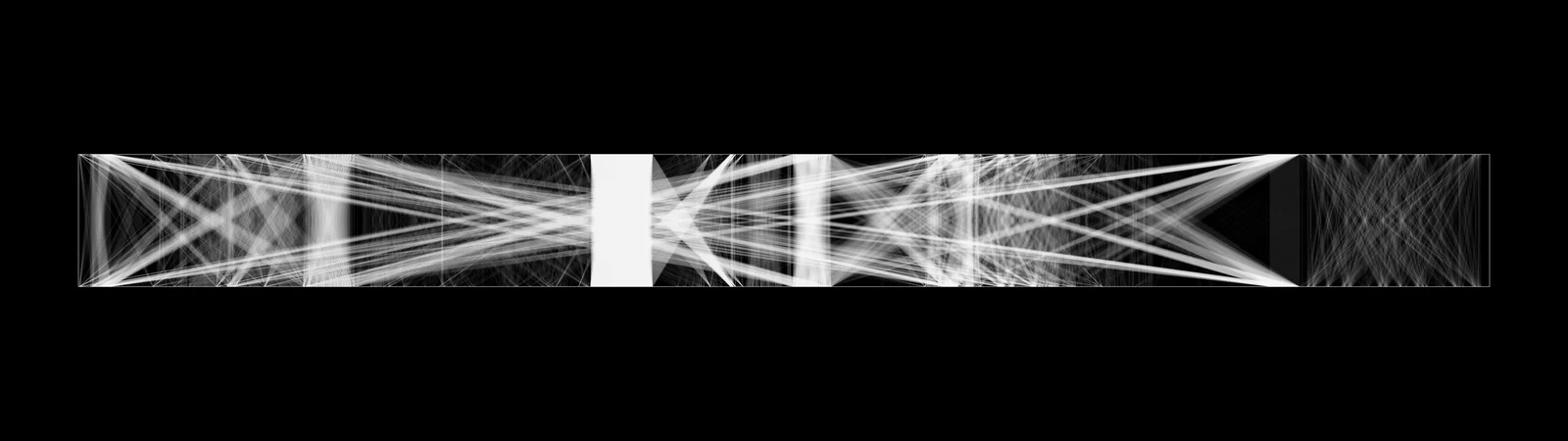
The most important part of the process is adding arcs between the fragment connections to make the output look cool:
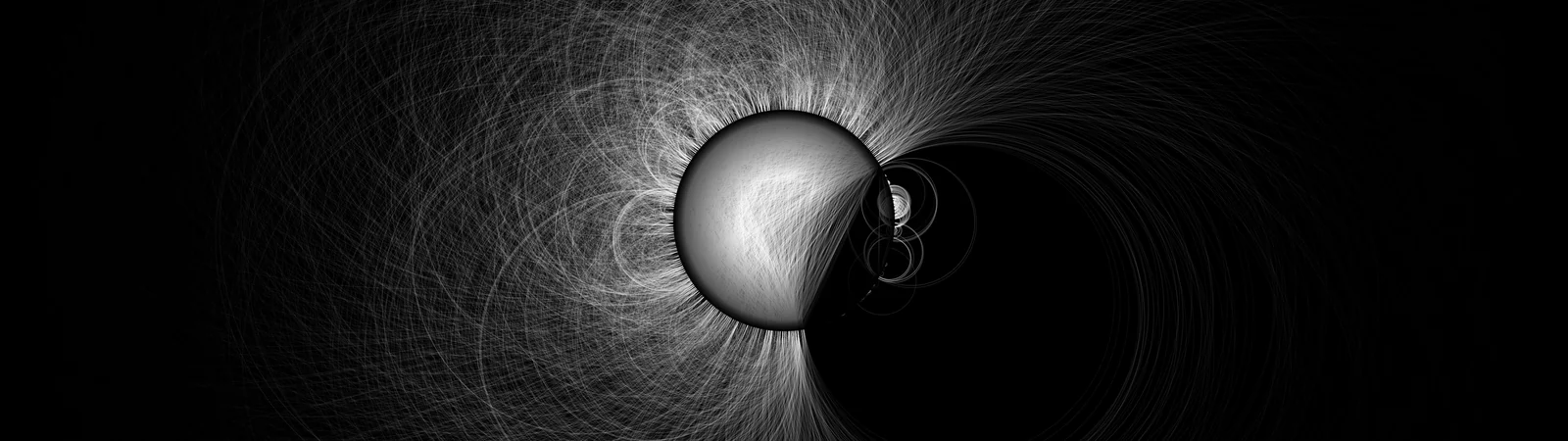
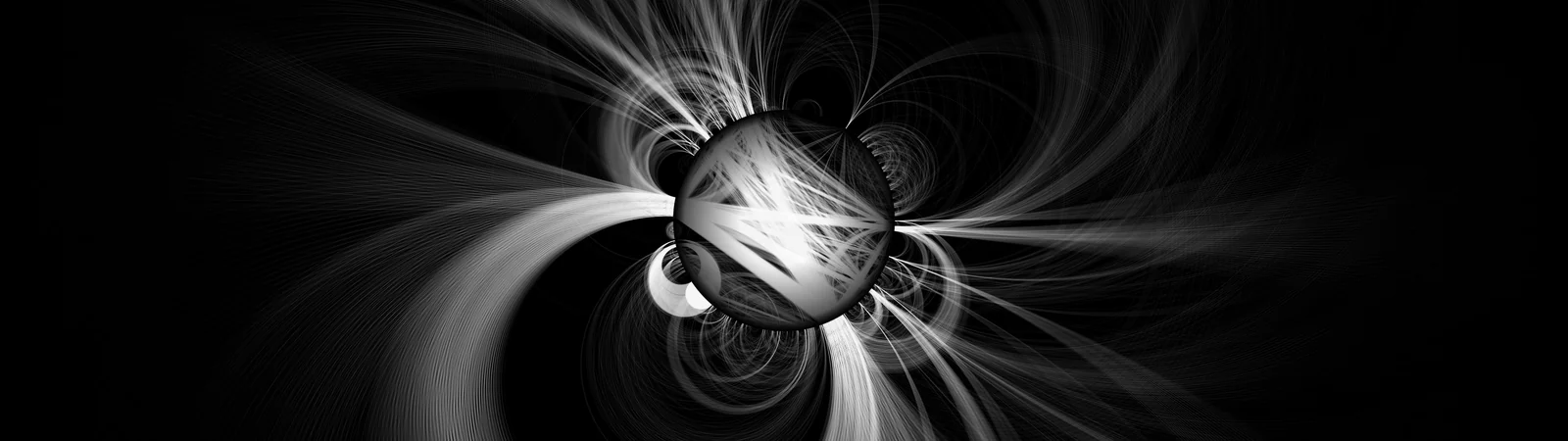
Having completely lost the plot, we can experiment with varied representations of the data. For example, the same file and connections rendered around the perimeter of a circle appears as follows:
python hexcymatix.py [options] file [file ...]
| Flag | Description |
|---|---|
--circular | Circular layout: byte offsets map to angles on a ring (default) |
--linear | Parallel-bars layout: two horizontal bars connected by crossing quads |
--top N [N ...] | Keep only the N longest fragments before rendering; pass several values to render one image per cutoff |
--no-arcs | Draw chords only, skipping the arcs (substantially faster, less visual noise) |
--resolution RES | Output resolution as WxH or a preset: 480p, 720p, 1080p, 1440p, 4k, uwfhd (2560x1080), suwfhd (3840x1080) (default: 1080p) |
--ultra | Shorthand for --resolution 4000x4000 |
--circle-fill F | Fraction of the canvas diameter used by the circle (default: 0.25, or 0.50 for the ultra-wide presets) |
--jpg | Also write an 80% quality JPEG alongside each PNG |
--output-dir DIR | Directory for output files (default: output) |
# Circular visualization of an executable
python hexcymatix.py --circular guidgen.exe

# Linear visualization, top 500 fragments only
python hexcymatix.py --linear --top 500 guidgen.exe

# Batch, 4K output
python hexcymatix.py --circular --resolution 4k *.exe