 whgojp/javaseclab
Comprehensive Java vulnerability lab with vulnerable and fixed code, attack scenarios, source/sink audit notes, and secure coding guidance for security training and tool evaluation.

 JavaSecLab - A Comprehensive Java Vulnerability Lab





JavaSecLab is a comprehensive Java vulnerability lab for application security learning, code audit practice, secure development training, and security tool evaluation. Built on Spring Boot, it provides vulnerable code, fixed implementations, realistic attack scenarios, audit-oriented source and sink notes, remediation guidance, secure coding explanations, and traffic-analysis examples.
The goal is practical: help users understand not only how a vulnerability is exploited, but also why it exists in code and how it should be fixed.
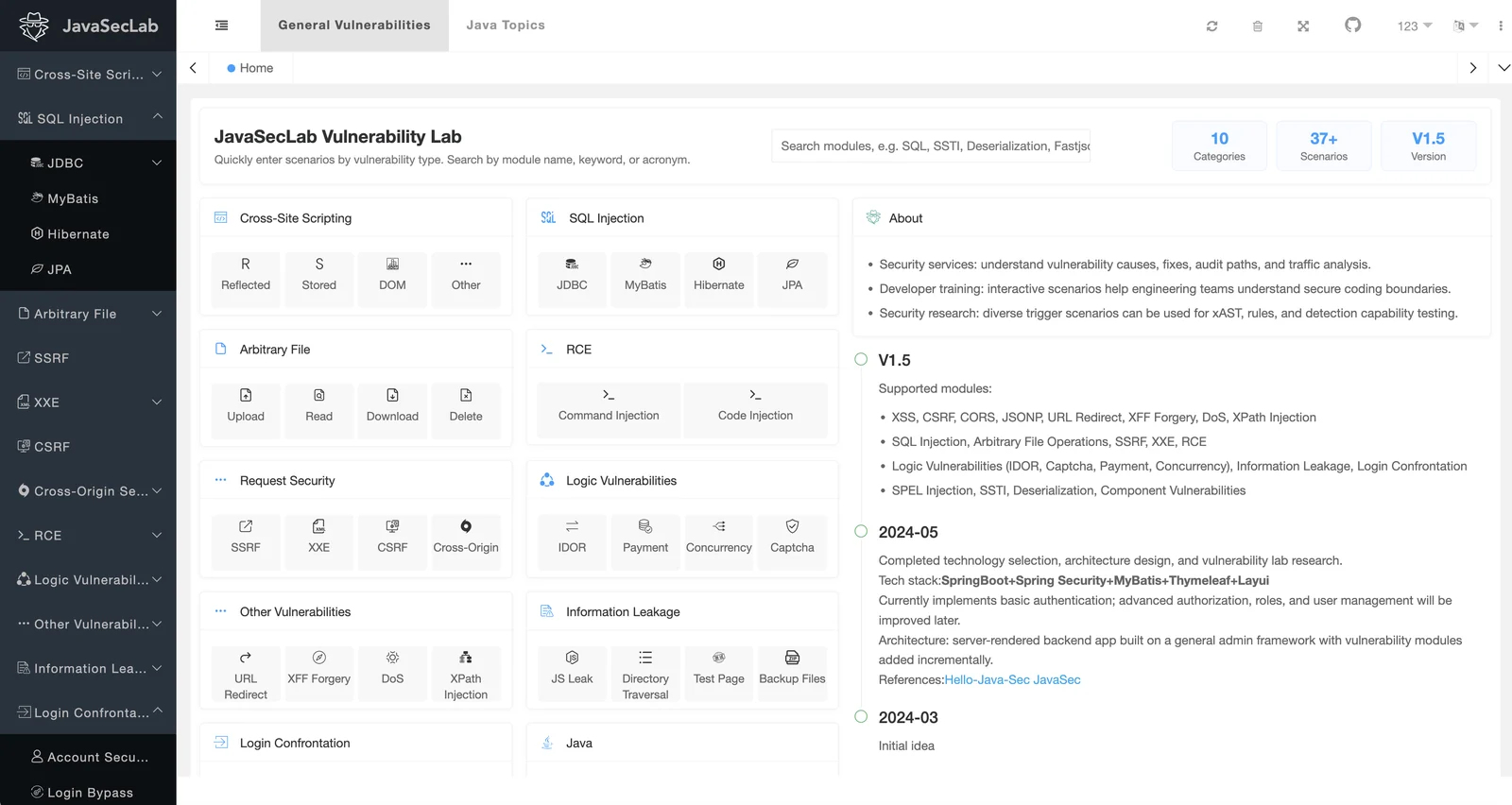
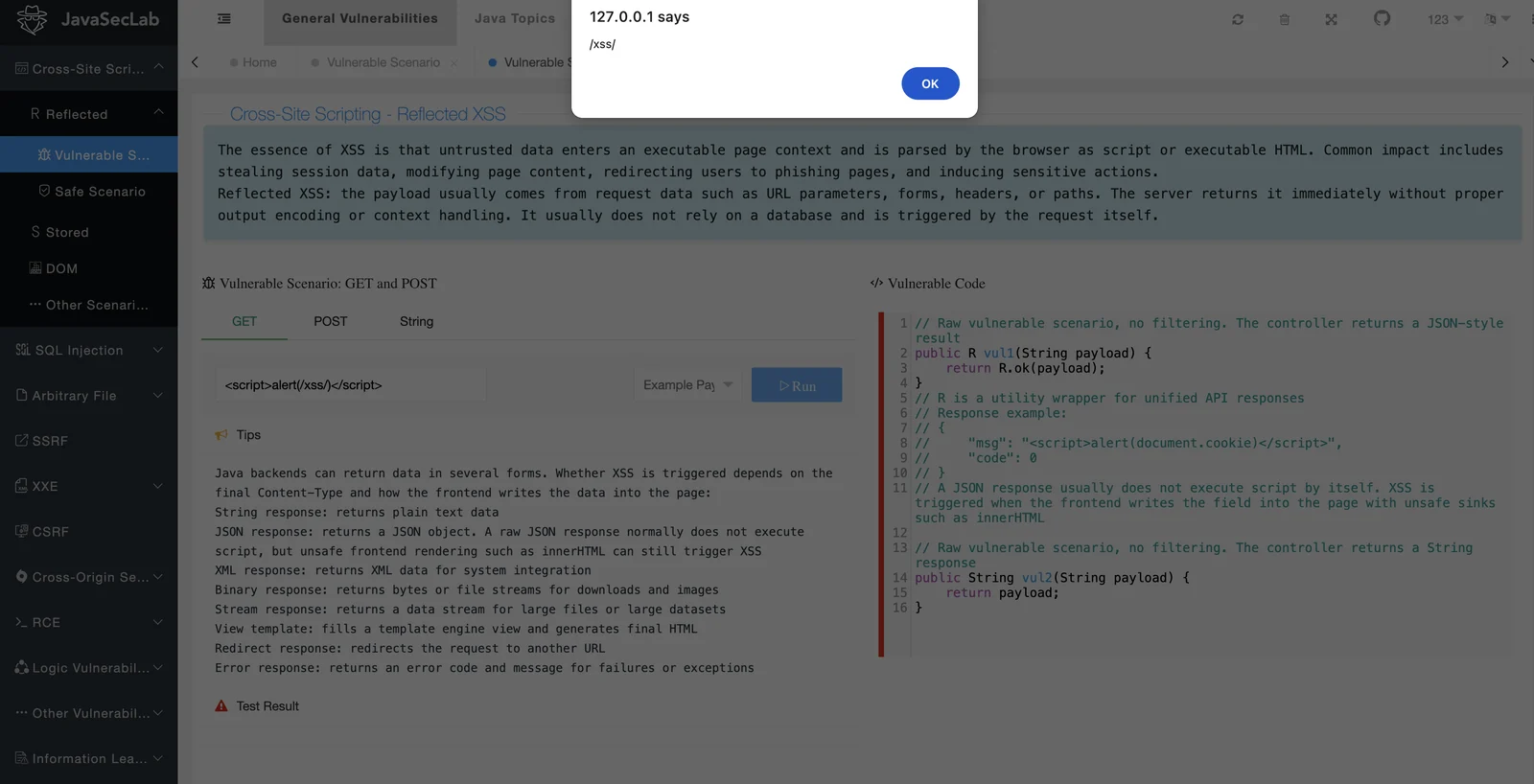
JavaSecLab covers a wide range of Java web security scenarios, including:
Demo site: http://whgojp.top/
Default account: admin/admin
JavaSecLab is intentionally vulnerable and contains dangerous endpoints, vulnerable dependencies, and insecure configurations. Run your own deployment only in an isolated environment. Do not expose it directly to the public internet.
The author has worked in enterprise security roles and experienced the full vulnerability lifecycle. After penetration tests or security assessments, vulnerabilities are often assigned to development teams through systems such as TAPD or Jira. In practice, two questions come up repeatedly:
JavaSecLab was created to connect vulnerability behavior, vulnerable code, remediation approaches, and audit thinking. Compared with a text-only report or a PoC, the project emphasizes understanding vulnerabilities from the code perspective.
In code auditing, a common workflow is to locate a sink first, such as command execution, SQL execution, file access, template rendering, deserialization, or response output. The auditor then traces backward to identify the corresponding source, such as request parameters, headers, cookies, uploaded files, serialized data, or database content. Many JavaSecLab scenarios are designed around this source-to-sink path, making them useful for both learning and tool verification.
The same vulnerability type often appears through multiple trigger paths in real systems. JavaSecLab therefore provides multiple scenarios for core vulnerability classes where possible, so users can compare how different coding patterns, framework features, and business flows affect risk.
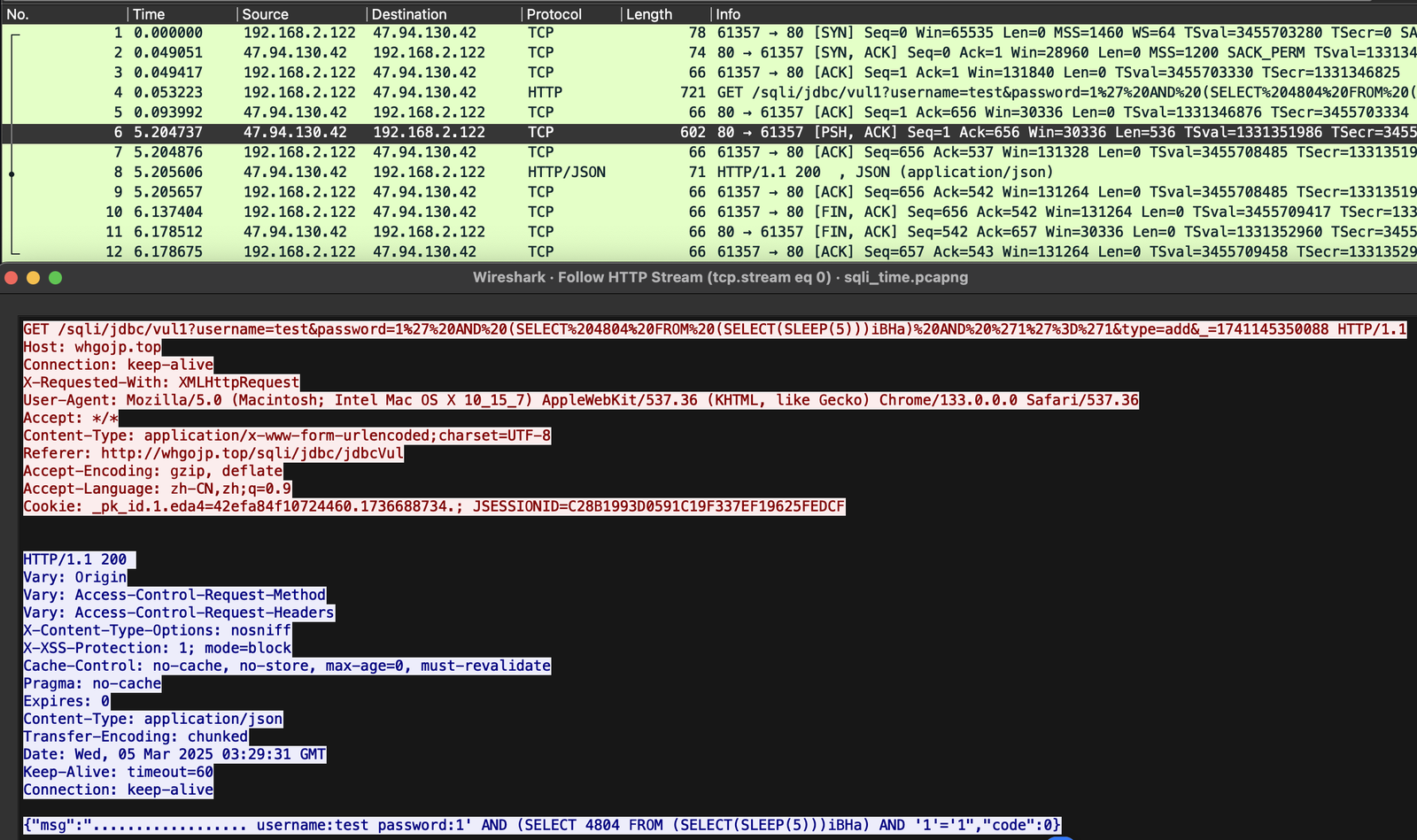
JavaSecLab includes vulnerability traffic-analysis examples to help learners connect request/response behavior with code execution. Contributions with clearer packets, better reproduction notes, or additional analysis examples are welcome.
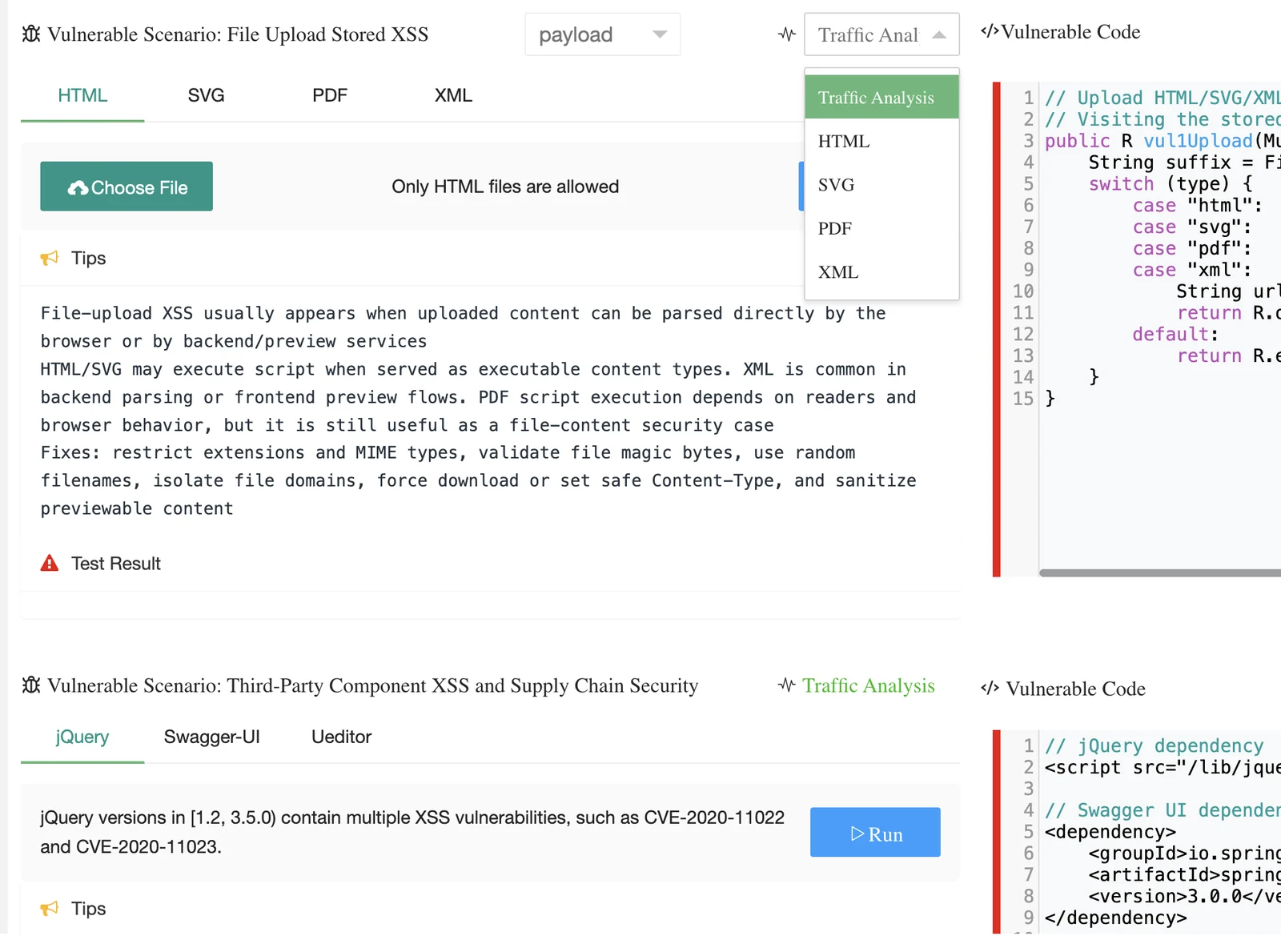
For example, in a time-based SQL injection scenario, the traffic pattern can be observed through response latency: the server responds after roughly five seconds.
Clone the repository:
git clone https://github.com/whgojp/JavaSecLab.git
cd JavaSecLab

Requirements:
Create the database and import sql/JavaSecLab.sql.
Set the active profile to dev in src/main/resources/application.yml:
spring:
  profiles:
    active: dev
Update the database connection in src/main/resources/application-dev.yml:
username: root
password: QWE123qwe
url: jdbc:mysql://localhost:13306/JavaSecLab?characterEncoding=utf8&zeroDateTimeBehavior=convertToNull&useSSL=false&useJDBCCompliantTimezoneShift=true&useLegacyDatetimeCode=false&serverTimezone=GMT%2B8&nullCatalogMeansCurrent=true&allowPublicKeyRetrieval=true&allowMultiQueries=true
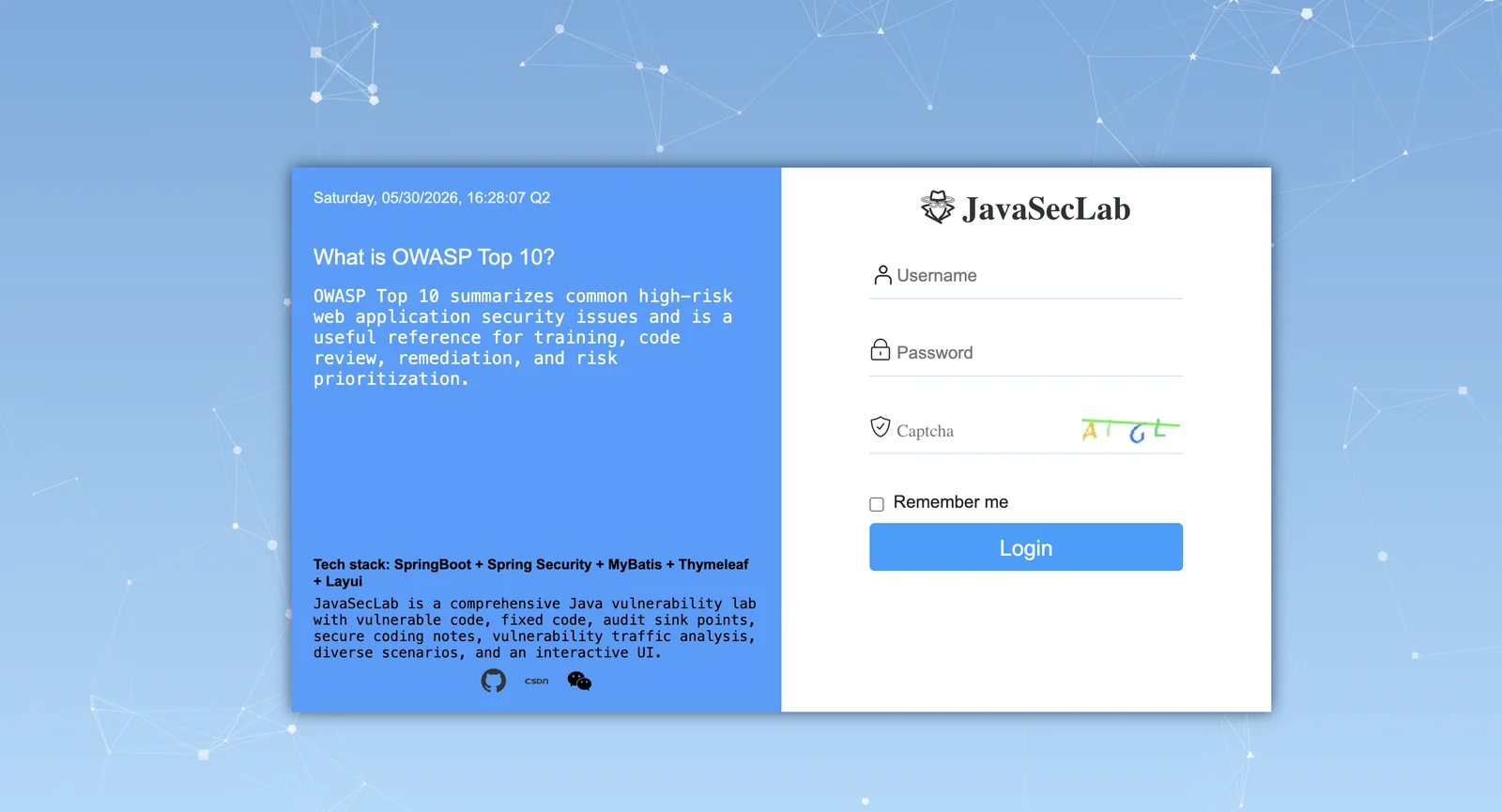
Start the application from IDEA or with Maven.
Default account: admin/admin
Requirements:
Option 1: start with the published image:
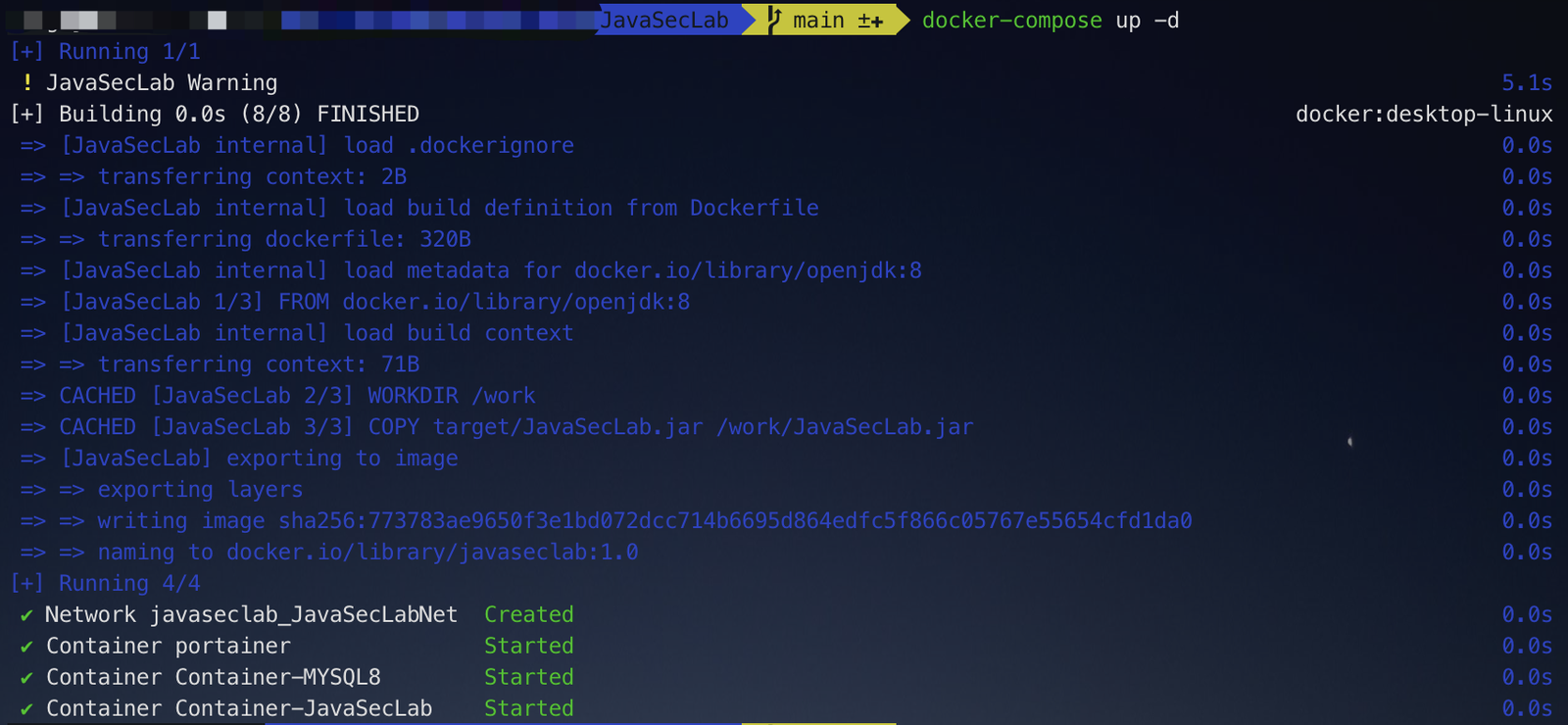
docker compose -f docker-compose.image.yml up -d
