 vulnerscom/getsploit
Search and download public exploits from the Vulners database — online, or fully offline from a local SQLite FTS5 index.

Search and download public exploits from the Vulners database — online, or fully offline from a local index.









Get an API key · Vulners search · Changelog · Architecture · Security policy
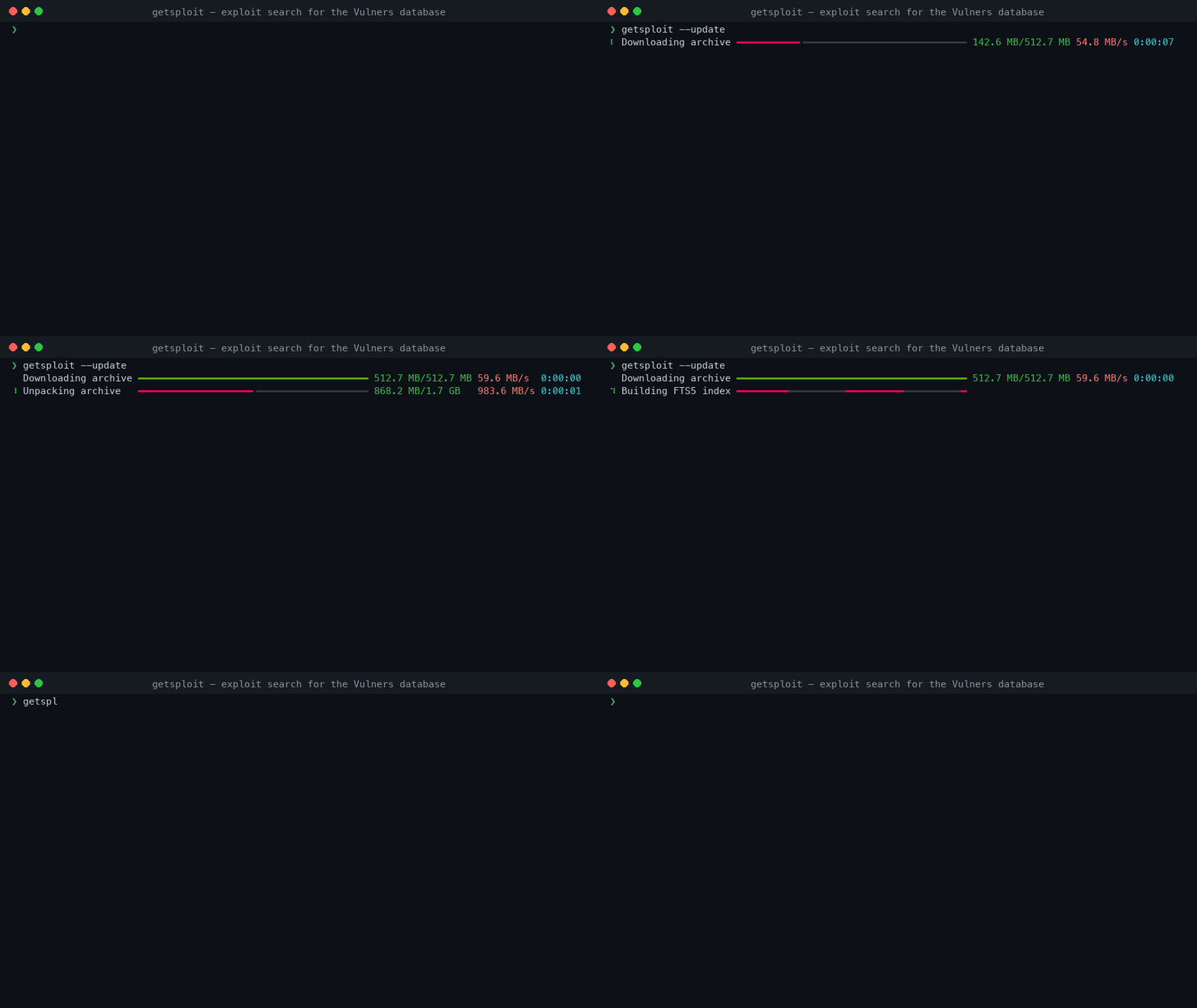
--update builds a local SQLite FTS5 index of
the whole exploit corpus; every later search is a local query.wordpress 4.7, CVE-2024-3094 and ms17-010
match literally, while a deliberate full-text expression still gets full FTS5 syntax.--mirror writes each exploit body to its own file.Getsploit needs Python 3.11 or newer.
$ pipx install getsploit
$ uv tool install getsploit
$ python -m pip install getsploit
Create a key in your Vulners account, then expose it through the environment:
$ export VULNERS_API_KEY="your-key" # pragma: allowlist secret
$env:VULNERS_API_KEY = "your-key" # pragma: allowlist secret
getsploit --set-key stores a key through a hidden confirmation prompt, in a private
file under the Getsploit home. The environment takes precedence over that file and is
the better choice for automation. There is no --api-key option: a key passed on the
command line ends up in the shell history and in the process list.
Online search and --update need a key. --local and --status do not.
$ getsploit CVE-2024-3094
$ getsploit "wordpress 4.7 remote code execution" --count 25
The query reaches Vulners unchanged, so its Lucene syntax works as documented:
$ getsploit 'title:wordpress AND description:"code execution"'
--count above 100 is paged transparently; a single API response never carries more
than 100 documents.
$ getsploit --update                 # download the archive and build the FTS5 index
$ getsploit --status                 # where it is, how big, how many documents
$ getsploit --local wordpress 4.7
Ordinary search words are matched literally, so identifiers and version numbers work as
typed: wordpress 4.7, CVE-2024-3094, ms17-010. A query that uses column filters,
boolean operators, quotes, parentheses, * or ^ is treated as an
SQLite FTS5 expression and reports its own error
when malformed:
$ getsploit --local 'title:eternalblue AND NOT description:metasploit'
Searchable columns are id, title, published, description and source_data. The
legacy sourceData: spelling is still accepted.
$ getsploit --mirror wordpress 4.7
$ getsploit --local --mirror eternalblue
Files land in a directory derived from the query, one file per exploit, created without following symlinks and never overwriting anything that already exists.
[!WARNING] Mirrored files are untrusted third-party code. Read them before running them.
$ getsploit --format json CVE-2024-3094
$ getsploit --format jsonl wordpress | jq -r .id
$ getsploit wordpress > results.tsv       # redirected output is tab-separated
--json remains an alias for --format json.
$ getsploit --color always query | less -R
$ getsploit --color never query
Colour defaults to auto. A wide terminal gets a table, a narrow one gets stacked
records, and a redirected stream gets tab-separated values — the same data in all three.
Run getsploit --help for the full option list.
| Location | ~/.getsploit/getsploit.db, or $GETSPLOIT_HOME |
| Format | SQLite with an external-content FTS5 index |
| Tokenizer | unicode61 remove_diacritics 2 |
| Size | roughly 1.7 GB for the full corpus |
| Update | atomic: the new database replaces the old one in a single operation |
An update downloads the archive over eight parallel range connections, unpacks and converts it beside the destination, verifies it, and only then commits. Memory use does not depend on the size of the archive. A search already running against the old database finishes against it undisturbed.
Databases built by Getsploit 2.x remain searchable; the next --update migrates them
from FTS4 to FTS5. FTS4 proximity expressions such as one NEAR/5 two must be rewritten
in the FTS5 NEAR(...) form.
| Python | 3.11, 3.12, 3.13, 3.14 |
| Operating systems | Linux, macOS, Windows |
| Vulners SDK | 4.1 and newer 4.x |
| Runtime dependencies | click, rich, vulners |
$ git clone https://github.com/vulnersCom/getsploit.git
$ cd getsploit
$ uv sync --all-groups
$ make check
