 vouch/vouch-proxy
an SSO and OAuth / OIDC login solution for Nginx using the auth_request module



An SSO solution for Nginx using the auth_request module. Vouch Proxy can protect all of your websites at once.
Vouch Proxy supports many OAuth and OIDC login providers and can enforce authentication to...
Please do let us know when you have deployed Vouch Proxy with your preffered IdP or library so we can update the list.
If Vouch is running on the same host as the Nginx reverse proxy the response time from the /validate endpoint to Nginx should be less than 1ms.
Vouch Proxy (VP) forces visitors to login and authenticate with an IdP (such as one of the services listed above) before allowing them access to a website.
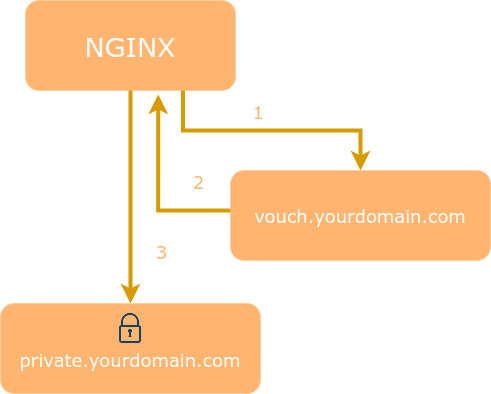
VP can also be used as a Single Sign On (SSO) solution to protect all web applications in the same domain.
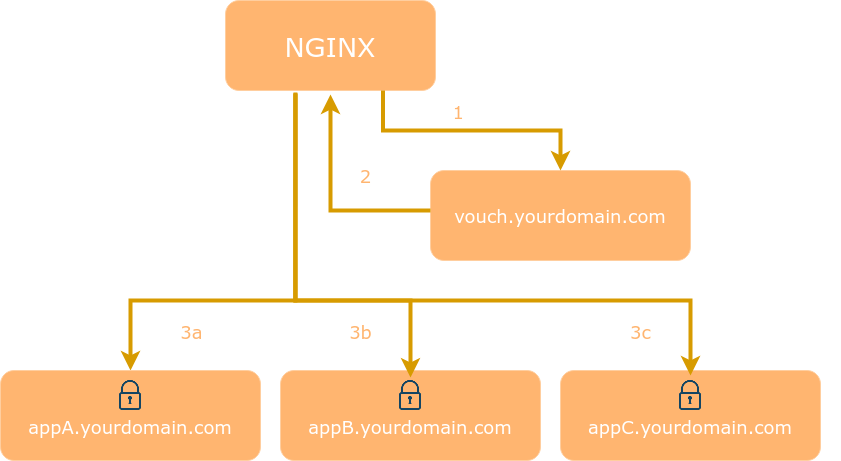
After a visitor logs in Vouch Proxy allows access to the protected websites for several hours. Every request is checked by VP to ensure that it is valid.
VP can send the visitor's email, name and other information which the IdP provides (including access tokens) to the web application as HTTP headers. VP can be used to replace application user management entirely.
Vouch Proxy relies on the ability to share a cookie between the Vouch Proxy server and the application it's protecting. Typically this will be done by running Vouch on a subdomain such as vouch.yourdomain.com with apps running at app1.yourdomain.com and app2.yourdomain.com. The protected domain is .yourdomain.com and the Vouch Proxy cookie must be set in this domain by setting vouch.domains to include yourdomain.com or sometimes by setting vouch.cookie.domain to yourdomain.com.
cp ./config/config.yml_example_$OAUTH_PROVIDER ./config/config.yml/auth endpointThe following Nginx config assumes..
vouch.yourdomain.com and protectedapp.yourdomain.com are running on the same serverhttps and have valid certs (if not, change to listen 80 and set vouch.cookie.secure to false)server {
listen 443 ssl http2;
server_name protectedapp.yourdomain.com;
root /var/www/html/;
ssl_certificate /etc/letsencrypt/live/protectedapp.yourdomain.com/fullchain.pem;
ssl_certificate_key /etc/letsencrypt/live/protectedapp.yourdomain.com/privkey.pem;
# send all requests to the `/validate` endpoint for authorization
auth_request /validate;
location = /validate {
# forward the /validate request to Vouch Proxy
proxy_pass http://127.0.0.1:9090/validate;
# be sure to pass the original host header
proxy_set_header Host $http_host;
# Vouch Proxy only acts on the request headers
proxy_pass_request_body off;
proxy_set_header Content-Length "";






