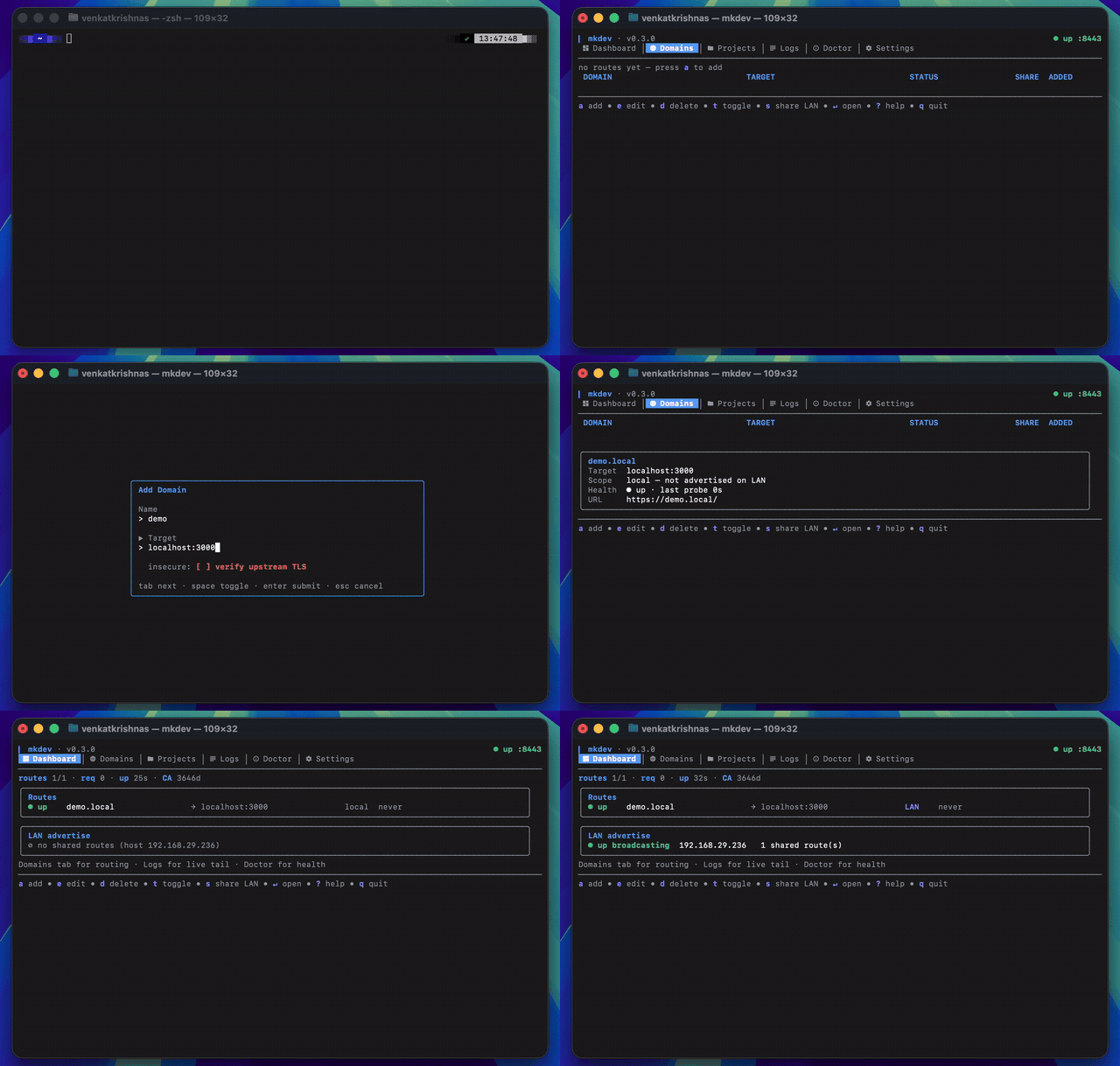

Trusted localhost HTTPS — local CA, /etc/hosts, mDNS LAN sharing, reverse proxy. Maps https://name.local → localhost:port
Real HTTPS for local dev — with a TUI and LAN sharing.
mkdev runs trusted HTTPS on *.local. A single Go binary: cert authority + reverse proxy + /etc/hosts + mDNS broadcast + a full TUI.
What makes it different:
https://app.local from your phone or any device on the same Wi-Fi.mkdev with no args drops you in.internal/safeexec). No PATH-based shadowing, no group-writable shortcuts.knownHost allow-list. Not wildcard, not pre-baked.mkdev install # CA + trust + daemon service + menu bar autostart
mkdev add myapp localhost:3000 # routes https://myapp.local → localhost:3000
curl https://myapp.local # 200 from your local app
install is one-shot: generates the CA, trusts it in the system store, installs and enables the daemon user-service (launchd / systemd), registers the menu bar to launch on login, and spawns the bar immediately when a GUI session is present. The daemon owns the proxy; the TUI (mkdev no args) and mkdev add | remove | list talk to it over ~/.mkdev/daemon.sock.
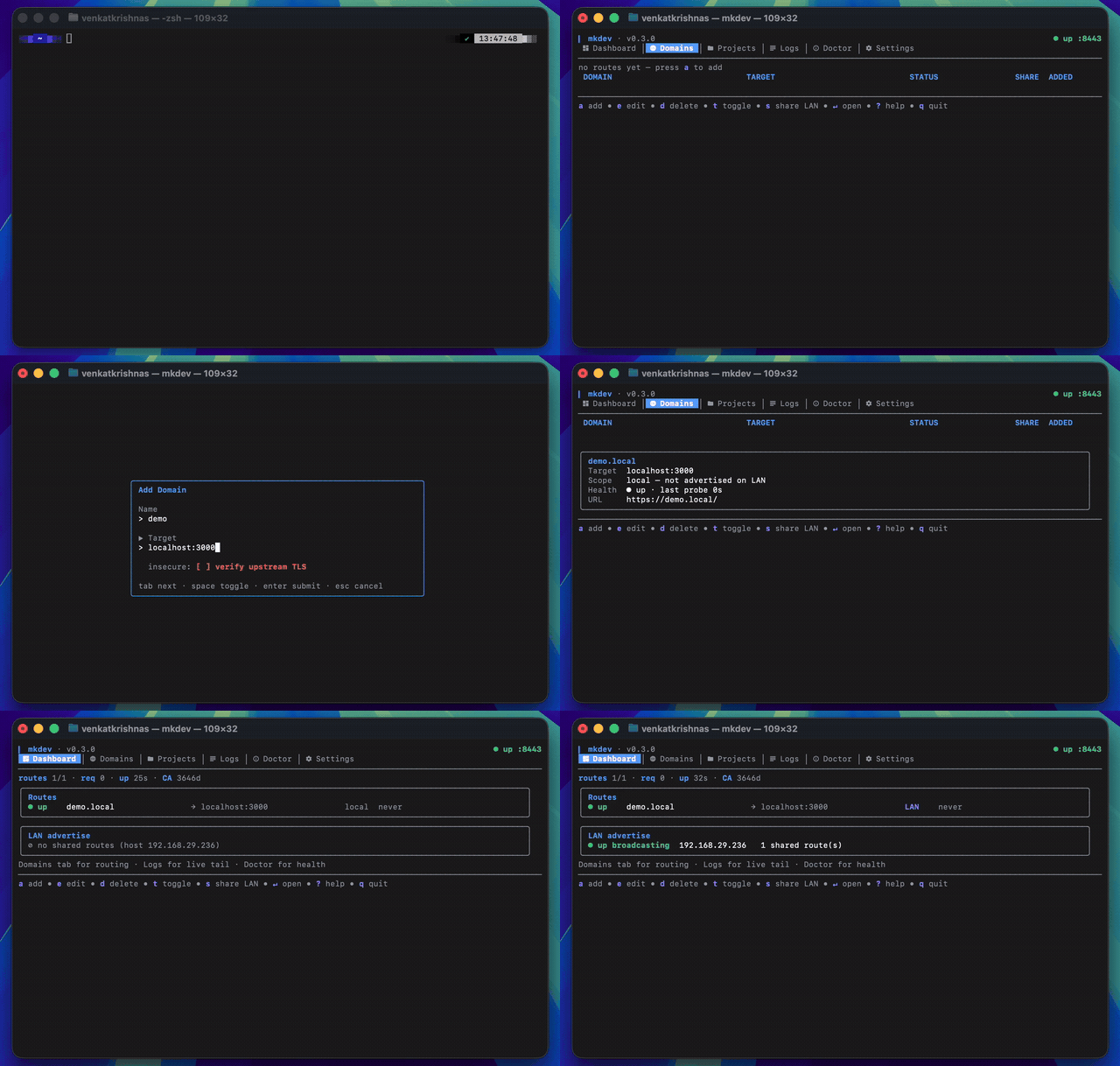
mkdev's headline feature. Share a route to any device on the same Wi-Fi with real TLS — no warnings, no tunnel service.
s to flip the SHARE column to LAN.<name>.local → this machine's LAN IP.https://<name>.local. Once the device trusts the mkdev CA (one-time), no warnings..local routes broadcast over mDNS. Other TLDs still proxy but aren't LAN-reachable by name.s is live — mDNS advertising and the LAN-side ACL update on the next request. No restart.brew install venkatkrishna07/tap/mkdev
Upgrade later:
brew update
brew upgrade mkdev
go install github.com/venkatkrishna07/mkdev/cmd/mkdev@latest
Upgrade to a specific version:
go install github.com/venkatkrishna07/mkdev/cmd/[email protected]
Pre-built binaries for macOS (Intel + Apple Silicon), Linux (amd64 + arm64), and Windows (amd64) are published on the Releases page. Each release includes checksums.txt plus a cosign keyless signature (checksums.txt.sig + .pem) — see SECURITY.md#verifying-releases for the verify command.
On macOS, if Gatekeeper blocks a direct-download binary:
xattr -d com.apple.quarantine ./mkdev
git clone https://github.com/venkatkrishna07/mkdev.git
cd mkdev
task build
cp bin/mkdev ~/bin/ # or /usr/local/bin
Requires Go 1.25+.
mkdev install # CA, trust, daemon service, bar autostart — one command
mkdev # launch TUI
After install, the daemon runs in the background and the menu bar appears (macOS, Linux GNOME/KDE, Windows). The bar shows daemon status, route list, and per-route enable / LAN-share toggles; Quit exits the bar without stopping the daemon.
The bar is the always-on UI. It lives in the system tray and talks to the daemon over ~/.mkdev/daemon.sock. Launches on login (autostart registered by install); also runnable foreground with mkdev bar.
What it shows:
mkdev v0.4.0 + daemon PID + uptime + listening proxy port.name.tld → target plus suffix badges ( · disabled, · LAN).What it does (click on a route):
https://name.tld with the system default handler.pbcopy / wl-copy / xclip / clip.exe).Enabled flag. Disabled routes stay in the store but stop being proxied.Bar-level actions:
DisableUnit first so launchd / systemd KeepAlive doesn't immediately respawn it, then sends shutdown over the socket.Notes:
mkdev daemon stop) cleanly stop the supervised daemon — killing the daemon process directly will get it respawned by launchd / systemd.Replace the binary (brew upgrade / go install ...@latest / new download). The next time you run any mkdev subcommand, the binary reconciles the parts that live outside it: rewrites the daemon plist / systemd unit and bar autostart entry to point at the new binary, re-asserts /etc/hosts for enabled routes, and re-trusts the CA if it was dropped. Sudo prompts run inline. If you only have the daemon running and never touch the CLI, the daemon does the safe (no-sudo) bits on its own startup and queues the rest until the next CLI command.
Re-running mkdev install does the same thing explicitly and is always safe — every step is idempotent.
Linux distros detected: Debian/Ubuntu (/usr/local/share/ca-certificates), RHEL/Fedora (/etc/pki/ca-trust/source/anchors), Arch (/etc/ca-certificates/trust-source/anchors), openSUSE (/usr/share/pki/trust/anchors).
Firefox uses its own NSS store and is not yet covered — system Chrome/Safari/Edge/curl/wget all work.
<target> accepts any of:
host:port e.g. localhost:3000
http://host[:port]/path e.g. http://localhost:3000/api
https://host[:port]/path e.g. https://gitlab.example.com
For HTTPS upstreams (e.g., a private GitLab on a corporate VPN) the upstream's TLS cert must verify against the system trust store. Private CAs need their root added to the OS keychain.
hosts-helper is not meant to be called directly. add / remove re-invoke the same binary under sudo to perform the privileged /etc/hosts write.
TLD note.
.localroutes need an mDNS responder (always-on on macOS, available on Linux whennss-mdnsis installed)..test/.dev/.localhostwork everywhere via/etc/hostsalone. Settldin config to match.
Config lives at ~/.mkdev/config.toml. Defaults:
tld = ".local" # appended to bare names in `add`
proxy_port = 443 # binding :443 requires sudo on serve
theme = "auto" # reserved for future TUI
log_retention = "7d" # reserved
log_max_size = "100MB" # reserved
Override the config directory with --home <path> or MKDEV_HOME=....
~/.mkdev/ca/. The private key is mode 0o400.security), Linux CA-bundle directory + update-ca-*, Windows ROOT store via crypt32.dll. Trust-store integration is adapted from mkcert (BSD-3) — see LICENSE-MKCERT.add, the daemon writes a route to a bbolt KV at ~/.mkdev/state.db and appends a 127.0.0.1 <name>.<tld> line to /etc/hosts via a sudo-invoked helper subcommand.This tool installs a private CA into your system trust store. Anyone with read access to ~/.mkdev/ca/rootCA-key.pem can mint TLS certs that your machine will trust. The key is created 0o400 (owner read only).
0.0.0.0, but a connection-source ACL 403s LAN requests to any route not explicitly marked shared. Loopback always passes.add / remove invoke sudo to mutate /etc/hosts. See SECURITY.md for the threat model and a known limit around os.Executable()-resolved helper paths.mkdev uninstall # stops + disables daemon, untrusts CA, clears /etc/hosts,
# removes daemon service + bar autostart, wipes ~/.mkdev/
If something gets stuck, open Keychain Access.app, search for mkdev, and delete by hand. Then grep mkdev /etc/hosts and clean any leftovers.
The daemon owns the proxy and the route store. It exposes a local HTTP API on ~/.mkdev/daemon.sock (owner-only 0600). The TUI, CLI subcommands, and menu bar are all clients of the daemon — only the daemon holds the bbolt lock.
mkdev install installs the daemon as a user-service (launchd LaunchAgent on macOS, systemd --user on Linux) and enables it. It runs in the background and survives logout / login.
mkdev daemon status # installed / enabled / running
mkdev daemon stop # stop + disable (prevents respawn)
curl --unix-socket ~/.mkdev/daemon.sock http://x/v1/status
curl --unix-socket ~/.mkdev/daemon.sock http://x/v1/routes
curl --unix-socket ~/.mkdev/daemon.sock -X POST http://x/v1/routes \
-H 'Content-Type: application/json' \
-d '{"name":"foo","target":"localhost:3000"}'
curl --unix-socket ~/.mkdev/daemon.sock -X DELETE http://x/v1/routes/foo
Next:
/api → 8080, /ws → 9000 on a single domain).~/.mkdev/ca/rootCA.pem manually under Settings → Privacy & Security → Certificates → View Certificates → Authorities → Import.proxy_port = 8443 in ~/.mkdev/config.toml and use https://name.local:8443.mkdev add keeps asking for sudo. Sudo's per-session cache expires (default 5 min). Use the TUI Domains tab instead — it elevates via osascript (macOS GUI prompt) or pkexec (Linux Polkit)./etc/hosts already has an entry for that name. mkdev add is idempotent and only appends when no mkdev-managed entry exists. Remove the prior entry by hand or pick a different name.See CONTRIBUTING.md.
mkdev's trust-store integration — Keychain/security on macOS, CA-bundle + update-ca-* on Linux, crypt32.dll ROOT store on Windows, and the NSS adjacent paths — is adapted from mkcert by Filippo Valsorda, BSD-3. Without that prior art, this project would be substantially harder. See LICENSE-MKCERT for the upstream license.
The TUI is built with Charmbracelet's Bubble Tea / Bubbles / Lipgloss. mDNS via hashicorp/mdns. Local KV via bbolt.
MIT LICENSE.
| Platform | Trust store | Elevation |
|---|
| macOS | System Keychain (security add-trusted-cert) | sudo / osascript |
| Linux | update-ca-trust / update-ca-certificates / trust extract-compat | sudo / pkexec |
| Windows | ROOT system store via crypt32.dll | UAC (PowerShell RunAs) |
| Command | Purpose |
|---|
install | One-shot: CA + trust + daemon service + bar autostart. Pass --no-service for CA-only. |
add <name> <target> | Add route. Appends a 127.0.0.1 entry to /etc/hosts. |
remove <name> | Remove route and its /etc/hosts entry. |
list | List routes in the store. |
tui | Launch the TUI (also the default when run with no args). |
daemon serve | Run the daemon in the foreground (normally driven by the service unit). |
daemon stop | Stop the running daemon and disable the user-service. |
daemon status | Report installed / enabled / running state of the service. |
bar | Launch the menu bar app. Autostarted by install. |
uninstall | Untrust CA, remove /etc/hosts entries, uninstall daemon + bar autostart, wipe ~/.mkdev/. |
version | Print version, commit, build date. |
completion <bash|zsh|fish|powershell> | Emit shell completion script. |
hosts-helper | Hidden. Invoked via sudo to mutate /etc/hosts atomically. |
| Flag / env | Effect |
|---|
--home <path> | Override ~/.mkdev state directory. |
--verbose, -v | Debug-level logging to stderr. |
--version | Print version and exit. |
MKDEV_HOME=<path> | Equivalent to --home. |
| Field | Default | Notes |
|---|
tld | .local | Auto-appended when add <name> has no dot. |
proxy_port | 443 | Set to 8443 if your platform won't let the user-service bind :443. |
theme | auto | Reserved for the upcoming TUI. |
log_retention | 7d | Reserved. |
log_max_size | 100MB | Reserved. |
0.0.0.0:<proxy_port>add / remove, no restart.0.0.0.0, but non-loopback requests are 403'd unless the matching route is marked shared — see LAN sharing.Location and Set-Cookie Domain rewritten back to the proxy domain so clients don't drop credentials.