 thongor77/nmlinux
Unified network toolkit for Linux — Python 3 + PySide6







A unified network toolkit for Linux and macOS — inspect, connect, diagnose.
NMLinux is a single, unified GUI that brings together 29 network modules in one window: interface monitoring, Wi-Fi, DNS, SSH terminal, firewall viewer, topology map, traceroute, and more. Built from scratch in Python and PySide6 (Qt 6), with 8 interface languages and no external dependencies beyond standard system tools.
[!NOTE] NMLinux is not related to the Linux system daemon
/usr/bin/NetworkManager(NetworkManager by Red Hat/GNOME). NMLinux is a standalone project built from scratch in Python and PySide6.
Built with Claude Code (Anthropic) and the contribution of its author.
NMLinux is built with AI assistance — Claude Code, specifically — and that's not hidden anywhere in this repo. Almost every serious software project today uses AI somewhere in its pipeline, whether it says so or not. So "was AI involved" isn't the interesting question. The interesting question is: does anything catch it when the AI gets something wrong?
Here's what does, if you'd rather check than take my word for it:
pytest tests/ -v. Pure logic plus a handful of real Qt widget tests (menus, tables), no mocking away the interesting parts.docs/Decisions-Techniques.md — every non-obvious technical call, the alternatives that got rejected, and the bugs (including AI-introduced ones) that were found and fixed, with the reasoning written down.docs/Architecture.md and docs/Carte-des-Modules.md — the actual structure of the code, kept in sync with what ships.None of that exists because AI can't be trusted. It exists because nothing should ship without a process that checks it — hand-written code included. Judge the output and how it's verified, not the tool that helped write it.
Found a bug anyway? That's useful, not embarrassing — open an issue.
GitHub Discussions are open — share feedback, report ideas, ask questions, or just say hello. The author has 30+ years in infrastructure and operations, and built this tool because good, free, and simple software should exist for Linux too.
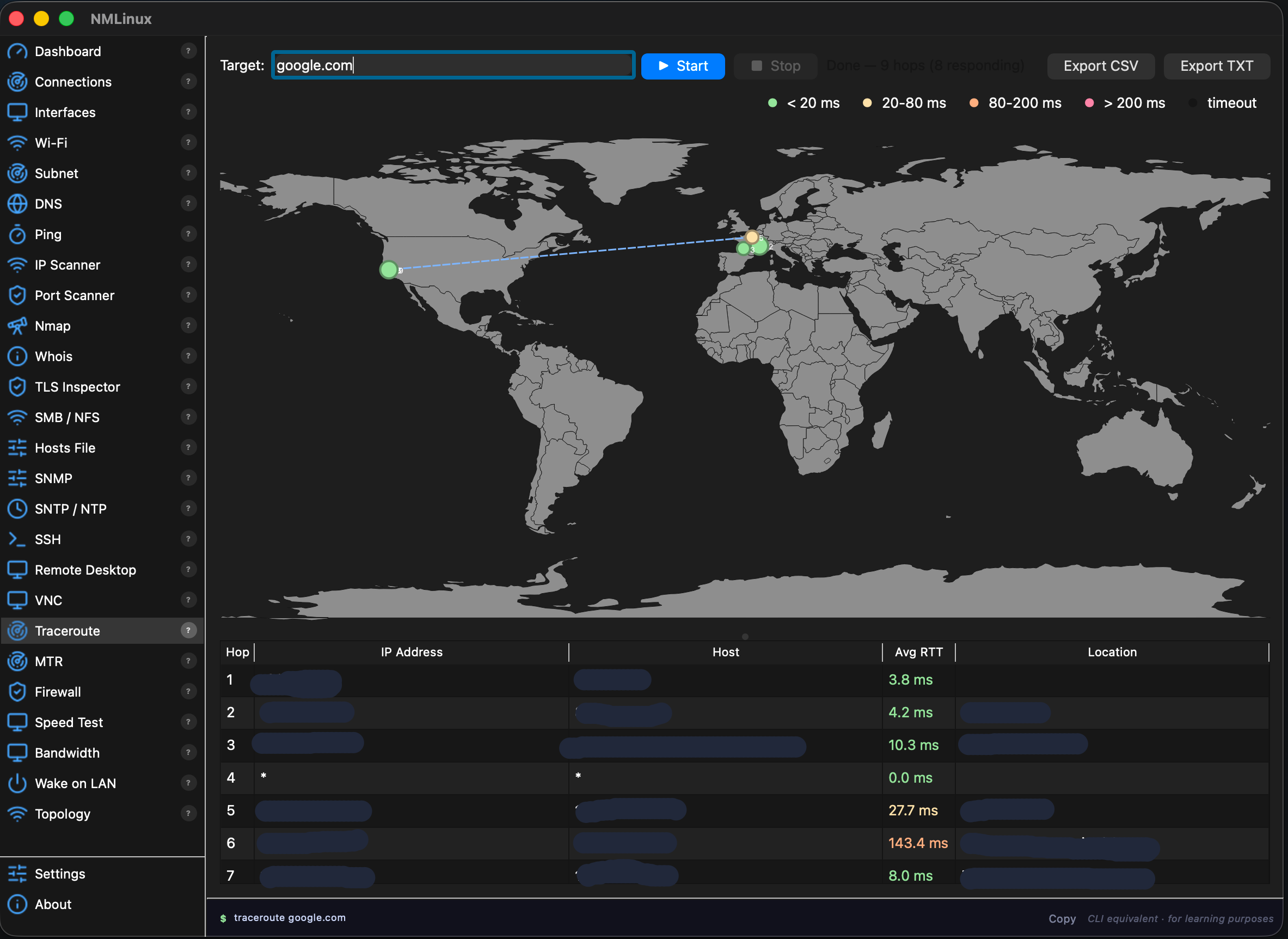
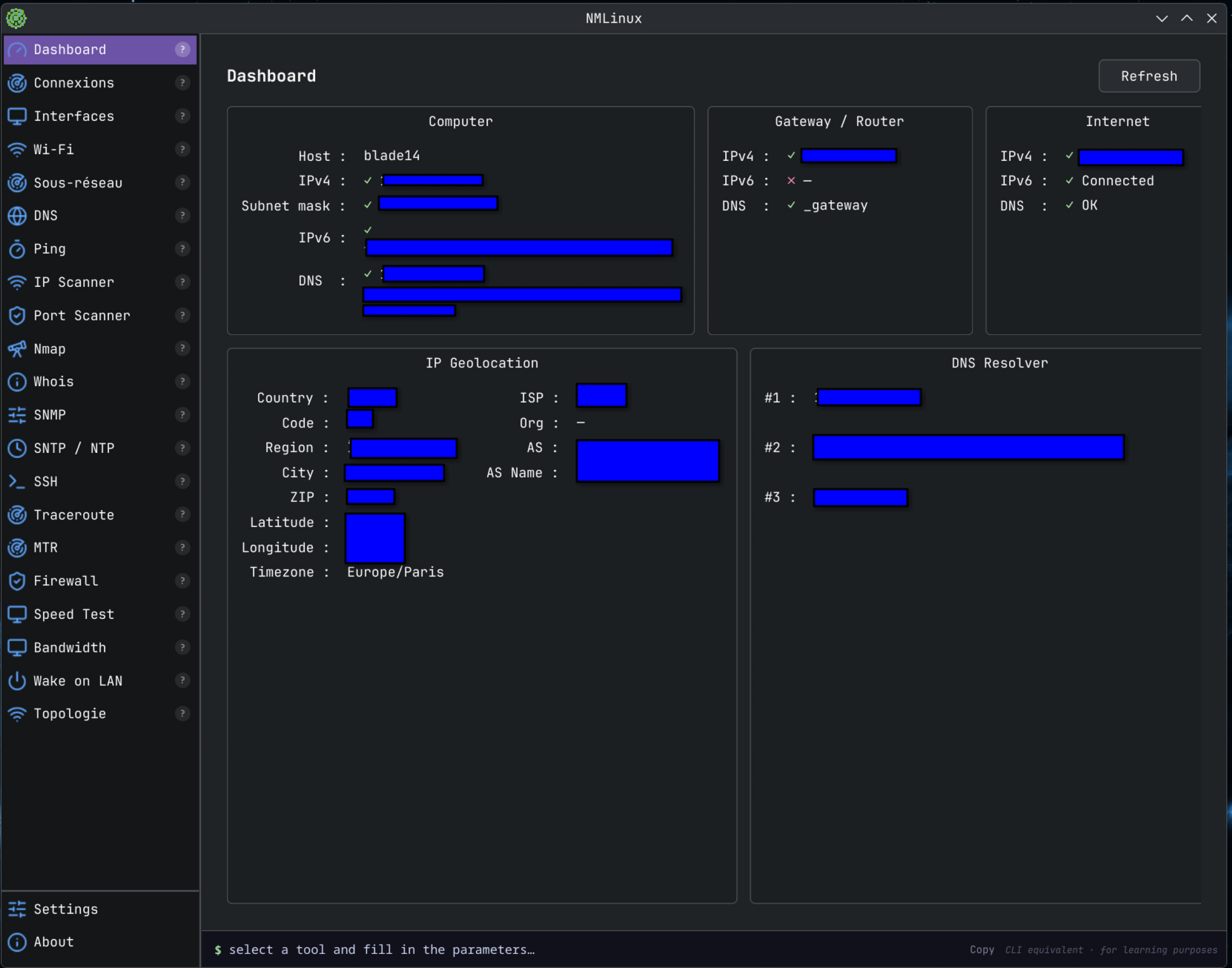
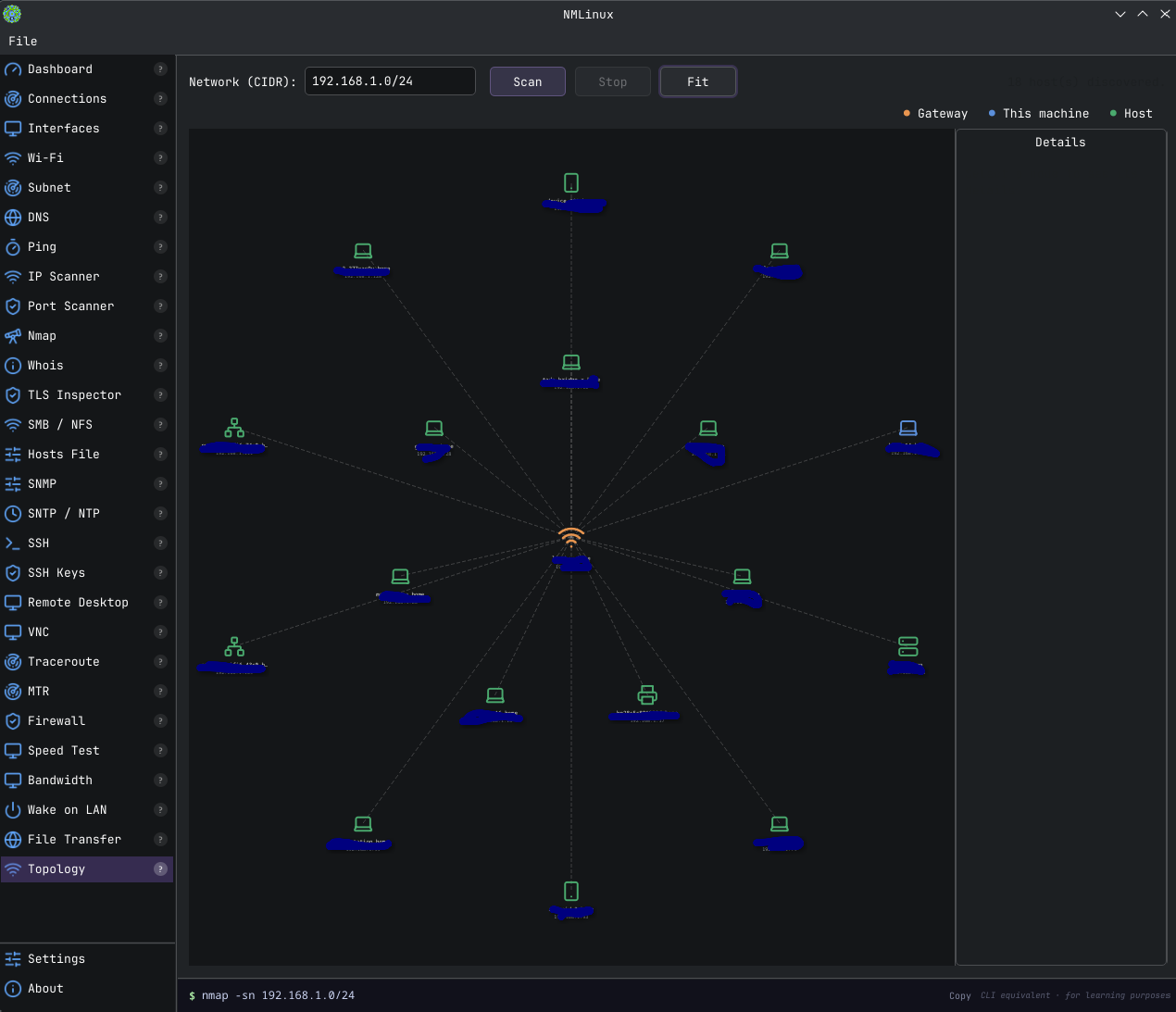
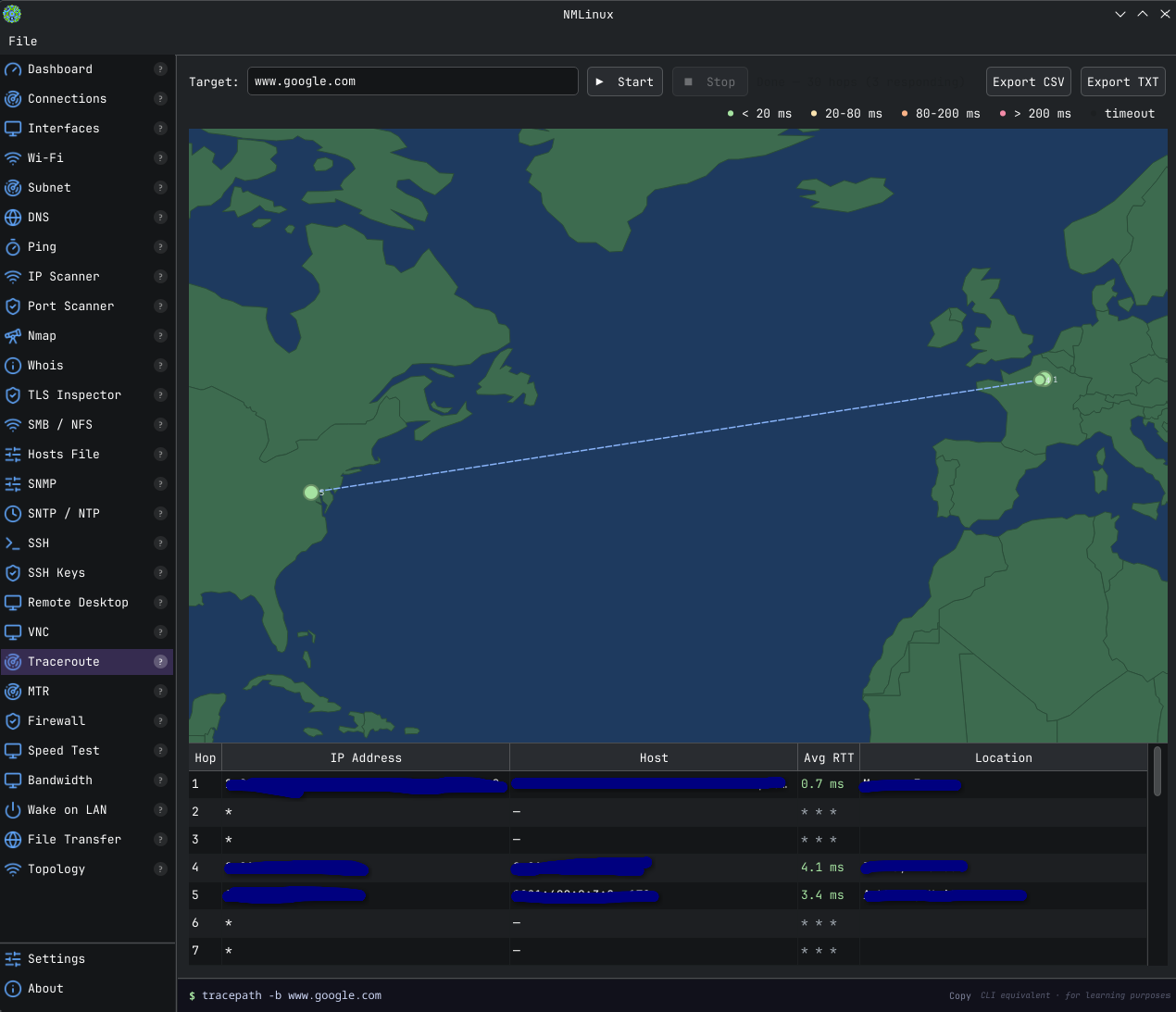
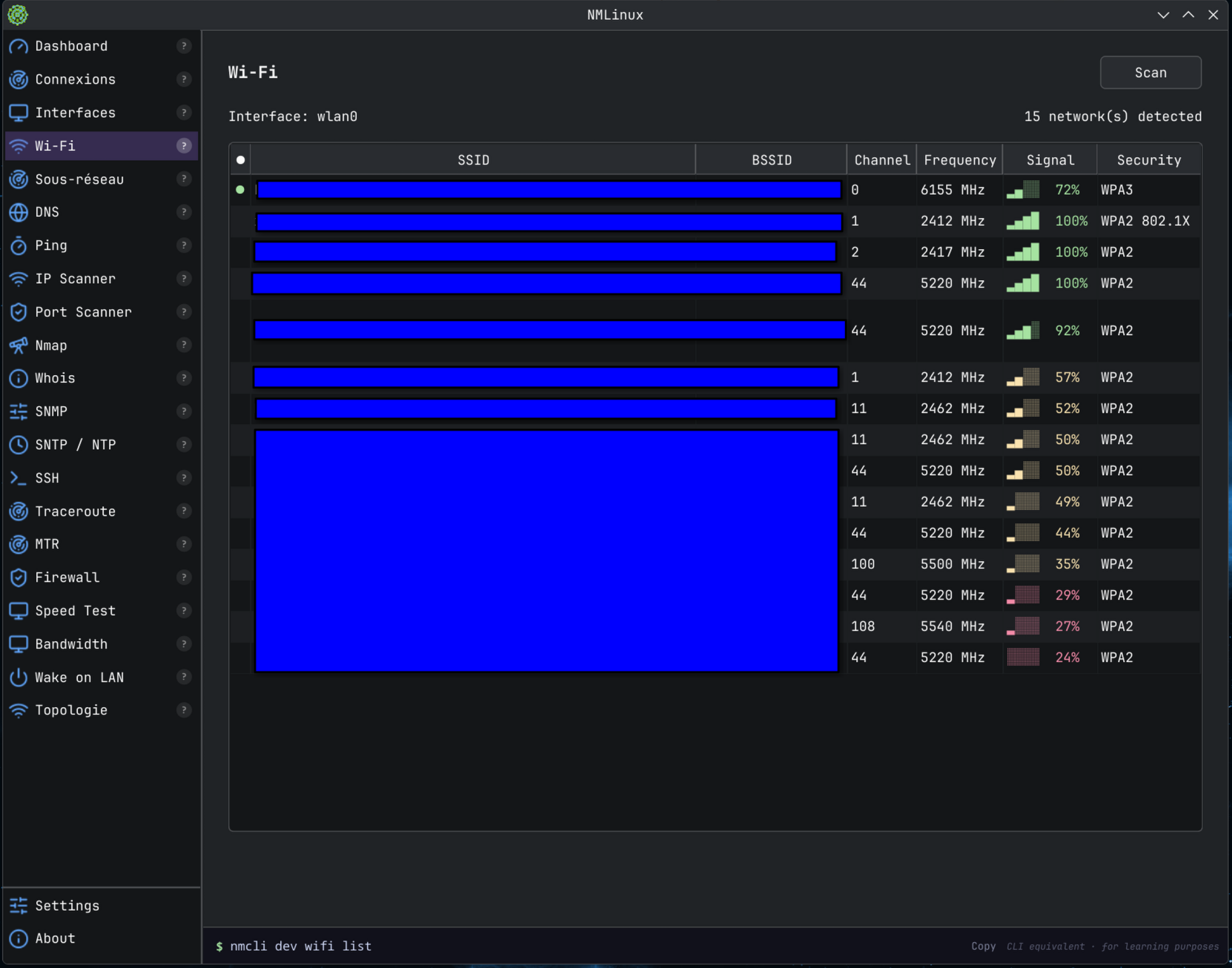
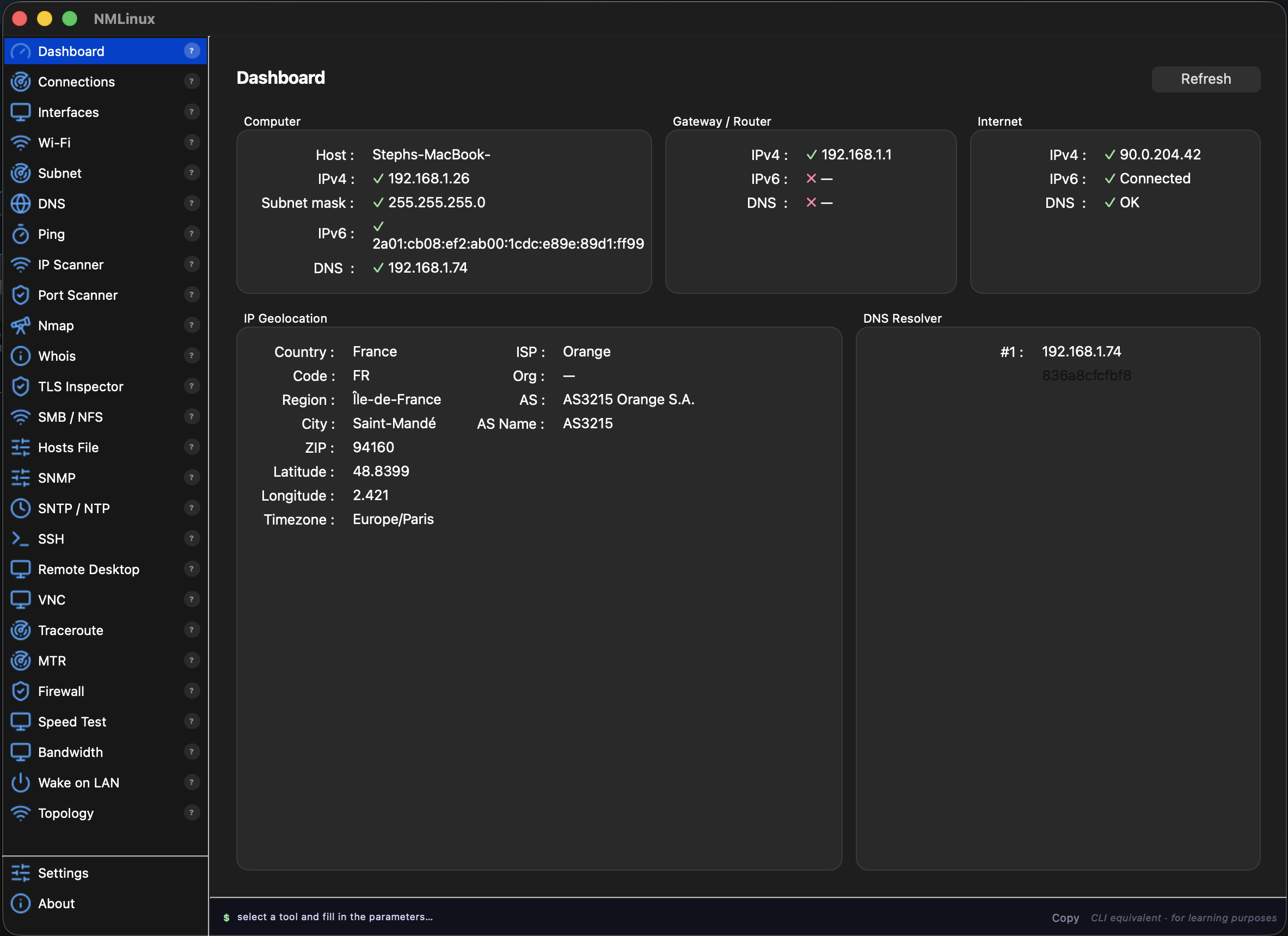
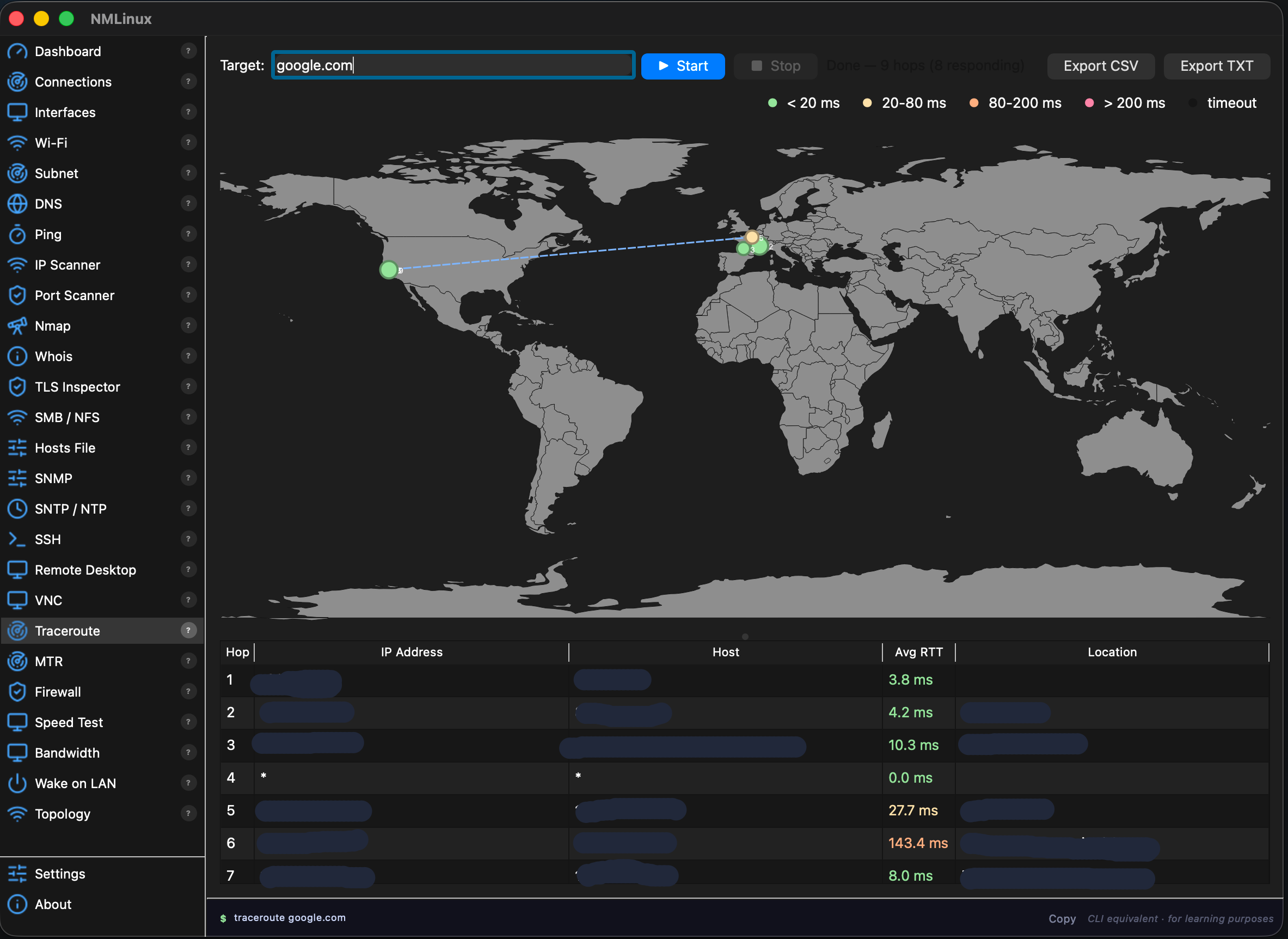
Linux screenshots from v1.2.7 — macOS screenshots from v1.3.5. The app now has 29 modules and 8 interface languages (FR/EN/ES/DE/IT/PT/JA/ZH).
Linux (KDE)
| Dashboard | Topology |
|---|---|
 |  |
| Traceroute | Wi-Fi |
|---|---|
 |  |
macOS
| Dashboard | Traceroute |
|---|---|
 |  |
gh-releases-zsync|thongor77|nmlinux|latest|NMLinux-*x86_64.AppImage.zsync and each release ships the matching .zsync file, so AppImageUpdate and similar tools can delta-update it from the latest GitHub release (requested by the AppImageHub catalog check). See DT-26. No change for AUR/wheel users.xcb platform plugin could not load (libxkbcommon-x11.so.0 and libxcb-cursor0 were missing from the bundle, which is now built in a clean ubuntu:22.04 container that does not have them). The container now installs them (plus the other libxcb-* helpers) so they are bundled. The bundle also pins PySide6 below 6.12, whose 6.12.0 release crashes under Python 3.11 in QPainter.drawPath (see DT-25). Verified in a clean Ubuntu 22.04 container under Xvfb.libpython3.14.so.1.0, built against the Arch Linux dev machine's glibc 2.44) still required glibc symbols newer than the AppImageHub catalog's test machine (Ubuntu 22.04, glibc 2.35) has, so the AppImage kept crashing right on launch. build-appimage.sh now builds the PyInstaller bundle inside an ubuntu:22.04 container (via podman) instead of on the host, so every embedded binary is linked against exactly the glibc version the AppImage needs to support.build-appimage.sh was bundling shared libraries (libz.so.1, libstdc++.so.6, libX11.so.6, libfontconfig.so.1, and others) straight from the Arch Linux build machine's very recent glibc. On older distros the AppImage crashed immediately on launch (GLIBC_ABI_DT_RELR' not found), caught by the AppImageHub catalog's automated test. These libraries are now stripped from the bundle so the AppImage falls back to the host system's own copies, which is the standard approach for AppImages.