
Skip to content
KitploitKITPLOIT
ToolsBlog
Submit
ToolsBlog
Submit

Hacking, PenTest, and Cybersecurity Tools for Your Security Arsenal!

Kitploit is a directory of hacking, cybersecurity, and pentesting tools. Discover the latest project updates to find vulnerabilities, analyze systems, automate testing, and strengthen your security.

··Feeds·Contact·Privacy·© 2026 Kitploit

Tool Directory

Categories

View all categories
Loading categories
briefr — Open Vulnerability Intelligence platform, aggregated intel in one dashboard, with correlation and IOC lookups, completely self hosted. All resources Open and Free. Majority of authenticated resources have generous API limits for free tier. | Kitploit
Tools/GitHubGitHub/soldier0x0/briefr
Defensive ToolsIndicator of Compromise (IOC) ManagementThreat Feeds & AggregatorsVulnerability AnalysisThreat Intelligence
GitHubsoldier0x0/briefr

briefr

Open Vulnerability Intelligence platform, aggregated intel in one dashboard, with correlation and IOC lookups, completely self hosted. All resources Open and Free. Majority of authenticated resources have generous API limits for free tier.

View Repository
11 day agoNot yet reviewed

Most Popular

View all →

Discover the most used tools by our community.

Explore all tools

Browse our collection of tools

View all tools →
Share
Website

BRIEFR architecture

BRIEFR

Self-hosted CVE intelligence and detection engineering

License: Apache-2.0 Python 3.11+ FastAPI React 19 PostgreSQL Self-hosted

What is BRIEFR? · Screenshots · Getting started · Docs · License


What is BRIEFR?

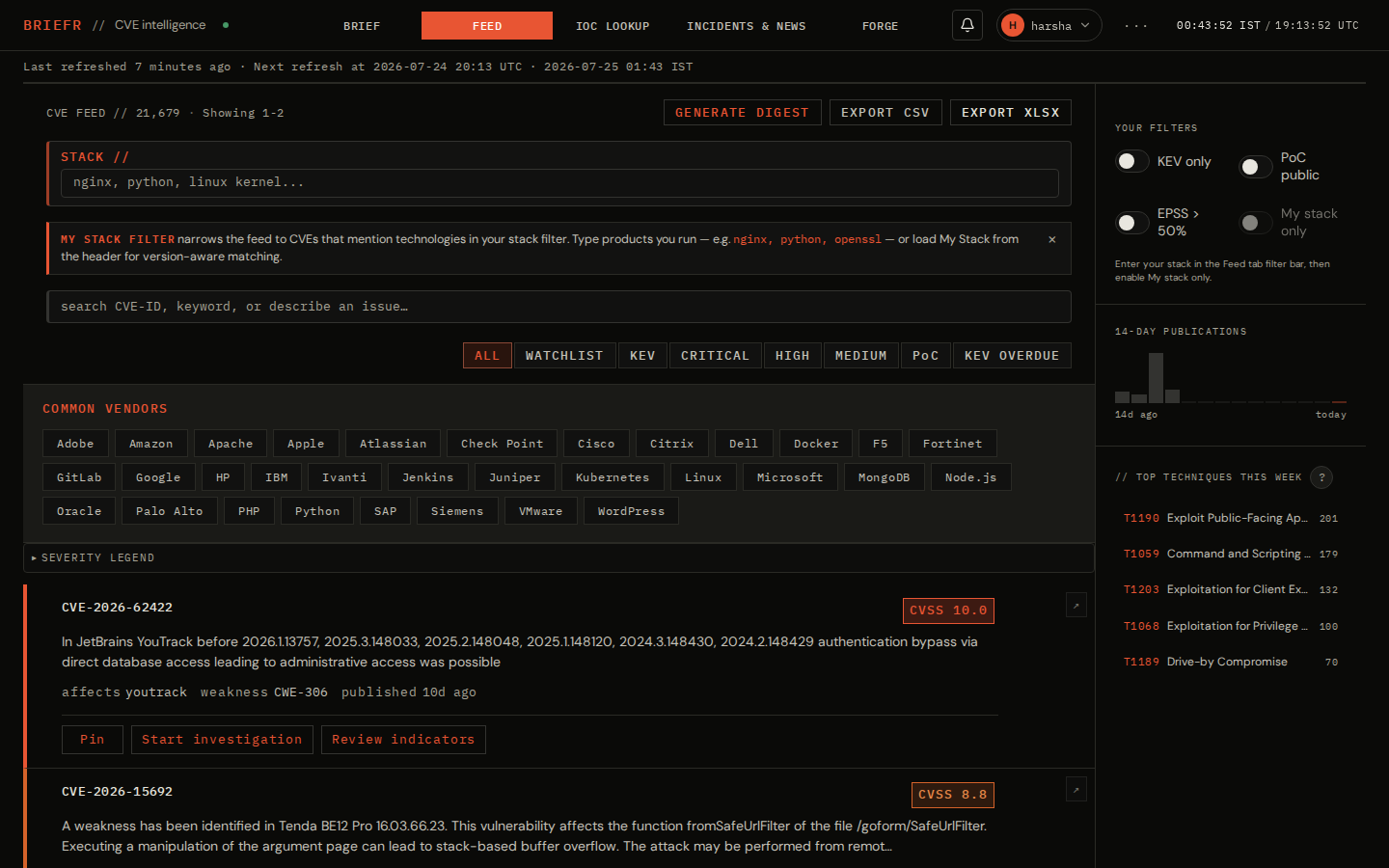
BRIEFR is a self-hosted CVE intelligence platform. It pulls vulnerability data from public and community sources — NVD, CISA KEV, EPSS, MITRE ATT&CK/ATLAS, OTX, abuse.ch, exploit indexes, RSS news — into a local PostgreSQL database and gives you a single UI to work through it: a daily brief, a searchable feed, IOC lookup, and detection rule generation.

Why BRIEFR?

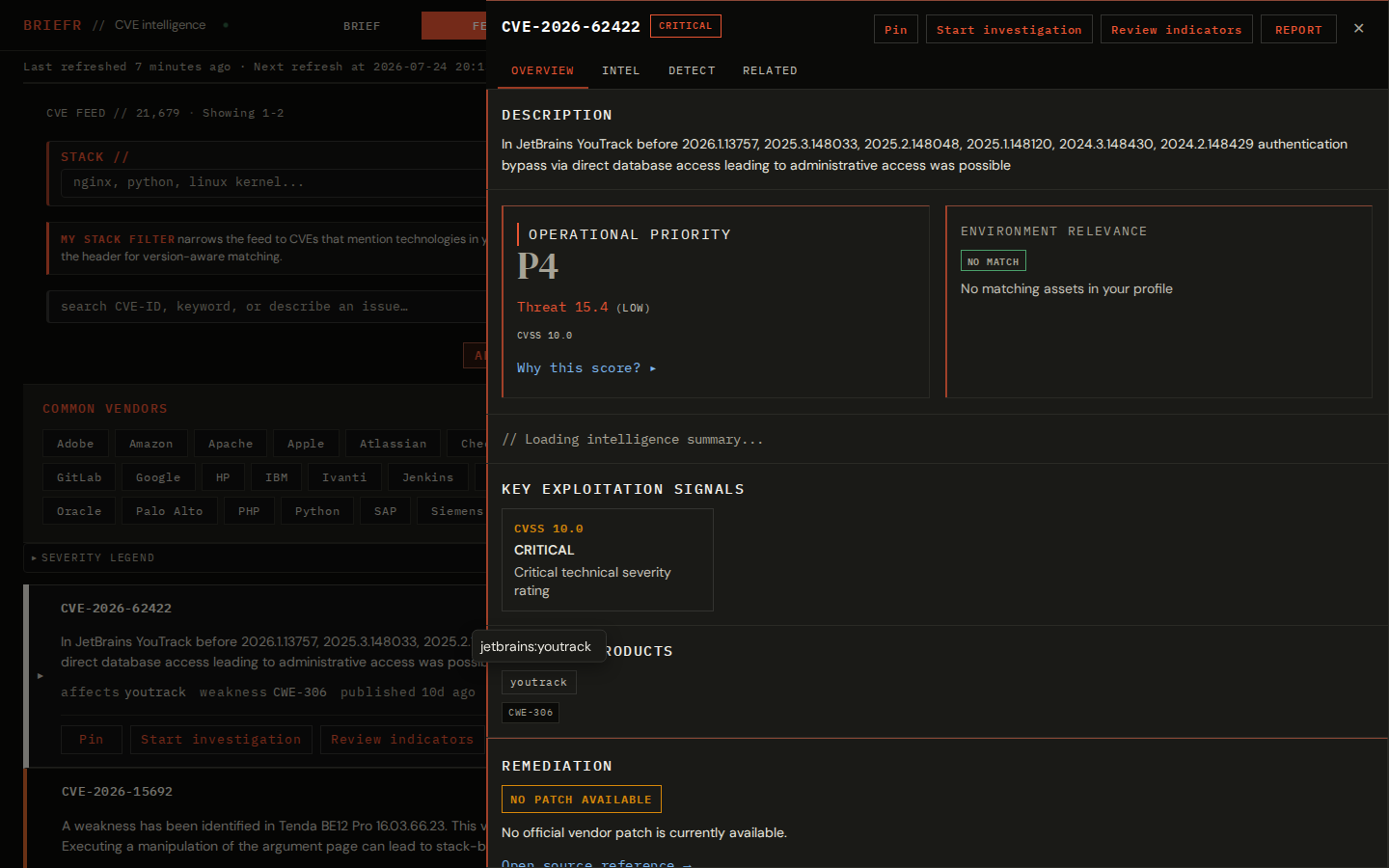
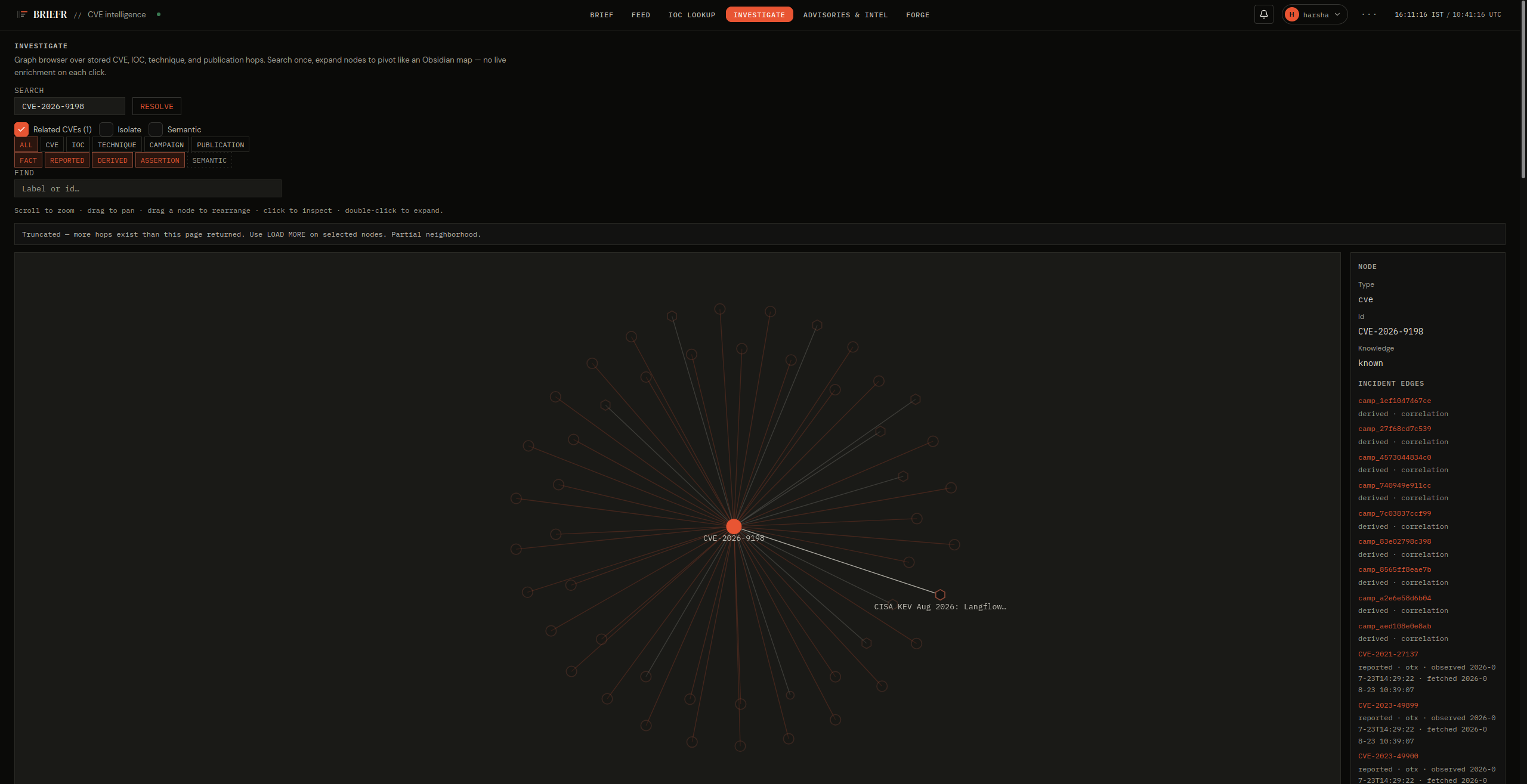
The public feeds are just the input; they're not really the point. BRIEFR's value is what it does with them: rule-based prioritization (Operational Priority P1–P4, threat score, environment relevance, SSVC), correlation that shows why CVEs are related (campaigns, shared infrastructure, actor/sector, timing), and Sigma / YARA / SIEM rule generation from a local SigmaHQ mirror. Everything is deterministic and documented — no black-box model. LLMs are optional and only narrate at the edges.

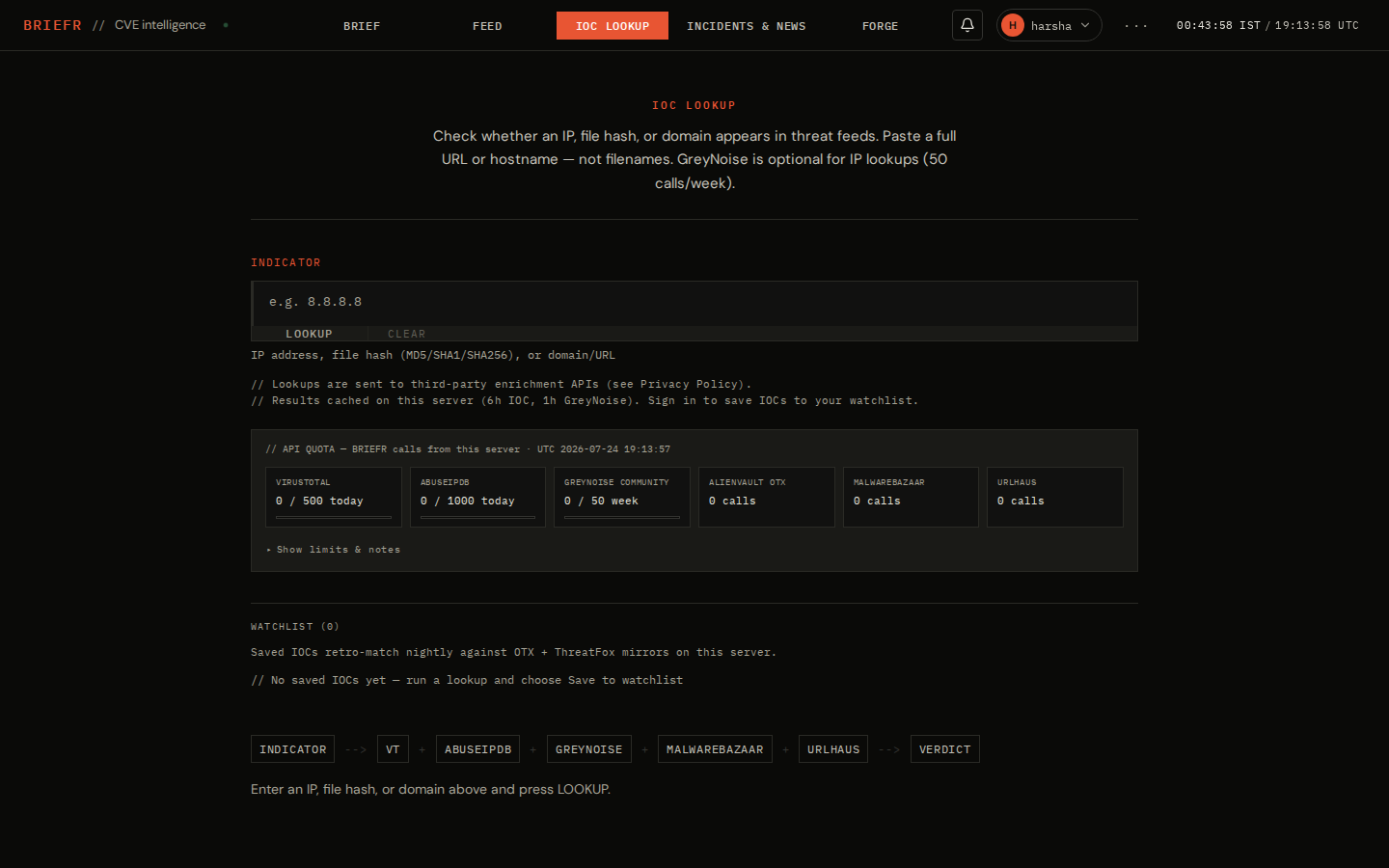
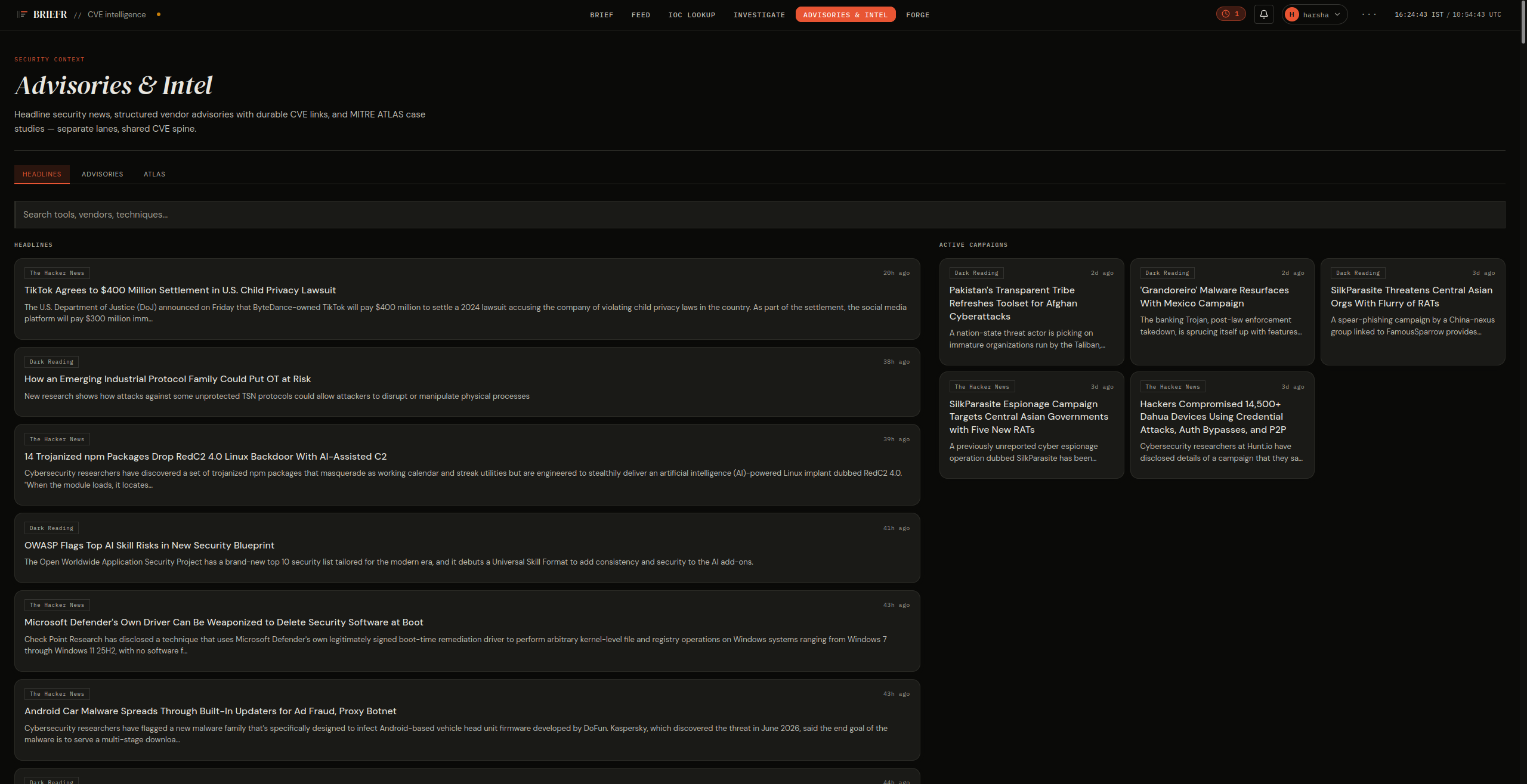
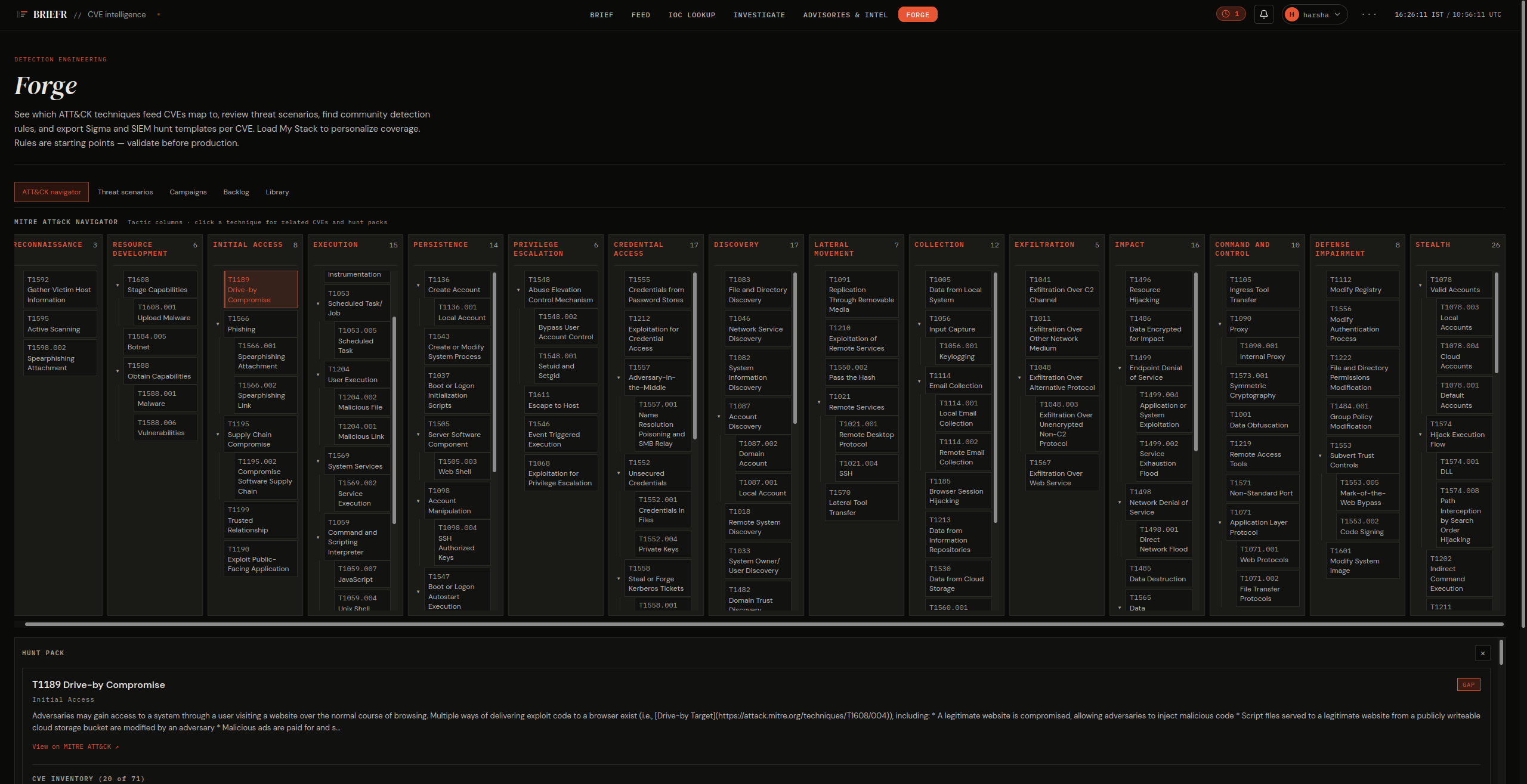
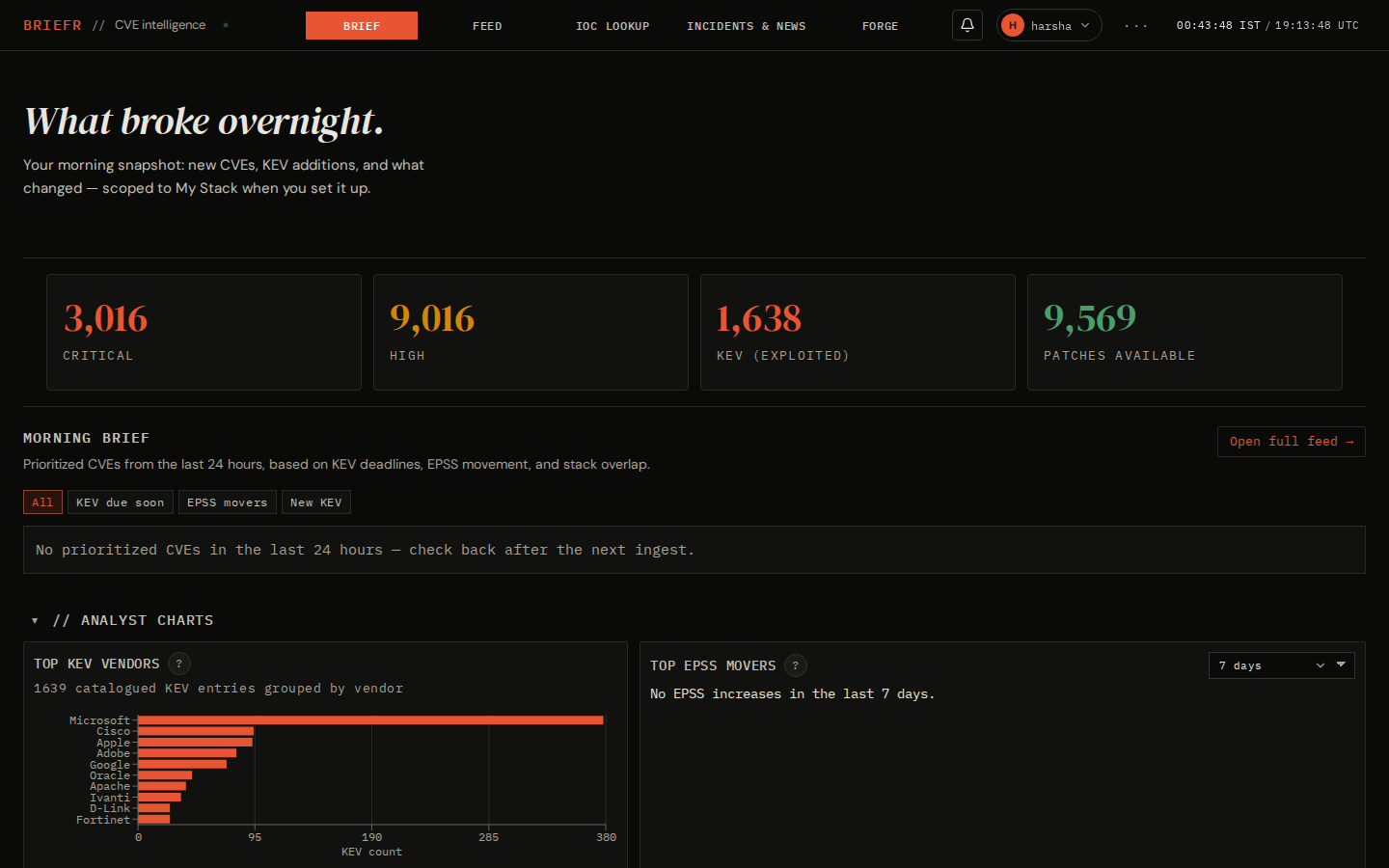
The five tabs cover the workflow: BRIEF (morning queue), FEED (CVE list and search), IOC LOOKUP, INCIDENTS & NEWS, and FORGE (ATT&CK navigator, hunt packs).

Some boundaries, so you know what you're getting: BRIEFR is not a scanner or ASM tool — it prioritizes known CVEs, it doesn't find your assets. Stack matching is term-based, not SBOM-precise. Community attribution is labeled as such. Data is as fresh as each upstream feed allows, and BRIEFR syncs on a schedule that respects that feed's rate limits; nothing is real-time. One instance, self-hosted: your hardware, your data.

Stack: FastAPI · React 19 · PostgreSQL 16 (+ pgvector for embeddings) · APScheduler. Bring your own API keys for upstream feeds.

Apache 2.0: clone, self-host, modify, and use commercially with attribution (LICENSE, NOTICE).


Try it

  • Live demo — briefrdemo.projectjupiter.in, 1:1 analyst UI with fixture data, no install and no backend.
  • Self-host — docs/SELF_HOST.md, install your own PostgreSQL-backed deployment.
  • Documentation — docs.projectjupiter.in.

The demo is a static showroom (briefr-demo): the same shell as production over frozen JSON instead of a database. Forge, hunt-pack generation, and IOC enrichment are visual-only there.


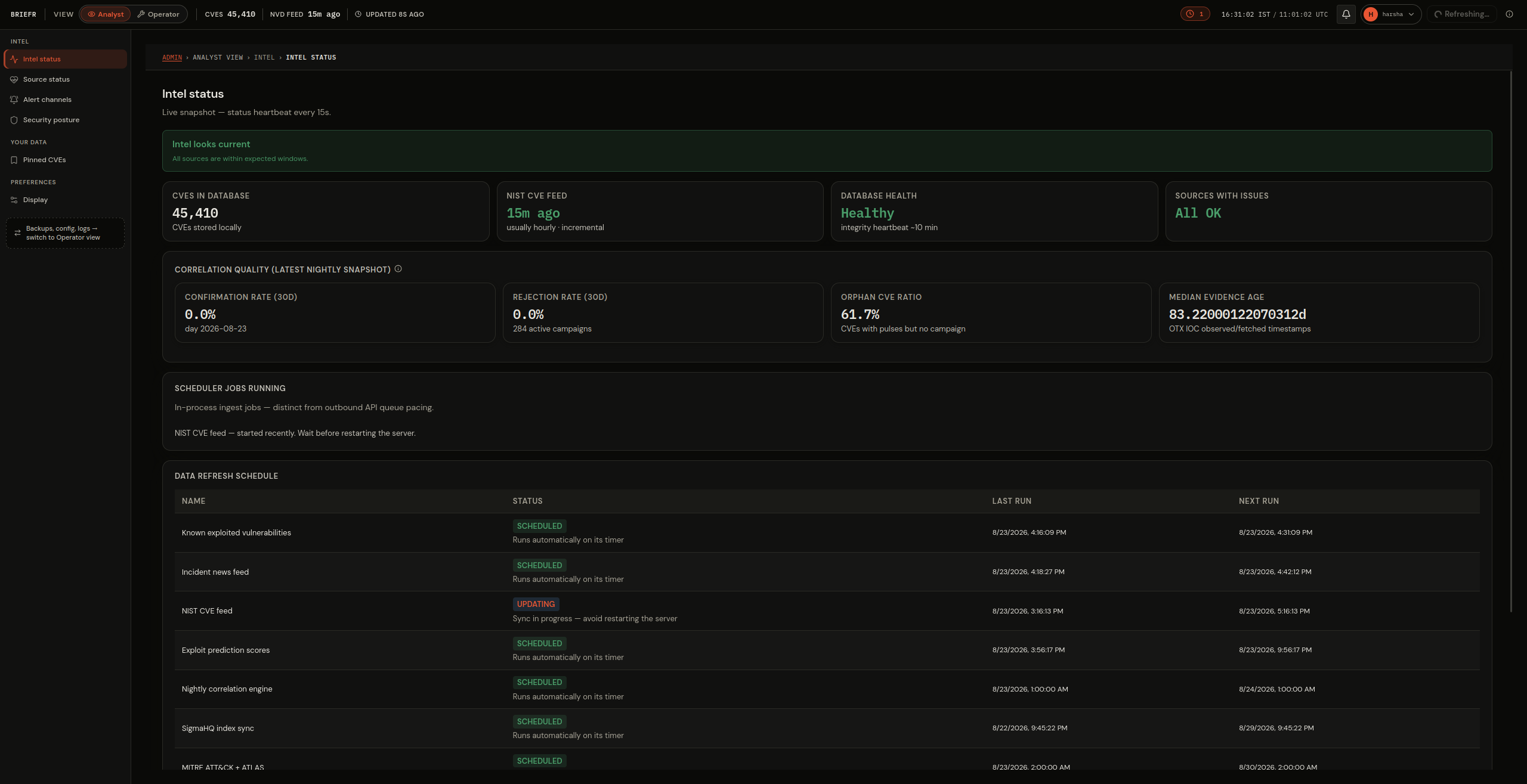
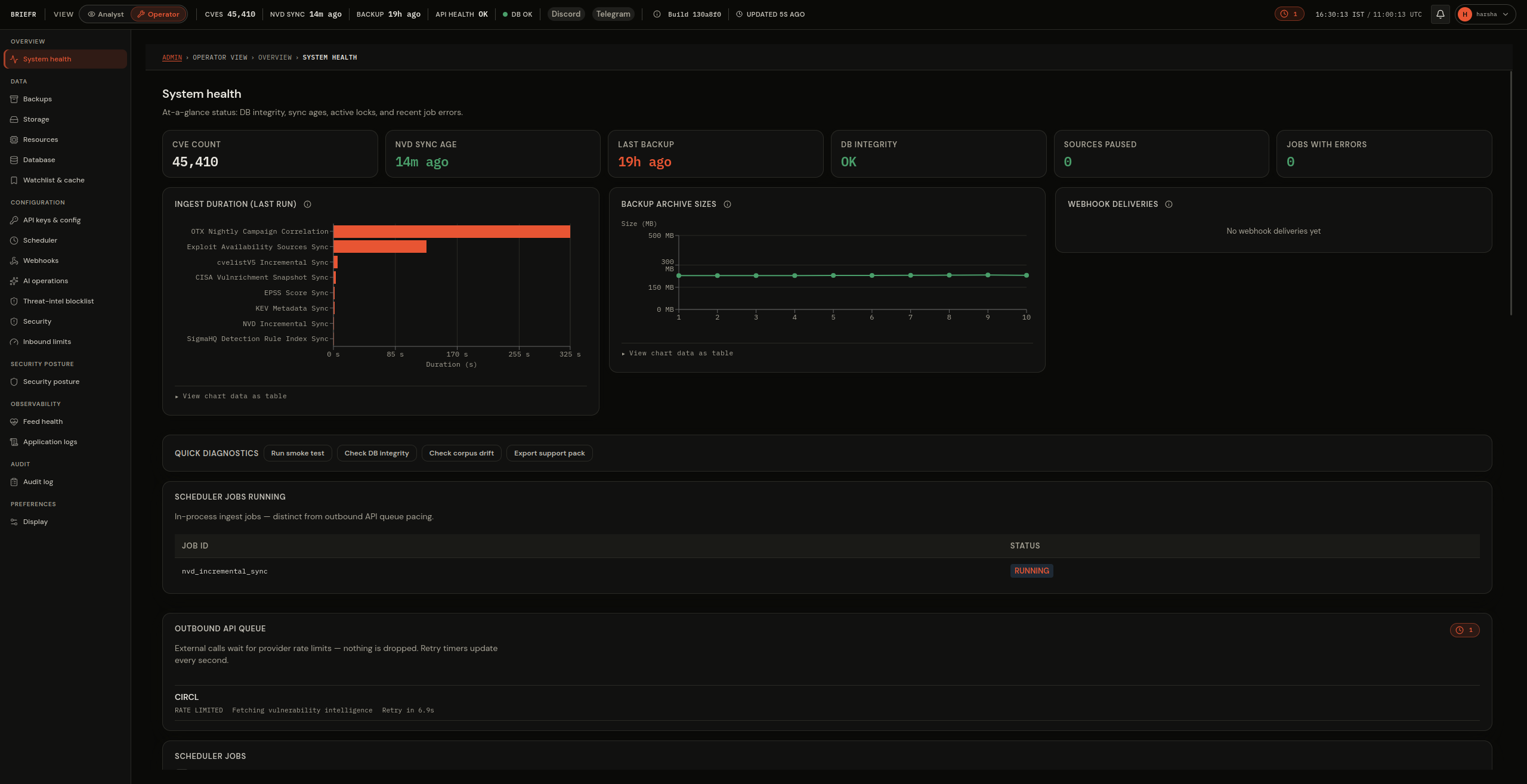
Screenshots

Screenshots from a self-hosted PostgreSQL deployment.


Getting started

Install guide: docs/SELF_HOST.md

Try BRIEFR locally

root@kitploit:~
git clone https://github.com/Soldier0x0/briefr.git
cd briefr/backend
python3 -m venv .venv && source .venv/bin/activate
pip install -r requirements-dev.txt
cp .env.example .env
uvicorn main:app --host 0.0.0.0 --port 8000
root@kitploit:~
cd ../frontend && npm install && npm run dev   # http://localhost:5173

Open http://localhost:5173 — first-run setup creates the admin user.

Production install (PostgreSQL + nginx)

For a permanent system, use SELF_HOST §3: provision pgvector/pgvector:pg16, then bash deploy/briefr-install.sh (or deploy/setup.sh). That runs npm run build, configures systemd + nginx, and serves the built SPA.

root@kitploit:~
curl -s http://127.0.0.1:8000/api/health | python3 -m json.tool
PathWhen
SELF_HOST §2Postgres + pgvector dev
SELF_HOST §3

Documentation

Index: docs/index.md


API

Full catalog: docs/API_REFERENCE.md. Interactive Swagger at http://localhost:8000/api/docs (enabled only in development — BRIEFR_ENV=development; production disables it).

Environment variables: backend/.env.example


License

Apache License 2.0 — see LICENSE. Contributions: CONTRIBUTING.md. Security reports: SECURITY.md (no public issues for vulnerabilities).

Copyright © 2026 Sai Harsha Vardhan.

Download Tool
BRIEF tab
BRIEF
FEED tab
FEED
CVE detail drawer
CVE detail
IOC LOOKUP
IOC LOOKUP
Incidents and News
Incidents & News
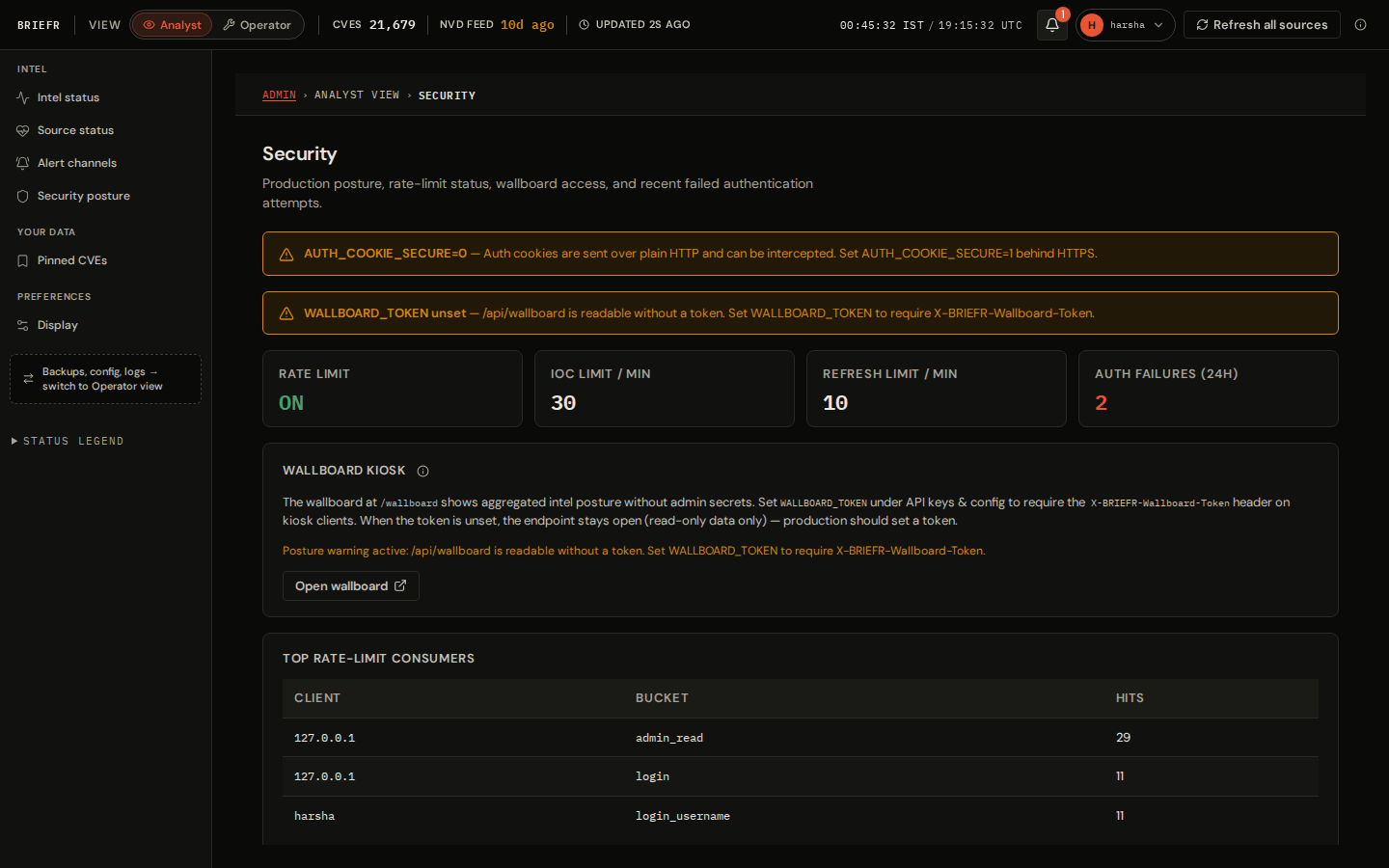
Admin Security
Admin
Production Debian deploy
POSTGRES.mdBackups, restore, pgvector
I want to…Doc
Installdocs/SELF_HOST.md
Use the UIdocs/USE.md
Fix a problemdocs/TROUBLESHOOTING.md
Understand internalsdocs/HOW_IT_WORKS.md · docs/SYSTEM_DESIGN.md
Try the UI (no install)https://briefrdemo.projectjupiter.in
Browse onlinehttps://docs.projectjupiter.in
Ask for helpGitHub Discussions → Q&A
API contractdocs/API_REFERENCE.md
What's shippeddocs/PRODUCT_STATUS.md
ContributeCONTRIBUTING.md · docs/ONBOARDING.md