

Skip to content
KitploitKITPLOIT
ToolsBlog
Submit
ToolsBlog
Submit

Hacking, PenTest, and Cybersecurity Tools for Your Security Arsenal!

Kitploit is a directory of hacking, cybersecurity, and pentesting tools. Discover the latest project updates to find vulnerabilities, analyze systems, automate testing, and strengthen your security.

··Feeds·Contact·Privacy·© 2026 Kitploit

Tool Directory

Categories

View all categories
Loading categories
CVE-2025-56801 — AES-CFB IV Generation Vulnerability in Reolink Desktop Application | Kitploit
Tools/GitHubGitHub/shinycolumn/cve-2025-56801
Vulnerability AnalysisExploitationCryptographyPapers & ResearchLearning & Education
GitHubshinycolumn/cve-2025-56801

CVE-2025-56801

AES-CFB IV Generation Vulnerability in Reolink Desktop Application

View Repository
10 months agoNot yet reviewed

Most Popular

View all →

Discover the most used tools by our community.

Explore all tools

Browse our collection of tools

View all tools →
Share

CVE-2025-56801

AES-CFB IV Generation Vulnerability in Reolink Desktop Application

1. Overview

Reolink Icon
  • Name: Reolink Desktop Application
  • Version: 8.18.12
  • Vendor: Reolink
  • CWE: CWE-1204: Generation of Weak Initialization Vector (IV), CWE-321: Use of Hard-coded Cryptographic Key
  • CVSS: 5.1 MEDIUM
  • Vector String: CVSS:3.1/AV:L/AC:L/PR:N/UI:N/S:U/C:L/I:N/A:L

2. Summary

The Reolink Desktop Application (version 8.18.12) uses the AES-CFB algorithm to encrypt configuration files and other sensitive data.

However, the Initialization Vector (IV) used in this process is handled improperly, leading to a vulnerability where encrypted configuration data can be easily decrypted by an attacker.

3. Details

The following code shows that the IV is generated dynamically at runtime:

root@kitploit:~
{
  key: "fetchAesIv",
  value: function () {
    return window.napiDecrypt.getAesIv();
  },
}

However, the value returned is always the same string: bcswebapp1234567.

This means that although the IV is technically generated at runtime, it is effectively hardcoded, providing no additional security.

4. Proof of Concept (PoC)

While the application is running, the IV value can be retrieved dynamically via the DevTools JavaScript console.

The window.napiDecrypt.getAesIv() function returns a Promise that resolves to a constant string bcswebapp1234567.
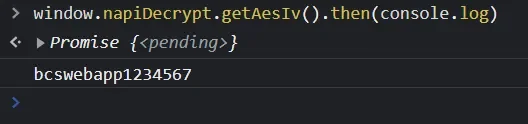
PoC

This demonstrates that the IV is reused across all encryption operations, violating cryptographic best practices.

5. Recommendations

In block cipher modes such as CFB, CBC, and OFB, reusing an IV can allow an attacker to predict ciphertext patterns, ultimately compromising data confidentiality. To fulfill the purpose of an IV, a new, unpredictable value must be dynamically generated.

6. References

  • https://www.cve.org/CVERecord?id=CVE-2025-56801
  • https://nvd.nist.gov/vuln/detail/CVE-2025-56801
  • https://github.com/shinyColumn/CVE-2025-56799
  • https://github.com/shinyColumn/CVE-2025-56802
Download Tool