 security-life-org/obscura
Threat Hunter & Attack Surface Management Platform A single static Go binary for passive & semi-offensive reconnaissance, correlation, risk scoring, and continuous monitoring.


Threat Hunter & Attack Surface Management Platform
A single static Go binary for passive & semi-offensive reconnaissance, correlation, risk scoring, and continuous monitoring.



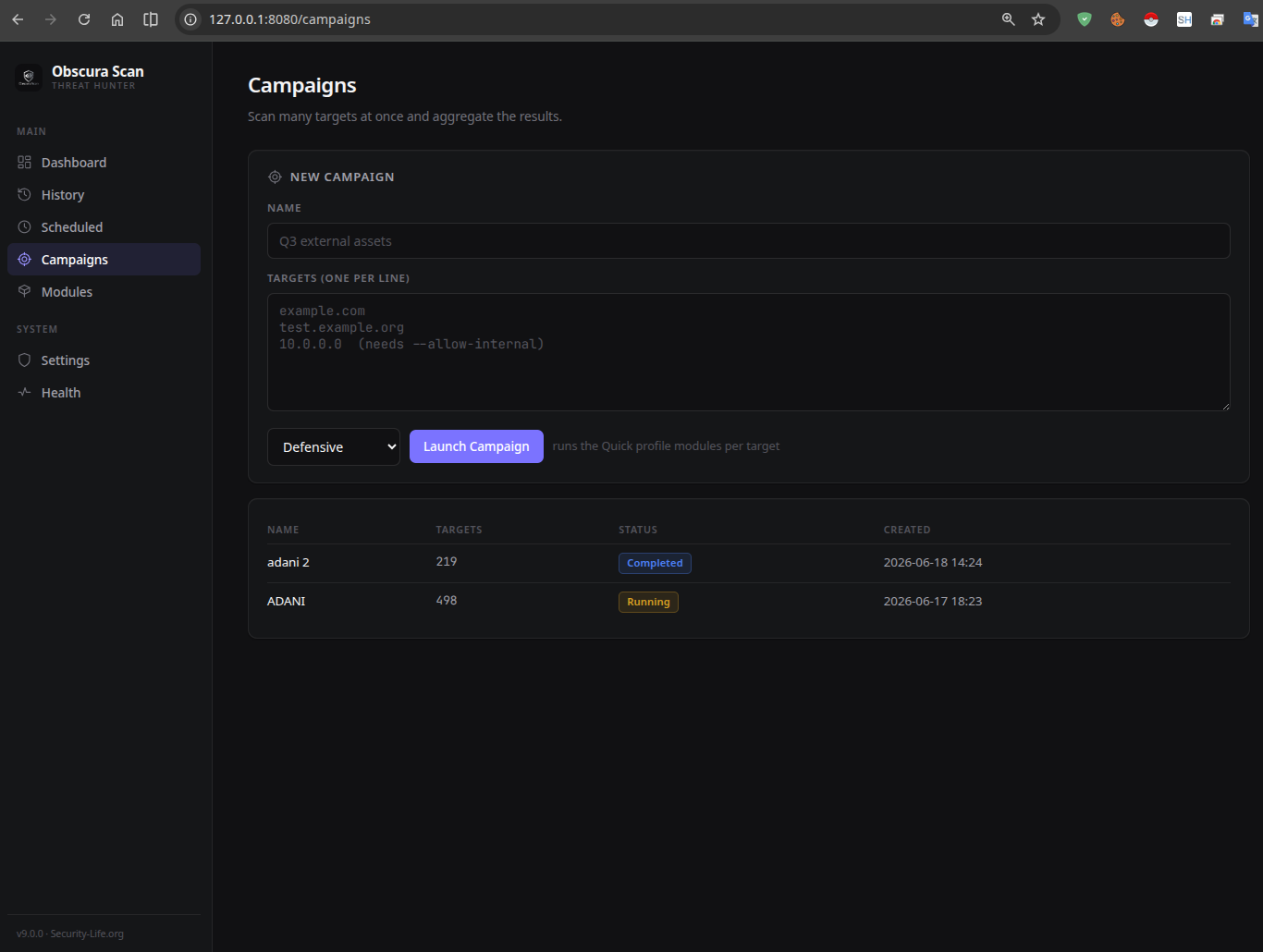
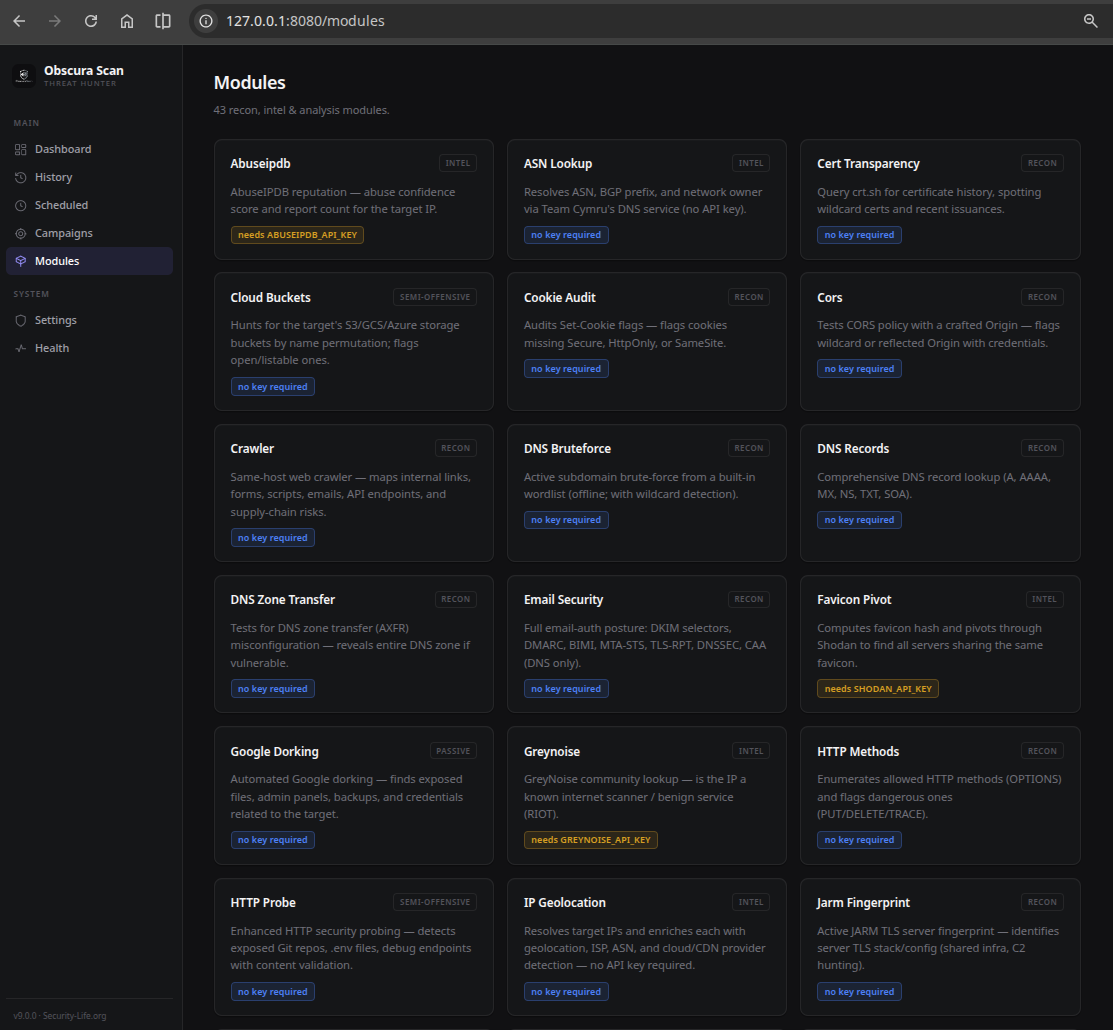
Obscura Scan is an attack-surface management and OSINT/recon platform that you run as one static binary — no Python, no virtualenv, no system libraries, no database server. Point it at a domain, URL, or IP and it runs dozens of recon modules concurrently, correlates the results, scores the risk, optionally enriches with an LLM, and serves everything through a clean web UI + REST API with live progress streaming.
It is the Go rewrite of the platform formerly known internally as AEGIS, re-architected for speed, safety, and single-file deployment.
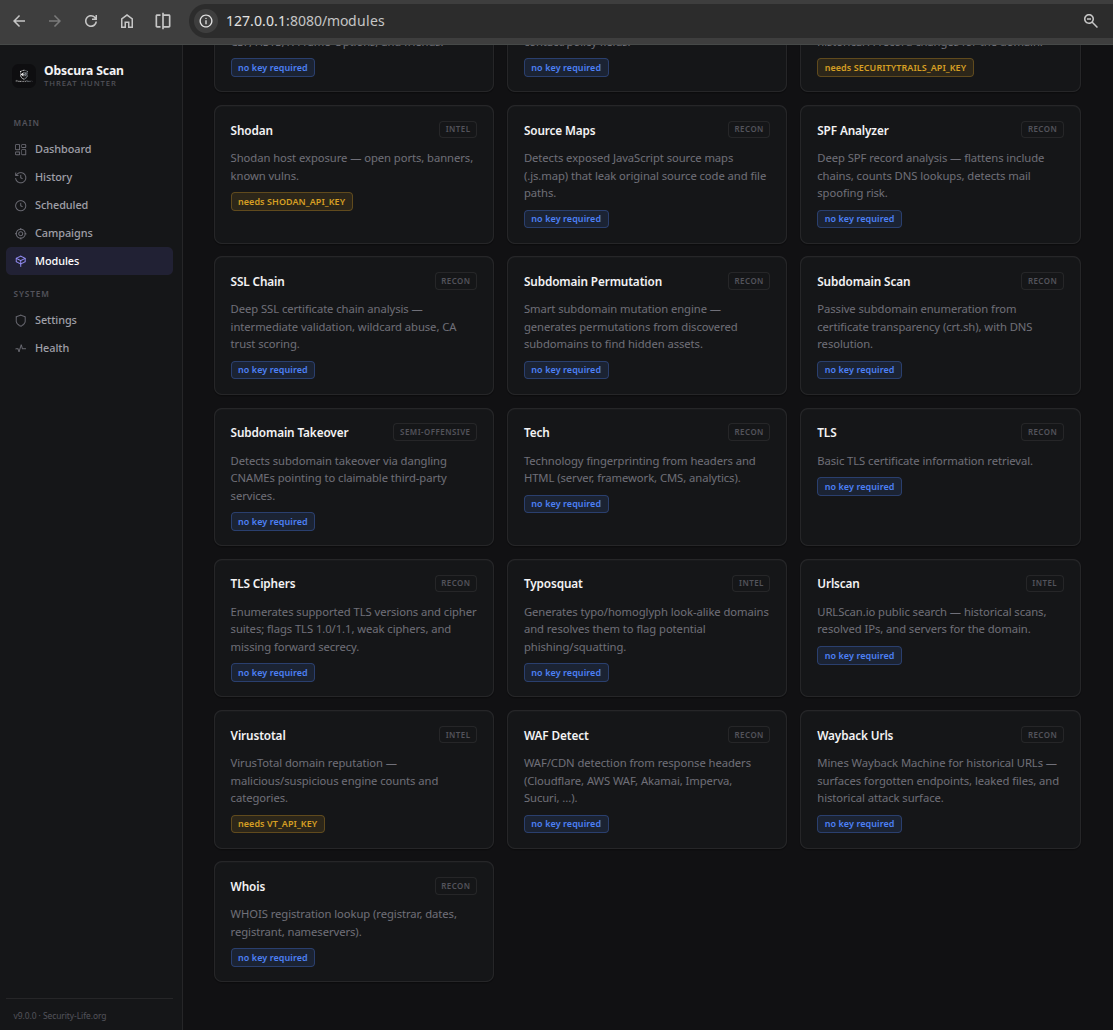
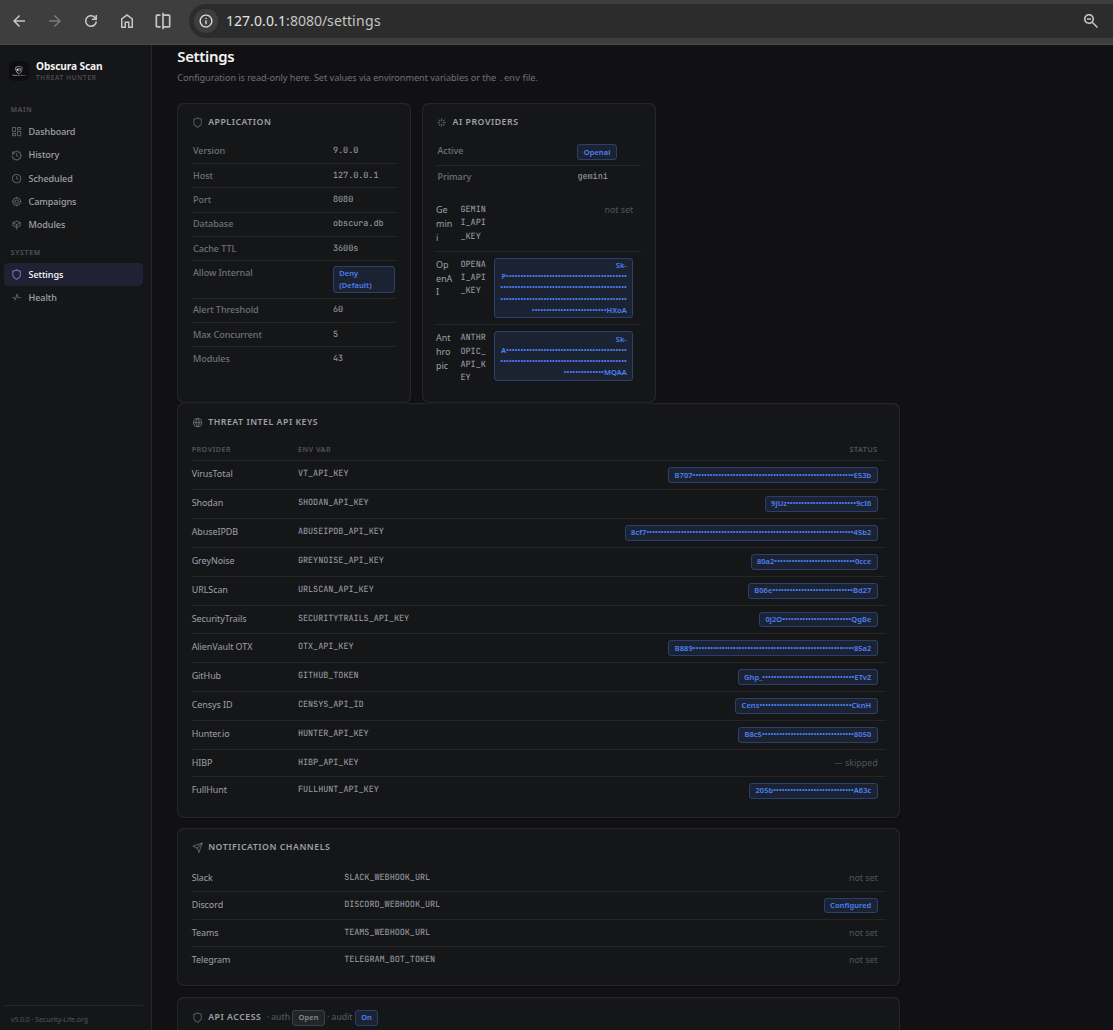
Most of the value needs no API keys. 43 of the 50 modules are fully self-contained — they talk directly to the target and the DNS/TLS/HTTP protocols. Obscura Scan runs with zero keys configured; key-gated modules simply skip with a reason.

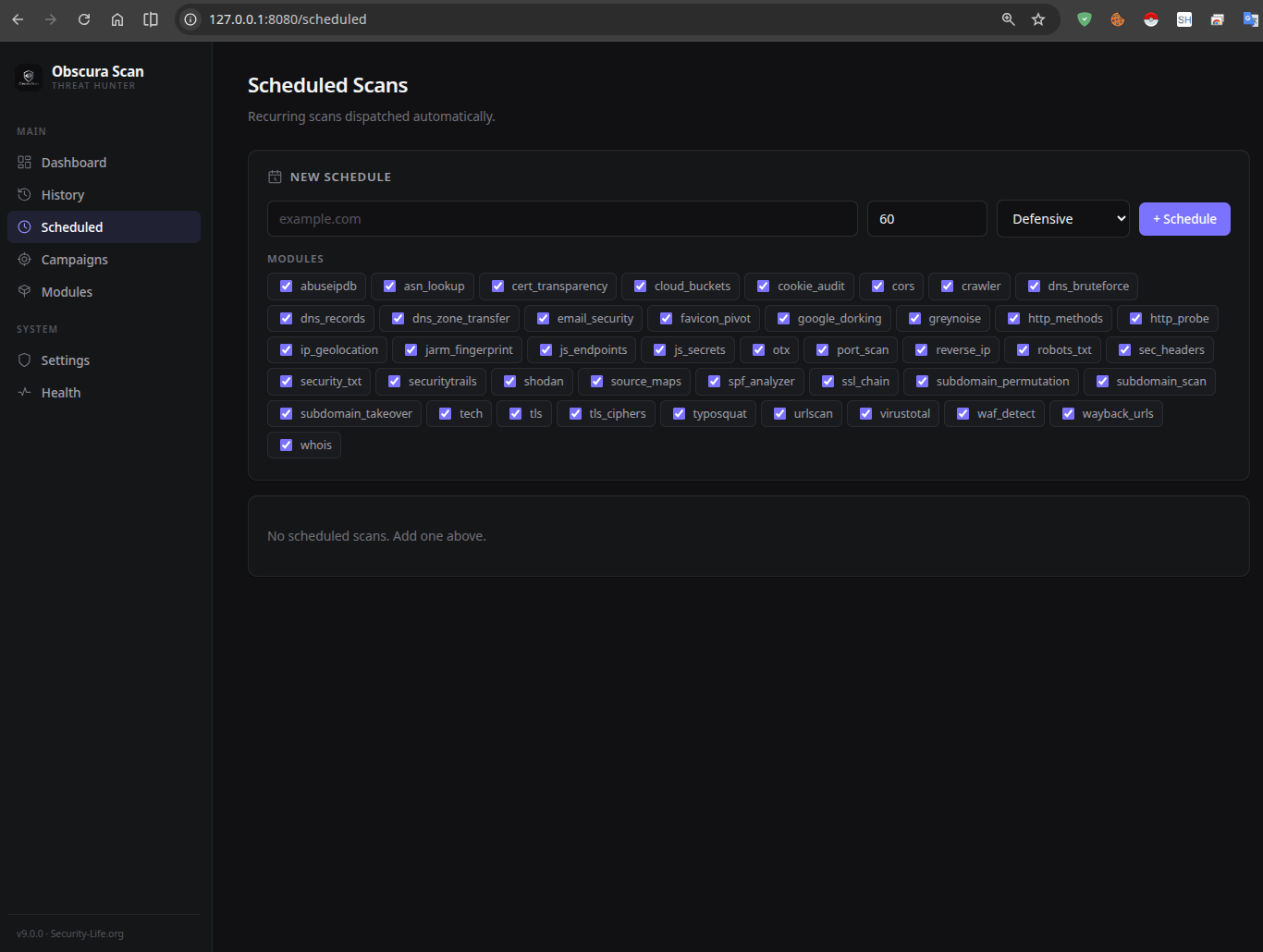
confirmed/firm/tentative); the score is anchored by the worst confirmed finding and only nudged by volume, so a flood of low-confidence heuristics can't pin the gauge at 100. Cross-module de-duplication and one-click false-positive suppression keep the report signal-dense./metrics, structured logging, graceful shutdown.# 1. Get it (see Installation for binaries / Docker)
git clone https://github.com/security-life-org/Obscura.git
cd Obscura
make build # -> bin/obscura (CGO_ENABLED=0, pure Go)
# 2. Run it (every config value is optional)
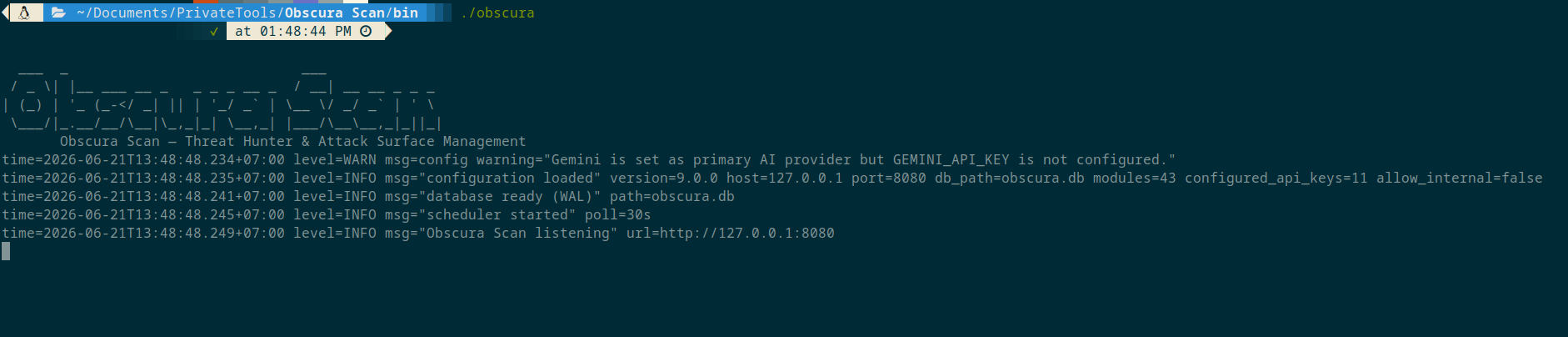
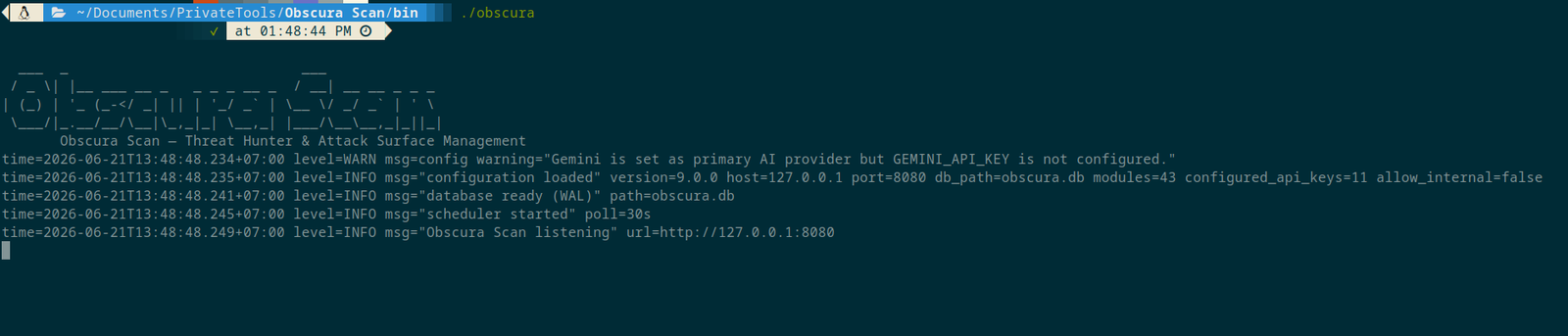
./bin/obscura
# 3. Open the UI
# http://127.0.0.1:8080
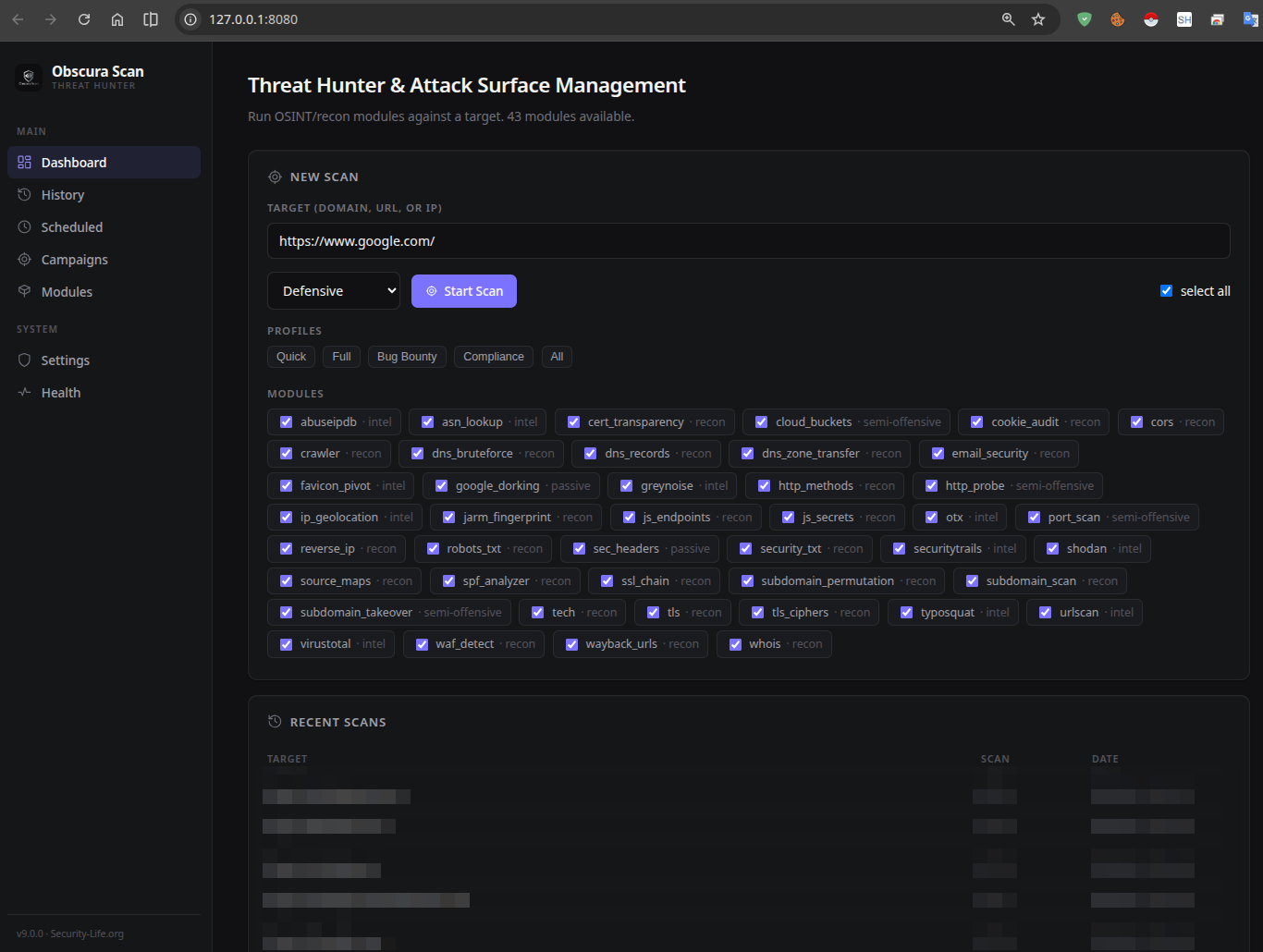
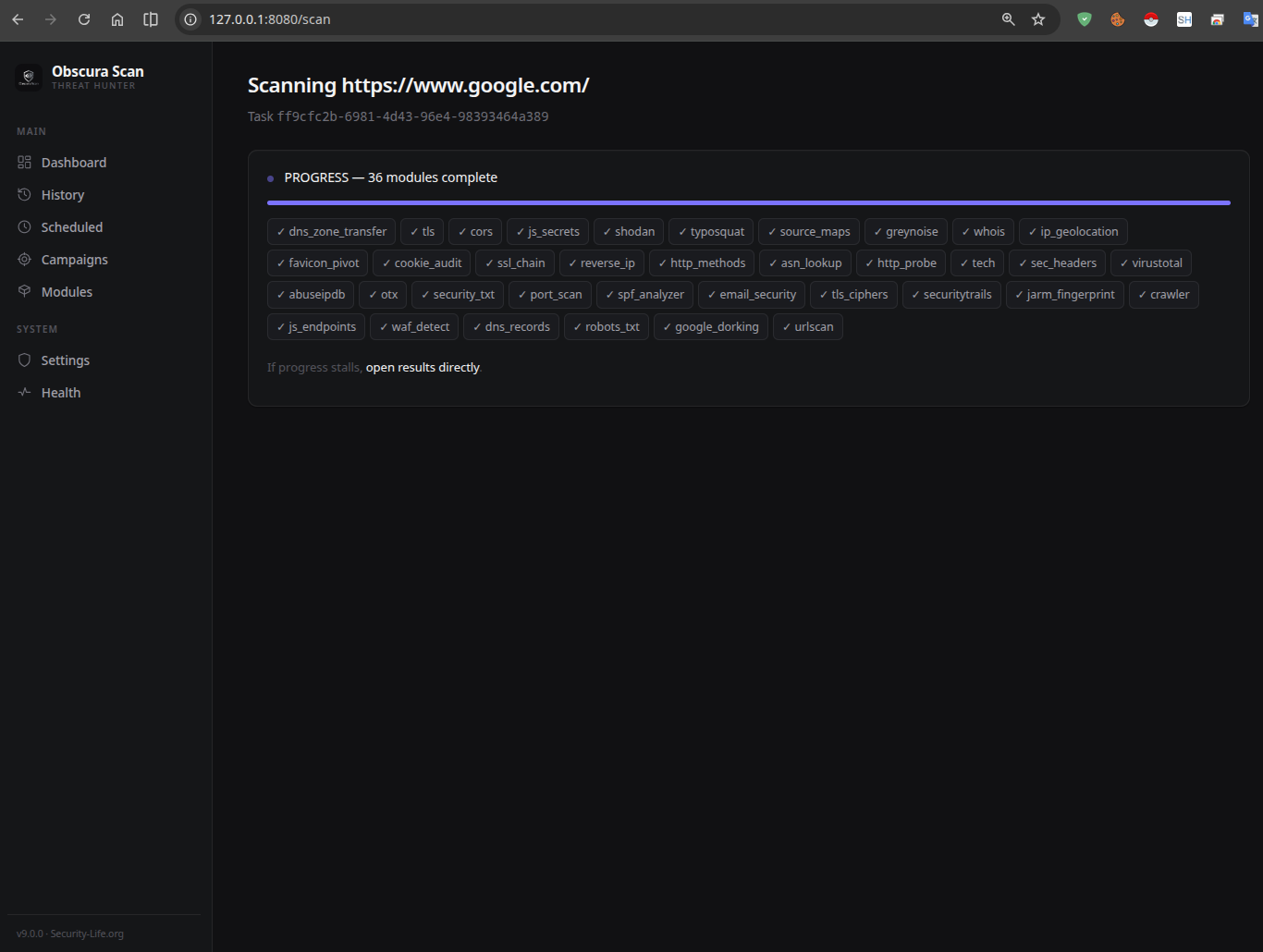
Then enter a target (e.g. example.com), pick a profile, and hit Start Scan. Results render as a readable report — risk gauge, findings, per-module tables — not raw JSON.
./bin/obscura --version          # build info
./bin/obscura --allow-internal   # permit private/loopback targets (authorized internal use)