 protectai/ai-exploits
A collection of real world AI/ML exploits for responsibly disclosed vulnerabilities


The AI world has a security problem and it's not just in the inputs given to LLMs such as ChatGPT. Based on research done by Protect AI and independent security experts on the Huntr Bug Bounty Platform, there are far more impactful and practical attacks against the tools, libraries and frameworks used to build, train, and deploy machine learning models. Many of these attacks lead to complete system takeovers and/or loss of sensitive data, models, or credentials most often without the need for authentication.
With the release of this repository, Protect AI hopes to demystify to the Information Security community what practical attacks against AI/Machine Learning infrastructure look like in the real world and raise awareness to the amount of vulnerable components that currently exist in the AI/ML ecosystem. More vulnerabilities can be found here:
This repository, ai-exploits, is a collection of exploits and scanning templates for responsibly disclosed vulnerabilities affecting machine learning tools.
Each vulnerable tool has a number of subfolders containing three types of utilities: Metasploit modules, Nuclei templates and CSRF templates. Metasploit modules are for security professionals looking to exploit the vulnerabilities and Nuclei templates are for scanning a large number of remote servers to determine if they're vulnerable.
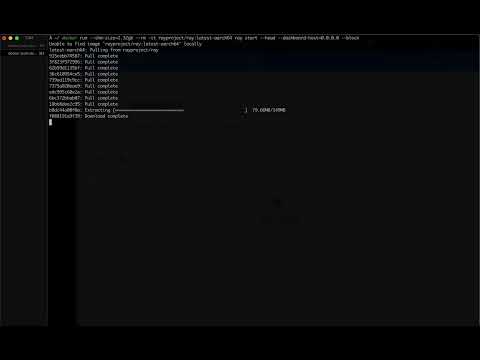
Video demonstrating running one of the Metasploit modules against Ray:
The easiest way to use the modules and scanning templates is to build and run the Docker image provided by the Dockerfile in this repository. The Docker image will have Metasploit and Nuclei already installed along with all the necessary configuration.
Build the image:
git clone https://github.com/protectai/ai-exploits && cd ai-exploits
docker build -t protectai/ai-exploits .
Run the docker image:
docker run -it --rm protectai/ai-exploits /bin/bash
The latter command will drop you into a bash session in the container with msfconsole and nuclei ready to go.
Start the Metasploit console (the new modules will be available under the exploits/protectai category), load a module, set the options, and run the exploit.
msfconsole
msf6 > use exploit/protectai/ray_job_rce
msf6 exploit(protectai/ray_job_rce) > set RHOSTS <target IP>
msf6 exploit(protectai/ray_job_rce) > run
Create a folder ~/.msf4/modules/exploits/protectai and copy the exploit modules into it.
mkdir -p ~/.msf4/modules/exploits/protectai
cp ai-exploits/ray/msfmodules/* ~/.msf4/modules/exploits/protectai
msfconsole
msf6 > use exploit/protectai/<exploit_name.py>
Nuclei is a vulnerability scanning engine which can be used to scan large numbers of servers for known vulnerabilities in web applications and networks.
Navigate to nuclei templates folder such as ai-exploits/mlflow/nuclei-templates. In the Docker container these are stored in the /root/nuclei-templates folder. Then simply point to the template file and the target server.
cd ai-exploits/mlflow/nuclei-templates
nuclei -t mlflow-lfi.yaml -u http://<target>:<port>
Cross-Site Request Forgery (CSRF) vulnerabilities enable attackers to stand up a web server hosting a malicious HTML page that will execute a request to the target server on behalf of the victim. This is a common attack vector for exploiting vulnerabilities in web applications, including web applications which are only exposed on the localhost interface and not to the broader network. Below is a simple demo example of how to use a CSRF template to exploit a vulnerability in a web application.
Start a web server in the csrf-templates folder. Python allows one to stand up a simple web server in any directory. Navigate to the template folder and start the server.
cd ai-exploits/ray/csrf-templates
python3 -m http.server 9999
Now visit the web server address you just stood up (http://127.0.0.1:9999) and hit F12 to open the developer tools, then click the Network tab. Click the link to ray-cmd-injection-csrf.html. You should see that the browser sent a request to the vulnerable server on your behalf.
We welcome contributions to this repository. Please read our Contribution Guidelines for more information on how to contribute.
This project is licensed under the Apache 2.0 License.
