 pqcworld/pqaudit
Scan codebases for quantum-vulnerable cryptography. Detect RSA, ECDSA, Ed25519, ECDH before Q-Day. CycloneDX CBOM + SARIF output.


Scan codebases for quantum-vulnerable cryptography. Get a clear picture of what needs to migrate before Q-Day.
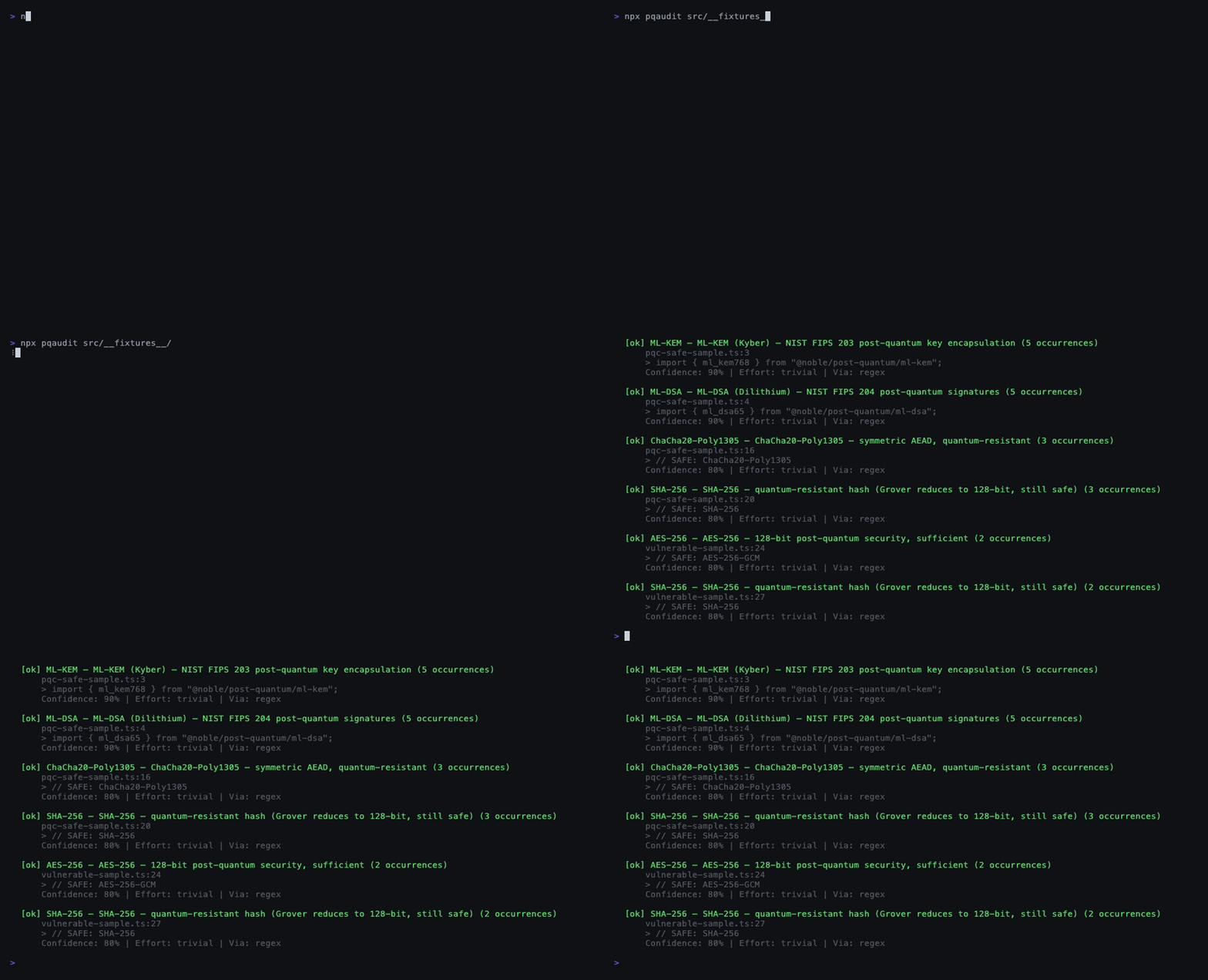
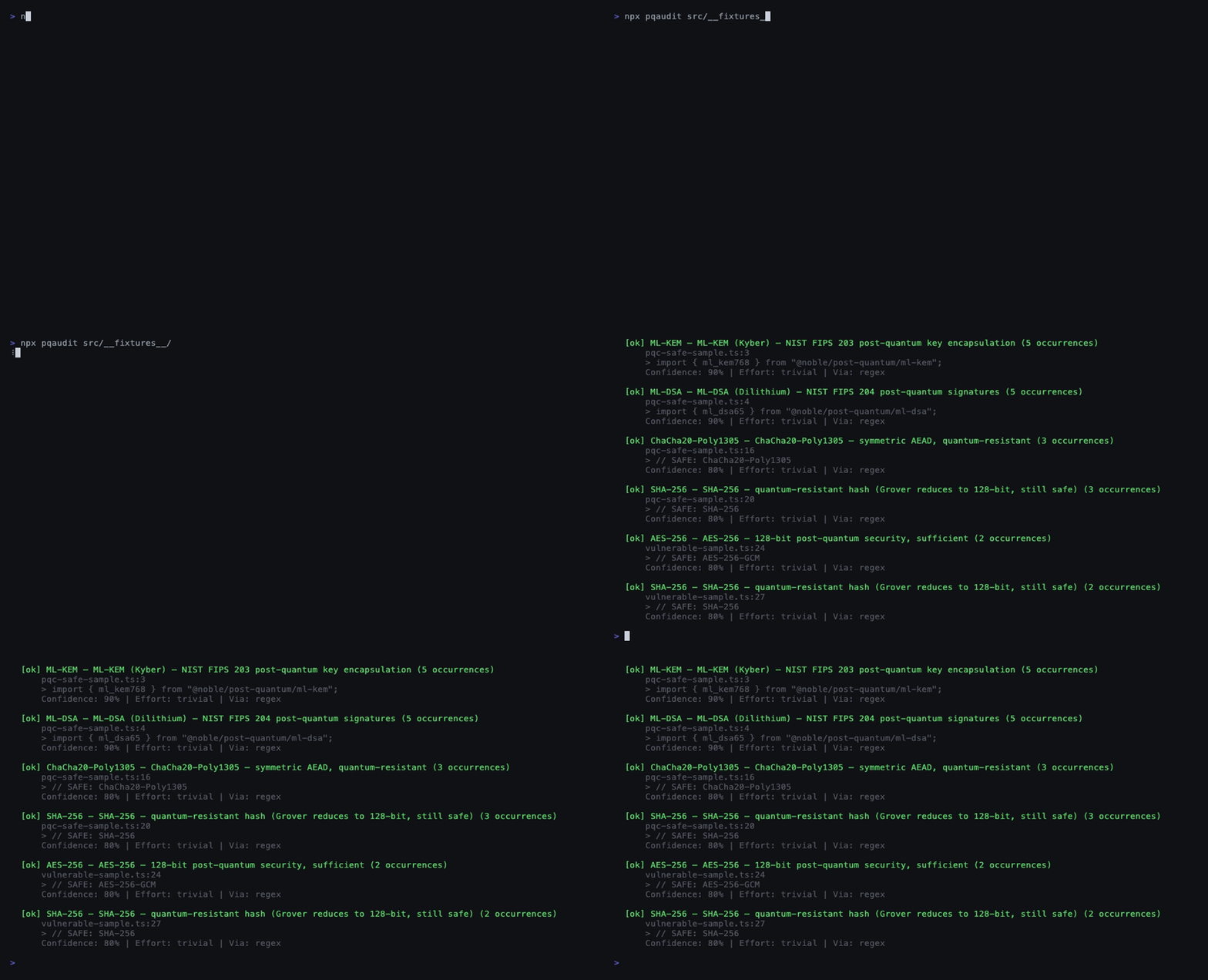
pqaudit detects usage of RSA, ECDSA, Ed25519, ECDH, DH, and other algorithms broken by Shor's algorithm. It also identifies already-migrated PQC usage (ML-KEM, ML-DSA, SLH-DSA) so you can track migration progress. Output as human-readable text, JSON, CycloneDX CBOM, SARIF for GitHub Code Scanning, or a self-contained HTML report.
On March 31, 2026, Google published research showing that breaking ECDSA-256 requires 20x fewer qubits than previously estimated — roughly 1,200 logical qubits and under 500,000 physical qubits. NSA's CNSA 2.0 mandates PQC for new national security systems by 2027. The migration window is open but closing.
npx pqaudit ./my-project
Or install globally:
npm install -g pqaudit
pqaudit ./my-project
# Scan current directory, human-readable output
pqaudit .

# Only show critical and high findings
pqaudit ./src --severity high

# Generate CycloneDX CBOM
pqaudit . --format cbom --output cbom.json

# Generate SARIF for GitHub Code Scanning
pqaudit . --format sarif --output results.sarif

# CI mode — exit code 1 if critical/high findings exist
pqaudit . --ci

# Show all findings including low-confidence comment matches
pqaudit . --min-confidence 0

# Show every occurrence instead of collapsing per file
pqaudit . --no-dedupe

# Skip dependency scanning
pqaudit . --no-deps

# Use custom rules
pqaudit . --rules ./my-rules.yaml

# Scan TLS/SSH endpoints for quantum-vulnerable crypto
pqaudit . --scan-endpoint api.example.com:443 --scan-endpoint git.example.com:22

# Scan endpoints only (no code scanning)
pqaudit --scan-endpoint example.com:443 --scan-endpoint example.com:22
| Flag | Description | Default |
|---|---|---|
-f, --format <format> | Output format: text, json, cbom, sarif, html | text |
-o, --output <file> | Write output to file | stdout |
-s, --severity <level> | Minimum severity: critical, high, medium, low, safe | safe |
--min-confidence <0-100> | Filter findings below this confidence threshold | 50 |
--no-dedupe | Show all occurrences instead of collapsing per file | dedupe on |
--no-deps | Skip dependency scanning | scan deps |
--include <patterns...> | Glob patterns to include | all source files |
--exclude <patterns...> | Additional glob patterns to exclude | node_modules, dist, etc. |
--rules <path> | Path to custom rules YAML file | built-in rules |
--scan-endpoint <endpoints...> | TLS/SSH endpoints to probe (host:port) | none |
--network-timeout <ms> | Network connection timeout | 5000 |
--ci | Exit code 1 if critical or high findings exist | off |
  pqaudit — Post-Quantum Cryptography Readiness Scanner
  Scanned: ./my-project

  NOT PQC READY — Quantum-vulnerable cryptography detected

  Files scanned: 65  |  Findings: 12
  Critical: 7  High: 2  Medium: 1  Low: 0  Safe: 2

  --- CRITICAL (7) ---

  [!!] Ed25519 — Ed25519 signatures — vulnerable to Shor's algorithm (14 occurrences)
      src/crypto/signing.ts:14
      > import { sign, verify } from "@noble/ed25519";
      Fix: ML-DSA-65 (FIPS 204) or hybrid Ed25519+ML-DSA-65
      Confidence: 98% | Effort: moderate | Via: ast

  [!!] RSA — RSA signature — vulnerable to quantum factoring (3 occurrences)
      src/auth/jwt.ts:42
      > jwt.sign(payload, key, { algorithm: "RS256" });
      Fix: ML-DSA-65 (FIPS 204)
      Confidence: 96% | Effort: complex | Via: ast

  [!!] ECDSA — Certificate uses ECDSA 256-bit key — vulnerable to Shor's algorithm
      tls://api.example.com:443
      > ECDSA 256-bit key, TLSv1.3
      Fix: Post-quantum certificate algorithms when available
      Confidence: 100% | Effort: complex | Via: network
  ...
| Algorithm | Threat | Replacement |
|---|---|---|
| RSA (any key size) | Shor's algorithm | ML-KEM-768 / ML-DSA-65 |
| ECDSA / Ed25519 | Shor's on elliptic curves | ML-DSA-65 (FIPS 204) |
| ECDH / X25519 / DH | Shor's on key exchange | ML-KEM-768 (FIPS 203) |
| DSA | Shor's algorithm | ML-DSA-65 (FIPS 204) |
| Algorithm | Threat | Replacement |
|---|---|---|
| AES-128 | Grover reduces to 64-bit | AES-256 |
| TLS 1.0/1.1, SSLv3 | Deprecated protocols | TLS 1.3 |
| SSH (detected via network) | DH/ECDH key exchange | PQ hybrid key exchange |
ML-KEM (Kyber), ML-DSA (Dilithium), SLH-DSA (SPHINCS+), AES-256, ChaCha20-Poly1305, SHA-256, SHA-3
Generates a Cryptographic Bill of Materials conforming to CycloneDX 1.6. Each cryptographic finding becomes a crypto-asset component with cryptoProperties, NIST quantum security levels, and evidence locations.
pqaudit . --format cbom --output cbom.json
Generates SARIF 2.1.0 output compatible with GitHub's code scanning. Upload via github/codeql-action/upload-sarif.
pqaudit . --format sarif --output results.sarif
Self-contained HTML file with a visual dashboard — severity breakdown, PQC readiness score, and findings table. No external dependencies, works offline.
pqaudit . --format html --output report.html
name: PQC Audit
on: [push, pull_request]
jobs:
  pqaudit:
    runs-on: ubuntu-latest
    steps:
      - uses: actions/checkout@v4
      - uses: actions/setup-node@v4
        with:
          node-version: "20"
      - run: npx pqaudit . --format sarif --output pqaudit.sarif --ci
      - uses: github/codeql-action/upload-sarif@v3
        if: always()
        with:
          sarif_file: pqaudit.sarif
          category: pqaudit
pqaudit checks manifest files for known cryptographic libraries across five ecosystems:
| Ecosystem | Manifest files | Example packages |
|---|---|---|
| npm | package.json | @noble/ed25519, node-rsa, jsonwebtoken, ethers |
| Rust | Cargo.toml | ed25519-dalek, rsa, ring, p256, pqcrypto |
| Go | go.mod | golang.org/x/crypto, cloudflare/circl |
| Python | requirements.txt, pyproject.toml | cryptography, pycryptodome, paramiko |
| Java | build.gradle, pom.xml | BouncyCastle, Google Tink |
PQC-safe libraries (@noble/post-quantum, pqcrypto, cloudflare/circl) are flagged as safe for inventory tracking.
Rules are defined in YAML:
- id: MY_CUSTOM_RULE
  description: "Custom quantum-vulnerable pattern"
  severity: critical
  category: signature
  algorithm: MyAlgo
  replacement: ML-DSA-65
  effort: complex
  languages: ["javascript", "typescript"]
  patterns:
    - "myVulnerableFunction\\("
    - "import.*myVulnerableLib"