 oxfemale/cve-2026-2636_poc
Proof-of-concept for CVE-2026-2636, a Windows CLFS.sys vulnerability causing BSoD via ReadFile on CreateLogFile handle, enabling unprivileged denial of service.

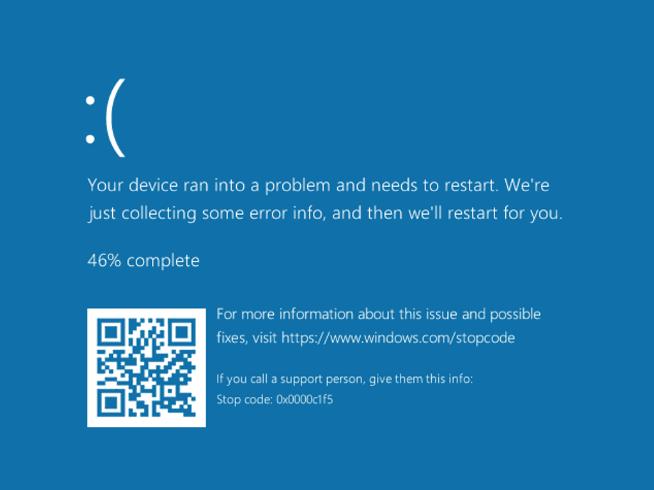
CVE-2026-2636 is a vulnerability in the Windows Common Log File System (CLFS) driver (CLFS.sys). An unprivileged user can trigger an unrecoverable system state by calling the ReadFile API on a handle opened via CreateLogFile. This results in a Blue Screen of Death (BSoD), leading to a denial of service (DoS).
CVSS Vector: (Awaiting Official Assignment)
Impact: Denial of Service (System Crash)
Discovered: 2025
Patch Release: September 2025 Cumulative Update
| Version | Status |
|---|---|
| Windows 11 23H2 and earlier | ? Vulnerable |
| Windows 11 2024 LTSC (pre-September 2025) | ? Vulnerable |
| Windows Server 2025 (pre-September 2025) | ? Vulnerable |
| Windows 11 2024 LTSC (with Sep 2025 update) | ? Patched |
| Windows Server 2025 (with Sep 2025 update) | ? Patched |
| Windows 25H2 (released September 2025) | ? Patched |
The vulnerability stems from CWE-159: Improper Handling of Invalid Use of Special Elements. Specifically, the CLFS driver fails to properly validate the combination of flags in the I/O Request Packet (IRP) associated with a read operation on a CLFS log file.
When a read operation is initiated via ReadFile on a handle created by CreateLogFile, the system generates an IRP with specific flags:
| Flag | Value | Description |
|---|---|---|
IRP_PAGING_IO | 0x02 | Indicates I/O relates to memory paging (paging file or memory-mapped files) |
IRP_INPUT_OPERATION | Varies | Indicates the I/O operation involves input data transfer |
Critical Insight: For correct function behavior, at least one of these flags should be enabled. In the PoC scenario, both are disabled, which leads to the incorrect handling path that triggers the BSoD.
While the CLFS subsystem has been a source of past vulnerabilities (often related to crafted .blf files), this issue is unique because:
The PoC is deliberately minimal and consists of only two main API calls, demonstrating the simplicity of the trigger:
