 orensv/characterization-and-detection-of-cross-router-covert-channels
This repository includes the source code used in the "Characterization and Detection of Cross-Router Covert Channels" paper.

This repository contains the source code used in the paper "Characterization and Detection of Cross-Router Covert Channels". To access the paper, go to Dr. Oren's laboratory website: orenlab.
The full data used in the paper is accessible with this link.
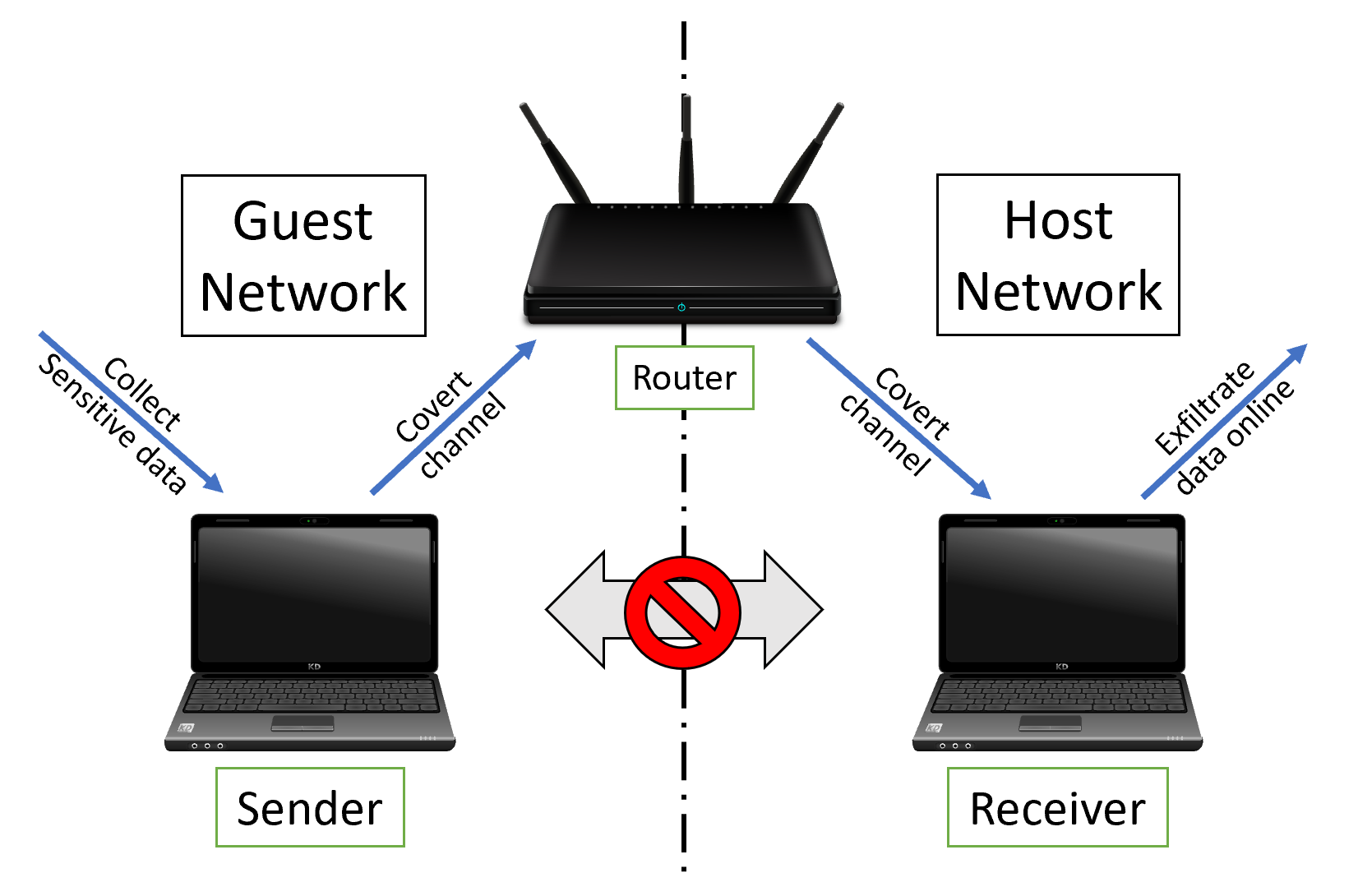
The paper presentes two network timing covert channel that break logical isolation between two networks hosted by a single shared router: CRCC and Wi-Fi Micro-jamming attacks.
By using these covert channels, we were able to leak information between the two networks, even though the overt communication is blocked.
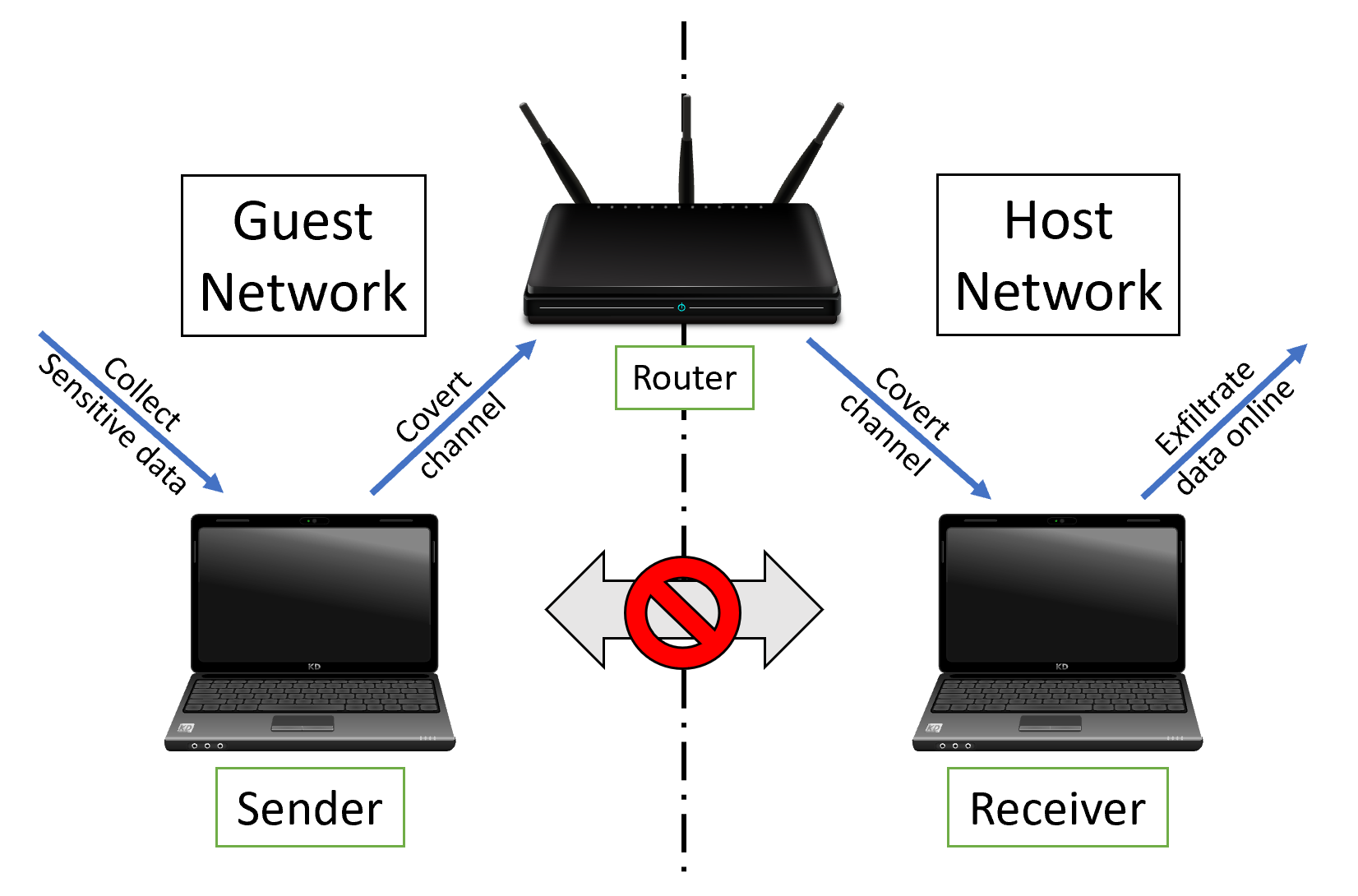
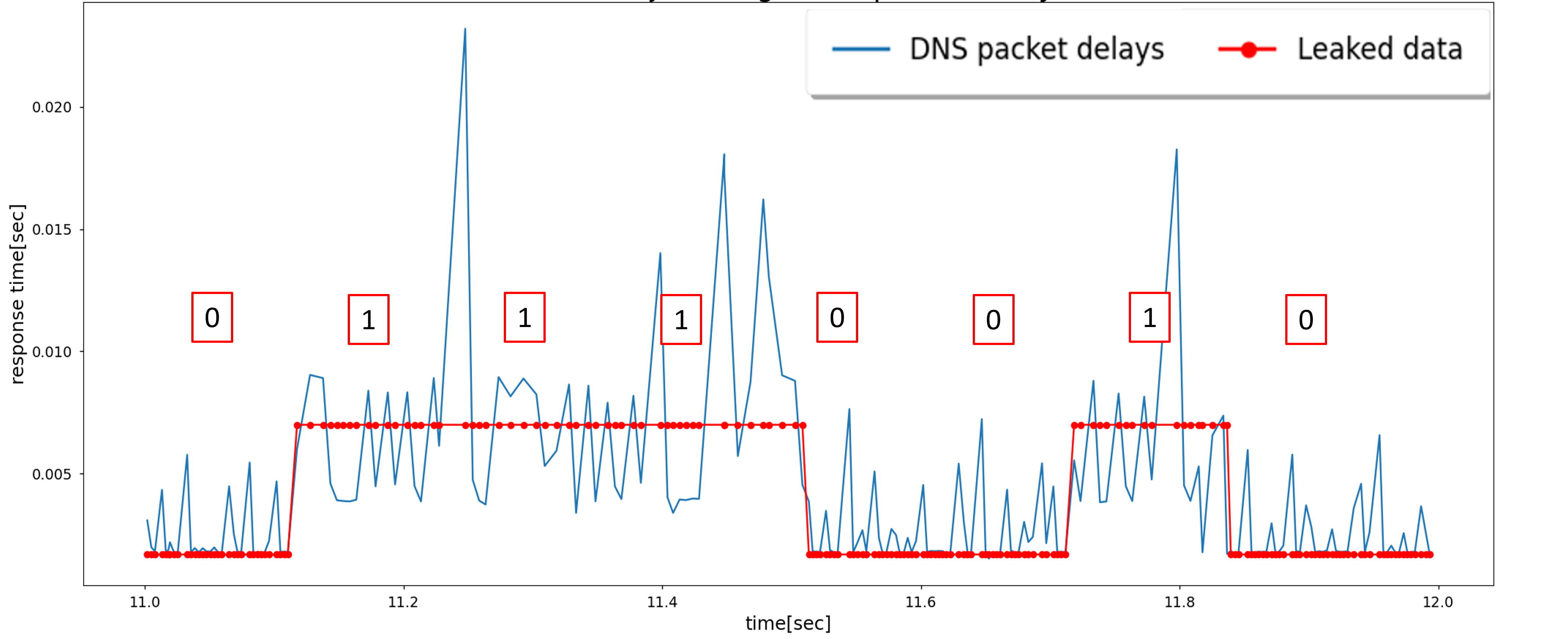
Both attacks deliberately exhausta the router's physical resources according to the leaked information bits. By doing so, a machine in the host network can signal the information to a machine in the guest network that periodically measures the router's response times. Normal response times are associated with the '0' bit, and large response times are associated with the '1' bit.
The paper also presents a method of detecting both attacks using a ML/DL detector. The models extract behavioral features from the network traffic and can detect anomalies caused by these attacks. The models used are semi-supervised models that perform novelty detection.
To detect the attacks we used:
The Attacks folder contains the source code for both attacks along with documents and pictures to help assembling their setup.
The Defense folder contains the source code of the ML/DL detector, the feature extractor, and the actual features used in the paper.
Main author: Oren Shvartzman ([email protected])
Co-authors: Adar Ovadya, Kfir Zvi, Omer Schwartz, Rom Ogen, Yakov Mallah, Niv Gilboa, and Yossi Oren
This work was supported by Israel Science Foundation grants 702/16 and 703/16. We thank Eyal Ronen for providing the inspiration and equipment for initiating our Wi-Fi micro-jamming research. We also thank Clémentine Maurice for providing the motivation for our cross-router covert channel research, and our WOOT shepherd, Paul Pearce, for helping us improve the paper. Finally, we would like to thank Yagel Netanel for designing and implementing large parts of the CRCC attack system which was used to collect data for this research.
