
Skip to content
KitploitKITPLOIT
ToolsBlog
Submit
ToolsBlog
Submit

Hacking, PenTest, and Cybersecurity Tools for Your Security Arsenal!

Kitploit is a directory of hacking, cybersecurity, and pentesting tools. Discover the latest project updates to find vulnerabilities, analyze systems, automate testing, and strengthen your security.

··Feeds·Contact·Privacy·© 2026 Kitploit

Tool Directory

Categories

View all categories
Loading categories
CVE-2025-15474 — A denial-of-service vulnerability in the AuntyFey BLE smart padlock allows unauthenticated connection floods to lock out legitimate users. CVE-2025-15474 | Kitploit
Tools/GitHubGitHub/nsm-barii/cve-2025-15474
Bluetooth SecurityIoT SecurityVulnerability AnalysisExploitationWireless SecurityHardware & IoT SecurityLearning & Education
GitHubnsm-barii/cve-2025-15474

CVE-2025-15474

A denial-of-service vulnerability in the AuntyFey BLE smart padlock allows unauthenticated connection floods to lock out legitimate users. CVE-2025-15474

View Repository
47 months agoNot yet reviewed

Most Popular

View all →

Discover the most used tools by our community.

Explore all tools

Browse our collection of tools

View all tools →
Share

BLE Smart Lock Denial-of-Service (DoS) Vulnerability

An unauthenticated Bluetooth Low Energy (BLE) connection flood can reliably prevent legitimate users from unlocking the device by interrupting keypad input and forcing repeated lockout states.


📌 Summary

This repository documents a Denial-of-Service (DoS) vulnerability affecting a commercial BLE smart padlock
(Amazon Product).

The device exposes a static BLE MAC address (no RPA) and accepts unauthenticated connection attempts.
By repeatedly initiating BLE connections in a loop, an attacker can interfere with the lock’s keypad authentication flow, preventing users from completing PIN entry.

This behavior is not caused by incorrect password attempts — the user is denied sufficient time to enter the PIN before the device forcibly enters a lockout state.


🔥 Impact

  • ❌ Prevents legitimate users from unlocking the device
  • ⛔ Keypad becomes unresponsive mid‑input
  • 🔁 Forced lockout occurs every 10–15 seconds
  • 🧠 Lockout is triggered by BLE interference, not invalid PIN attempts
  • 🔓 Works on both default and custom configurations
  • 📡 Target uses a static MAC address, allowing persistent tracking
  • 🚫 No pairing or authentication required

As long as the attack is sustained, the device remains effectively unusable.


🧪 Attack Prerequisites

  • BLE-capable Linux
  • Python 3.x
  • bleak Python library
  • Target MAC address (device must broadcast it after physical button press)

🚀 Proof of Concept (PoC)

Step 1: Install Dependencies

root@kitploit:~
python3 -m venv venv
source venv/bin/activate
pip install bleak

Step 2: Run the Attack

root@kitploit:~
python3 poc.py -m <target_mac>

This initiates unauthenticated BLE connection attempts in a loop.
The lock becomes unusable, consistently interrupting user input and forcing lockout behavior.


📷 Demo

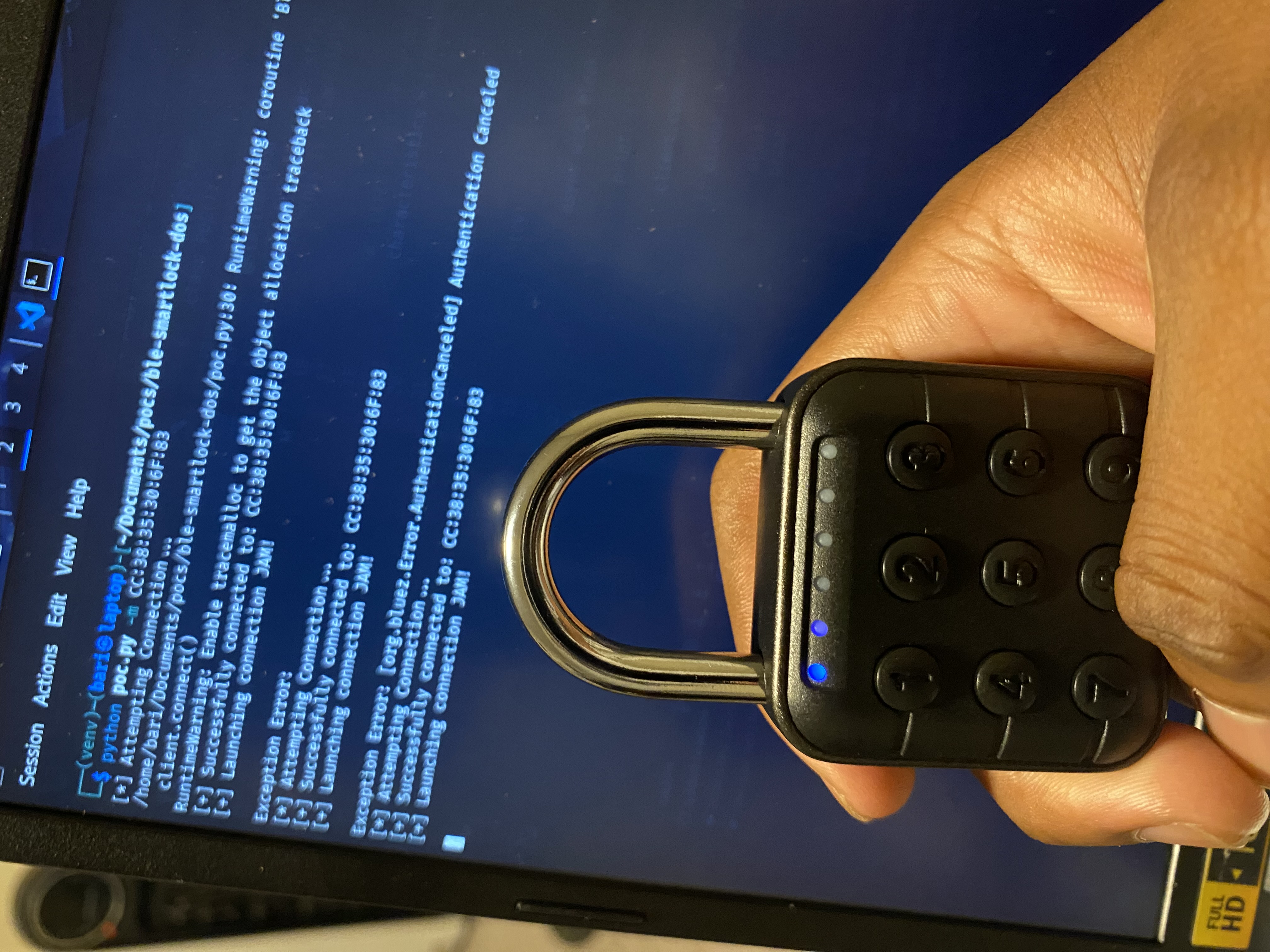
Below is a still image from a live attack session where the device's keypad was rendered non-functional:
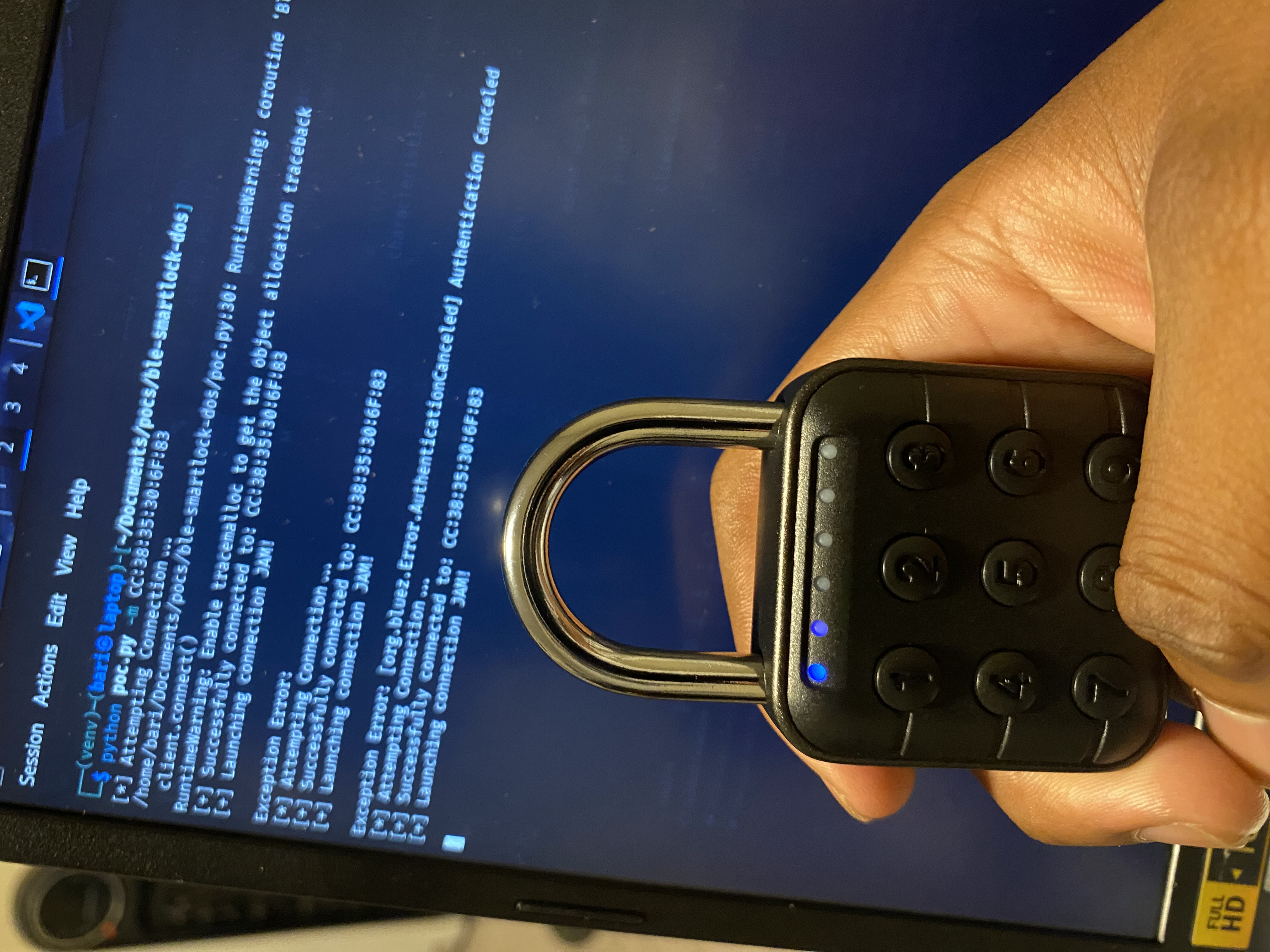
Attack in action


🛑 Legal Disclaimer

This proof-of-concept is provided strictly for educational and responsible disclosure purposes.

  • Do not test this on devices you don’t own or lack permission to assess
  • This tool must not be used for malicious activity
  • The author takes no responsibility for misuse

This vulnerability is being reported responsibly to the vendor and relevant CVE authorities.


🕒 Disclosure Timeline

  • Vulnerability discovered: 2025
  • Reported to: MITRE + VulnCheck
  • CVE status: Assigned
  • Researcher: nsm_barii
    GitHub: https://github.com/nsm-barii

🔗 References

  • Amazon Product: https://www.amazon.com/dp/B0F9L1M4XG
  • GitHub Repo: https://github.com/nsm-barii/CVE-2025-34462
Download Tool