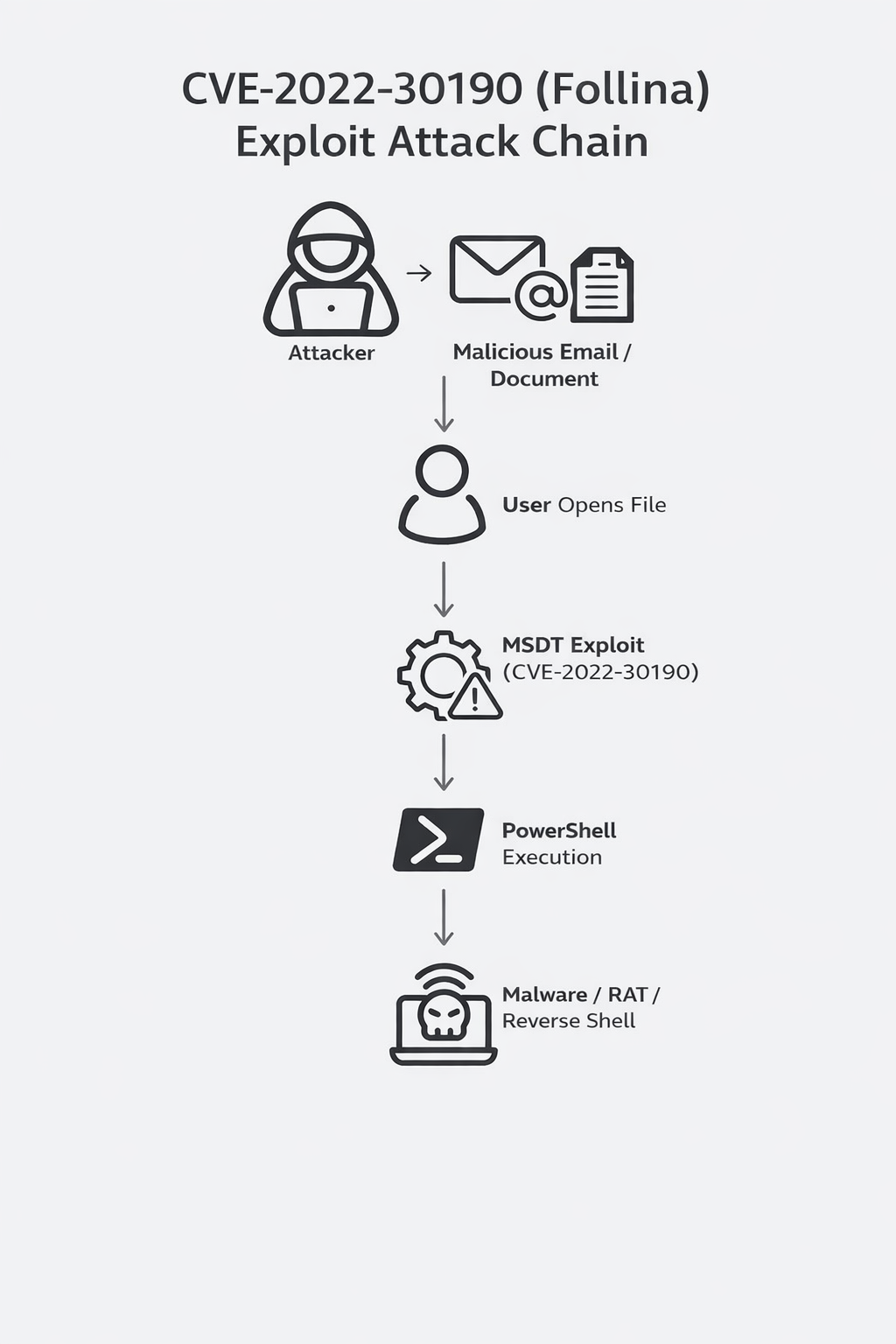
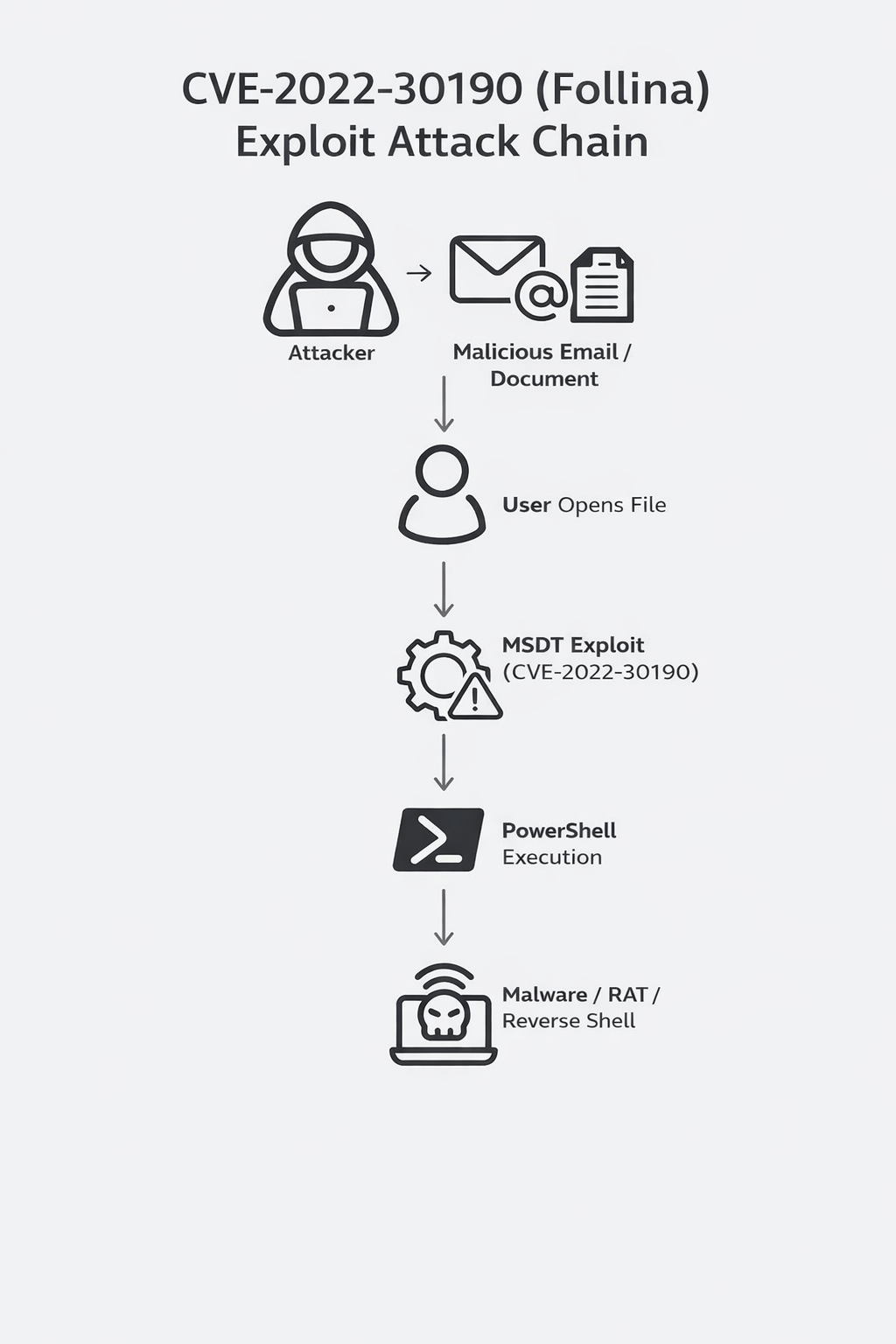
 nimesh895/malware-analysis-follina-cve-2022-30190
Step-by-step static malware analysis of a Follina (CVE-2022-30190) exploit document, covering file extraction, VirusTotal correlation, MITRE ATT&CK mapping, and indicator identification.

Malicious Microsoft Word Document Investigation
During a practical malware analysis session on Kali Linux, I encountered a suspicious file named sample.doc. I decided to perform a structured static analysis to understand its nature and behavior without executing it.
This document describes the exact steps I took, the observations I made, and the conclusions I reached.
All work was performed in an isolated Oracle VirtualBox VM running Kali Linux.
I first located the file in the Downloads/sample folder using the file manager.
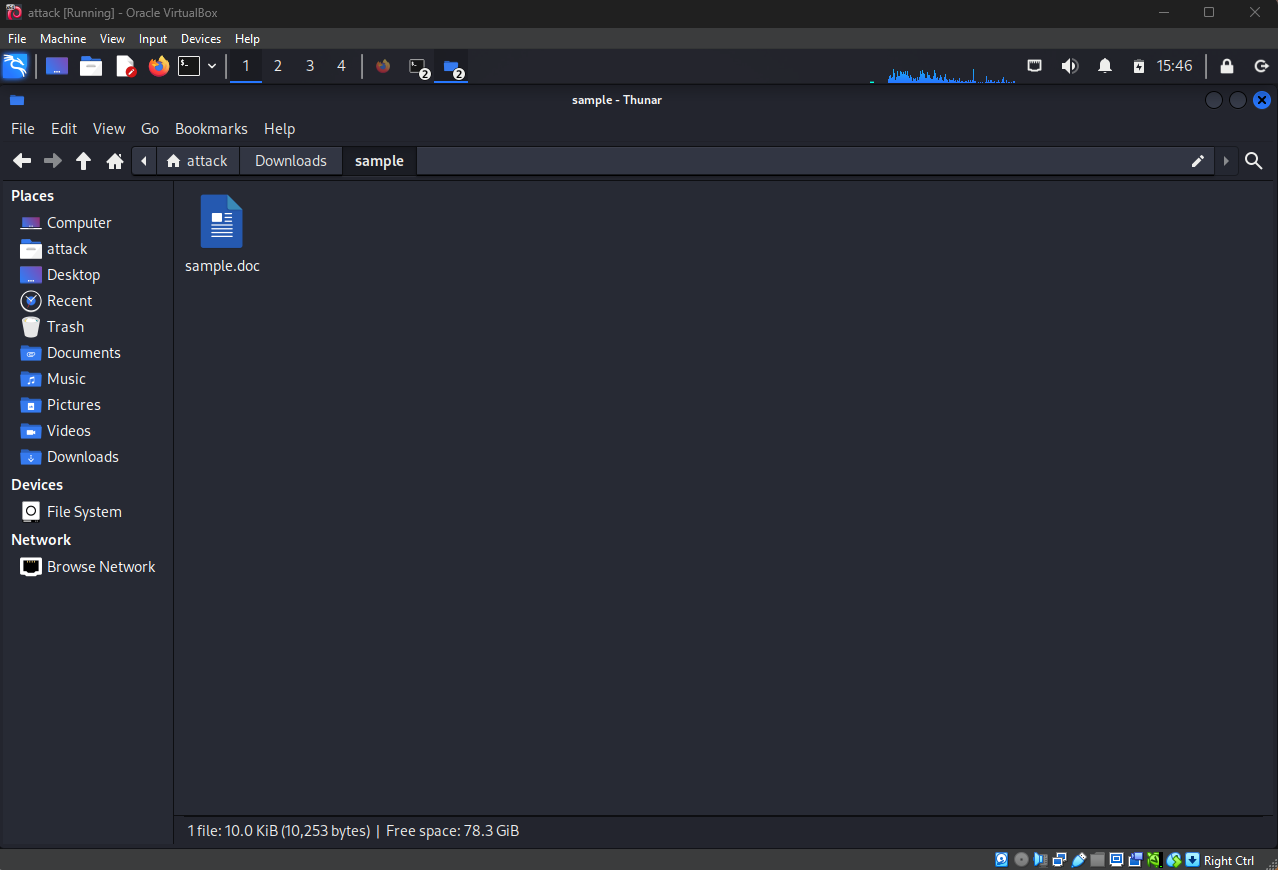
At this point I already suspected it might be malicious due to the context in which I obtained it, so I moved directly to threat intelligence validation.
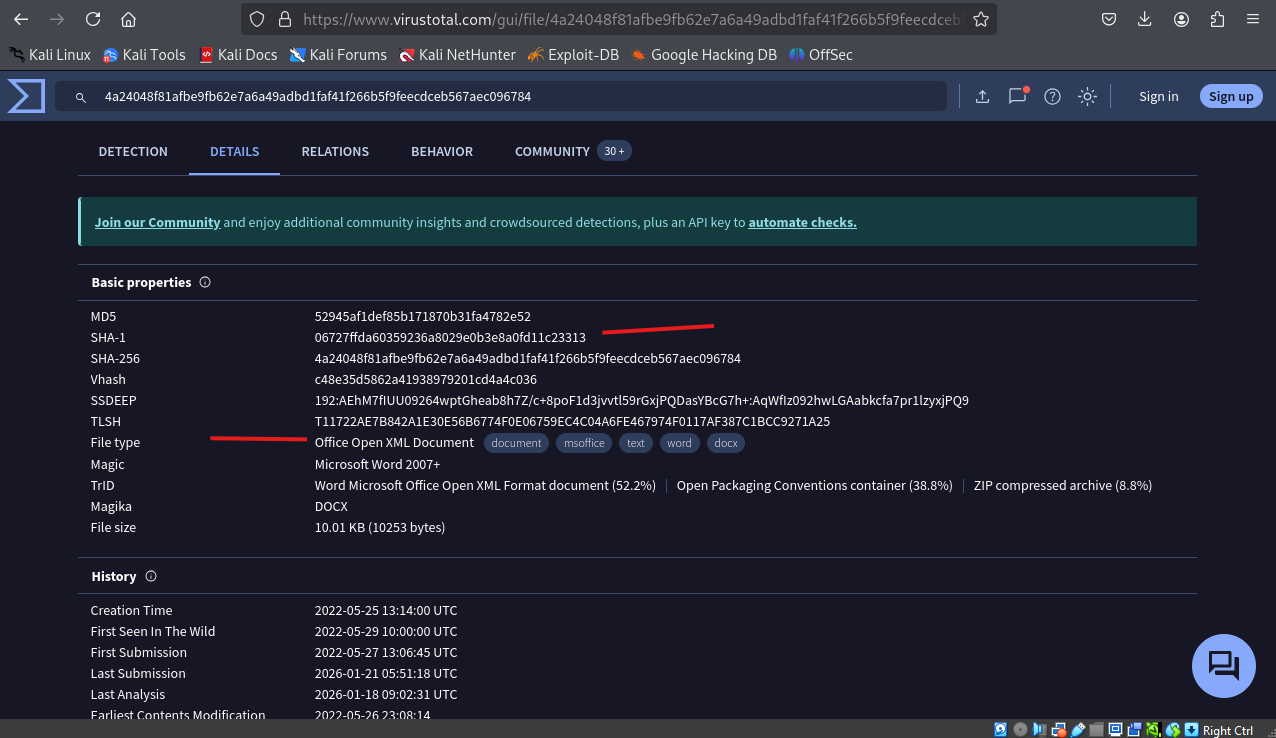
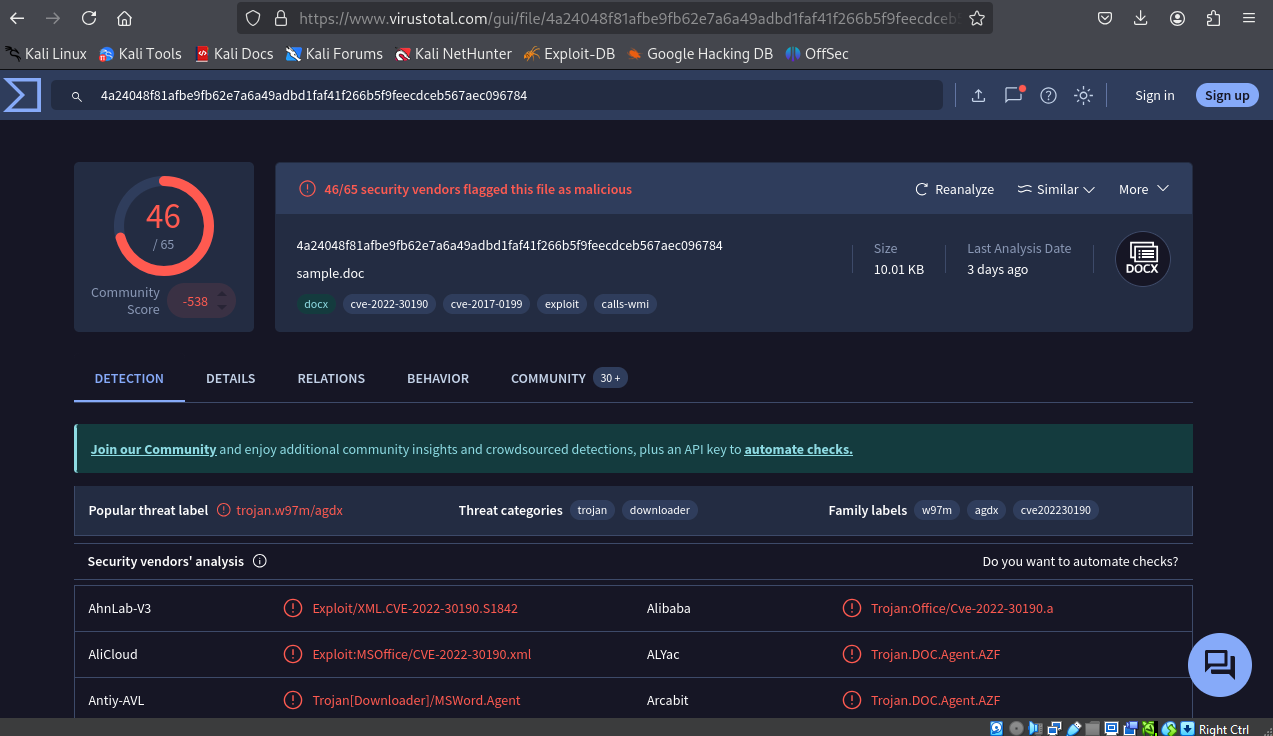
I uploaded the file to VirusTotal and immediately checked the overview:
This strongly suggested an exploit-based document rather than a conventional macro malware.
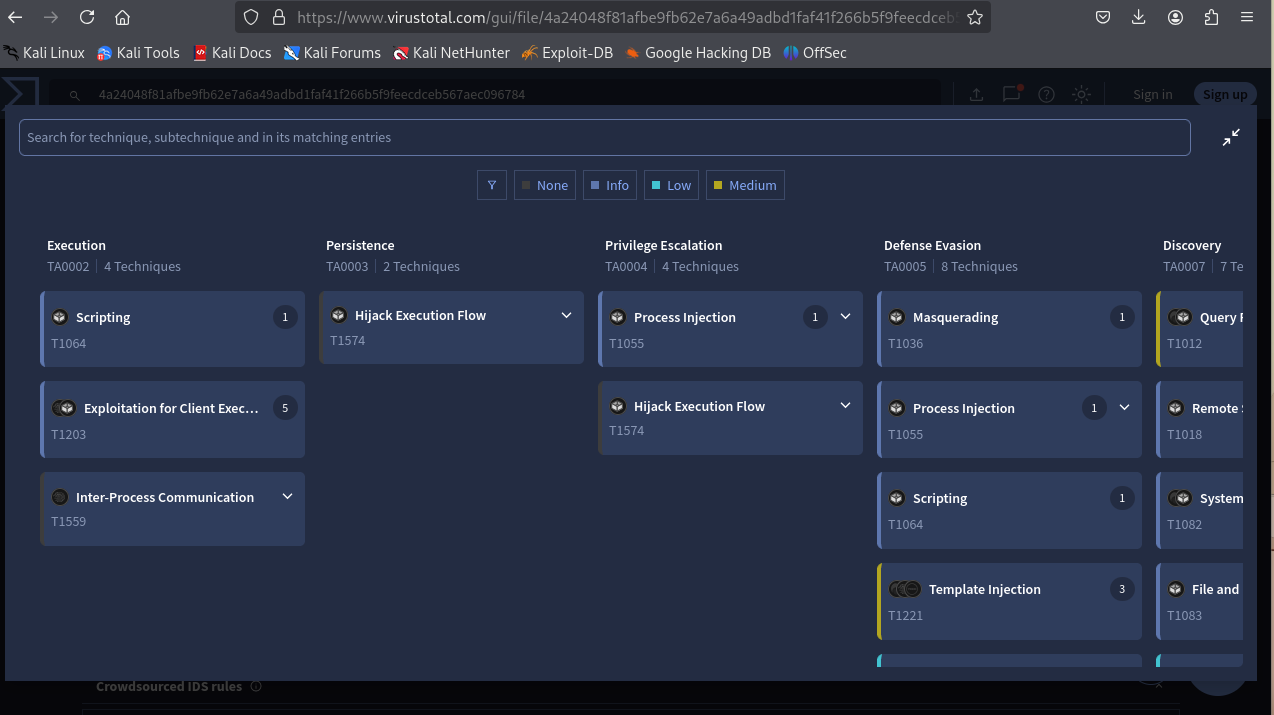
In the Behavior tab I examined the MITRE ATT&CK mapping that VirusTotal community / sandboxes associated with this sample.
Most relevant under the Execution tactic:
This immediately pointed toward a technique abusing inter-process mechanisms – very characteristic of the Follina / MSDT abuse chain.
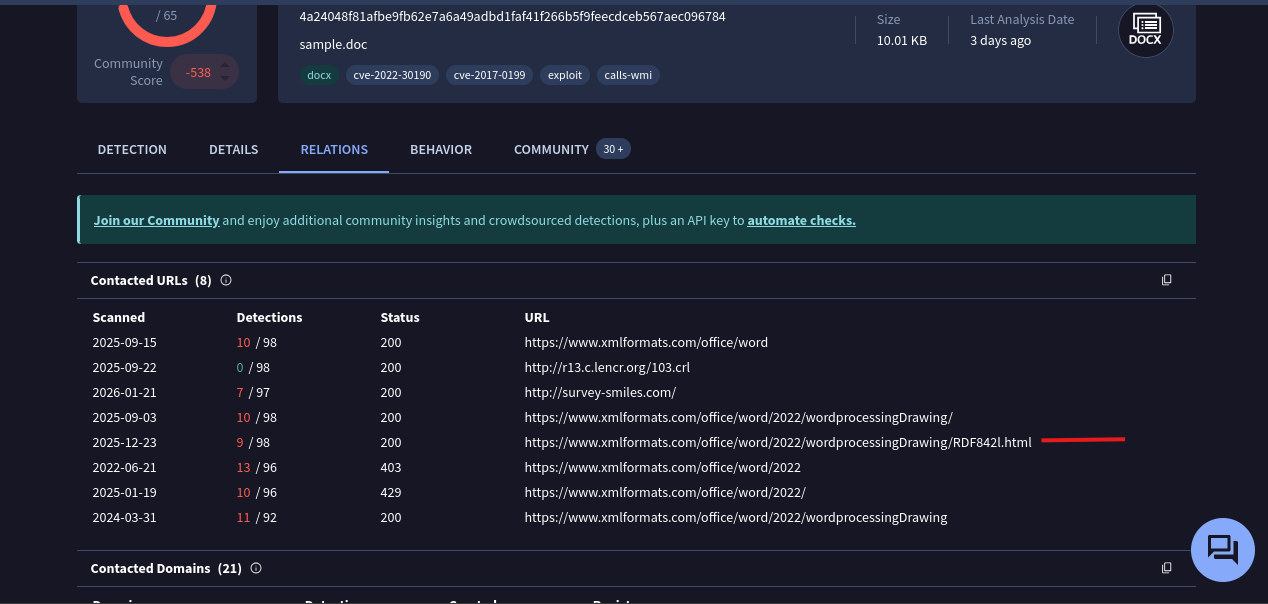
The Relations → Contacted URLs section revealed the most important indicator:
Multiple fetches to domains under xmlformats.com (spoofing legitimate Microsoft XML schema domains), especially paths containing:
These URLs are fetched automatically when Microsoft Word processes the external relationship inside the document.
This is the classic Follina delivery mechanism: an external HTML reference in document.xml.rels that triggers the ms-msdt: protocol handler.
Knowing that modern Office files are ZIP archives, I extracted the contents using unzip:
unzip sample.doc

Questions or feedback? → Open an issue or connect on LinkedIn: www.linkedin.com/in/nimesh23

🛡️
