

AI-powered security co-pilot that catches vulnerabilities as you code. Real-time security scanning, educational explanations, and auto fixes for developers.



Your AI-Powered Security Guardian — Now Connected to Live Attacker Intelligence
Features • Architecture • Raven Integration • Installation • Roadmap • Contributing
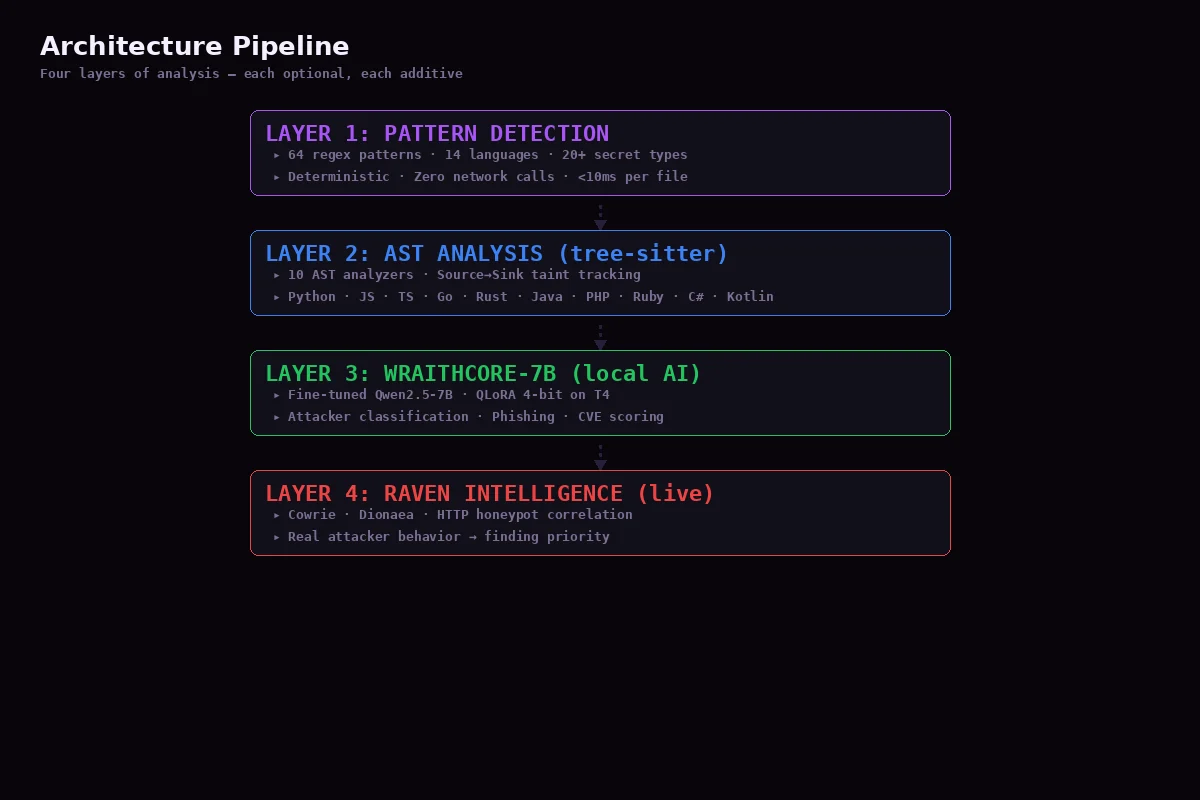
CodeGuard Copilot catches security vulnerabilities as you code, not after you commit. It combines deterministic regex pattern detection with AI-powered deep analysis and live attacker intelligence from the Raven/WraithWall ecosystem to give you context no other VS Code security extension can.
What makes it different:
.codeguard.json custom rule configuration — regex, severity, CWE, per-file
 │ │ │ │
│ │ ┌─────────────┐ ┌────────────────┐ │ │
│ │ │ Knowledge │ │ Raven Bridge │ │ │
│ │ │ Graph │ │ ← attacker data │ │ │
│ │ │ finding→CWE │ │ → threat intel │ │ │
│ │ │ →MITRE→fix │ │ │ │ │
│ │ └─────────────┘ └────────────────┘ │ │
│ └──────────────────┬───────────────────┘ │
│ │ │
│ ▼ │
│ ┌──────────────────────────────────────┐ │
│ │ Developer Feedback │ │
│ │ QuickFix · Explain · Suppress · Fix │ │
│ │ Training · Report · CI/CD │ │
│ └──────────────────────────────────────┘ │
│ │
└──────────────────────────────────────────────┘
│
▼
┌──────────────────────────────────────────────┐
│ WraithWall / Raven │
│ │
│ Cowrie Honeypot → Attacker Telemetry │
│ Campaign Correlation → Behavioral DNA │
│ CISA KEV → OWASP → Composite Scoring │
│ Cross-Repo Systemic Patterns │
│ Dark-Web Breach Monitoring │
└──────────────────────────────────────────────┘
│ │ │ │
│ │ ┌─────────────┐ ┌────────────────┐ │ │
│ │ │ Knowledge │ │ Raven Bridge │ │ │
│ │ │ Graph │ │ ← attacker data │ │ │
│ │ │ finding→CWE │ │ → threat intel │ │ │
│ │ │ →MITRE→fix │ │ │ │ │
│ │ └─────────────┘ └────────────────┘ │ │
│ └──────────────────┬───────────────────┘ │
│ │ │
│ ▼ │
│ ┌──────────────────────────────────────┐ │
│ │ Developer Feedback │ │
│ │ QuickFix · Explain · Suppress · Fix │ │
│ │ Training · Report · CI/CD │ │
│ └──────────────────────────────────────┘ │
│ │
└──────────────────────────────────────────────┘
│
▼
┌──────────────────────────────────────────────┐
│ WraithWall / Raven │
│ │
│ Cowrie Honeypot → Attacker Telemetry │
│ Campaign Correlation → Behavioral DNA │
│ CISA KEV → OWASP → Composite Scoring │
│ Cross-Repo Systemic Patterns │
│ Dark-Web Breach Monitoring │
└──────────────────────────────────────────────┘
---

## Raven Intelligence Bridge

CodeGuard Copilot is the **frontend intelligence consumer** for Raven's attacker telemetry pipeline. When Cowrie honeypots observe real attackers using exploitation techniques, the patterns flow into CodeGuard:
Attacker uses SQL injection on honeypot ↓ Raven detects: CWE-89, credential_access, threat_score=85 ↓ RavenIntelBridge.ingestEvent() receives event ↓ Generates candidate CodeGuard pattern at confidence 0.85 ↓ Proposed pattern: "SQL Injection (attacker-observed)" ↓ Human review → published as CodeGuard rule ↓ Developers protected against the actual exploit
Conversely, when CodeGuard finds a vulnerability, it generates structured Raven feedback:
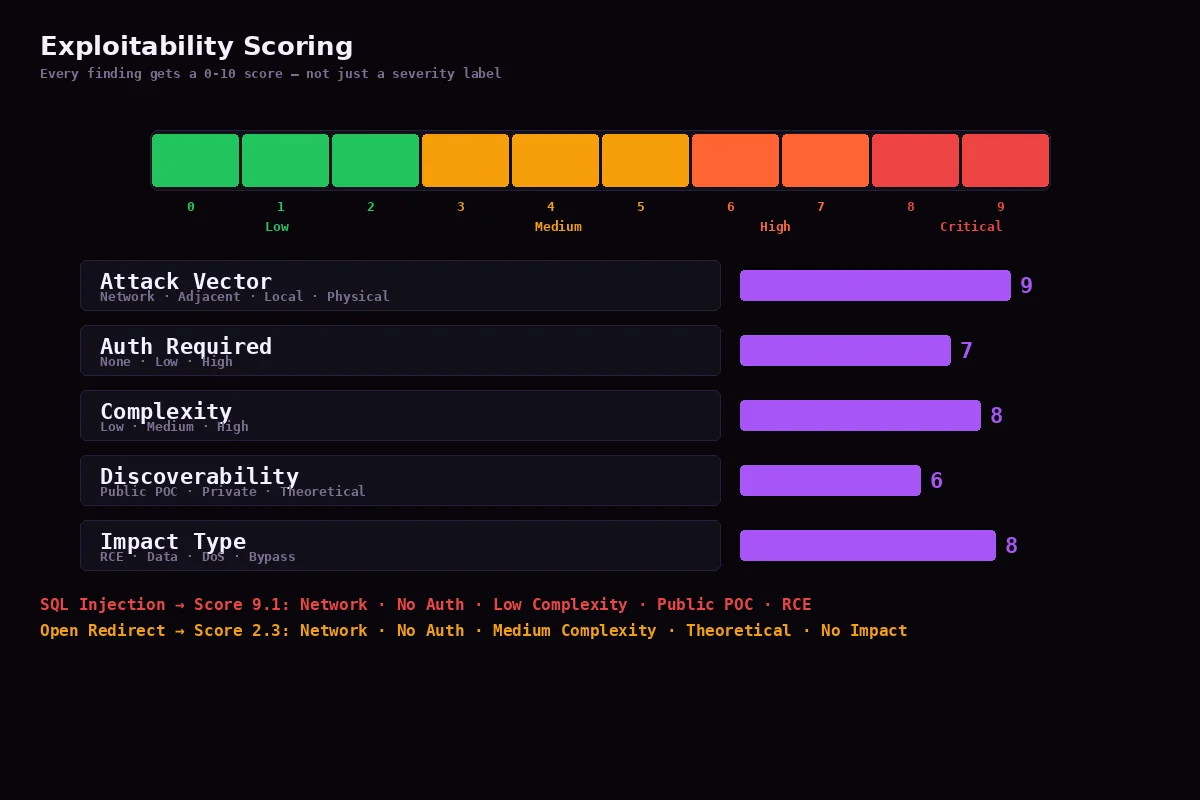
CodeGuard finding: CWE-798 hardcoded secret in auth/login.js ↓ RavenThreatFeedback.generateIntelligence() ↓ MITRE techniques: T1552, T1078 ↓ Raven priority score: 72 (network attack vector, low complexity) ↓ Raven elevates this finding in composite scoring ↓ SOC team sees: "Attacker-aligned credential finding in production repo"
---

## Detected Vulnerability Categories

### Critical
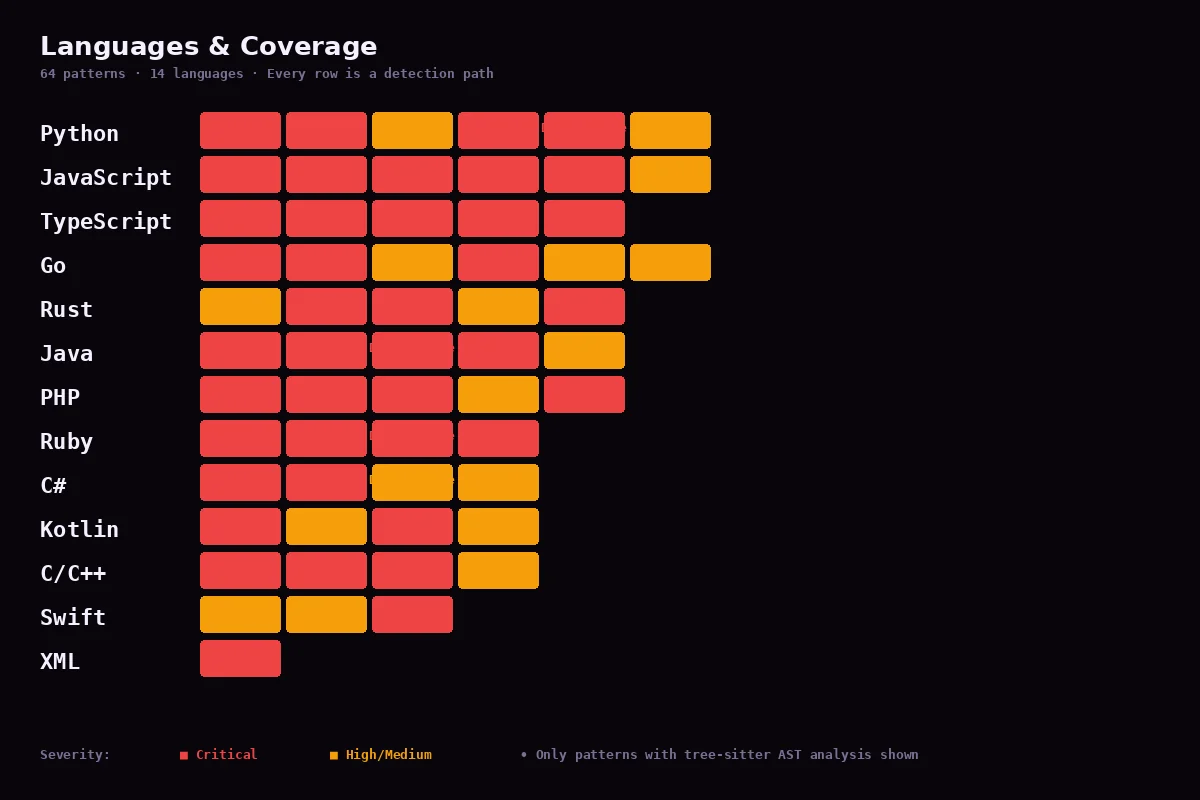
SQL Injection (CWE-89), Command Injection (CWE-78), NoSQL Injection (CWE-943), Hardcoded Secrets (CWE-798), Insecure Deserialization (CWE-502)

### High
XSS (CWE-79), DOM-based XSS, Path Traversal (CWE-22), File Upload (CWE-434), Weak Crypto (CWE-327), Unsafe Blocks (Rust), Unescaped HTML (Go)

### Medium
CORS Misconfiguration (CWE-942), Open Redirect (CWE-601), Insecure Random (CWE-338), ReDoS (CWE-1333), Memory Leak (C++), Mass Assignment (Ruby)

### Low
Weak Password Storage, Express Trust Proxy, Missing Security Headers, Framework anti-patterns

### Language-specific (18 new)
Go: SQLi, Insecure Random, Hardcoded Secret, Unescaped HTML
Rust: Unsafe Block, Hardcoded Secret, Command Injection, Weak Crypto
C++: Buffer Overflow, Memory Leak, SQL Injection
C#: SQL Injection, Connection String, Insecure Deserialization
Ruby: SQL Injection, Command Injection, Mass Assignment, Unsafe YAML

---

## Fine-Tuned Security Model (v0.3.1)
