 nbs32k/localstranger
PoC for WinNotify, demonstrated through a driver mapper, and local privilege escalation.

LocalStranger is a Proof of Concept project designed to demonstrate how dangerous a vulnerable kernel-mode driver actually is.
WinNotify.sys (as I call it, msft.sys), is a very dangerous vulnerable driver exposing arbitrary kernel primitives due to a complete lack of caller validation.
Unexpectedly, the driver is signed under the Microsoft Windows Hardware Compatibility Publisher partnership program and to this date, hasn't been added to the
Microsoft Vulnerable Driver Blocklist. Apparently, as long as it isn't actively leveraged in the wild by a threat group, it basically isn't treated as anyone's problem.
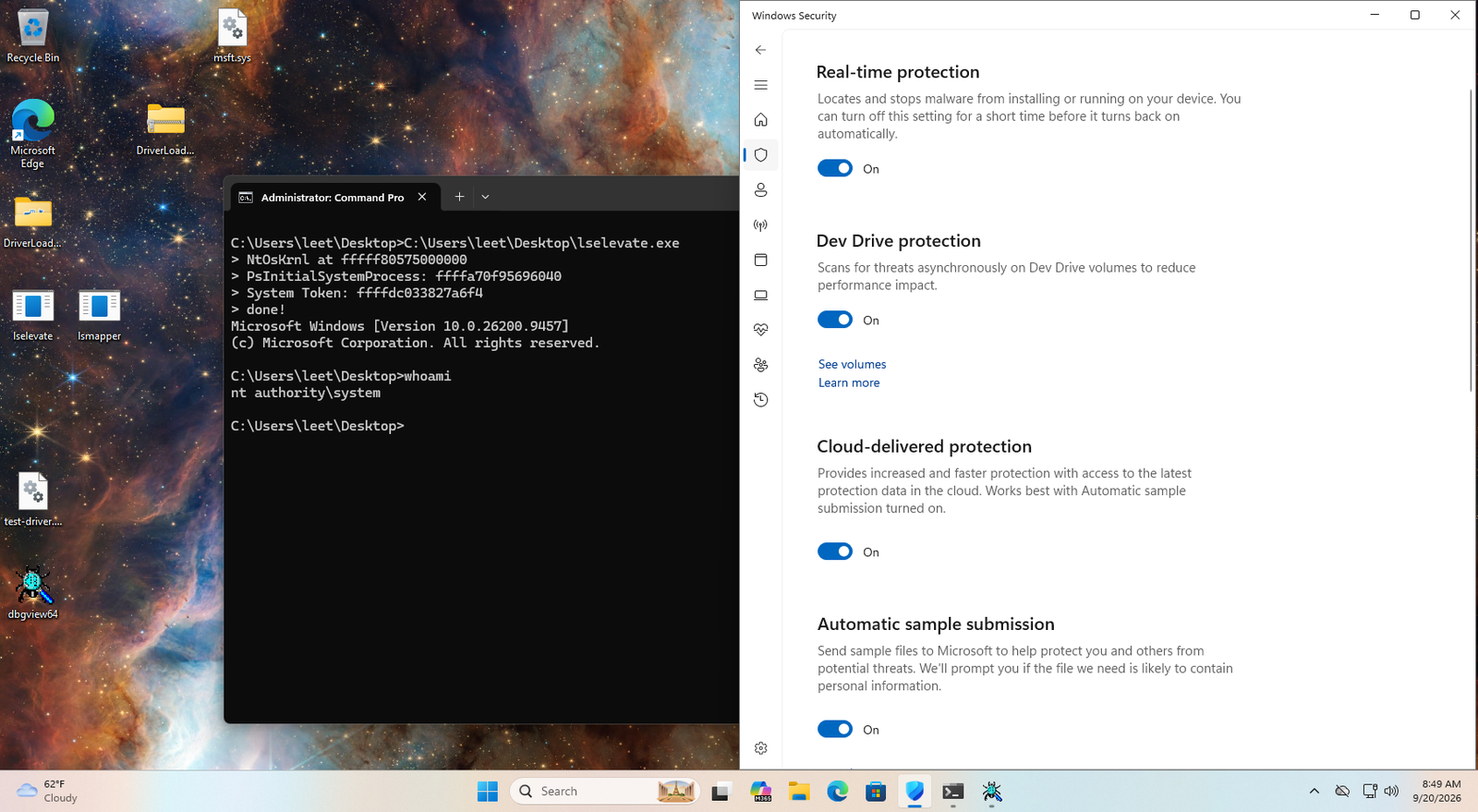
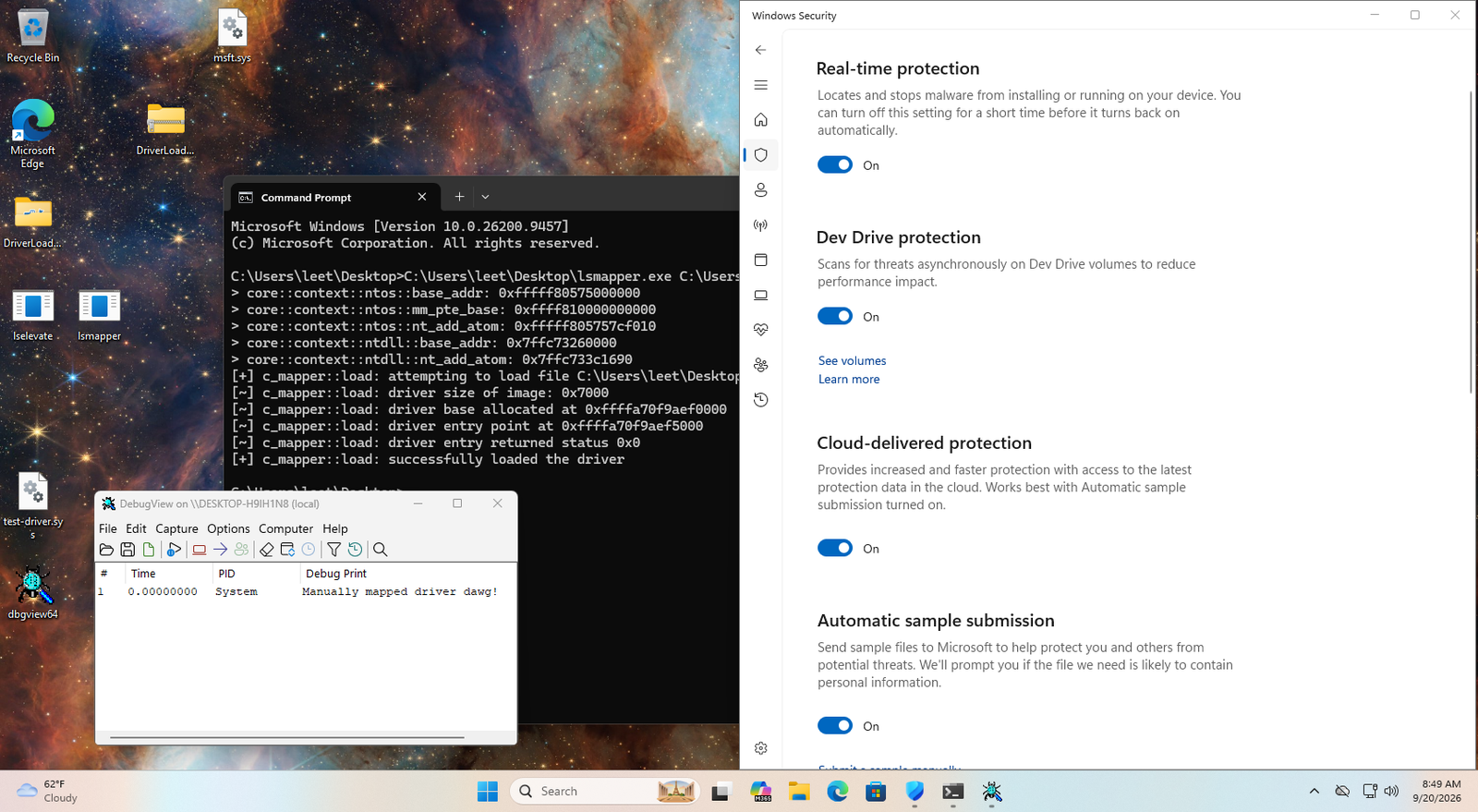
Taking advantage of the driver, I was able to create a driver mapper to map unsigned kernel drivers into kernel space, and a program to elevate the user to NT-AUTHORITY. Due to how dangerous the exposed primitives are, you can literally do anything you'd think of. The sky is the limit.
LocalStranger consists of one main core component, lsapi which implements wrappers around user-mode communications with the driver. From process R/W and memory allocations to KASLR bypass, physical
and virtual memory R/W.
The driver mapper, lsmapper, is written in C++ with a pretty modern syntax, because I felt like it.
Everything else's been written in C with a strong Microsoft formatting, because I also felt like doing.
The code has been shared without a license so don't ask me what that means, search it up.