 mulwarex/cve-2025-6218-poc
RARLAB WinRAR Directory Traversal Remote Code Execution

RARLAB WinRAR Directory Traversal Remote Code Execution Vulnerability. This vulnerability allows remote attackers to execute arbitrary code on affected installations of RARLAB WinRAR. User interaction is required to exploit this vulnerability in that the target must visit a malicious page or open a malicious file.
The specific flaw exists within the handling of file paths within archive files. A crafted file path can cause the process to traverse to unintended directories. An attacker can leverage this vulnerability to execute code in the context of the current user. Was ZDI-CAN-27198.
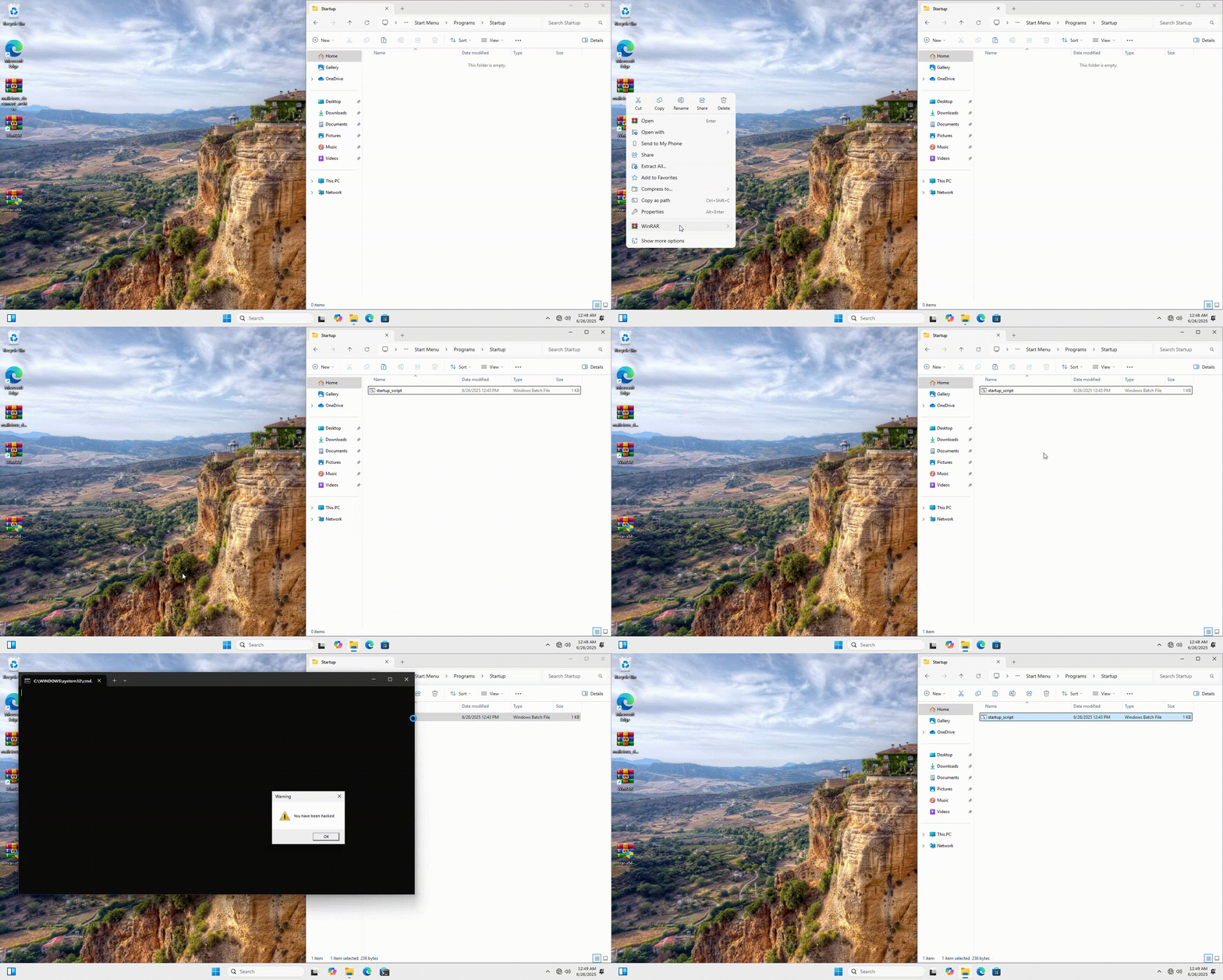
This Python script creates a specially crafted ZIP archive exploiting a WinRAR Directory Traversal Remote Code Execution vulnerability (ZDI-CAN-27198). The archive includes a payload designed to be extracted into the Windows Startup folder, allowing for execution upon the next user login. CVE-2025-6218-POC
⚠️ WARNING: This tool is provided for educational and research purposes only. Unauthorized use may be illegal and unethical. Always obtain proper authorization before testing on any system.
By embedding a payload with directory traversal sequences (.. .\\.. .\\...), the ZIP tricks WinRAR into extracting files outside the current directory—e.g., into the victim’s Startup folder:
AppData\Roaming\Microsoft\Windows\Start Menu\Programs\Startup
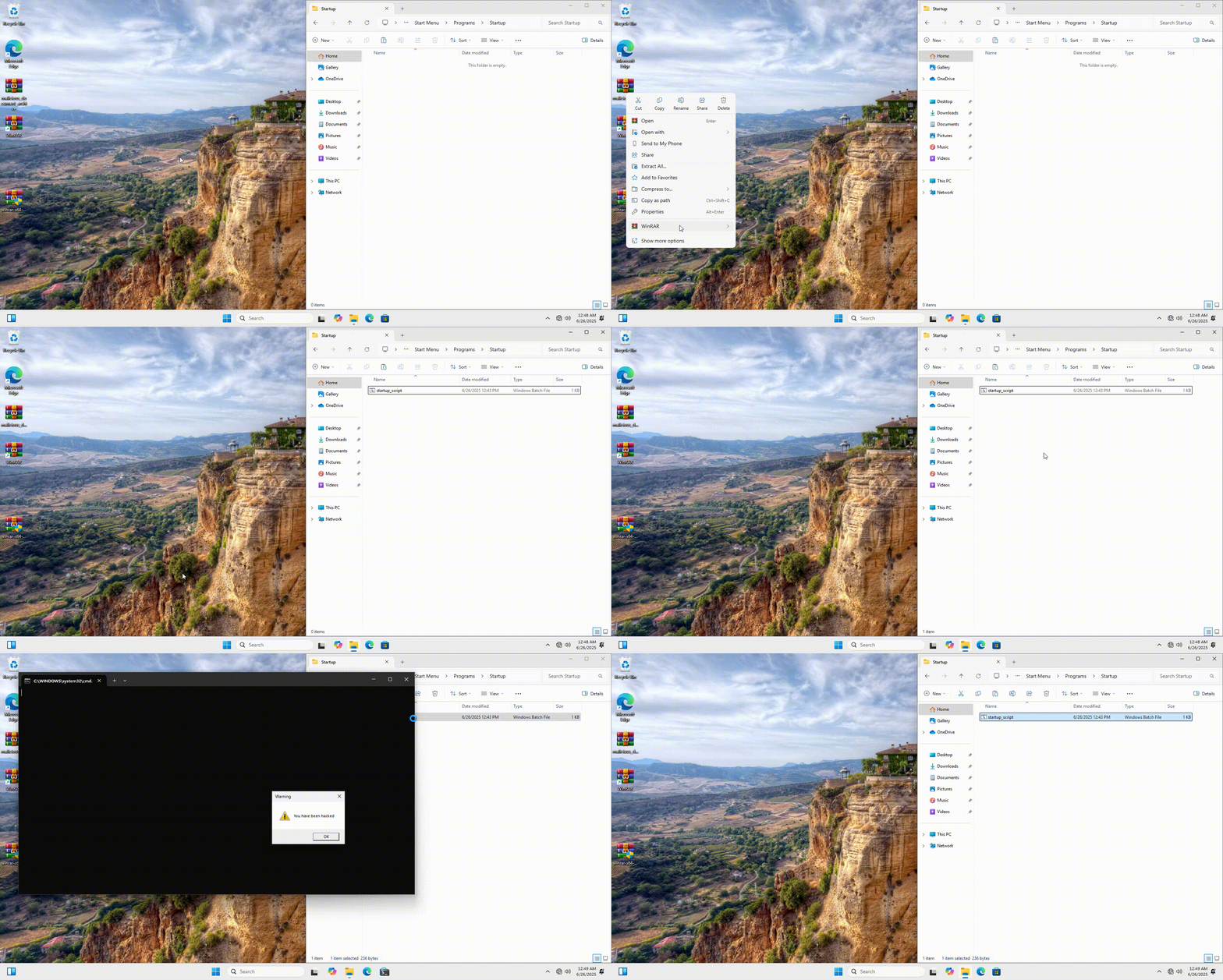
python3 zip_payload_generator.py --payload payload.bat --normal decoy.pdf --output backdoor.zip
⚠️ Disclaimer
This project is for educational and authorized penetration testing only. The creator is not responsible for any misuse or damage caused by this tool. Always comply with local laws and regulations.
