 moalali/cve-2025-56379
A stored cross-site scripting (XSS) vulnerability in the blog post feature of ERPNEXT v15.67.0 allows attackers to execute arbitrary web scripts or HTML via a crafted payload injected into the content field.

📌 Summary
A stored Cross‑Site Scripting (XSS) vulnerability exists in the Blog module of ERPNext (v15.67.0) / Frappe (v15.72.4). An authenticated user who can create or edit blog posts may inject crafted HTML/JavaScript into the content field. That payload is stored and will execute in the browser of any user who views the blog-post page, allowing arbitrary script execution, information disclosure, denial of service, and other client-side attacks. Admin privileges are not strictly required — any user with permission to create/edit blog posts may exploit it.
Vulnerability Type: Stored Cross‑Site Scripting (CWE‑79)
Affected Product(s): ERPNext / Frappe
Affected Versions (reported):
Affected Component: ERPNext Blog Module
Route: /app/blog-post/<blog_name>
Vulnerable Field: content (blog post creation / edit form)
Attack Type: Remote (requires authentication and blog-post creation privileges)
Severity: High (client-side code execution, data theft, session hijacking possibility)
Estimated CVSS v3.1 Score: 7.5 (High) — estimate; authoritative assigner should compute final score
Status: Not fixed (as reported)
Discovered by: Mohammed Aloli
Date Discovered: Not specified
CVE ID: CVE-2025-56379
Only test in authorized / lab environments. Do NOT run against systems you do not own or have explicit permission to test.
Steps to reproduce
Authenticate to the target ERPNext instance as a user with permission to create/edit blog posts.
Navigate to blog-post creation/edit route for a blog, e.g.:
/app/blog-post/<blog_name>
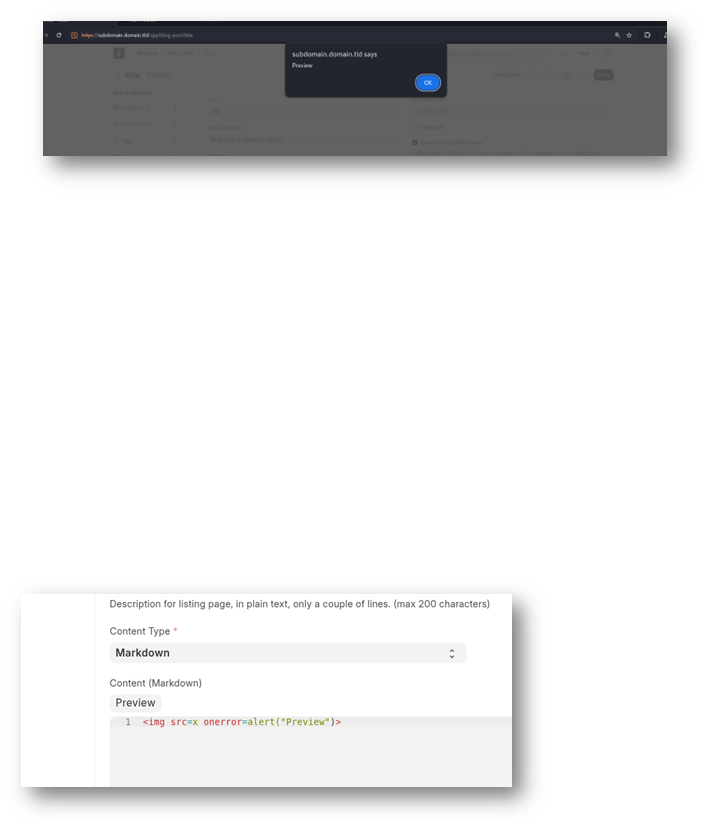
In the content field insert the payload and save the post:
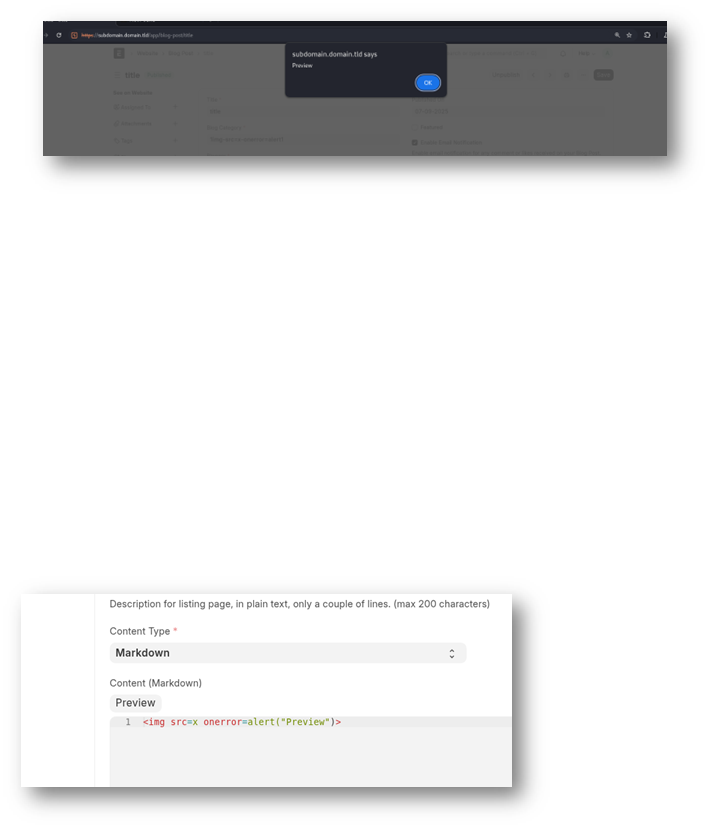
Open the blog-post page (/app/blog-post/<blog_name>) as another user (or same user in a fresh browser). The payload executes in the viewer’s browser (here, alert("xss")).
Notes: the PoC uses a simple onerror alert. Real attacks could exfiltrate cookies, perform actions on behalf of the victim, or load remote scripts (subject to CSP and cookie flags).
An attacker who can create or edit blog posts stores a malicious script in the content field. Any user — including administrators — who visits the blog-post page will execute the attacker's script in their browser context. Consequences include session theft (if cookies are not HttpOnly), forced actions in the victim’s session, data exfiltration from pages the attacker can access, UI redress attacks, and potential DoS of client-side components.
content HTML on input and/or escape on output using a secure HTML sanitizer that removes dangerous tags and attributes (remove on* attributes, javascript: URIs, <script>, ``, etc.). Prefer well‑maintained libraries.<p>, <b>, <i>, <ul>, <li>, <a href> with strict href validation). Disallow inline event handlers.'unsafe-inline', use nonce/hash-based script allowances where necessary).HttpOnly and set appropriate SameSite attributes to reduce cookie theft and CSRF-like risks.https://github.com/frappe/erpnexthttps://github.com/frappe/frappehttps://cheatsheetseries.owasp.org/cheatsheets/Cross_Site_Scripting_Prevention_Cheat_Sheet.htmlauthor : Mohammed Aloli
This write-up is intended for defensive, remediation, and awareness purposes only. Do not attempt to exploit this vulnerability against systems you do not own or have explicit authorization to test. If you operate ERPNext/Frappe, apply fixes, enforce sanitization, and follow the mitigation guidance above.
