 maty156/telegram-phish-simulator
Educational Telegram phishing simulation for cybersecurity training and awareness. Demonstrates credential harvesting via fake login pages in isolated lab environments.

DO NOT USE THIS CODE FOR ILLEGAL ACTIVITIES. This repository is a simulation built for cybersecurity education, awareness, and authorized lab-based testing only.
This project demonstrates a Telegram phishing simulation that is intended for:
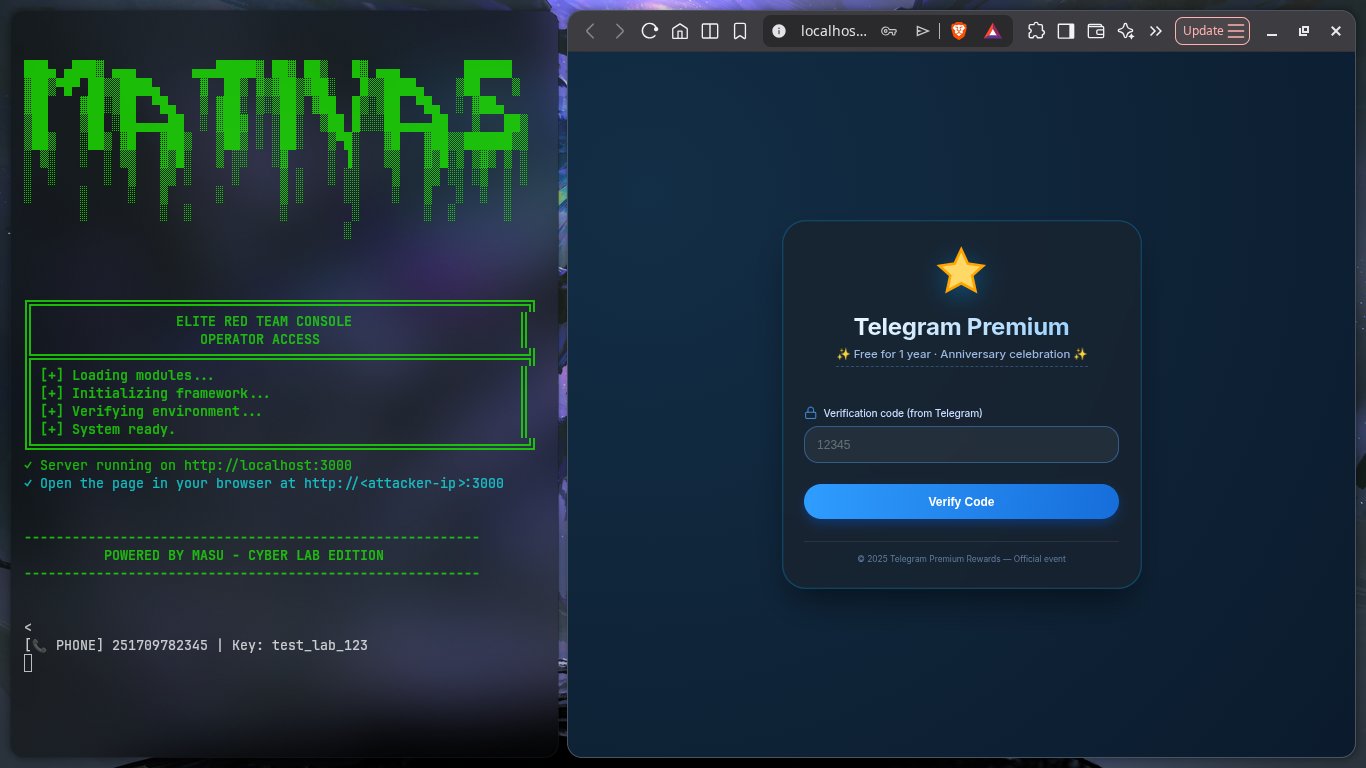
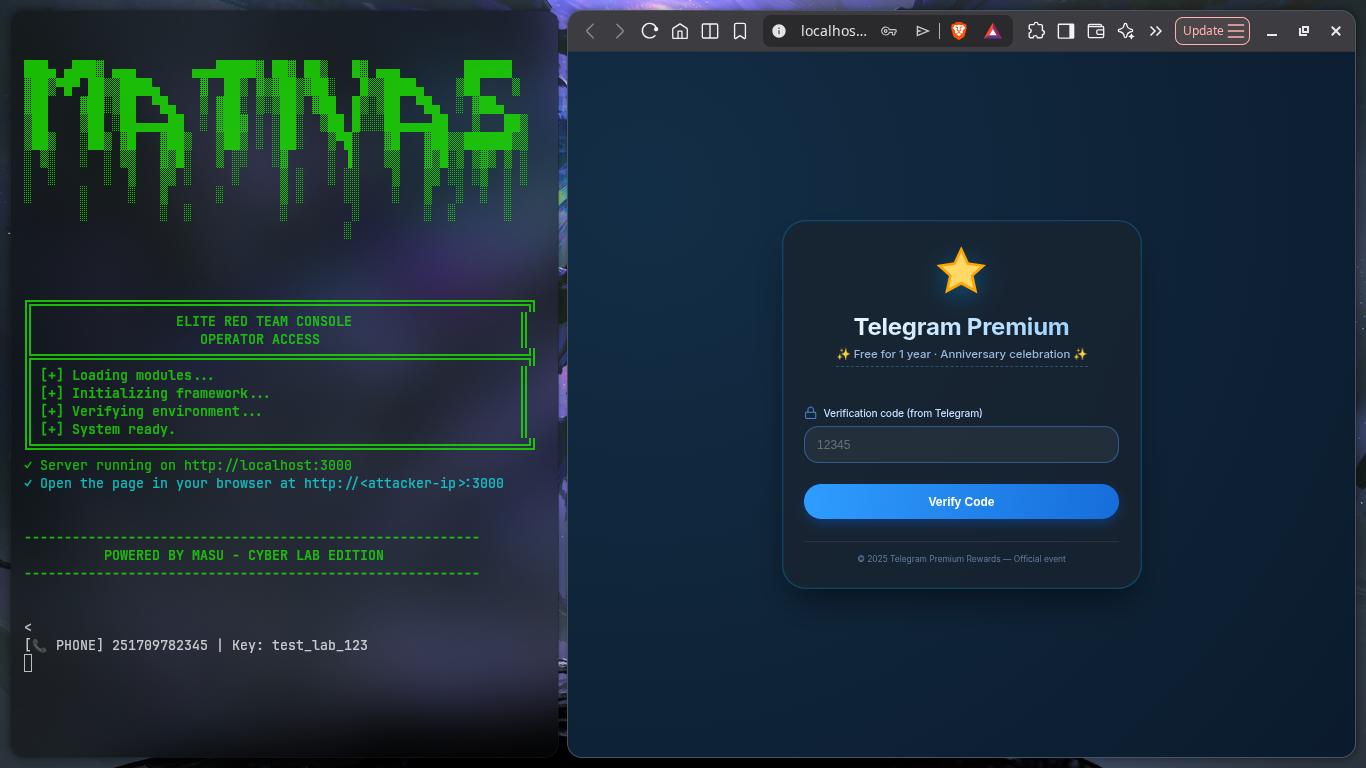
It shows how attackers can use fake “Free Premium” offers to harvest phone numbers, capture verification codes, and request 2FA passwords.
This repository is not intended for real phishing or account takeover. It does not connect to Telegram’s live API.
| File | Description |
|---|---|
public/index.html | Phishing page UI used for the simulation. |
public/assets/ | Supporting static assets used by the demo page. |
server.js | Mock backend that logs submitted values locally. |
package.json | Node project metadata and dependencies. |
README.md | Project documentation. |
LICENSE | Project license terms. |
.gitignore | Files and directories excluded from Git tracking. |
Use this tool only in a controlled environment.
sudo apt update && sudo apt install -y nodejs npm
cd /home/youruser
git clone https://github.com/Maty156/telegram-phish-simulator.git
cd telegram-phish-simulator
npm install
server.js on the attacker VM.http://<attacker-ip>/.Start the mock server on the attacker VM:
npm install

npm start
From the victim VM, open the phishing page in a browser:
http://<attacker-ip>:3000/
Use the page to submit a phone number, verification code, and optional password.
Observe the logged output on the attacker VM and in stolen_credentials.log.
The server is a simulation and does not perform real Telegram authentication.
This simulator models the phishing phases used in credential capture:
The backend records all values to the terminal and stolen_credentials.log.
Protecting against this type of phishing includes:
Use this repository only for defensive, educational, and authorized testing.
The author is not responsible for misuse.
This project is licensed under the MIT License. See the included LICENSE file for full terms.
Use this repository only for educational, defensive, and authorized testing.
