 maqeel-git/cve-2020-0796
Analysis and ethical exploitation guide for CVE-2020-0796 (SMBGhost) SMBv3 vulnerability with technical details and practical attack plan.

CVE-2020-0796, also known as "SMBGhost," is a critical security vulnerability affecting Microsoft Windows operating systems. It falls under the "wormable" category, meaning it can rapidly propagate across networked systems. This vulnerability resides in Microsoft's Server Message Block (SMB) protocol, which handles file and printer sharing. Exploiting it enables remote code execution on vulnerable servers, potentially leading to full system compromise.
CVE-2020-0796 is characterized by its association with the Microsoft Server Message Block (SMB) protocol. It is classified as a remote code execution vulnerability, meaning malicious actors can exploit it to execute code on a target system remotely without authentication.
For a detailed breakdown, refer to VULNERABILITY_DETAILS.md.
This critical vulnerability affects the Microsoft Server Message Block (SMBv3) protocol in certain versions of Microsoft Windows operating systems.
The following versions are specifically affected:
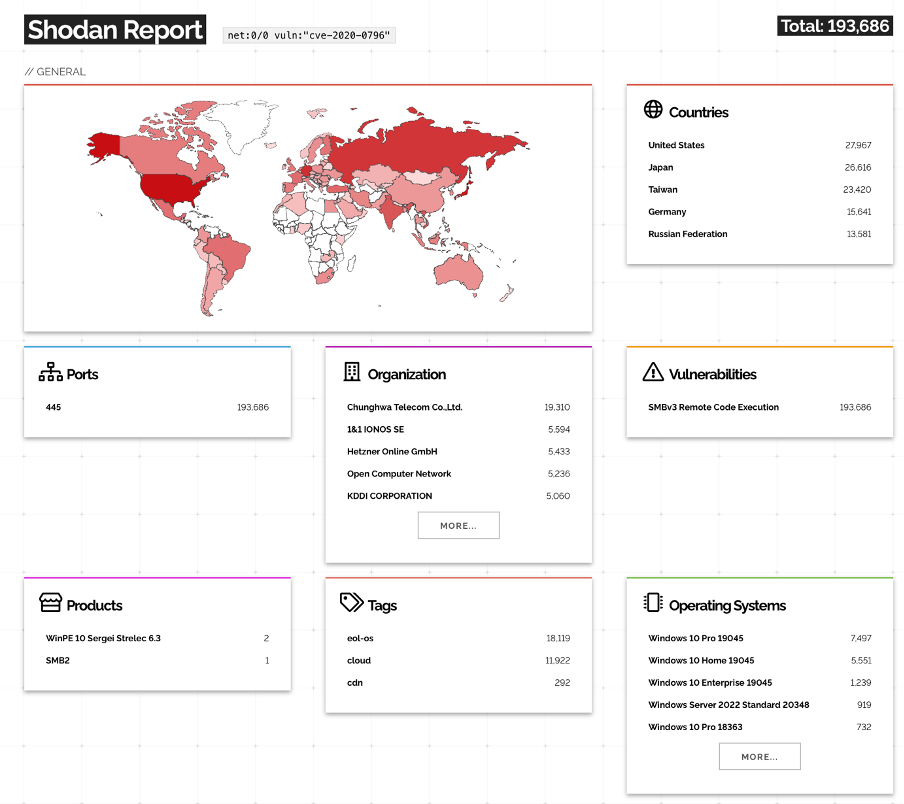
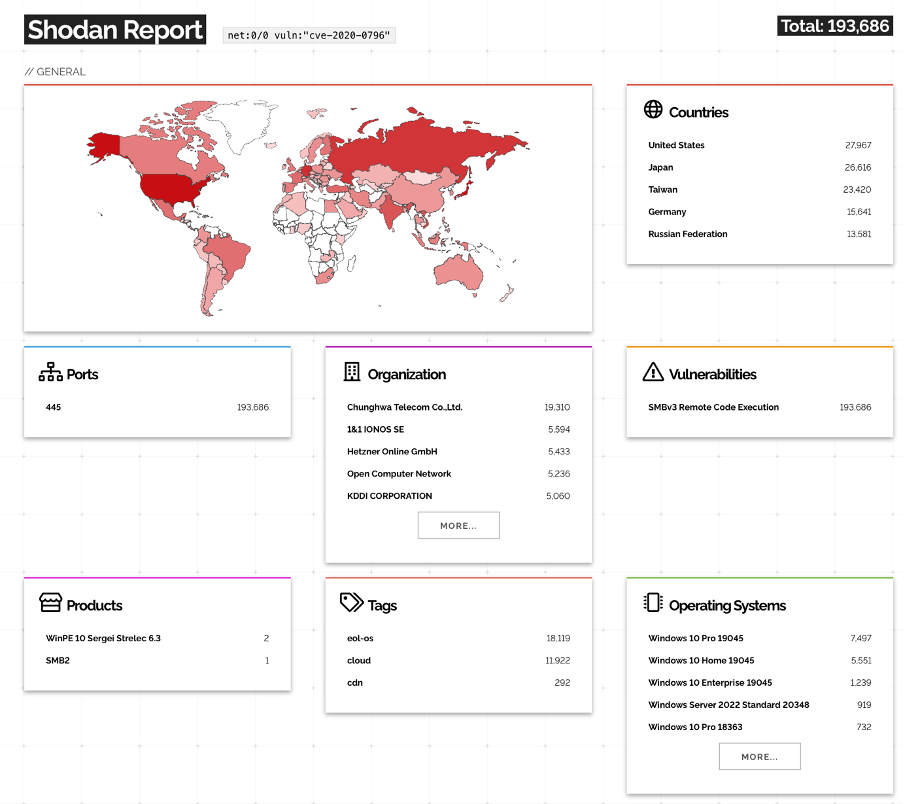
Shodan provides data on active and vulnerable systems affected by CVE-2020-0796. There are approximately 193,665 results available for this particular vulnerability, also showing application statistics.
The objective of this plan is to demonstrate the potential impact of CVE-2020-0796 on a vulnerable Windows system within a controlled and ethical environment. This demonstration aims to showcase the severity of the vulnerability for educational and research purposes.
For detailed steps on how to ethically exploit this vulnerability, refer to ATTACK_PLAN.md.
To mitigate the risks associated with CVE-2020-0796, prompt application of Microsoft's security updates is essential. Proactive security measures and vigilant monitoring are crucial in today's digital landscape.
CVE-2020-0796 is a critical vulnerability with the potential for rapid network propagation. Exploiting this flaw can lead to unauthorized access, full system compromise, and malware dissemination. This vulnerability highlights the ongoing importance of cybersecurity and the need for preventive actions to create a safer digital environment.
Please refer to REFERENCES.md for a comprehensive list of sources.
